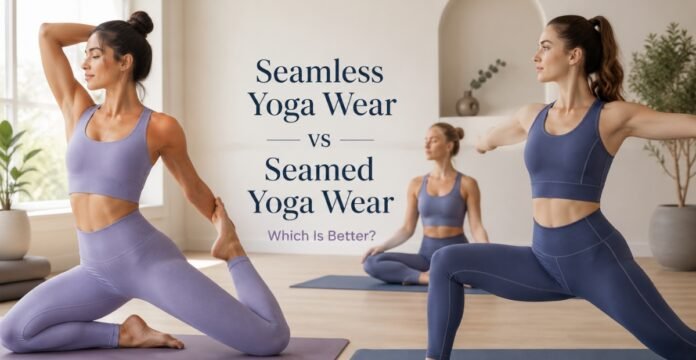
Choosing yoga clothing may look simple, but its construction can change how it feels during every pose. The debate around seamless yoga wear vs seamed yoga wear mainly comes down to comfort, support, movement, durability, and personal preference. Seamless pieces reduce the number of stitched joins, while seamed clothing uses shaped fabric panels that are sewn together. Both can work well when the fabric and fit are right. You can explore a wider yoga wear collection to compare different waistbands, tops, shorts, and pants. Understanding seamless yoga wear vs seamed yoga wear helps you choose clothing that matches your practice instead of following a trend.
Seamless Yoga Wear vs Seamed Yoga Wear: Main Difference
Seamless yoga wear vs seamed yoga wear differs from seamed yoga clothing in the way it is constructed. Seamless yoga clothing is knitted into a tube shape, with few seams. However, some stitching can still be seen around the openings. Seamed yoga wear is made from fabric pieces that are cut and stitched together. Designers can shape the garment using panels, gussets and curved waistbands. Seamless styles are designed to feel smooth and close to the body. Seamed styles allow for more control of shape and structure. Seamed or seamless yoga clothing is not always superior because of fabric quality, stretch and sizing.
How Seamless Yoga Wear Is Made
Circular knitting machines are commonly used to produce seamless yoga wear vs seamed yoga wear. They create the majority of the garment in a continuous shape. This method allows for ribbing to be added, as well as stretch, ventilation and light compression, without the need for many sewn panels. This construction is often smoother against the skin, and can reduce rubbing. This also gives the garment a neat, fitted look that many people prefer for studio practice. But seamless doesn’t always mean that there are no stitches. Some edges and join points need to be finished. Seamed yoga clothing has a few bulky seams, but seamless clothing does not have them.
How Seamed Yoga Wear Is Made
The fabric is first cut into shapes, then sewn together. Designers can create more precise fits around the waist and hips. They can also use separate panels for thighs, knees, thighs, and chest. Seamed garments are more shapely than seamless ones, because they follow the contours of each area. These garments can also have flatlock seams and reinforced stress points. They may even include pockets or carefully placed gussets. Well-made flat seams are smooth against the skin, while poorly-made seams may feel rough. Seamless yoga wear and seamed yoga clothing should be judged on the quality of the seams as well as their placement, rather than just whether there is visible stitching.
Which Option Feels More Comfortable?
Seamless yoga wear vs seamed yoga wear is often compared to seamed yoga clothing for its comfort. Seamless designs can feel softer when repeated movements are made because there are less raised lines that press against the skin. This is useful when you are in poses that put pressure on your hips, waist or shoulders.
Seamed garments are also more comfortable when the thread is soft, the stitching is flatlock, and panels are placed correctly. The problem usually occurs when the seam is directly over a sensitive part or when the garment fits too tightly. The best comfort in the debate between seamless and seamed yoga clothing comes from a smooth construction, breathable material, and a fitting that doesn’t pinch, slide, or roll.
Quick Comparison Points
- Seamless yoga wear normally has fewer stitched joins and a smoother inner surface.
- Seamed yoga wear can use shaped panels for better structure and targeted support.
- Seamless styles may reduce rubbing during repeated stretches and floor poses.
- Seamed styles can include practical pockets, gussets, and reinforced sections.
- Seamless garments often create a close and clean second-skin appearance.
- Seamed garments provide more choices in cuts, panels, and design details.
- Both options need good fabric, correct sizing, and strong stretch recovery.
- The better choice depends on your yoga style, body shape, and comfort needs.
Fit and Support During Practice
Fit and support can change the result of seamless yoga wear vs seamed yoga wear. Seamless pieces often stretch evenly around the body and may feel like a second skin, but very tight versions can create more pressure than expected. Seamed pieces can use shaped waistbands, cup areas, and panel placement to provide support where it is needed. For example, a properly fitted running sports bra can provide structured support for active yoga sessions that include fast movement. In seamless yoga wear vs seamed yoga wear, support should match the level of activity. This is why seamless yoga wear vs seamed yoga wear should be tested through real stretches instead of being judged only on a hanger.
Movement and Flexibility
Both types of clothing can allow for free movement if the fabric is stretched in multiple directions. seamless yoga wear vs seamed yoga wear is often more flexible than seamed yoga clothing because it has fewer seams. This allows for deeper bends, twists and stretches. Seamed clothing can perform as well if it has a four-way stretch material and gussets that give the legs more room. Uneven seams can cause a pull when doing lunges. A seamless knit that is too tight can also restrict movement. Seamed vs seamless yoga wear isn’t just a question of construction.
Durability, Sweat, and Daily Wear
The durability of seamless yoga wear vs seamed yoga wear clothes depends on the yarn strength, the fabric weight, the stitching, wash, and construction. Seamless clothing is less likely to split at the seams, but its knitted material can snag and lose shape if it’s weak. Seamed clothing is more likely to have stitched seams. However, reinforced seams are able to withstand regular wear. The fabric density and fibers are more important for sweat control than the seams. Some synthetic blends are quick drying, while others provide a comfortable and supportive feeling. When choosing between seamless yoga wear and seamed yogawear, choose a material that is resilient after stretching,
Which Is Better for Different Yoga Styles?
Seamless yoga wear vs seamed yoga wear is better than seamed yoga clothing depending on the type of yoga that you practice. Seamless leggings, tops, and other garments are suitable for hatha and restorative yoga sessions, as their smooth surface is comfortable in floor poses and slow movements. Seamed clothing can be used for power yoga, hot or mixed yoga with strength training. Shaped panels, gussets and supportive waistbands add to the control. Seamed loose pants can also be used for relaxed meditation. Seamed vs seamless yoga wear is not a simple question of winner or loser. Instead, choose the garment that best suits your needs, including sweat levels, coverage, support and comfort.
How to Choose the Right Yoga Wear
Start by checking the garment in basic movements such as a squat, forward fold, side stretch, lunge, and seated pose. When comparing seamless yoga wear vs seamed yoga wear, make sure the waistband does not roll, the fabric does not become see-through, and the legs do not twist. People who prefer a loose fit can consider wide-leg yoga pants, while those who prefer a close fit may choose seamless leggings or fitted seamed shorts. Also check the care label, stretch recovery, pocket placement, and seam finish. The smartest choice in seamless yoga wear vs seamed yoga wear is a garment that feels secure and remains comfortable from warm-up to cool-down.
Conclusion
seamless yoga wear vs seamed yoga wear and seamed yoga clothing are both equally effective. Seamless styles can be a good choice because they provide a smooth feel, have fewer pressures points and are close fitting. Seamed styles often offer better support, pockets, reinforced areas and a greater range of cuts. Both versions can be high-quality, but poorly made versions can feel uncomfortable. Your body, your yoga style, the fabric you prefer, and how much support you need will determine whether seamless or seamed yoga clothing is right for you. This guide will help you choose between seamless yoga wear and seamed yoga clothing. Test the garments through actual yoga movements.
FAQs
Is Seamless Yoga Wear Completely Free From Seams?
No. Most seamless yoga wear has fewer seams rather than no seams at all. Small seams may still be used around the waistband, shoulders, arm openings, or finishing areas.
Does Seamed Yoga Wear Cause Chafing?
Well-made seamed yoga wear should not cause chafing. Flatlock stitching, soft thread, correct seam placement, and proper sizing can keep the garment smooth and comfortable.
Is Seamless Yoga Wear Better for Hot Yoga?
Seamless clothing can work for hot yoga when it uses lightweight, breathable, and quick-drying fabric. However, seamed clothing with ventilation panels may also perform very well.