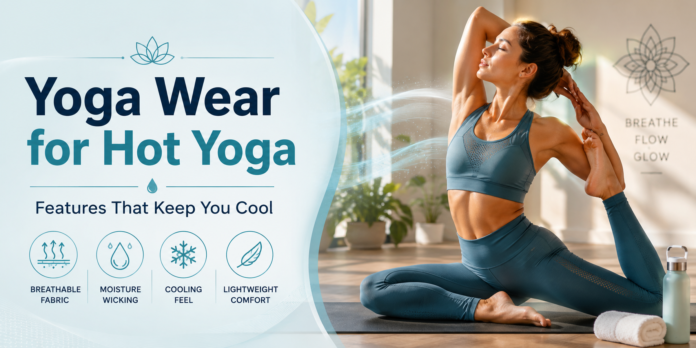
Hot yoga is not like a normal yoga class in a cool room. The room is warm, your body heats up fast, and sweat starts within the first few minutes. That is why yoga wear for hot yoga should feel light, breathable, and easy to move in. The right clothes help sweat dry faster, reduce sticky fabric, and allow your skin to breathe while you stretch, bend, and hold poses. If your outfit is too thick, too loose, or made from heavy cotton, it can feel wet, heavy, and uncomfortable. Good hot yoga clothing does not stop sweating because sweating is natural in hot yoga. Instead, it helps manage sweat so your body feels cooler and your movement stays smooth. This guide explains the simple features that make yoga clothes better for heated yoga classes, especially for beginners who want comfort without confusion.
What Makes Yoga Wear for Hot Yoga Different?
Yoga wear for hot yoga is different because it is designed for heat, sweat, and constant movement. Normal casual clothing may look comfortable, but it often becomes heavy when wet. Hot yoga clothes need to stay light even when you sweat a lot. They should stretch in all directions so your body can move freely during lunges, twists, forward folds, and balance poses. They should also fit close enough to stay in place, but not so tight that they block movement or feel uncomfortable around the waist, chest, shoulders, or thighs. The main goal is simple: your outfit should support your body without distracting you. When clothes ride up, trap sweat, or stick badly to the skin, your focus moves away from breathing and posture. That is why yoga wear for hot yoga should combine cooling fabric, smart fit, and flexible construction.
Lightweight Fabric Helps Your Body Breathe
The first feature to look for is lightweight fabric because heavy material can trap heat close to the skin. In hot yoga, your body already works hard to stay cool, so your clothing should not make the job harder. Lightweight polyester blends, nylon blends, and spandex blends are common because they can feel smooth, thin, and flexible. These fabrics usually dry faster than thick cotton and can help sweat move away from the body. When choosing yoga wear for hot yoga, avoid fabric that feels bulky, stiff, or rough. A light fabric should feel soft on the skin but strong enough to stretch without losing shape. For a better starting point, you can explore breathable yoga wear options that match the kind of movement and comfort needed in heated yoga classes.
Moisture-Wicking Keeps Sweat Under Control
Moisture-wicking is one of the most important features in yoga wear for hot yoga because sweat is always part of the class. Moisture-wicking fabric pulls sweat away from your skin and spreads it across the surface of the cloth so it can dry faster. This helps reduce the heavy, soaked feeling that happens when fabric holds sweat for too long. It can also help prevent rubbing in areas like the underarms, waistband, inner thighs, and back. Cotton may feel soft at first, but once it absorbs sweat, it can stay wet for a long time. That can make hot yoga feel harder than it needs to be. Performance-based activewear fabrics are usually a better choice because they are made for sweat, movement, and repeated training. The best fabric feels dry sooner and lets you keep moving with confidence.
Breathable Support Pieces Matter for Comfort
Support pieces are very important in hot yoga, especially sports bras, crop tops, and fitted upper layers. A good top should support your movement without trapping too much heat around the chest and back. Breathable panels, smooth straps, and stretch fabric can make a big difference during poses like downward dog, plank, cobra, and warrior. Yoga wear for hot yoga should not feel tight in a way that makes deep breathing difficult. Since breathing is part of yoga practice, your top should allow your ribs and chest to expand easily. A supportive piece like a running sports bra can work well when it offers sweat control, flexible support, and a stay-in-place fit. The goal is not only support, but support that still feels cool, light, and comfortable during a heated session.
Stretchy Bottoms Help You Move Without Sticking
The bottom you choose can change your whole hot yoga experience. Leggings, yoga shorts, and wide-leg yoga pants should stretch easily without pulling, sliding, or becoming see-through during movement. Yoga wear for hot yoga should allow deep bending, wide stances, and seated stretches without pressure around the hips or knees. If the fabric sticks too much when wet, it can make simple poses feel annoying. A good waistband should stay secure without digging into your stomach. Some people prefer fitted shorts because they feel cooler, while others prefer wider pants because they allow more airflow around the legs. If you like a relaxed shape, wide-leg yoga pants can be useful when the fabric is light, breathable, and flexible enough for yoga movement. Comfort depends on both fabric and fit.
Key Cooling Features to Check Before Buying
Before buying yoga wear for hot yoga, check the cooling features one by one so you do not choose clothes only because they look nice.
- Choose lightweight fabric that does not feel thick or heavy.
- Pick moisture-wicking material that helps sweat dry faster.
- Look for four-way stretch so the outfit moves with your body.
- Choose breathable panels or open-back designs for better airflow.
- Avoid thick cotton because it can hold sweat and feel heavy.
- Pick a secure waistband that stays in place during bending.
- Select flat seams to reduce rubbing during sweaty movement.
- Choose a fit that feels close but not tight.
- Avoid rough labels, stiff stitching, and bulky pockets.
- Test the outfit with squats and stretches before class.
Fit Should Be Close, But Not Too Tight
Fit is one of the easiest things to get wrong. Some people think tighter clothes are always better for yoga, but this is not true. Yoga wear for hot yoga should stay in place, but it should not press into your skin or limit your breathing. A top that is too tight can feel uncomfortable around the chest, shoulders, or underarms. Bottoms that are too tight can roll down, dig into the waist, or limit hip movement. On the other hand, clothes that are too loose can slide, twist, or fall into your face during inverted poses. The best fit is balanced. It feels secure when you bend, stretch, and sweat, but it still lets your body move naturally. Before wearing new yoga clothes to a hot class, try simple movements at home, such as lunges, forward folds, squats, and arm raises.
Seam Design Can Stop Rubbing and Irritation
Seams may look like a small detail, but they matter a lot in heated yoga. When sweat builds up, rough seams can rub against the skin and cause irritation. This is especially common around the inner thighs, underarms, waistline, and shoulders. Yoga wear for hot yoga should have smooth seams, flat stitching, and soft edges. Flatlock seams are helpful because they sit flatter against the skin and reduce friction. A smooth waistband also matters because twisting and folding poses can make rough waistbands uncomfortable. Avoid clothing with hard labels, thick stitching, heavy zippers, or bulky decorations. These details may look stylish, but they can become annoying once you are sweating and moving. The best hot yoga clothes feel simple, smooth, and almost invisible during practice. When your clothes stop distracting you, your focus returns to breathing, balance, and posture.
What You Should Avoid in Hot Yoga Clothing
Some clothes are not suitable for hot yoga, even if they look good outside the studio. Avoid thick cotton shirts because they absorb sweat and can feel heavy very quickly. Avoid denim, fleece, heavy joggers, and loose hoodies because they trap heat and block movement. Avoid very baggy tops because they can fall during downward-facing poses. Avoid bottoms with stiff waistbands, rough seams, or fabric that becomes see-through when stretched. Yoga wear for hot yoga should also avoid too many pockets, metal parts, or thick layers because they add weight and discomfort. Dark, heavy clothing may also feel warmer than lighter and thinner options. You do not need the most expensive outfit, but you do need the right features. A simple breathable top and flexible bottom can perform much better than a trendy outfit made from the wrong fabric.
Best Fabric Choices for Hot Yoga Practice
The best fabric for yoga wear for hot yoga is usually a blend that combines sweat control, stretch, and softness. Polyester and nylon are common because they can dry faster than cotton and feel lighter during exercise. Spandex or elastane is often added because it gives the fabric stretch and helps the garment return to shape after movement. Bamboo blends and some recycled performance fabrics can also feel soft and breathable, depending on construction. The key is not just the fiber name, but how the fabric performs in real use. A good hot yoga fabric should stretch, recover, breathe, and dry quickly. It should also feel soft after repeated washing. If the fabric becomes loose, rough, or smelly too quickly, it may not be ideal for regular hot yoga. Always check fabric quality, not just design.
Conclusion
The best yoga wear for hot yoga helps you stay cool, dry, flexible, and focused. It should not fight against your body while you move. Look for lightweight fabric, moisture-wicking performance, breathable support, smooth seams, and a fit that stays in place without feeling tight. Hot yoga will always make you sweat, but the right outfit can make sweat easier to manage. When your clothes dry faster, stretch better, and feel softer, your class becomes more comfortable. You can breathe deeper, move more freely, and stay focused on each pose instead of fixing your outfit again and again. In the end, yoga wear for hot yoga should feel simple, practical, and comfortable. Choose pieces that support your body, handle sweat well, and make every heated yoga session easier to enjoy.
FAQs
What is the best fabric for yoga wear for hot yoga?
The best fabric for yoga wear for hot yoga is usually a lightweight polyester, nylon, and spandex blend. These fabrics can help manage sweat, stretch easily, and dry faster than thick cotton. The fabric should feel soft, breathable, and flexible during movement.
Should hot yoga clothes be tight or loose?
Hot yoga clothes should be close-fitting, but not too tight. They need to stay in place during bending and stretching, but they should not stop deep breathing or movement. A balanced fit is best for comfort and control.
Is cotton good for hot yoga?
Cotton is usually not the best choice for hot yoga because it absorbs sweat and can stay wet for a long time. Wet cotton may feel heavy, sticky, and uncomfortable. Moisture-wicking activewear fabric is usually better.
Can I wear shorts for hot yoga?
Yes, you can wear shorts for hot yoga if they are stretchy, breathable, and secure. Shorts can feel cooler than full-length leggings, but they should not ride up or cause rubbing during poses.