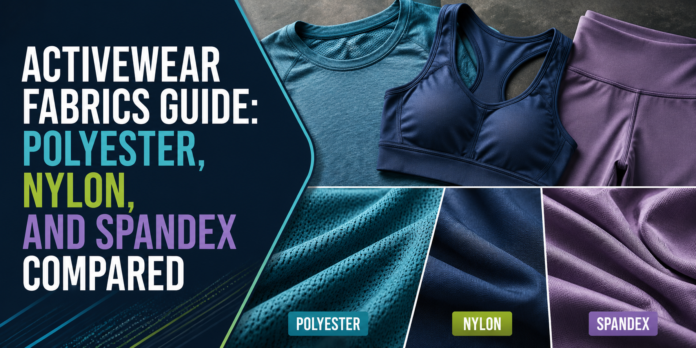
Activewear fabrics are special clothing materials made for movement, sweat, comfort, and daily performance. The most common activewear fabrics are polyester, nylon, and spandex because they are light, flexible, and easier to wear during workouts than many heavy natural fabrics. Polyester is popular for sweat control and fast drying. Nylon feels smooth, strong, and soft on the skin. Spandex gives stretch and helps the garment move with the body. These activewear fabrics are used in gym wear, yoga wear, fitness clothing, compression garments, swimwear, and performance wear. The right fabric depends on the activity. A runner may need quick drying. A yoga user may need stretch. A gym user may need durability. A swimmer may need chlorine resistance. This guide compares polyester, nylon, and spandex in a simple way so buyers, brands, and clothing makers can choose the right fabric with confidence.
Why Activewear Fabrics Matter in Sports Clothing
Activewear fabrics matter because workout clothing is not only about style; it also affects comfort, movement, and confidence. A normal cotton shirt can feel soft at first, but once it absorbs sweat, it may become heavy and slow to dry. In comparison, good activewear fabrics help move moisture away from the skin and keep the body feeling lighter during training. When a brand is building an activewear collection, fabric choice can decide whether the product feels cheap, premium, tight, breathable, or supportive. Polyester, nylon, and spandex are used because each one solves a different problem. Polyester helps with sweat and drying. Nylon helps with softness and strength. Spandex helps with stretch and shape recovery. When these activewear fabrics are blended correctly, the final garment can feel comfortable during walking, running, stretching, lifting, cycling, or casual daily wear.
Polyester: The Everyday Performance Fabric
Polyester is one of the most used activewear fabrics because it is light, strong, and dries quickly. It does not hold water the same way cotton does, so it is useful for sweaty workouts and outdoor activity. Polyester is also popular because it can be made into many finishes, such as mesh, interlock, fleece, jersey, and brushed fabric. This makes it suitable for T-shirts, tracksuits, leggings, shorts, jackets, and performance tops. Another reason brands like polyester is that it keeps color well, so printed or dyed activewear can stay bright for longer. But polyester is not perfect. It can hold odor if the fabric does not have a good finish or if it is not washed properly. Cheap polyester can also feel rough or plasticky. High-quality polyester activewear fabrics feel smoother, breathe better, and work well when mixed with spandex for stretch.
Nylon: The Smooth and Strong Option
Nylon is often used when a garment needs a softer, smoother, and more premium touch. Compared with polyester, nylon usually feels silkier on the skin, which makes it useful for leggings, sports bras, swimwear, fitted tops, and light jackets. Nylon is also strong for its weight, so it works well in active clothing that needs durability without feeling thick. Many people like nylon activewear fabrics because they feel comfortable during long wear, especially in gym, yoga, and athleisure outfits. Nylon can absorb a little more moisture than polyester, but it still dries faster than cotton. It also handles rubbing and movement well, which is important for fitted clothing. However, nylon can be more expensive than polyester, and it may need better care to keep its shape and finish. For brands, nylon is a good choice when the goal is a softer, cleaner, and more premium activewear feel.
Spandex: The Fabric That Adds Stretch
Spandex is the stretch fiber that makes active clothing flexible. It is rarely used alone. Instead, it is blended with polyester, nylon, or other fibers to help garments stretch and return to shape. Spandex is also called elastane or Lycra in many markets. Good activewear fabrics often include a small amount of spandex, such as 5%, 8%, 10%, or even more, depending on the garment. A loose gym T-shirt may need only a little stretch, while leggings, compression tops, and sports bras may need more. Spandex helps the fabric move when the body bends, runs, lifts, or stretches. It also helps fitted clothing stay close to the body without feeling stiff. But too much spandex can make fabric feel hot, tight, or less breathable. The best activewear fabrics use spandex carefully so the garment feels flexible but still comfortable.
Polyester vs Nylon: Which Feels Better?
Polyester and nylon are both useful, but they feel different. Polyester is usually better for quick drying, color holding, and lower-cost performance clothing. Nylon is usually better for a smooth hand feel, premium comfort, and soft stretch garments. For example, gym T-shirts, running tops, and team training wear often use polyester because sweat control and drying speed are important. On the other hand, yoga leggings, fitted tops, and luxury athleisure pieces often use nylon because the touch feels cleaner and softer. For yoga wear, nylon with spandex can feel gentle during stretching and floor movement. Polyester can still be a great choice, but the quality of yarn, knit structure, and finishing matters a lot. In simple words, polyester is practical and strong for active use, while nylon feels smoother and more premium for close-to-body clothing.
Spandex Blends: Why Stretch Needs Balance
Spandex makes activewear fabrics more comfortable, but the blend must be balanced. A fabric with no spandex may feel stiff during stretching, especially in leggings, sports bras, cycling shorts, and compression garments. A fabric with too much spandex may feel too tight, warm, or less airy. This is why many activewear fabrics use a base fiber with spandex. Polyester-spandex blends are common for gym wear, performance shirts, and training shorts. Nylon-spandex blends are common for yoga leggings, sports bras, swimwear, and premium fitted garments. For compression wear, the fabric needs enough stretch and recovery to support the body without blocking movement. Good recovery means the garment comes back to its shape after stretching. Poor recovery means the knees, waist, or elbows may become loose after a few wears.
Best Uses for Polyester, Nylon, and Spandex
Each fabric has a best use, and choosing the right one makes the garment better. Polyester is a smart choice for running shirts, training tops, tracksuits, gym shorts, team uniforms, and performance wear because it dries fast and handles sweat well. Nylon is a strong choice for leggings, sports bras, swimwear, athleisure tops, and smooth fitted garments because it feels soft and premium. Spandex is best used as a support fiber in blends because it gives stretch and comfort. The best activewear fabrics are often not made from one fiber only. They are blends made for a clear purpose. For example, polyester with spandex can make a strong gym shirt. Nylon with spandex can make soft leggings. Polyester mesh can make breathable panels. A brushed polyester blend can make warmer training wear. The goal is not to pick the most expensive fabric. The goal is to choose the fabric that fits the activity.
One-Paragraph Bullet Guide for Choosing Activewear Fabrics
Use polyester when you need fast drying, sweat control, strong color, and better price.
Use nylon when you need a smoother hand feel, soft touch, and premium close-to-skin comfort.
Use spandex when you need stretch, shape recovery, and flexible movement.
Use polyester-spandex blends for gym tops, training shorts, performance shirts, and fitted sportswear.
Use nylon-spandex blends for leggings, yoga wear, sports bras, swimwear, and premium athleisure clothing.
Use mesh or lighter knits when breathability is more important than warmth.
Use thicker interlock or double-knit structures when the garment needs more coverage and support.
Use fabric testing before bulk production because activewear fabrics can feel different after washing, stretching, printing, and sewing.
Use the activity as the main guide because running, yoga, swimming, gym training, and casual wear do not need the same fabric.
Common Mistakes When Choosing Activewear Fabrics
A common mistake is choosing activewear fabrics only by name. Two polyester fabrics can feel completely different if the yarn, GSM, knit, and finish are different. A cheap polyester fabric may feel hot, rough, and sticky, while a better polyester fabric may feel light and breathable. Another mistake is thinking more spandex always means better stretch. More spandex can help movement, but it can also make the garment feel tight or heavy if the structure is wrong. Some brands also ignore fabric weight. Very thin fabric may show too much, while very thick fabric may feel hot during workouts. Another mistake is using the same fabric for every category. Swimwear, yoga wear, gym wear, compression wear, and performance wear all need different properties. Good activewear fabrics should be tested for stretch, recovery, sweat handling, shrinkage, color bleeding, pilling, and comfort before bulk production.
Which Fabric Should You Choose?
The best fabric depends on the product. Choose polyester if the main need is fast drying, sweat control, durability, and affordable performance. Choose nylon if the main need is smooth comfort, soft touch, premium feel, and close-to-body wear. Choose spandex as part of a blend when the garment needs stretch and recovery. For most modern sportswear, the strongest answer is not polyester vs nylon vs spandex. The stronger answer is the right blend. Polyester-spandex is great for many gym and training products. Nylon-spandex is great for soft leggings, yoga wear, and premium athleisure. Polyester mesh is useful for breathability. Brushed polyester can work for warmer activewear. Good activewear fabrics should match the body movement, sweat level, season, and product purpose. When the fabric supports the activity, the garment feels better, lasts longer, and gives the customer more value.
Conclusion
Activewear fabrics decide how a garment feels, moves, dries, stretches, and performs. Polyester is the practical choice for fast drying and sweat control. Nylon is the smoother choice for comfort and a premium feel. Spandex is the stretch fiber that helps clothing move with the body and return to shape. The best result usually comes from a smart blend, not one fiber alone. A good activewear product should feel comfortable before, during, and after movement. It should not feel heavy, rough, loose, or too tight. For brands, buyers, and fitness users, understanding activewear fabrics makes it easier to choose better gym wear, yoga wear, compression wear, swimwear, and performance clothing. When fabric choice is clear, the final garment becomes easier to wear, easier to trust, and easier to sell.
FAQs
What are the best activewear fabrics for gym clothing?
The best activewear fabrics for gym clothing are usually polyester-spandex blends because they dry fast, stretch well, and handle sweat better than cotton.
Is nylon better than polyester for activewear?
Nylon is usually softer and smoother than polyester, but polyester often dries faster and costs less. The better choice depends on the product and activity.
Why is spandex used in activewear fabrics?
Spandex is used in activewear fabrics because it adds stretch, comfort, and shape recovery. It helps the garment move with the body.
Which activewear fabric is best for leggings?
Nylon-spandex is often best for soft premium leggings, while polyester-spandex is better when durability, sweat control, and lower cost are more important.