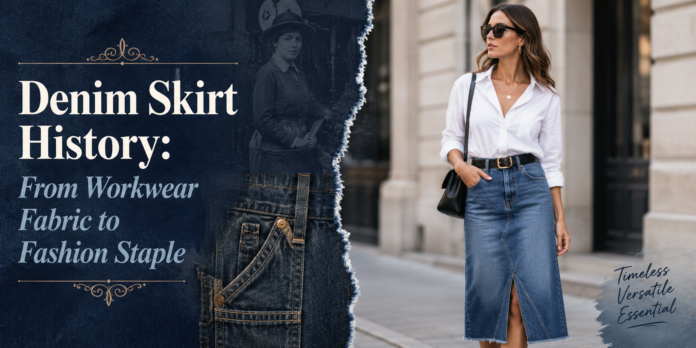
Denim skirt history starts with a strong fabric, not with a fashion trend. Denim was first loved because it was tough, long-lasting, and useful for hard daily work. Over time, the same fabric moved from mines, farms, workshops, and factory floors into city streets, schools, music culture, and modern wardrobes. The denim skirt became popular because it joined comfort, durability, and style in one simple garment. It could look casual, feminine, rebellious, modest, practical, or polished depending on its length, cut, wash, and styling. This is why denim skirt history is not only about clothing. It is also about how women’s fashion changed, how workwear became streetwear, and how one fabric kept finding new meaning in every generation.
Denim skirt history begins with workwear fabric
Denim skirt history is closely connected to the rise of denim as a workwear fabric. Denim became common because it could handle dirt, movement, friction, and repeated washing better than many lighter fabrics. Workers needed clothing that did not tear easily, and denim answered that need. Before denim skirts became a fashion item, denim was mostly linked with jeans, overalls, jackets, and uniforms used by laborers. The fabric had a plain purpose: protection and strength. When designers and everyday people later used denim for skirts, they carried that same practical value into women’s clothing. This is why the denim skirt never felt too delicate or limited. It had the strength of workwear but the shape of a classic skirt. In simple words, denim skirt history began when a hard-working fabric slowly became useful for more than hard work.
Why denim became trusted before it became stylish
The early success of denim came from its weave, weight, and rough use. Denim is usually made with a strong twill weave, which gives it better resistance against wear than many plain cotton fabrics. That strength helped denim become trusted before it became stylish. People wore denim because it lasted, not because it looked fashionable. This matters in denim skirt history because the skirt version inherited the same trust. A denim skirt could be worn many times without feeling fragile. It worked for walking, traveling, shopping, school, and daily chores. Unlike silk, satin, or very fine cotton skirts, denim skirts did not demand special care all the time. They felt practical and relaxed. Over time, this practical image became part of their charm. The denim skirt looked casual, honest, and easy to wear, which helped it move from utility clothing to everyday fashion.
How women’s fashion changed the denim skirt
Denim skirt history became more interesting when women’s fashion started moving toward comfort and freedom. In earlier fashion periods, women’s skirts were often formal, structured, or made for a narrow social setting. Denim changed that feeling. A denim skirt gave women something that looked simple but could handle real life. It did not need to be saved for special occasions. It could be worn during the day, styled with basic shirts, paired with jackets, or used as a casual outfit base. As more women entered public workplaces, schools, and active daily routines, clothing also had to become more useful. Denim skirts matched that shift because they were stronger than many fashion skirts but softer in appearance than work pants. This is why modern denim skirts still carry both sides of their past: practical workwear and easy fashion.
Denim skirt history and the rise of casual style
Denim skirt history grew faster when casual clothing became accepted in daily life. In the middle of the twentieth century, denim was no longer seen only as a worker’s fabric. It became linked with youth, music, travel, cinema, and relaxed living. Jeans became a sign of comfort and independence, and denim skirts followed the same path. A denim skirt allowed people to enjoy the look of denim without wearing jeans. It was also easier to style across different seasons. In warm weather, it could be worn with a light top and sandals. In cooler weather, it could be worn with boots, tights, sweaters, or jackets. This flexibility helped the denim skirt become a fashion staple. It was not tied to one age, one body type, or one trend. It kept changing while still feeling familiar.
Long denim skirts made denim more modest and wearable
One important part of denim skirt history is the long denim skirt. Longer denim skirts made the style feel more modest, mature, and easy to wear for many women. A long denim skirt could offer coverage without looking too formal. It also gave denim a softer and more graceful shape. In many wardrobes, long denim skirts became a good choice for people who liked denim but did not want the fitted look of jeans or short skirts. They worked well with tucked shirts, loose blouses, cardigans, long coats, and simple footwear. The longer shape also helped denim skirts move into wider style groups, including modest fashion, casual office looks, and everyday street outfits. Today, a long denim skirt still shows how denim can be practical, stylish, and comfortable at the same time.
Mini denim skirts brought youth energy into the story
The mini skirt changed fashion by making clothing feel younger, bolder, and more playful, and denim soon became part of that change. This is a major turning point in denim skirt history because the denim mini skirt gave the strong fabric a fresh and youthful shape. It was casual, easy to move in, and simple to style with T-shirts, crop tops, sweaters, sneakers, or boots. The denim mini skirt became popular in music scenes, street fashion, summer outfits, and weekend wear because it felt less formal than many other skirts. It also gave denim a fun identity beyond workwear and jeans. A denim mini skirt shows how one fabric can move from tough labor clothing to a confident fashion piece without losing its casual character.
How black denim added a sharper modern look
Black denim added another chapter to denim skirt history because it made the denim skirt look sharper and more modern. Blue denim often feels classic, relaxed, and vintage, while black denim can feel cleaner, dressier, and more urban. A black denim skirt can be styled with white shirts, knit tops, leather jackets, blazers, boots, or simple sneakers. This made the denim skirt useful for people who wanted the comfort of denim but a more polished look. Black denim also helped the skirt move beyond summer fashion. It worked well in autumn and winter outfits because darker colors are easier to pair with coats, tights, and heavier layers. This change proves that denim skirt history is not stuck in one look. The skirt kept becoming new through color, wash, length, and styling.
Built-in style points that made denim skirts last
The reason denim skirts stayed popular is not only history; it is also daily usefulness. Their strongest style points are simple and easy to understand:
- Denim skirts are strong enough for regular wear.
- They can be styled in casual, modest, vintage, streetwear, or smart-casual outfits.
- They come in many lengths, including mini, knee-length, midi, and long.
- Blue denim gives a classic look, while black denim gives a cleaner modern look.
- A denim skirt works with sneakers, sandals, boots, flats, and heels.
- The fabric becomes softer with wear, which makes it more comfortable over time.
These points explain why denim skirt history continues today. The skirt is not popular because of one trend only. It is popular because it solves a real wardrobe need.
Denim skirts in modern fashion
Modern denim skirt history is about choice. Today, denim skirts are available in straight cuts, A-line cuts, button-front styles, slit styles, distressed looks, washed finishes, dark colors, stretch blends, and raw hems. Some people wear them for vintage style, while others wear them for clean everyday outfits. A denim skirt can look relaxed with a plain T-shirt, more polished with a tucked blouse, or bold with a fitted jacket. This range is the reason it stays useful across fashion seasons. Trends may change, but the basic denim skirt keeps coming back because it is easy to understand and easy to wear. It also suits many personal styles. Someone can wear it in a soft feminine way, a streetwear way, a modest way, or a simple daily way.
Why denim skirt history still matters today
Denim skirt history still matters because it shows how fashion can come from real life. Many famous garments started as useful clothing before they became stylish, and the denim skirt is one of the best examples. It took the strength of denim, the shape of a skirt, and the freedom of casual fashion, then turned them into one lasting wardrobe item. The denim skirt has survived because it adapts. It can be long or short, blue or black, fitted or relaxed, simple or detailed. It works for people who want comfort, durability, and style without too much effort. That is why denim skirt history is more than a story about fabric. It is the story of how practical clothing became a fashion staple that still feels fresh today.
Conclusion
Denim skirt history shows a clear journey from workwear fabric to modern fashion staple. Denim began as a strong fabric made for hard use, but people slowly discovered that its strength could also support everyday style. The denim skirt became popular because it balanced comfort, durability, and fashion in a way few garments can. It could be modest, bold, casual, vintage, or modern depending on how it was designed and worn. From long denim skirts to mini styles and black denim versions, each change added a new chapter to the story. The reason denim skirt history continues is simple: the denim skirt still works in real life. It is easy to wear, easy to style, and strong enough to stay relevant across generations.
FAQs
What is denim skirt history mainly about?
Denim skirt history is mainly about how denim moved from tough workwear fabric into women’s everyday fashion. The skirt became popular because it offered strength, comfort, and style in one simple garment.
When did denim skirts become popular?
Denim skirts became more popular when casual fashion grew and denim moved beyond workwear. They gained attention through youth culture, street fashion, music influence, and everyday styling.
Why are denim skirts still fashionable?
Denim skirts are still fashionable because they are easy to style, durable, comfortable, and available in many lengths and colors. They work with many outfits and seasons.
Are long denim skirts part of denim skirt history?
Yes, long denim skirts are an important part of denim skirt history because they made denim skirts more modest, wearable, and suitable for many daily wardrobes.