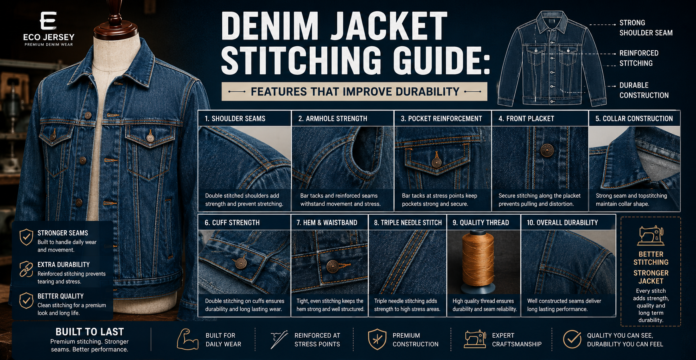
Although denim jackets appear tough due to the fabric, their durability is actually due to the stitching. Denim jacket stitching combines the panels, collar, sleeves, cuffs, hems, and pockets. Weak stitching means that the jacket will open at the seams even if the fabric looks perfectly fine. Strong stitching makes the jacket withstand movement, washing, stretching, and layering. For both the brands and the buyers, this detail is very important, for customers easily identify broken seams, loose threads, and poor finishing. Thus, a jacket looks nice, the fabric needs to be strong, coupled with strong threads, careful quality checking, and clean seams.
Denim Jacket Stitching Basics
Denim jacket stitching is the sewing that attaches important parts of a jacket and reinforces seams. This includes stitching the seams of the jacket’s sleeves and shoulders, the armholes, the pockets, the placket, the waist, the cuffs, and the collar. Each of these areas experiences a different kind of stress and strain. Shoulders experience constant movement while the seams of the sleeves bending and pulling will cause stress in different areas. A category like the denim jackets collection can include many jacket styles, so clear stitching details help buyers compare quality more easily. When stitching is planned properly, the jacket keeps its shape longer and gives better value to the customer.
Shoulder Seams for Long-Term Strength
One part of denim jacket stitching that deserves special attention is shoulder seams. They experience stress and pull from the weight of the jacket. Jackets are pulled and stretched at the shoulders, often from repeated use. Tearing weak seams will only be a matter of time. Good shoulder stitching looks straight, tight, and even. There should be no bulk, but the seam should feel secure. Reinforced shoulder seams are even stronger stitching. Shoulder seams affect how a jacket fits, and stronger shoulder seams create a more comfortable jacket. Good shoulder stitching is a sign of good jacket construction.
Armhole and Sleeve Stitching
An armhole and sleeve require different kinds of movement, but the movement is constant. The stitching of jackets in that area must allow for flexible movement. Reaching, Driving, and carrying all put pressure on the seams of the jacket. Weak stitching in any area can break, but weak stitching in the armhole will break the fastest. A quality jacket will have a smooth attachment of the arm sleeve with even stitching and enough allowance for movement. The seams on the inside of the armhole should not feel rough. This invokes the need for comfort and strength in denim jacket stitching. When the stitching of the jacket is clean, it also gives the jacket a better shape.
Pocket Stitching and Bar Tacks
Pockets are not just design features on denim jackets, they’re very useful. Denim jacket pockets get a lot of use and their stitching around the chest and side pockets should be tough. Bar tacks are tight mini stitches that secure corners to prevent ripping. They add structure to the fabric where constant pressure is exerted. Weak corners can cause the edges of pockets to begin to open. A strong denim jacket will have neat topstiching and good reinforcements for pockets. Strong pockets not only make the jacket practical, but also help the jacket useful, and clean for a long time.
Button Placket and Front Opening
The front opening is used every time the jacket is worn, so it needs careful sewing. Denim jacket stitching on the button placket should keep the front straight and stable. Buttons, buttonholes, and the placket area face pulling during opening and closing. For everyday styles like a mens denim jacket, this area must look clean and feel strong because it affects both appearance and function. If the placket is poorly stitched, the front can twist or lose shape. Strong front stitching improves durability and gives the jacket a better finished look.
Collar Stitching and Shape Holding
The collar is one of the most prominent features of a denim jacket. The stitching along the collar should be neat and sturdy. Lack of collar structure leads to curling or sitting unevenly. Collar seams should sit evenly along the neckline and shoulders. Stitching also helps a jacket retain structure. Brands should pay attention to the finishing of jackets because it is the first feature seen in product photos. A collar should be neat and fitting, and a jacket should retain structure over time.
Cuff and Hem Stitching
Cuffs and hems experience a lot of stress and friction. A good denim jacket has stable and secure stitching on the cuffs. The bottom hem of the jacket should remain flat and even after constant wear. Without good stitching on the cuffs, the edges will fray. A weak bottom hem will mean the jacket will look old quickly. Denim jackets will often lose their shape over time. Denim jacket stitching on cuffs and hems will help maintain a denim jackets outline. These areas, while small, help improve long-term durability and the jackets overall appearance.
Simple One-Line Stitching Checks
These simple checks make denim jacket stitching easy for buyers to understand before choosing a product.
- Check shoulder seams because they should look straight and secure.
- Check armholes because they should support movement without pulling.
- Check pocket corners because bar tacks should be tight and neat.
- Check the front placket because it should stay flat and strong.
- Check collar stitching because it should hold shape after washing.
- Check cuffs because sleeve edges should not loosen quickly.
- Check loose threads because too many loose ends show weak finishing.
These one-line checks help customers understand denim jacket stitching and judge jacket quality without needing factory knowledge or hard garment terms.
Lining and Heavy Jacket Stitching
Denim jackets sometimes have additional layers. Therefore, stitching becomes vital. Denim jacket stitching for jackets that are lined must hold both the outer denim and the inner layer of the jacket without making the jacket difficult to wear. A product like a sherpa lined denim jacket needs strong sewing because the lining adds warmth, thickness, and extra weight. The seam must manage both materials properly. If the lining is poorly attached, it can shift, bunch, or pull inside the jacket. Good lining stitching improves comfort, warmth, shape, and durability. It also gives the jacket a more premium feel.
Final Difference Between Weak and Durable Stitching
Weak stitching may appear fine when the denim jacket is new. However, stitching that is weak will cause problems during washing, after the fabric is stretched, and through normal daily movement. Weak stitching almost surely means that stitching is weak across areas of the denim jacket such as the pockets, collar, cuffs, and the jacket’s opening. Weak stitching offers no protection from damage to the denim jacket and allows the fabric to be quickly deformed beyond repair. Clothing brands will see stronger sales/stronger customer trust, fewer complaints, and higher product value with better sewing. Strong denim jackets are not made only from strong fabric.
FAQs
What is denim jacket stitching?
Denim jacket stitching means the sewing used to join and strengthen jacket parts such as shoulders, sleeves, collar, pockets, cuffs, and hems.
Why is denim jacket stitching important?
It is important because strong stitching protects seams, stress points, and pockets from tearing during daily wear, washing, and movement.
Which stitching areas should buyers check first?
Buyers should check shoulder seams, armholes, pocket corners, button placket, collar, cuffs, and bottom hem before choosing a denim jacket.
Are bar tacks important in denim jackets?
Yes, bar tacks are important because they reinforce high-stress points like pocket corners and stop the fabric from tearing quickly.
How can brands improve denim jacket durability?
Brands can improve durability by using strong thread, reinforced seams, neat topstitching, secure bar tacks, and clean quality control.