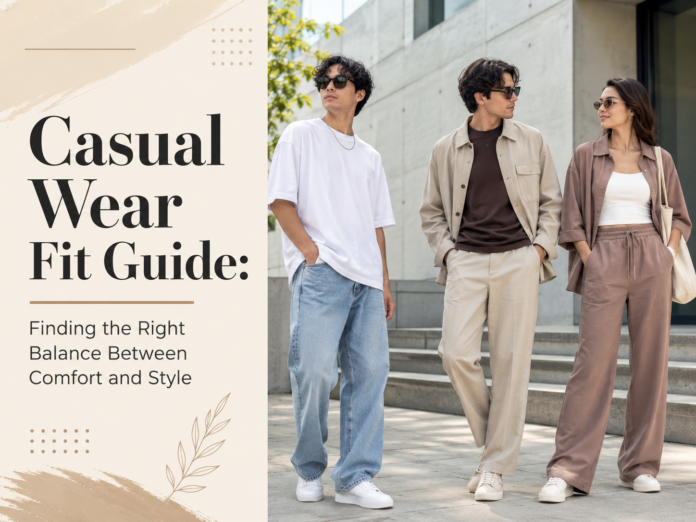
Casual wear is the clothing we choose when we want to feel relaxed, move easily, and still look presentable. It can include t-shirts, cardigans, jackets, coats, tracksuits, and everyday tops. A good casual wear fit guide helps you understand how each item should sit on your body without feeling too tight or too loose. The main goal is simple: your outfit should feel comfortable, but it should also look neat. When casual clothes fit well, you do not need to keep fixing them again and again during the day. For anyone building a simple wardrobe, starting with a wide casual clothing range like casual wear makes it easier to compare different styles and understand what works best for your body shape.
Why Fit Matters More Than Trend
Trends change quickly, but good fit always stays important. A shirt can be expensive, stylish, or popular, but if it does not fit your body properly, it will not look right. This is why a casual wear fit guide is useful for both men and women. It teaches you to focus on shoulder shape, sleeve length, body width, and overall comfort before following a trend. For example, oversized clothing can look stylish, but it should still look intentional. Slim fit clothing can look sharp, but it should not stop you from moving. The best casual outfit is not always the newest style. It is the one that feels easy, looks clean, and matches your daily routine.
Casual Wear Fit Guide for Better Comfort
A casual wear fit guide should always begin with comfort because casual clothing is made for real life. You may wear it while walking, working, traveling, shopping, meeting friends, or relaxing at home. If your clothes pull at the shoulders, feel tight under the arms, or press around the waist, they are not the right fit. At the same time, clothes that are too loose can look messy and make your body shape disappear. The best balance is a natural fit. Your t-shirt should fall smoothly, your cardigan should layer easily, and your jacket should close without pulling. Comfort does not mean careless dressing. It means your clothes support your movement and still look smart.
Choosing the Right T-Shirt Fit
T-shirts are the base of many casual outfits, so their fit matters a lot. A good t-shirt should sit properly on the shoulders, with the shoulder seam close to the edge of your shoulder. The sleeves should not be too tight, and the body should have enough room to move without looking baggy. A simple style such as crew neck tees is useful because it can be worn alone or under jackets, cardigans, and coats. This casual wear fit guide suggests choosing t-shirts that feel soft, breathable, and easy to layer. If the t-shirt is too long, it may look untidy. If it is too short, it may rise when you move. A balanced length usually ends around the upper hip.
Finding Balance in Loose and Relaxed Fits
Loose clothing can be very comfortable, but it needs balance. If everything in your outfit is oversized, the look may feel heavy. If everything is tight, the outfit may feel uncomfortable. A casual wear fit guide helps you mix relaxed pieces with cleaner shapes. For example, if you wear a loose cardigan, you can pair it with a regular fit tee. If you wear wide trousers, a neat top can make the outfit look more balanced. Relaxed fit should look easy, not careless. The fabric should fall naturally instead of bunching in too many places. When loose casual wear is chosen carefully, it gives comfort, confidence, and a modern everyday style.
Layering Casual Wear the Right Way
Layering is an important part of casual dressing, especially when the weather changes. A casual wear fit guide can help you understand how layers should work together. The first layer should be light and smooth, such as a t-shirt. The middle layer can be a cardigan, sweatshirt, or light jacket. The outer layer should have enough room to cover the inner layers without feeling tight. If the outerwear is too small, the sleeves may pull and the front may not close properly. A structured piece like a classic trench coat can make casual outfits look more polished while still keeping the outfit comfortable and wearable.
One Simple Fit Checklist
A casual wear fit guide becomes easier when you check a few basic points before wearing or buying any item. These points help you judge the fit quickly, even if you are not a fashion expert.
- Shoulder seams should sit close to your natural shoulder line.
- Sleeves should allow easy arm movement.
- The chest area should not pull or feel tight.
- The waist should feel relaxed but not shapeless.
- The length should match the clothing type and your height.
- Fabric should fall smoothly without too many wrinkles.
- You should be able to sit, walk, and stretch comfortably.
- The outfit should look neat from both front and back.
Matching Style With Body Shape
Every person has a different body shape, so one fit does not suit everyone. This is why a casual wear fit guide should not force one rule on all people. Some people look better in regular fit t-shirts, while others prefer relaxed or slightly oversized styles. Some people like longer cardigans because they create a soft shape, while others prefer shorter jackets because they make the body look balanced. The goal is not to hide your body. The goal is to choose clothes that make you feel easy and confident. When you understand your body shape, shopping becomes simpler because you know what type of fit supports your natural look.
Fabric and Fit Work Together
Fit is not only about size. Fabric also changes how clothing looks and feels. A stiff fabric may hold shape better, but it may feel less relaxed. A soft fabric may feel comfortable, but it can stretch or fall differently on the body. A casual wear fit guide should always consider fabric weight, stretch, softness, and breathability. For daily wear, fabric should feel comfortable for many hours. A t-shirt with good drape can look cleaner. A cardigan with soft texture can feel warm without looking bulky. A jacket with structure can improve the outfit shape. When fabric and fit work together, casual clothing looks more natural and feels better.
Common Casual Wear Fit Mistakes
Many people choose casual clothes only by size label, but size labels can change from brand to brand. A medium in one item may feel like a large in another. This casual wear fit guide recommends checking the real fit instead of trusting the tag only. Another common mistake is buying clothes too tight because they look sharp in photos. In real life, tight casual wear can feel uncomfortable and limit movement. Some people also buy clothes too loose because they want comfort, but extra fabric can make the outfit look untidy. A better choice is to try movement tests. Raise your arms, sit down, walk, and check the mirror from different angles.
Conclusion
A good casual wear fit guide shows that comfort and style are not opposite things. You do not have to choose between feeling relaxed and looking smart. The right casual fit gives you both. Start with simple pieces, check the shoulders and sleeves, choose breathable fabric, and keep your outfit balanced. Your casual clothes should match your lifestyle, body shape, and daily comfort needs. When each piece fits naturally, even a simple outfit can look clean and confident. In the end, the best casual wear fit guide is about wearing clothes that help you move freely, feel good, and present yourself in a neat way every day.
FAQs
What is a casual wear fit guide?
A casual wear fit guide explains how casual clothes should fit your body. It helps you choose clothing that feels comfortable, looks neat, and allows easy movement.
Should casual wear be loose or fitted?
Casual wear should be balanced. It should not be too tight or too baggy. A regular or relaxed fit is usually best for daily comfort and clean style.
How do I know if a t-shirt fits properly?
A t-shirt fits properly when the shoulder seams sit near your shoulders, the sleeves feel comfortable, and the body is not too tight or too loose.
Why is fabric important in casual wear fit?
Fabric affects comfort, shape, and movement. Soft, breathable, and well-balanced fabric helps casual clothing fit better and feel easier to wear.