A corporate uniform does more than identify your team — it represents your brand every single day. Employees wear it for long hours across demanding environments, so comfort cannot be an afterthought. Choosing the best fabrics for corporate uniforms is one of the smartest investments a business can make.
The right fabric keeps employees comfortable, professional, and productive throughout the workday. Whether you’re outfitting an office team, a field crew, or a customer-facing workforce, fabric choice makes all the difference. Let’s break down what works best.
What Are the Best Fabrics for Corporate Uniforms?
The best fabrics for corporate uniforms are materials that balance comfort, durability, and professional appearance across long working hours. Unlike casual clothing, corporate uniforms need to maintain their structure and look sharp even after repeated wearing and washing.
The most commonly used best fabrics for corporate uniforms include cotton blends, polyester, wool, and technical fabric mixes. Each brings unique advantages depending on the work environment — and the smartest uniform programs combine them strategically across different uniform pieces.
Why It Matters — Key Benefits
Choosing the right fabric for corporate uniforms delivers real value for businesses and employees alike. Here’s why it matters:
- All-day comfort — The right fabric keeps employees comfortable through long shifts without causing irritation or discomfort.
- Professional appearance — Quality fabrics maintain their shape and structure, keeping uniforms looking sharp throughout the workday.
- Durability through heavy use — Performance fabrics withstand repeated wearing and washing without fading, pilling, or losing their form.
- Breathability in warm environments — Breathable fabrics regulate body temperature, keeping employees cool in warm offices or outdoor settings.
- Moisture management — Moisture-wicking materials keep employees dry and comfortable in physically demanding work environments.
- Easy care and maintenance — The right fabrics are simple to launder and maintain, reducing uniform upkeep costs over time.
- Brand representation — High-quality fabrics ensure uniforms always look presentable, reinforcing a professional brand image.
Cotton and Cotton Blends
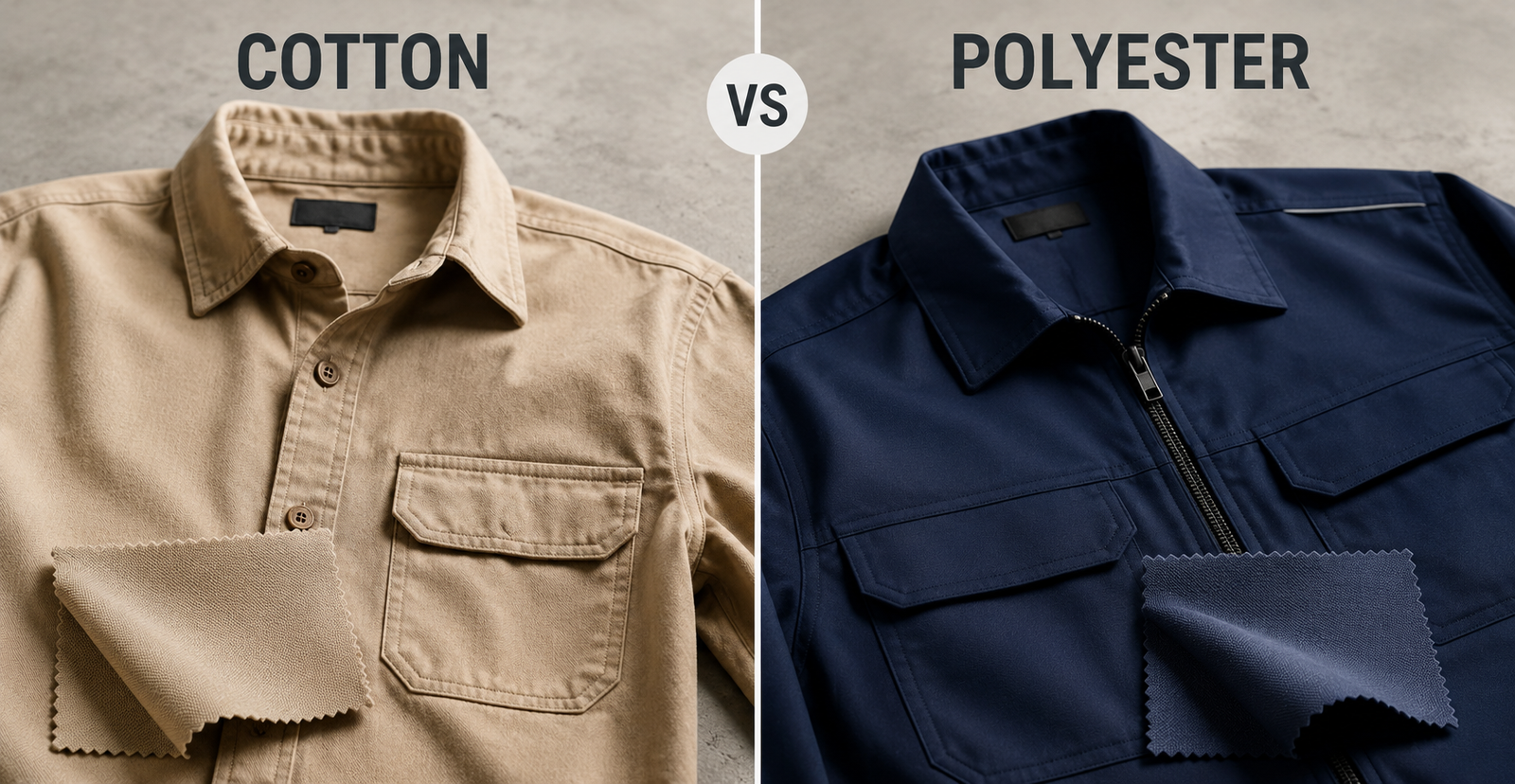
Cotton remains one of the most popular choices in best fabrics for corporate uniforms because of its natural breathability and soft feel against the skin. It works particularly well for office environments where comfort during long desk hours is a priority. Pure cotton uniforms feel comfortable and look professional but can wrinkle easily with extended wear.
Cotton-polyester blends address this weakness effectively. The polyester component adds wrinkle resistance and durability, while the cotton maintains breathability and softness. This blend is one of the most widely used fabric combinations for corporate shirts, trousers, and general office uniforms across industries.
Polyester and Technical Fabrics
Polyester is a go-to choice for more demanding corporate environments. It’s lightweight, durable, and highly resistant to shrinking and wrinkling — making it ideal for uniforms that need to look sharp all day with minimal maintenance. For businesses operating in physically active or outdoor settings, polyester blends offer the additional benefit of moisture-wicking performance.
Technical fabrics take this a step further. These engineered materials combine polyester with advanced fiber technology to deliver enhanced breathability, stretch, and durability suited to demanding workplaces. Industries like industrial workwear and oil and gas rely heavily on technical polyester fabrics to keep workers comfortable and protected through long, demanding shifts.
Wool and Wool Blends
Wool is a premium fabric choice for corporate uniforms that require a polished, formal appearance. It naturally regulates body temperature, keeping wearers comfortable in both warm and cool environments. Wool uniforms drape beautifully and hold their shape exceptionally well, making them a strong choice for customer-facing roles in banking, hospitality, and corporate services.
Wool blends — typically combined with polyester or nylon — offer the visual appeal of pure wool with added durability and easier care. These blends reduce the cost compared to pure wool while still delivering the professional appearance that formal corporate environments demand. For businesses investing in corporate uniforms, wool blends are a smart long-term investment.
Who Needs to Understand the Best Fabrics for Corporate Uniforms?
Understanding the best fabrics for corporate uniforms matters to a wide range of decision-makers. HR managers and procurement teams need this knowledge to source uniforms that keep employees comfortable and represent the company well across all departments. Businesses operating in specialized industries need fabric knowledge to meet both comfort and safety requirements.
Retailers and uniform suppliers benefit from understanding fabric performance to stock products that businesses genuinely want to buy. Apparel brands developing corporate uniform lines need this knowledge to create products that hold up to real workplace demands. Businesses requiring specialized workwear can explore options like high visibility workwear or waterproof workwear alongside standard corporate uniform fabrics.
Standards of Quality in Corporate Uniform Fabrics
Not every fabric that looks professional performs well under real workplace conditions. Quality best fabrics for corporate uniforms need to meet specific standards to deliver lasting value. Colorfastness is essential — uniforms should maintain their color consistently across every wash and every wear throughout the year.
Durability is equally critical. The fabric should resist pilling, fraying, and loss of structure even after frequent laundering. Comfort standards also matter — uniforms worn for eight or more hours a day need to breathe, flex, and feel comfortable without causing irritation. Businesses operating in regulated industries should also ensure fabrics align with relevant workwear safety standards to meet compliance requirements.
Why Choose Eco Jersey for Corporate Uniforms?
Eco Jersey is a specialist workwear manufacturer with deep expertise in sourcing and producing corporate uniforms built on the right fabrics. We help businesses find the best fabrics for corporate uniforms that match their industry, environment, and brand identity.
We offer full customization across every uniform piece — from fabric selection and color to logo placement and fit. Our manufacturing process maintains consistent quality across large bulk orders, ensuring every employee receives a uniform that looks and feels the same. We work with businesses across industries, from office environments to specialized field operations, delivering reliable timelines and professional results every time.
Conclusion
Choosing the best fabrics for corporate uniforms is about far more than appearance. It’s about keeping employees comfortable, maintaining a professional brand image, and ensuring uniforms last through the demands of real workplace environments.
At Eco Jersey, we combine fabric expertise with precision manufacturing to deliver corporate uniforms that perform as well as they look. Ready to outfit your team? Explore our corporate uniform options and get in touch with our team today.
FAQs
What is the most comfortable fabric for corporate uniforms?
Cotton-polyester blends are among the most comfortable choices for corporate uniforms. They combine the breathability of cotton with the durability and wrinkle resistance of polyester, making them ideal for long working hours across most industries.
Which fabric is best for corporate uniforms in hot environments?
Lightweight polyester or moisture-wicking technical fabrics work best in warm environments. They allow heat and sweat to escape quickly, keeping employees cool and comfortable through long shifts.
Are there specific fabric requirements for industrial or safety-focused corporate uniforms?
Yes. Industries like oil and gas, construction, and manufacturing often require fabrics that meet specific safety standards — including flame resistance and high visibility properties. It’s important to ensure your uniform fabric complies with relevant industry regulations.
How often should corporate uniform fabrics be replaced?
Most quality corporate uniforms last one to two years with regular use and proper care. Fabrics that pill, fade, or lose their structure significantly before this point are a sign of lower quality materials that need replacing sooner.