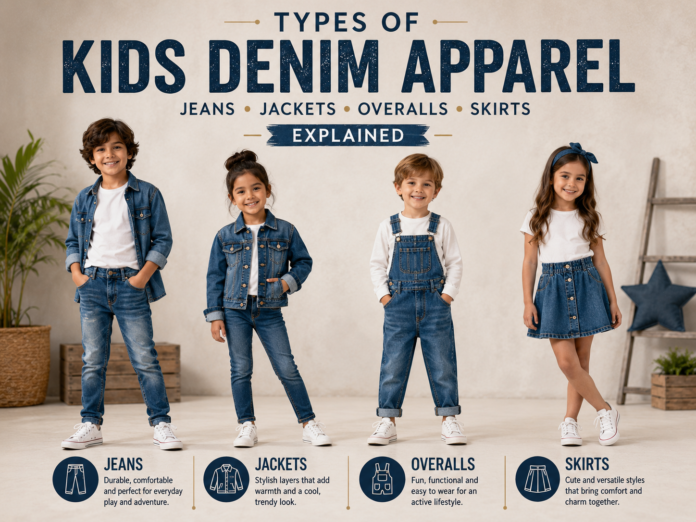
Choosing the right denim fabric is essential for comfort, durability, and flexibility in Types of Kids Denim Apparel. Brands must consider softness, movement, and wash resistance to ensure children stay comfortable while parents trust the product season after season. Poor fabric choices can lead to complaints, returns, and damage to a brand’s reputation in the kidswear market.
This guide will help you choose between the different types of denim fabrics for children’s clothing.
The fabric choice is more important in kids denim
Denim for children is subjected to demands that denim for adults does not. Children’s denim must be able to withstand climbing frames, soccer in the garden, and art classes.
Children’s skin, however, is much more sensitive than that of adults. The fabric may feel fine to adults, but it can be uncomfortable or scratchy to children. A child who is uncomfortable will not wear the garment no matter how nice it looks.
Parents wash their children’s clothes more often than they do. After ten washings, a kids denim fabric which fades badly or shrinks dramatically, or loses shape, is likely to cause complaints.
Fabric selection for kids denim is one of the first decisions that a brand must make before they begin any design work.
Stretch Denim
The most popular kids’ denim style is stretch denim. It has also become the predominant material for children’s shorts and jeans.
By adding elastane, typically between 2 and 4 percent of the fabric’s composition, a rigid denim becomes a fabric which moves with a child’s body. It means that jeans won’t limit movement when running, climbing or sitting cross-legged in a classroom. Shorts that do not bind or pull during active play. It means wearing a garment which is comfortable for a whole day of activities.
Stretch denim tends to recover shape better after washing than rigid jeans, so it can be washed more often before it shows the bagging or distortion that parents dislike.
Stretch denim, in particular for kids jeans shorts and trousers, is the best fabric to balance the aesthetics of traditional denim with functional requirements of active wear.
Soft Washed Denim
Even in lighter weights, rigid denim can be stiff and uncomfortable on sensitive skin. This is especially true for children. Soft-washed denim directly addresses this. The washing process softens the stiffness of the denim and gives it a more comfortable, supple handfeel. Children will tolerate this much better.
Soft-washed denim suits younger children better than stiffer fabrics. Denim is a great choice for overalls, and shirts which sit close to skin over a larger area.
Denim that has been heavily washed will have less fabric integrity, which can reduce its durability. The balance between structural strength and softness depends on the garment and age.
Lightweight Denim
The fabric weight, measured in ounces/square yard, has a significant impact on how kids denim feels and wears. Denim for adults is usually between ten and fourteen ounces. A lighter weight, typically between seven and nine ounces, is more practical for children’s clothing.
It’s easier to move around in lighter denim. Wearing lighter denim is easier for children, especially younger ones who are still learning to coordinate and develop strength. It dries quicker after washing, which is a benefit parents appreciate.
Lightweight denim is a great choice for kids’ denim jackets. It makes a big difference in comfort and wearability. A denim jacket that is heavy enough for an adult can be cumbersome to wear on a child. A jacket made of lighter denim that is well constructed will move freely and feel comfortable throughout the day.
Organic Denim
Denim is not an exception. Parents are becoming more concerned about the clothing their children wear. They are asking questions about chemical usage, fabric sourcing and environmental impact.
Organic denim, made from cotton grown without synthetic fertilizers or pesticides, addresses chemical concerns directly. Organic denim certified by GOTS provides independent verification of the fabric’s organic standards across the entire supply chain.
Organic fabric can be a significant and credible differentiator for brands who want to position their kids denim collection around sustainability credentials. This opens up retail channels, including premium independents and conscious lifestyle stores that require sustainable fabric.
A denim clothing manufacturer that has established sustainable fabric sourcing can provide certified organic options and the documentation that retailers and conscious parents increasingly demand.
Denim-Jersey Blend
A denim-jersey mix — also known as jegging fabric, jersey denim or denim jersey — is a combination of the appearance and comfort of denim with jersey knit’s stretch. This fabric looks similar to denim but is much softer and flexible on the skin.
It is popular with babies and toddlers, where woven denim may be too stiff or heavy. This fabric is also an excellent choice for denim trousers, especially in smaller sizes.
The limit is durability. They can lose their shape or develop holes more easily at stress points. They are better suited to garments for young children who grow out of clothing quickly and use cases with lower intensity than active older children.
How to test before approving any kids denim fabric
No matter which type of fabric you choose, testing is mandatory before mass production in children’s jeans. It’s more important to test children’s denim than adult clothing because poor fabric performance can affect the comfort and safety for a child.
The key tests for denim fabrics for children include the washability test, which includes a minimum thirty cycles of washing, checking for shrinkage and colour fade. Stretch recovery tests confirm that fabrics with elastane content return to their original size after use. Skin sensitivity tests — using OEKOTEX Standard 100 certification or an equivalent — confirm that the fabric does not contain harmful chemicals that can affect sensitive skin.
A denim private label manufacturer who has experience with children’s clothing will have tested fabrics and follow clear protocols. They will also be able provide documentation of certification that you, your retail partners, and customers can rely on.
Check out these key denim fabric properties before you approve any product:
- After thirty wash cycles, the shrinkage rate is calculated.
- Colour retention and fade consistency throughout the wash range
- Stretch recovery after repeated washing and use
- The resistance to pinning under frictional and active wear conditions
- Chemical safety certification for compliance with skin contact
How to match fabric to product type
Different denims for kids are made from different fabrics. By matching them correctly at the beginning, you can avoid costly development issues later.
Stretch denim with a weight of seven to nine ounces is the best choice for kids’ jeans and shorts. It offers the perfect balance between durability, comfort and movement. Lightweight denim jackets in the same weight range are more wearable than heavier fabrics. Soft washed denim is the perfect fabric for shirts and overalls. It provides comfort and flexibility that young children require. Denim-jersey mix is ideal for skirts of smaller sizes. It offers comfort and flexibility.
Organic certified stretch denim is ideal for brands that prioritize sustainability in their entire range. It combines the benefits of stretch and the certifications that conscious parents actively seek.
These decisions are made much more quickly and accurately by working with a denim manufacturer who is familiar with the different fabric types and weights and understands their performance in children’s clothing.
Conclusion
Fabric types of denim for children’s clothing are more diverse than many brands expect. Understanding the Types of Kids Denim Apparel helps brands choose the right fabric for comfort, durability, flexibility, and sustainability. Stretch denim works well for activewear, soft wash denim improves comfort, lightweight denim is ideal for layering and jackets, organic denim supports eco-friendly collections, and denim jersey is perfect for younger age groups.
It is important to choose a manufacturer who can test and source your product consistently, while also delivering it at the high quality that you expect.
Explore the range of kid denim manufacturing and find the best production partner for you.
FAQ
Which denim fabric is best for kids’ jeans?
The strongest option is stretch denim, in a weight of seven to nine ounces. It moves with the child and maintains its shape even after washing.
Why is lightweight denim better for children’s clothing?
It is easier to move around in lighter-weight denim, it is less physically demanding, and it dries quicker after washing. These are all advantages for active children’s wear.
What does denim-jersey fabric mean?
It is a fabric that has the appearance of denim and the softness and stretch of jersey knit. This fabric is popular with babies, toddlers and younger children who are looking for comfort and mobility.
Can organic denim be used on children with sensitive skin?
Organic denim that is GOTS certified is free of harmful chemicals and synthetic pesticides, which makes it an excellent choice for brands looking to appeal to parents who have sensitive children.