The right pair of joggers will make or break any workout. Your fabric choice is more important than you might think, whether you are hitting the gym or going on a run. Since years, the debate between synthetic joggers and cotton has raged. The two fabrics are different, and each has its own strengths.
What Makes Cotton Joggers Special?
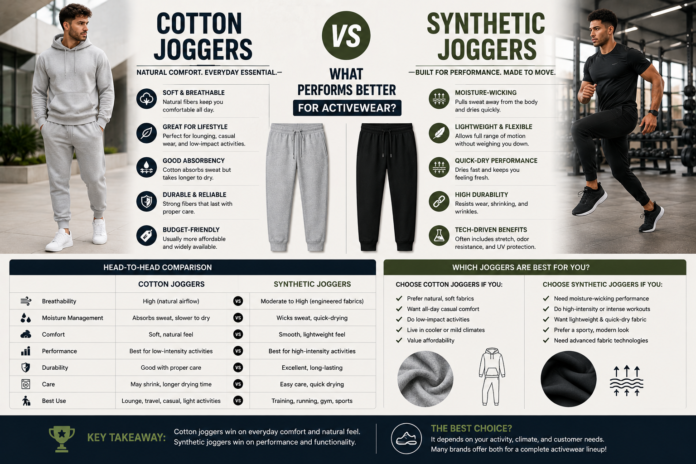
Cotton is such an amazing fabric. It’s soft, convenient to wear, and the breathability of cotton allows the body to cool and makes sweating a lot more manageable. This makes it great to wear during low-intensity activities, not to mention cotton absorbs sweat and keeps you feeling fresh.
Cotton does have its downsides. The first is that during more intense activities, it gets heavy and clingy. This is because it absorbs a lot moisture. This fabric isn’t ideal when you need freedom of movement or need the fabric to dry quickly.
Good uses for cotton joggers are for:
- Casual everyday clothing
- Light workouts or warm-ups
- Yoga and movement that is low-impact
- People who have sensitive skin
If you’re sourcing comfortable, everyday styles, explore our range at joggers manufacturer to find the right fit for your brand.
Why Synthetic Joggers Dominate Performance Activewear?
Synthetic fabrics like polyester, nylon, and spandex blends are built for performance. They are lightweight, moisture-wicking, and quick-drying. When you sweat hard, synthetic joggers pull moisture away from your skin and dry fast — keeping you comfortable throughout your session.
Synthetic joggers also offer better stretch and shape retention. They move with your body without losing structure. That’s exactly why most gym wear manufacturer brands rely heavily on synthetic blends for their performance lines.
Additionally, synthetic fabrics work perfectly for compression styles. If you’re building a range of compression wear for your brand, synthetic is the go-to choice every time.
Cotton Joggers vs Synthetic Joggers: Head-to-Head
| Feature | Cotton | Synthetic |
|---|---|---|
| Breathability | High | Medium–High |
| Moisture Wicking | Low | High |
| Drying Speed | Slow | Fast |
| Stretch & Flexibility | Low–Medium | High |
| Comfort for Casual Wear | Excellent | Good |
| Performance in Intense Workouts | Average | Excellent |
Which One Should You Choose for Your Activewear Brand?
The answer depends on your target customer and their lifestyle. If your audience trains hard and sweats a lot, synthetic joggers are the smarter pick. If your brand focuses on casual, lifestyle-driven activewear, cotton blends give that soft, relaxed feel your customers love.
Many successful activewear brands today offer both options. As a reliable activewear manufacturer, we help brands customize both cotton and synthetic joggers based on their specific needs, fits, and performance goals.
If your line also includes other pieces like tank tops or fitness apparel, matching fabric choices across your collection creates a more consistent and professional brand identity.
Conclusion
Joggers should be made from both cotton and synthetic fabrics. Cotton joggers should work for everyday use. It should be comfortable and flexaable. When you need to push your self and do a rigorous work out, synthetic joggers should be your go to. The best brands have both cotton joggers and synthetic joggers. Knowing the difference between cotton and synthetic joggers helps design a line of activewear that performs and meets customer satisfaction.
FAQs
Are cotton joggers good for gym workouts?
Cotton joggers are fine for light gym sessions but struggle during intense workouts as they absorb sweat and become heavy.
Do synthetic joggers cause skin irritation?
Quality synthetic fabrics are generally skin-friendly. Choosing moisture-wicking blends reduces irritation significantly during workouts.
Which fabric is better for yoga — cotton or synthetic?
Cotton works well for gentle yoga. However, synthetic blends offer better stretch and moisture control for dynamic yoga styles.
Can I mix cotton and synthetic joggers in one activewear collection?
Absolutely. Offering both gives your customers options for casual wear and performance training, strengthening your overall brand range.