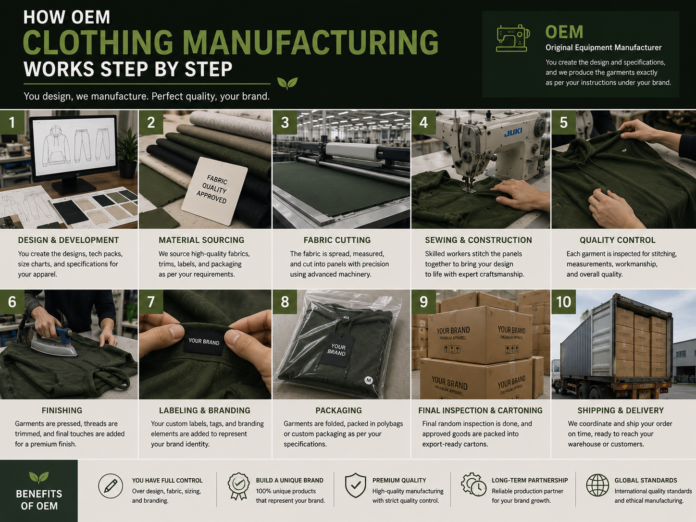
OEM clothing manufacturing offers a way to completely control your designs and what’s in your clothing line. Factories construct your designs using your sketches and specifications. There are multiple steps to OEM manufacturing that are not needed with ready-made clothing. However, those steps help build more brand value, and partners like ECO JERSEY help you move smoothly through them.
Create Your Design Concept
Creating your own designs and sketches is how OEM clothing manufacturing starts. OEM sketches are more than just images as they combine shapes of necklines and pockets. Consider using an app or a sketchpad. Then select a color palette and the aesthetic to help build the mood for your collection as the idea will help factory workers stay on course.
Build Detailed Tech Pack
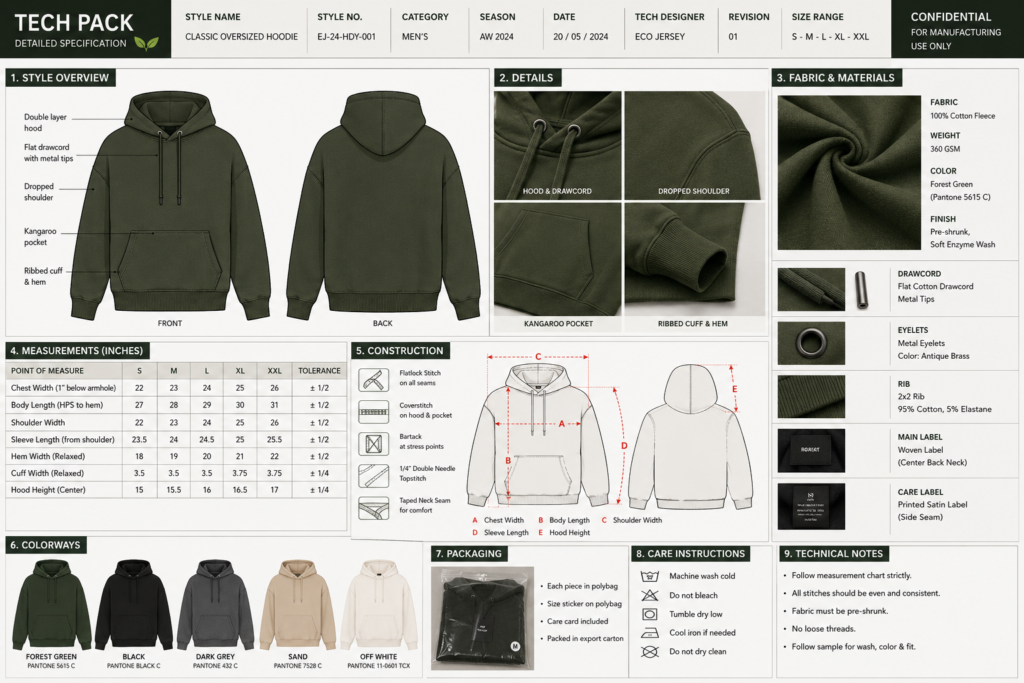
The next step of how OEM clothing manufacturing works is creating a detailed tech packs. Tech packets must include everything specific to the design like the weight of fabric along with the type of stitches and seams, as well as the measurements. For the factory to build a design, it must be a blueprint to the design. One of the ways you can organize your tech packet is through the use of Tec packer.
Source Fabrics and Materials
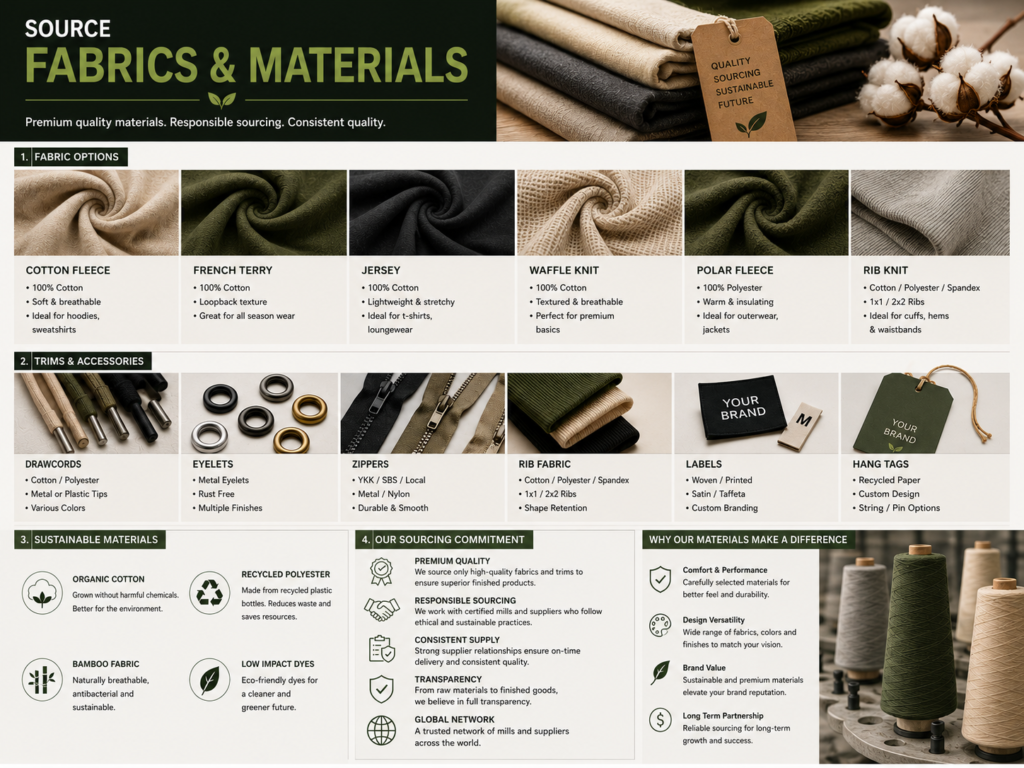
To fully bring your OEM vision to life, fabric must be chosen. Swatches for the fabrics must first be ordered and then tested yourself as cotton and blends stand to create a large amount of performance. Factors like softness, stretch, and how well the fabric holds up in the wash to prove its reliability before a bulk order can be placed. ECO JERSEY has always suggested reliable sources and having them improves quality time and again.
Choose Your OEM Factory Partner
Choose factories that understand how OEM clothing manufacturing works. Look at their previous work and who their clients were. Ask what machines are best suited for your style. If you need to hem a pair of activewear, for example, you need a coverstitch. It’s also important to try and visit or video call to see manufacturing in real time. Great partners are willing to talk to you every day.
Make First Sample Garments
These prototypes are the perfect example of how OEM clothing manufacturing works. Factories will use a tech pack to cut and sew your very first pieces. It’s important to try the samples and check what needs falling right. For example, the sleeves may need to be shorter to avoid riding. This is a great time to test out some washes to check for shrinkage.
Approve and Refine Samples
When looking at samples of how OEM clothing manufacturing works, it’s important to review everything to call out every little flaw, like uneven collars or loose threads. Most factories will accept these sketches, so it’s important to send them quickly. To get the perfect sample, you must repeat the process as many times as needed. This step is important to avoid batch disasters.
Final Pre-Production Approval
Before how OEM clothing manufacturing works ramps up, check that the color matches in different lighting. You should check that all measurements match your specifications. This is the last time you will have to approve the label, tags, and packaging. ECO JERSEY provides great service for top quality products. If you need a change, you will need to start again from step one.
Full Production Run Begins
After 8 steps in how OEM clothing manufacturing works comes the factory phase. Lines are set up to cut hundreds of pieces and sew them together in an assembly style. The quality team checks every tenth piece to keep standards high. All reports show your production progress, which takes 2 – 6 weeks.
Quality Control and Final Inspection
Final good inspections are part of how OEM clothing manufacturing works. Third parties inspect and measure garments to check the prints, threads, and hardware. Bad batches are rejected. Garments packed in your labels mean your customers only get the best.
Shipping and Delivery
How OEM clothing manufacturing works helps with the easy part, the deliveries. All goods are securely packed, and you can track everything from when it leaves the factory to when it arrives at your business. All customs documents are pre-filled and signed. The factories deliver an exact shipment, so your designs arrive lawfully.
Conclusion
How OEM clothing manufacturing works encompasses everything from sketches to shipping, enabling a brand to create a unique collection. Careful hiring, especially ECO JERSEY, makes it easy and ensures your designs are perfect when they reach your customers. Start your OEM journey to get products and designs in record time.
FAQs
How long does the full OEM process take?
4-6 weeks from first sketch to delivery typically.
What exactly goes in a tech pack?
Every tech pack needs to include materials, construction details, size specifications, and the measurement specs.
Why make multiple samples?
This helps catch any fit issues and helps refine any details prior to a large production run.
Can small brands use OEM manufacturing?
Absolutely, small brands should try working with a lot of different minimum partners which helps in doing initial runs and tests.
What’s the biggest OEM advantage?
With OEM manufacturing, brands have total design control which helps in creating unique company styles.