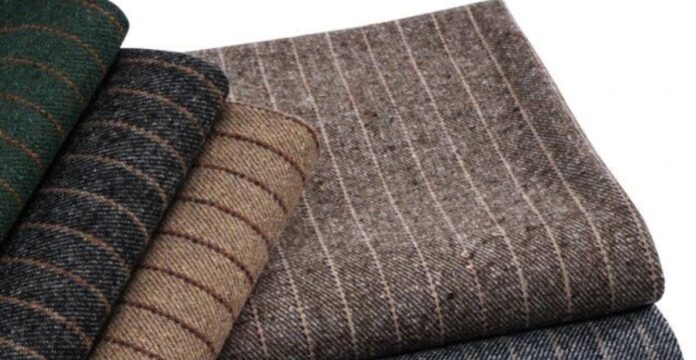
Cashmere-wool fabric blends are one of the most popular textiles used in fashion and textiles. The material combines the softness and durability of cashmere and the warmth and durability of wool to create a practical and elegant fabric. Designers, clothing brands and consumers are increasingly choosing this fabric to create premium garments.
Cashmere-Wool Blend Fabric mixes offer the best in both worlds. Cashmere can be extremely soft, lightweight and durable. Wool is slightly coarser but strong and resilient. Blending these fibers produces a fabric that is comfortable, yet strong and affordable.
This guide will cover everything you need to know about the Cashmere-Wool Blend Fabric, its benefits, uses, advantages, and care tips. You will understand by the end why this fabric is a fashion staple.
What is Cashmere-Wool Blend Fabric?
A cashmere-wool fabric is made by combining fibers of cashmere and fibers of sheep wool. The manufacturer will determine the percentage of each fiber.
The blend ratio can range from:
- Cashmere and wool blend
- Cashmere and wool blend of 30-50%
- Blends of higher luxury with 60% or more Cashmere
Cashmere-Wool Blend Fabric is soft and luxurious, so the more cashmere the fabric contains, the softer it will be. Wool, on the other hand, ensures durability, flexibility, and structure.
This blend also allows for fabrics to be produced that are both high-quality as well as more affordable than pure Cashmere.
Cashmere and wool fibers: Their origins
Understanding the origins and characteristics of the fibers can help explain why the blend is so successful.
Cashmere Fiber
Cashmere is made from the undercoat of goats. It is mainly found in:
- Mongolia
- China
- Afghanistan
- Iran
- Northern India
These goats produce an ultra-fine layer of insulation during the winter. The fibers are then collected by combing or shaving.
Cashmere is a rare and expensive fiber. Blending cashmere with wool makes this luxurious fiber more affordable.
Wool Fiber
Wool comes from sheep. It is the most popular natural fiber in the world. Wool fibers are more plentiful and stronger than cashmere.
Wool is also excellent for its insulation, flexibility, and moisture wicking qualities. It is therefore a great companion for cashmere.
Cashmere-Wool Blend Fabric: How it is Made
Cashmere-Wool Blend Fabric production involves several steps. The final fabric is soft, durable, and of high quality.
1. Fiber Collection
Cashmere fibers come from goats first, and wool fibers from sheep. Both fibers must be carefully sorted in order to remove any impurities.
2. Cleaning and Dehairing
The Cashmere-Wool Blend Fabric are then cleaned to remove grease, dirt and coarse hair. The process of dehairing is required for cashmere, as it separates the fine fibres from the rough guard hairs.
3. Fiber Blending
The fibers are then blended in the ratio desired. It is important to ensure even distribution of fibers throughout the fabric.
4. Spinning Yarn
The Cashmere-Wool Blend Fabric will then be spun into yarn. Cashmere and wool are both softened by using advanced spinning techniques.
5. Weaving or knitting
The yarn is then knitted or woven into fabric. Different weaving techniques produce different textures and weights that are suitable for various garments.
6. Finishing processes
Final finishing treatments, such as brushing or steaming the fabric, can enhance its softness.
Cashmere-Wool Blend Fabric: Key Characteristics
Cashmere-Wool Blend cashmere Fabric are highly prized because they offer multiple benefits. Here are some of its most important characteristics.
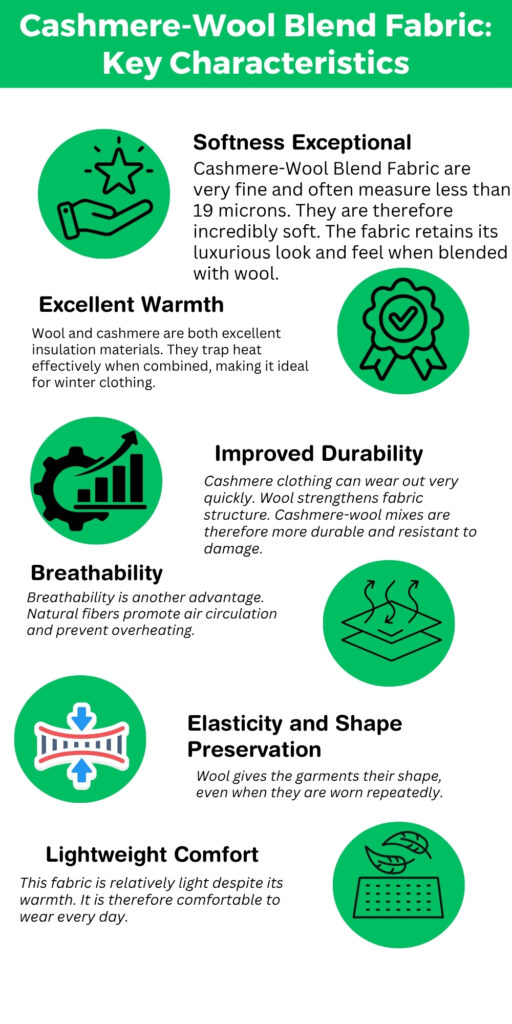
1. Softness Exceptional
Cashmere-Wool Blend Fabric are very fine and often measure less than 19 microns. They are therefore incredibly soft. The fabric retains its luxurious look and feel when blended with wool.
2. Excellent Warmth
Wool and cashmere are both excellent insulation materials. They trap heat effectively when combined, making it ideal for winter clothing.
3. Improved Durability
Cashmere clothing can wear out very quickly. Wool strengthens fabric structure. Cashmere-wool mixes are therefore more durable and resistant to damage.
4. Lightweight Comfort
This fabric is relatively light despite its warmth. It is therefore comfortable to wear every day.
5. Breathability
Breathability is another advantage. Natural fibers promote air circulation and prevent overheating.
6. Elasticity and Shape Preservation
Wool gives the garments their shape, even when they are worn repeatedly.
Cashmere and Wool Blend Fabrics
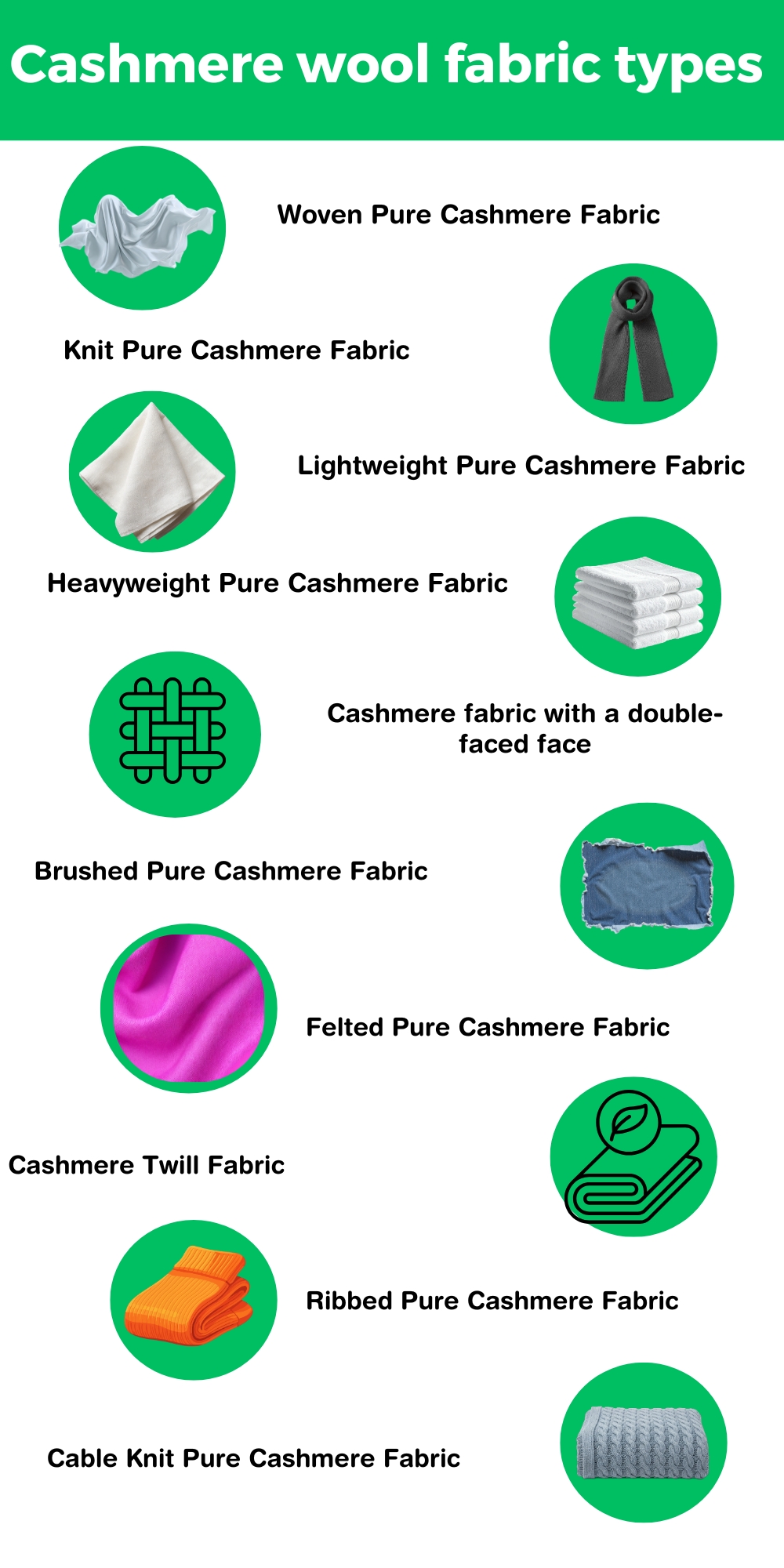
Cashmere and wool blends are available in different types depending on the way they are produced.
Woven Cashmere-Wool Blend
These fabrics are commonly used to make suits, coats and scarves. Woven fabrics have a strong structure.
Knitted Cashmere-Wool Blend
Knitted fabrics have a softer feel and are more flexible. These fabrics are used to make cardigans and knitwear for winter.
Brushed Cashmere-Wool Fabric
This creates a soft and fuzzy texture by raising the surface fibers. This finish is used on luxurious winter garments.
Lightweight Blend
These blends are ideal for the transitional seasons, such as Autumn and early Spring.
Heavyweight Blend
The heavier blends are ideal for winter jackets and blankets.
Cashmere-Wool Blend Fabric: Benefits
Cashmere and wool blends are very popular for their many benefits.
1. Affordable Luxury
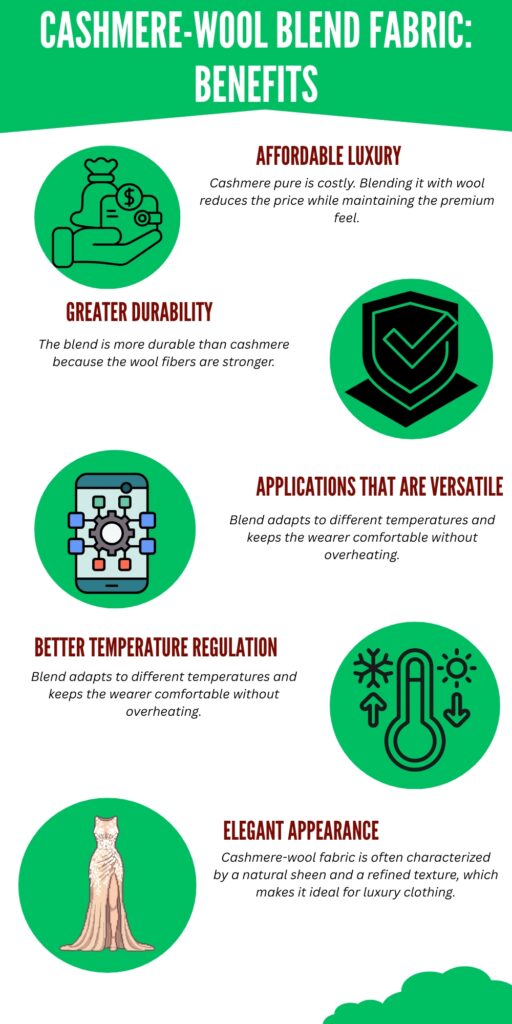
Cashmere pure is costly. Blending it with wool reduces the price while maintaining the premium feel.
2. Greater Durability
The blend is more durable than cashmere because the wool fibers are stronger.
3. Applications that are versatile
This fabric can be used for many different types of clothing, including formal wear and casual knitwear.
4. Better Temperature Regulation
Blend adapts to different temperatures and keeps the wearer comfortable without overheating.
5. Elegant Appearance
Cashmere-wool fabric is often characterized by a natural sheen and a refined texture, which makes it ideal for luxury clothing.
Cashmere-Wool Blend Fabric: Common Applications
Fabrics made from a cashmere-wool mix are widely used for fashion and home textiles.
Sweaters and Knitwear
cardigans and sweaters are the most popular uses. The blend is warm and comfortable.
Coats and Jackets
This fabric is often used in luxury winter coats because it provides insulation without being too heavy.
Scarves and Shawls
Cashmere and wool blends are soft, luxurious and comfortable around the neck.
Suits and formal wear
This blend is often used in high-quality suits to add warmth and comfort.
Throws and Blankets
The blend is also soft and warm, which makes it ideal for home textiles such as blankets.
Cashmere-Wool Blend Fabric: Sustainability
In the textile industry, sustainability is becoming more important. Cashmere-wool mixes can help support eco-friendly practices.
Natural Fibers
Cashmere and Wool are both natural, biodegradable fibres. They are therefore less harmful to the environment than synthetic fabrics.
Longer Garment Lifespan
Blended fabrics are stronger and more durable. This makes garments last for longer. Textile waste is reduced.
Responsible Farming
Many producers follow ethical practices for goat and sheep production, which ensures animal welfare and sustainability of the environment.
Cashmere-Wool Blend Fabric: How to care for it
This fabric will last longer and look better with proper care.
Gently Washing
Use mild detergent and cold water to wash your garments. It is generally recommended to wash clothes by hand.
Avoid High Heat
Natural fibers can be damaged by high temperatures. Avoid hot water and high dryer temperatures.
Dry Flat
Lay the garment flat after washing. It will prevent the garment from stretching.
Proper Storage
Fold your clothes instead of hanging them to keep their shape.
Protect against moths
Cedar blocks and moth repellents are effective in repelling moths.
Why fashion brands prefer cashmere-wool blends
Cashmere-wool blended products are increasingly popular among fashion brands for many reasons.
The blend is luxurious without being expensive. Brands can therefore create premium products for more competitive prices.
The fabric is also a good performer in different climates. It is therefore suitable for global markets.
Thirdly, consumers are looking for garments that offer comfort, durability and elegance. Cashmere-wool blended garments satisfy all of these demands.
Cashmere-Wool Blend Fabric: Future Trends
Cashmere-wool fabrics are set to have a bright future. Its growth is influenced by several trends.
Sustainable Production
Eco-friendly processing, ethical fiber sourcing and more widespread use of organic products will be commonplace.
Innovative Blends
To improve performance, manufacturers are testing new fiber combinations.
Smart Textiles
Textiles with advanced technologies can improve durability, moisture control and temperature regulation.
Luxury Comfort: Growing Demand
Comfort and quality are becoming more important to consumers. Cashmere-wool blended products will continue to grow in popularity.
Conclusion:
Cashmere and wool blend fabric is the ultimate fusion of luxury, comfort and functionality. Combining the softness and durability of cashmere, manufacturers have created a textile which is elegant, warm, and long lasting.
This blend also makes high-end fashion more affordable for a larger audience. The blend provides the luxurious feeling of cashmere, while maintaining the resilience of wool.
FAQs
What is cashmere-wool blend fabric?
Cashmere-wool blend fabric is a textile made by combining soft cashmere fibers with durable sheep wool. This blend offers the luxury feel of cashmere with the strength and resilience of wool.
Why is cashmere blended with wool?
Cashmere is blended with wool to improve durability and reduce cost while maintaining softness, warmth, and comfort.
Is cashmere-wool blend warm?
Yes, cashmere-wool blend fabric is extremely warm because both fibers provide excellent insulation and heat retention.