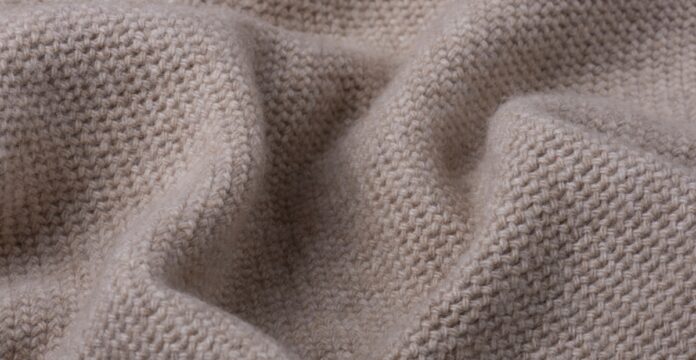
The world of luxury fashion wool is dominated by the lightweight pure cashmere fabric. It is a refined and highly sought after textile. This fabric is known for its natural warmth and breathable structure. It also has a feather-soft feel. Cashmere is a lighter material than heavier wool, and it offers insulation without adding bulk. Cashmere is a popular choice for luxury garments, scarves and sophisticated layering pieces.
This comprehensive guide will teach you everything about the Lightweight Pure Cashmere Fabric, from its properties and origin to its uses and benefits. You will also learn why fashion houses and designers choose this material over others.
What is lightweight pure cashmere fabric?
Lightweight Pure Cashmere Fabric made of the undercoat fibers from cashmere goats. These fibers are collected, cleaned, spun and then woven into delicate textiles. The fabric is exceptionally soft and lightweight because only the thinnest and softest fibers were selected.
Cashmere is 100% natural fibers, unlike blended materials. Its softness is unsurpassed. The lightweight version is designed to be warm and breathable while still providing warmth. It is therefore ideal for seasons in transition, such as spring or autumn.
Cashmere fibers are a Lightweight Pure Cashmere Fabric.
Lightweight Pure Cashmere Fabric is primarily obtained from goats in Mongolia, China and Central Asia. Inner Mongolia, in particular, produces some of finest quality fibers because of its harsh climate. The fiber is naturally insulating because goats grow a thick undercoat in order to survive harsh winters.
The fibers are traditionally combed manually during the molting period. Then, the fibers are sorted according to their quality and fineness. For lightweight cashmere fabrics, only the finest strands will be used. Only a small portion of the collected fibers is suitable for lightweight premium production.
Lightweight Pure Cashmere Fabric: Key Characteristics
Lightweight Pure Cashmere Fabric that has many remarkable properties. Cashmere is a fabric that has many features.
1. Exceptional softness
The fibers are between 14 and 19 microns wide. The fabric is softer than wool. Even sensitive skin rarely experiences irritation.
2. Natural Warmth
The fibers are encased in air pockets, despite the thinness of the fabric. The heat is therefore retained effectively. This structure provides warmth without being heavy.
3. Breathability
Cashmere is a natural fabric that allows for air circulation. The body temperature is naturally regulated as a result.
4. Lightweight Structure
Fabric drapes easily. The garments look elegant and not bulky.
5. Durability
Fabrics that are made from high-quality fibres can last for many years. The fabric will last longer if it is properly cared for.
How to manufacture a lightweight pure cashmere fabric
The process of production is meticulous and refined. The first step is to collect the raw fibers. Impurities are then removed by dehairing. The fibers are then spun into fine threads. Depending on their final use, these yarns can be woven or knitted.
The tension is controlled during weaving. Weaving lightweight fabrics requires delicacy. Therefore, the density is less than heavyweight versions. The fabric is then washed to increase softness.
Many luxury mills still use traditional techniques. Modern technology also ensures accuracy and consistency. The result is a perfect textile.
Lightweight Pure Cashmere Fabric: Benefits
Lightweight Pure Cashmere Fabric that has many advantages. Cashmere is a textile that can be considered as an investment.
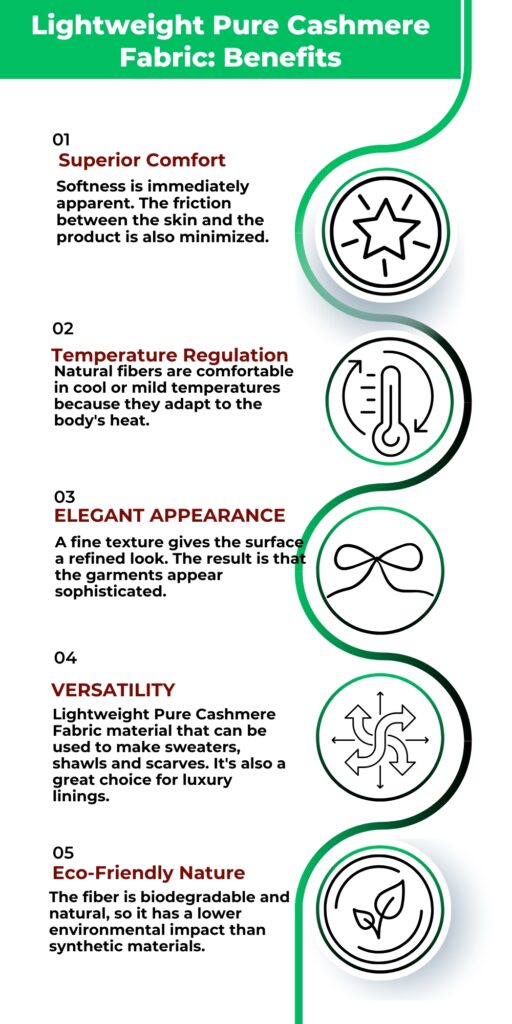
Superior Comfort
Softness is immediately apparent. The friction between the skin and the product is also minimized.
Temperature Regulation
Natural fibers are comfortable in cool or mild temperatures because they adapt to the body’s heat.
Elegant Appearance
A fine texture gives the surface a refined look. The result is that the garments appear sophisticated.
Versatility
Lightweight Pure Cashmere Fabric material that can be used to make sweaters, shawls and scarves. It’s also a great choice for luxury linings.
Eco-Friendly Nature
The fiber is biodegradable and natural, so it has a lower environmental impact than synthetic materials.
Cashmere fabric is used in many different ways.
This fabric is used widely in fashion and accessories because of its versatility.
Sweaters, Cardigans and other Clothing
The light sweaters can be layered to create a stylish look. They provide comfort without overheating.
Scarves and Shawls
Cashmere is a lightweight fabric that drapes beautifully. It also adds warmth, without adding any weight.
Luxury T-Shirts
Cashmere tees are often minimalistic and designed by premium brands. Casual wear is refined.
Travel Wraps
The fabric is ideal for travelling because it can be folded easily and does not wrinkle.
Why designers prefer lightweight pure cashmere
Designers are concerned with both aesthetics and performance. Lightweight pure cashmere delivers both. It provides fluid drape. It maintains its structure, while still appearing soft. The dye absorbency is also excellent, which allows for rich, vibrant colors.
Cashmere is a popular fabric in luxury fashion houses. This fabric is a brand enhancer because exclusivity and quality are associated.
What is the best way to identify pure cashmere fabric?
Cashmere is not all the same. Checking certain indicators is important.
- Fiber fineness — The lower the micron number, the softer fabric.
- Resistance to Pilling– Fibers of high quality will pill less with time.
- Elastic recovery – The fabric should return back to its original shape after stretching.
- Uniform weave– Consistency indicates superior production.
Cashmere is a natural material that should be warm to the touch.
Care for Lightweight Cashmere Fabric
The fabric will last longer if you take care of it properly. Even though the fabric is delicate and requires special care, it is easy to maintain if you follow the guidelines.
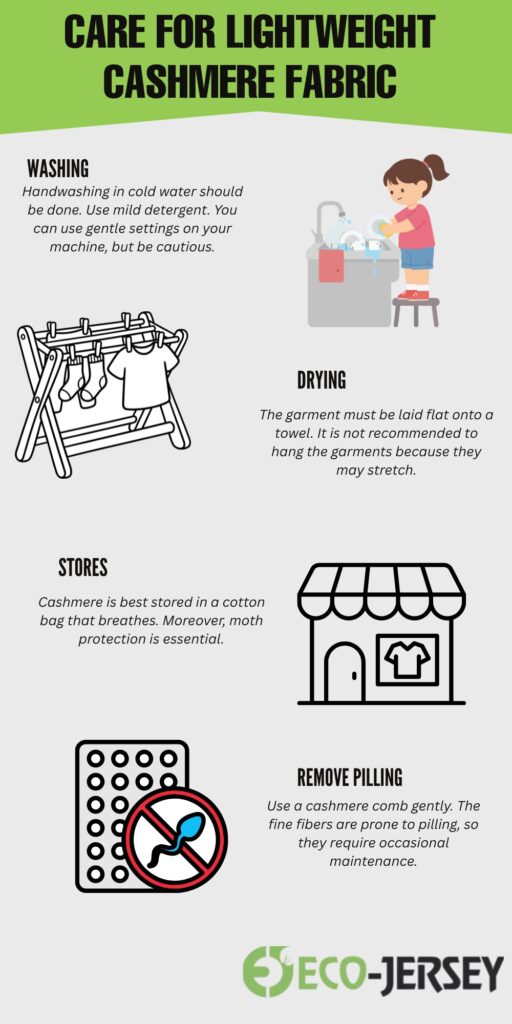
Washing
Handwashing in cold water should be done. Use mild detergent. You can use gentle settings on your machine, but be cautious.
Drying
The garment must be laid flat onto a towel. It is not recommended to hang the garments because they may stretch.
Stores
Cashmere is best stored in a cotton bag that breathes. Moreover, moth protection is essential.
Remove Pilling
Use a cashmere comb gently. The fine fibers are prone to pilling, so they require occasional maintenance.
Sustainability and ethical considerations
Sustainability is becoming increasingly important. Many producers adopt responsible sourcing practices. The goat herding process is also monitored to avoid overgrazing. Environmental balance is maintained when ethical standards are upheld.
Biodegradable textiles reduce the impact of textile waste. Brands are highlighting sustainable cashmere initiatives as consumers demand transparency.
Cashmere Lightweight Fabric: Investment Value
The long-term benefits are unquestionable, despite the high initial costs. When properly maintained, the fabric will last for many years. Its timeless appeal also prevents it from being out of style.
Many consumers choose to own fewer, but better quality garments because they believe that quality is more important than quantity. Cashmere is a smart investment because it’s lightweight and luxurious.
Style Tips for Lightweight Cashmere
There are many styling options. As an example:
- Combine a lightweight cashmere sweatshirt with tailored trousers to achieve business elegance.
- For evening elegance, layer a cashmere scarf over your dress.
- Combining a cardigan in a neutral tone with denim is incredibly chic.
The fabric drapes beautifully, making silhouettes look polished.
The Global Market for Lightweight Cashmere Fabric
The market for luxury textiles continues to grow. Demand for natural fabrics, especially in Europe and North America is increasing. Asian markets are also expanding rapidly.
Comfort and sustainability are becoming increasingly important to consumers. Cashmere is still highly desired because it’s lightweight. Online shopping has increased accessibility around the world.
Some common misconceptions about lightweight pure cashmere
Myth 1: The material is too delicate
When properly maintained, durability can be impressive despite its delicate appearance.
Myth 2: It is only for Winter
Lightweight versions can be used for many seasons.
Myth 3: Cashmere is all the same
The quality of the fibers varies greatly depending on their grade and their processing.
Future Trends for Lightweight Pure Cashmere Fabric
Innovation continues to be a driving force in the industry. Eco-certified dyes, for example, are now being introduced. Traceability systems also improve transparency. The technology of blending is improving, but pure cashmere still remains superior.
The minimalist fashion trend is also driving demand for classic luxury basics. Cashmere is growing in popularity as consumers choose quality over fast fashion.
Final Thoughts
The perfect balance of warmth, softness and elegance is achieved by the lightweight pure cashmere fabric. It is both breathable and insulating. This makes it a perfect fit for modern lifestyles. Its versatility makes it suitable for all seasons.
Fabrics can be used to enhance any wardrobe, from luxurious sweaters and accessories to sophisticated accessories. The investment in premium clothing is worth it because of its timeless style and longevity. Read more: Combed Grade A Cashmere Wool Fabric
FAQs
What is lightweight pure cashmere fabric?
Lightweight pure cashmere fabric is made from 100% fine cashmere fibers, designed to provide warmth without bulk. It is soft, breathable, and ideal for layering.
Is lightweight cashmere warm enough for winter?
It provides moderate warmth and works perfectly for mild winters or layering. However, in extremely cold climates, heavier cashmere may be preferred.
How is lightweight pure cashmere different from regular wool?
Cashmere fibers are finer and softer than wool. Therefore, lightweight pure cashmere feels smoother, lighter, and more luxurious on the skin.