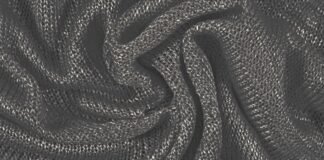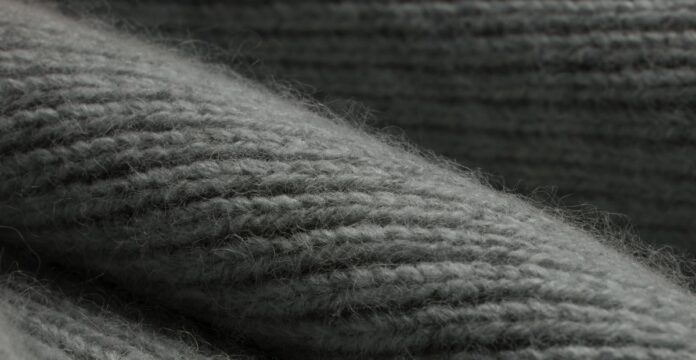
Knit Pure Cashmere Fabric wool is the ultimate expression of comfort, softness and elegance in the textile industry. This premium material, made from the fine undercoat fibres of cashmere goats, has been synonymous with high-end knitwear and timeless sophistication for many years. Knit pure cashmere fabric is not only beautiful, but it also offers outstanding insulation, breathability and durability.
This comprehensive guide will teach you everything about knitted pure cashmere fabrics, including their origin, production, types, benefits and construction methods. It also includes care instructions. This article is SEO friendly, detailed and structured in a way that helps brands, designers and textile buyers to understand why knitted pure cashmere continues to dominate luxury markets.
What is knit pure cashmere fabric?
Knitted pure cashmere is a fabric made of 100% cashmere. The fibers are spun into yarn, and the fabric is constructed by knitting rather than weaving. Knit cashmere has a softer, more flexible, and stretchier feel than woven cashmere. It is used in sweaters, cardigans and scarves as well as loungewear and luxury knit accessories.
Cashmere is primarily obtained from goats in Mongolia, China and India. To survive harsh winters, these goats grow ultra-fine undercoats. The fibers are therefore naturally lightweight and insulating.
The fabric is flexible and breathable because of the interlocking yarn loops. The structure also allows for air circulation while maintaining warmth. Cashmere knit fabric is therefore suitable for cold climates as well as transitional seasons.
Cashmere: Its Origin and History
Cashmere is a material with a long history. Cashmere is named after the Kashmir region, where fine woolen shawls are produced and traded worldwide. In the 18th century, European royalty imported and admired these luxurious textiles.
Cashmere was eventually adopted by luxury fashion houses from Paris and Milan for their high-end garments. Knit cashmere gained popularity as fashion changed, mainly because it was more comfortable than woven alternatives.
Cashmere knit fabric is now used in high-end collections around the world. Technological advancements have improved spinning and knitting methods, improving softness, durability, and durability.
How to Knit Pure Cashmere Fabric
The process of producing knitted pure cashmere fabric is delicate and involves many steps. To preserve the fiber quality, precision and care is required at each stage.
1. Fiber Collection
During the molting period, the fine undercoat of goats is gently combed. Rarely is mechanical shearing used to produce premium grades. After collection, the fibers are sorted according to color and thickness.
2. Dehairing Process
The coarse guard hairs have been removed. The result is that only ultra-soft fibres are left. This ensures the knit fabric will feel smooth on the skin.
3. Spinning
The fibers are spun to fine yarn. Single-ply and multi-ply fibers can be produced depending on the desired thickness. The yarn is strengthened by twisting while retaining its softness.
4. Knitting Construction
Knitting yarn is done using special machines or by hand. The structure is stretchy because the loops are interlocked.
5. Finishing
The fabric is then washed and softened before being lightly brushed. Steam treatments can be applied in some cases to enhance the texture. Before garments are made, they are inspected for quality.
Knit pure cashmere fabric types
Knit Pure Cashmere Fabric is available in many forms. Each type has different functional and fashion purposes.
1. Lightweight Knit Cashmere
This version is light and delicate. This fabric is perfect for luxury tops, layering pieces and fine sweaters. The fabric drapes beautifully because the gauge of the knit is fine.
2. Midweight Knit Cashmere
The midweight knit provides warmth and structure in a balanced way. It is used to make classic sweaters and cardsigans.
3. Cashmere Heavyweight Knit
In this category, thicker yarns are used. Insulation is increased significantly. Cashmere heavyweight is often used to make winter coats, structured knit jackets and oversized pullovers.
4. Cable Knit Cashmere
The knitted design incorporates decorative cable patterns. This not only adds visual depth but also increases warmth because of the layered design.
5. Ribbed Knit Cashmere
Ribbed construction improves elasticity. This technique is therefore ideal for cuffs and hems of fitted garments.
Knit pure cashmere fabric: Benefits
Cashmere knit fabric has many advantages. This is why it is still one of the most sought-after luxury textiles.
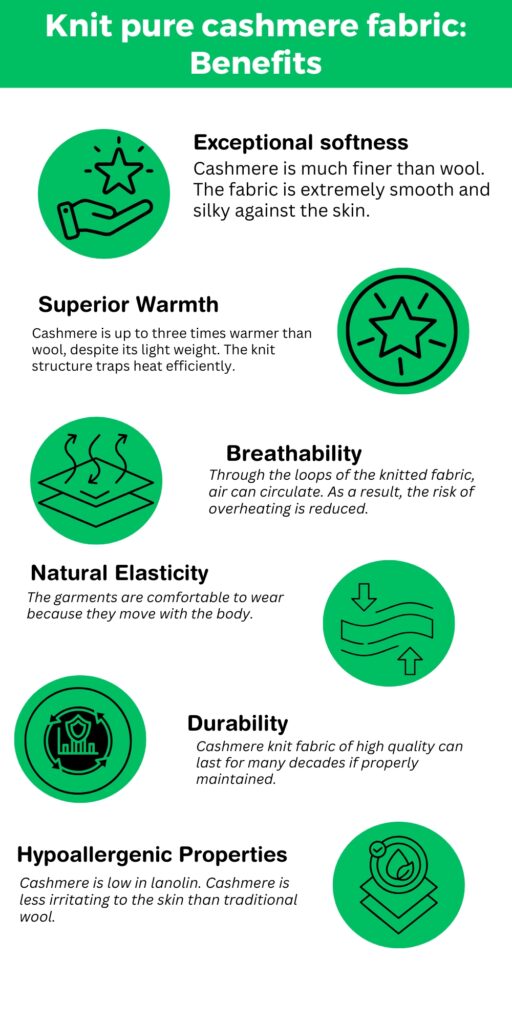
Exceptional softness
Cashmere is much finer than wool. The fabric is extremely smooth and silky against the skin.
Superior Warmth
Cashmere is up to three times warmer than wool, despite its light weight. The knit structure traps heat efficiently.
Breathability
Through the loops of the knitted fabric, air can circulate. As a result, the risk of overheating is reduced.
Natural Elasticity
The garments are comfortable to wear because they move with the body.
Durability
Cashmere knit fabric of high quality can last for many decades if properly maintained.
Hypoallergenic Properties
Cashmere is low in lanolin. Cashmere is less irritating to the skin than traditional wool.
Knit vs. Woven Cashmere
Both are luxurious but there are differences.
- Knit Cashmere is soft, stretchy and casual.
- Woven Cashmere has a structured weave and is often used to make scarves or coats.
Knit fabrics are more flexible, whereas woven fabrics allow for crisper tailoring. Designers choose fabrics according to the garment’s purpose.
Sustainability and ethical considerations
In the textile industry, sustainability has taken on a greater importance. In countries like Mongolia and China, responsible sourcing is now being emphasized.
In certain areas, there are concerns about overgrazing. Regenerative grazing, improved livestock management and improved livestock management is being implemented. To reduce the environmental impact, eco-friendly dying methods are also being implemented.
Transparency is becoming increasingly important to consumers. In order to meet consumer demands, traceable supply chain and ethical certifications are now standard practice in the production of premium knit pure Cashmere fabrics.
Knit pure cashmere fabric: Applications
Cashmere knit fabric is used extensively in fashion and lifestyle products.
- Sweaters, pullovers and other sweaters
- Cardigans
- Wraps and scarves
- Knit dresses
- Loungewear
- Baby clothes
- Knitted accessories
Cashmere knit is also frequently seen on the runways of New York City and London. Designers love it because it is elegant and comfortable.
How to care for knit pure cashmere fabric
The longevity of your garments is ensured by proper care. Even though the fabric is delicate and requires special care, it can be maintained easily if you follow these guidelines.
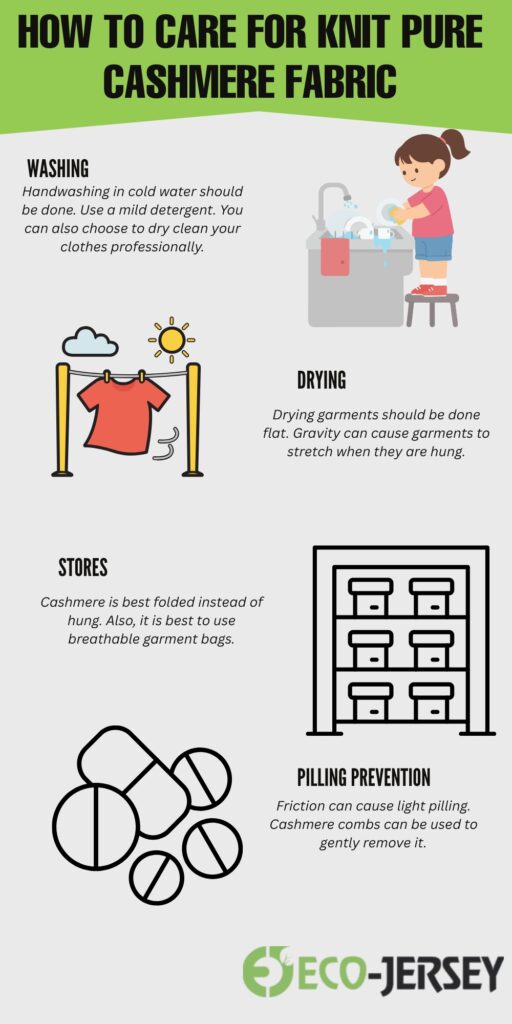
Washing
Handwashing in cold water should be done. Use a mild detergent. You can also choose to dry clean your clothes professionally.
Drying
Drying garments should be done flat. Gravity can cause garments to stretch when they are hung.
Stores
Cashmere is best folded instead of hung. Also, it is best to use breathable garment bags.
Pilling Prevention
Friction can cause light pilling. Cashmere combs can be used to gently remove it.
Why Cashmere Knit Fabric is a Worthwhile Investment
Experience is what makes luxury luxurious. Cashmere knit fabric is luxurious, warm, and comfortable. The price is higher than normal wool but the durability justifies it.
Cashmere is also timeless, so garments will remain in style for many years. Cashmere is timeless and will never go out of style.
Ethical options are becoming more accessible as sustainability initiatives expand. Buyers can therefore enjoy luxury and support responsible production.
Future Trends for Knit Pure Cashmere Fabric
The market is being reshaped by innovation. The development of lightweight performance blends is underway. Digital knitting technology also allows for seamless garment construction.
Natural fibers are favored by minimalist fashion trends. Cashmere knit fabric will continue to be in high demand worldwide.
Luxury brands are also exploring carbon-neutral manufacturing and biodegradable packaging. The future of knitted pure cashmere fabrics appears elegant and environmentally-conscious.
Conclusion:
Cashmere knit fabric is one of the world’s most luxurious and versatile fabrics. This exceptional material, which has its origins in Kashmir and is now available in modern fashion capitals such as Paris and Milan has been a symbol of refinement throughout the centuries.
Cashmere knit fabric is unsurpassed in the production of premium knitwear due to its softness and warmth. It also breathes well, so it’s durable. As sustainability practices improve, the future of cashmere looks brighter.
FAQs
What is knit pure cashmere fabric?
Knit pure cashmere fabric is made from 100% cashmere fibers that are spun into yarn and constructed using knitting techniques. Unlike woven cashmere, it offers more flexibility, softness, and stretch. Therefore, it is widely used for sweaters, scarves, and luxury knitwear.
Is knit pure cashmere warmer than regular wool?
Yes, knit pure cashmere fabric is significantly warmer than standard wool. The fibers are finer and trap heat efficiently. As a result, more insulation is provided without adding extra weight.
Why is knit pure cashmere fabric expensive?
The production process is labor-intensive, and only a small amount of fine fiber is collected from each goat annually. Additionally, careful dehairing and spinning are required. Consequently, the cost reflects its rarity, quality, and luxurious feel.