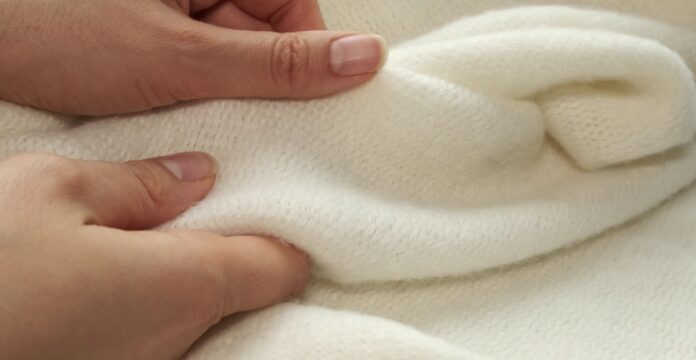
Felted Recycled Cashmere Fabric wool Choice of Material Known for its sumptuousness and luxurious feeling, cashmere is one fabric that will never go out of style. But since sustainability has started to play a larger role in contemporary fashion and textiles, recycled cashmere felted fabric has surfaced as an affordable but luxurious option. It not only maintains the integrity of traditional cashmere but also minimizes environmental damage.
In addition, felted recycled cashmere is both hard-wearing and soft to the touch which makes it perfect for fashion as well as interiors. Ultimately, it’s why design-oriented folks and brands — not to mention environmentally aware folk – are increasingly relying on this relatively sustainable material. In this extensive guide, I will cover all you need to know about felted recycled cashmere fabric including how it’s made, what properties and advantages there are with the material as well as how it’s used and cared for along with its future prospects.
What Is Felted Recycled Cashmere Fabric Material?
Felted Recycled Cashmere Fabric cloth describes a felted textile of thick wool fabric made from the reclaimed fibres of used or residual cashmere garment production. Felts are made by compressing, heating and agitating fibres so that they hook together firmly. The result is a thicker, warmer, beefier fabric.
Furthermore, recycling provides a need for less production of raw materials. Accordingly, environmental load can be decreased with an excellent textile quality. And while the fabric may come from garbage, it is frequently just as soft as new cashmere because the fibers are already broken in.
How Recycled Felted Cashmere Is Made
Collection of Cashmere Waste
First, discarded clothing, end-of-line yarn or textile offcuts are collected. These materials are sorted by color and fiber quality. As a result, the dyeing needs may be reduced to its minimum in some cases and water and chemicals can be saved.
Fiber Regeneration
Fabrics are then shredded mechanically to produce fibers. At this point, the fibers are softened and cleansed. Some fiber shortening, but good quality is maintained with careful handling.
Felting Process
Then they are subjected to controlled heat, pressure and moisture. As a result of this process the fibers become permanently locked. In this way a robust felt is obtained.
Finishing and Quality Control
Lastly, finishing treatments improve softness, colorfastness and abrasion resistance. This point in the process is for brushing or steaming, followed by a final quality inspection before distribution.
Look For When Purchasing Before Profiling This Beautiful Knitting Materials I Should Mention The Principals Of Buying This Recycled Cashmere Fundamentally, cozying up to the cashmere recycled or not is so rewarding. Key Attributes of Felted Recycled Cashmere Ummm okay how much do you love felt?
Exceptional Softness
The fabric is also soft to the touch despite being recycled. The delicacy comes from the small circumference of cashmere fibres.
Increased Warmth
As the fibers are interwoven, insulation increases extensively. Thus the material is perfect for cold climates and winter clothes.
Durability and Structure
Felting strengthens the fabric structure. As a result, it is less prone to fraying and other forms of wear caused by loose weaving.
Sustainable Composition
Recycling saves landfill space and natural resources. Thus, environmental benefits are significant.
Natural Breathability
Even though it’s thick, the fabric is still breathable. So comfort is consistent no matter what the season.
Save the Planet with Felted Cashmere
Reduced Resource Consumption
Recycling causes another goats breeding not to be necessary anymore (in some situations). It means the amount of land, water and feed decreases.
Lower Carbon Footprint
The second is that less processing power is needed than when making virgin fibers. Therefore, carbon emissions are reduced.
Waste Reduction
Textile waste is also diverted from landfill sites. This is a movement that has a direct immediate impact on circular fashion.
Chemical Savings
In addition, less dye and treatment may be necessary because of natural coloration. Water pollution hazards, therefore, are reduced.
How to use your recycled cashmere felted.
Winter Apparel
Recycled cashmere can also be found constructed into coats, jackets, scarves and hats made through a felting process. For its weight and bulk it works extremely well in cold weather.
Fashion Accessories
Purses, gloves and components of footwear are also known made from this material. Besides, the felt like finish makes it looks very good.
Interior Décor
Designers work with felted recycled cashmere for cushions, throws and upholstery accents. Of course that’s all good news for interiors as well giving them comfort and sustainability.
Craft and Textile Art
Sustainable Textile Art Artists love this material. Because it is so easily cut and molded, creative opportunities are greatly increased.
Advantages Over Traditional Cashmere
Greater Strength
Felting improves fabric stability. So the product will much more time with compared to loosely knitted cashmere.
Cost Efficiency
The use of the reused fibers commonly decreases producing expenses. Therefore, customers can enjoy the delicious texture of luxury, at an affordable price.
Sustainability Appeal
Eco-friendly products attract modern consumers. Therefore, felted cashmere can have a good commercial value.
Unique Texture
The felted appearance gives it style with substance. Therefore, designers generally gravitate towards them for statement pieces.
Challenges and Limitations
Fiber Length Reduction
Recycling shortens fibers slightly. Consequently, the softness be relatively different owing to the quality of processing.
Limited Color Control
Cannot always color match because recycled material is used.
Perception Issues
To some shoppers, recycled is synonymous with inferior. But good education transforms this mindset.
Availability Fluctuations
Supply is limited by the availability of textile waste. Consequently, production volumes can vary.
Maintenance and Care Tips
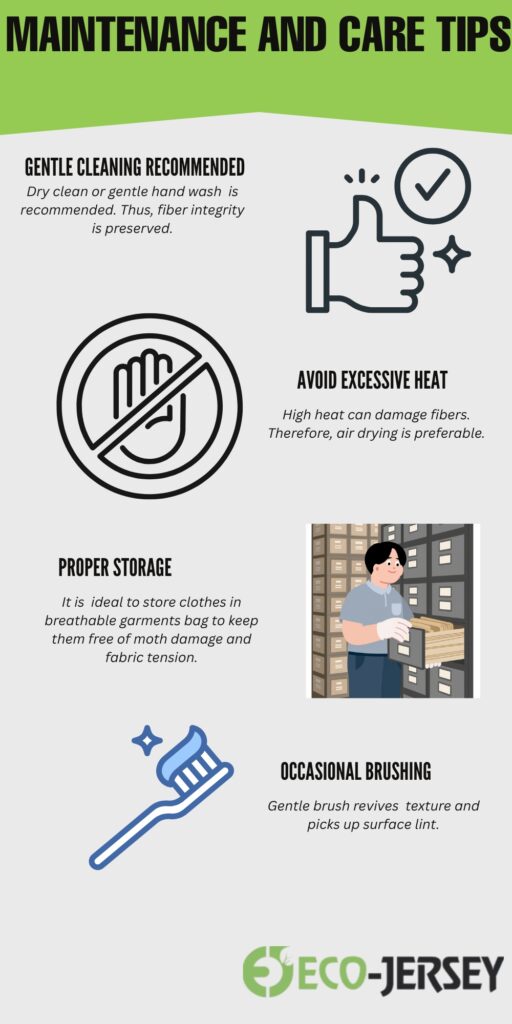
Gentle Cleaning Recommended
Dry clean or gentle hand wash is recommended. Thus, fiber integrity is preserved.
Avoid Excessive Heat
High heat can damage fibers. Therefore, air drying is preferable.
Proper Storage
It is ideal to store clothes in breathable garments bag to keep them free of moth damage and fabric tension.
Occasional Brushing
Gentle brush revives texture and picks up surface lint.
Market Trends and Industry Growth
Green fashion is increasing globally. This is the reason why recycled textiles are becoming more popular. Felted Recycled Cashmere Fabric is a particularly fortunate recipient of the trend, pairing luxury with conscientiousness.
Moreover, quality of the fiber regeneration is enhanced by technical development. And here’s the thing, Felted Recycled Cashmere Fabric is becoming just as good as virgin in performance. In addition, consumers are becoming more environmentally conscious in their demand for brands to implement circular production.
Comparison With Other Recycled Fabrics
Recycled Wool
Although just as warm, recycled wool can be a touch rougher. However, it remains highly durable.
Recycled Cotton
Cotton breathes but is less insulating. This is therefore more suited to hotter climates.
Felted Recycled Cashmere Fabric Synthetic Fibers
These are durable but do not have the natural softness that cashmere has. Consequently, comfort differences are noticeable.
Therefore, Felted Recycled Cashmere Fabric maintain a balance of sustainability, softness and performance really well.
Why Designers Love Felted Recycled Cashmere Fabric
For a start, the texture is soft and sharp all at once. Secondly, sustainability credentials lend themselves to a further positive consumer facing story. Furthermore, it is highly appealing because of its versatility in the fashion and deco market.
In addition, a young demographic has a particularly deep appreciation for ethical sourcing. As a result, brands using recycled cashmere usually fare well in the market.
Economic Benefits for Manufacturers
Raw materials costs are drastically minimized by recycling. Consequently, profit margins may improve. Furthermore, waste management expenses decrease.
Furthermore, sustainable branding leads to value creation in products and services. As a result, manufacturers receive both monetary and prestige benefits.
It’s all very well for your potential customers to know your beanie is made from felted recycled cashmere, but why should they want that?
Ethical Purchasing
Today´s customer is more and more environmentally aware.
Long-Term Value
Sustainable felted design means your clothes will last longer.
Comfort With Responsibility
The feel of luxury with sustainability is the ultimate combination.
Fashion Forward Appeal
Eco-friendly fashion trends are only getting bigger.
What to do with Upcycled Felted Recycled Cashmere Fabric
Textile recycling development still moves ahead fast. consequently, the quality of fibers will be better. Moreover, closed-cycle cultures are being utilized.
That might mean that felted recycled cashmere is soon to be mainstream, rather than specialty. Further, regulatory pressure for sustainable applications also drives this growth.
How to Find Good Felted Recycled Cashmere Fabric
Check fabric density and uniformity.
Evaluate softness and resilience.
Review manufacturer sustainability certifications.
Observe finishing quality carefully.
The latter steps are to screen high-quality products.
Role in Circular Fashion Economy
Circular fashion is all about reusing what we have, recycling unused items and reducing waste.Felted Recycled Cashmere Fabric does this perfectly. Since materials are recycled, the environmental burden decreases significantly.
Product durability also underpins the philosophy of slow fashion. In this way, the textile industry takes a step closer to achieving sustainability targets.
Innovation Opportunities
Advanced Fiber Sorting Technology
Improves recycling efficiency.
Blended Fiber Enhancement
Strength can be elevated by mixing recycled cashmere with other fibers.
Eco-Friendly Dyeing Methods
Reduce water and chemical consumption.
These developments are ongoing and define future of sustainable textiles.
Conclusion
Felted Recycled Cashmere Fabric is the epitome of luxury, eco-friendliness and usefulness! Traditional cashmere is still something spectacular, but compared to some recycled felted versions it can be just as soft and a whole lot greener.
In addition, it is suitable for fashion, home and creative decoration. With sustainability everything in value the demand for recycled textiles is going up.
FAQs
What is Felted Recycled Cashmere Fabric?
Felted recycled cashmere fabric is made from reclaimed cashmere fibers that are processed and compressed through felting to create a dense, warm, and sustainable textile.
Is Felted Recycled Cashmere Fabric as soft as new cashmere?
Yes, it can still feel soft and comfortable, although softness may vary slightly depending on the recycling and felting process used.
Why is Felted Recycled Cashmere Fabric considered eco-friendly?
It reduces textile waste, conserves natural resources, and lowers environmental impact compared to producing virgin cashmere fibers.