Recycled Grade C Cashmere is long associated with luxury and warmth. Recycled cashmere has gained popularity worldwide as fashion and textiles become more sustainable. Grade B recycled cashmere fabric wool is a good choice for those who are looking for affordability, environmental friendliness and practical durability. It may not be as soft as premium grades but it can still deliver impressive performance if processed correctly. Understanding its types, benefits, and uses helps designers, manufacturers, and buyers to make better textile choices.
This guide is a comprehensive look at the types and characteristics of Grade C recycled cashmere fabrics as well as their production methods and applications. It also highlights the sustainability benefits, styling possibilities, and industry relevance.
Understanding Grade C Recycled Cashmere fabric
It is important to know what Recycled Grade C Cashmere means before exploring the different types. Cashmere of Grade C is usually shorter, coarser or less refined than cashmeres of higher grades. These fibers can be recovered from textile waste or old garments. Instead of being thrown away, these fibers are processed to make usable fabrics.
The recycling process also involves sorting and cleaning, shredding the material, spinning it, and reweaving it. The fiber strength can be slightly reduced during this process; however, modern technologies in textiles have improved the quality retention. Recycled Grade C Cashmere remains valuable for fashion as well as industrial applications.
Environmental benefits are also substantial. The reduction of landfill waste, water consumption, and energy are all achieved. Cashmere recycled from old garments has been a major player in the sustainable fashion industry.
Why Recycled Grade C Cashmere is Important
Globally, concerns about sustainability are on the rise. Textile waste is a major contributor to pollution. Recycling existing fibers reduces environmental impact.
Second, affordability is a key factor. The Grade C fibers, which are cheaper than the premium cashmere, make luxurious clothing more accessible.
Thirdly, the durability of recycled cashmere improves when blended with other materials such as cotton, wool or synthetics. Fabrics become more wearable for daily use.
Last but not least, the ethical fashion movement is increasingly supporting recycled materials. Brands that use recycled cashmere can be seen as being environmentally friendly.
Cashmere fabric types that are recycled grade C
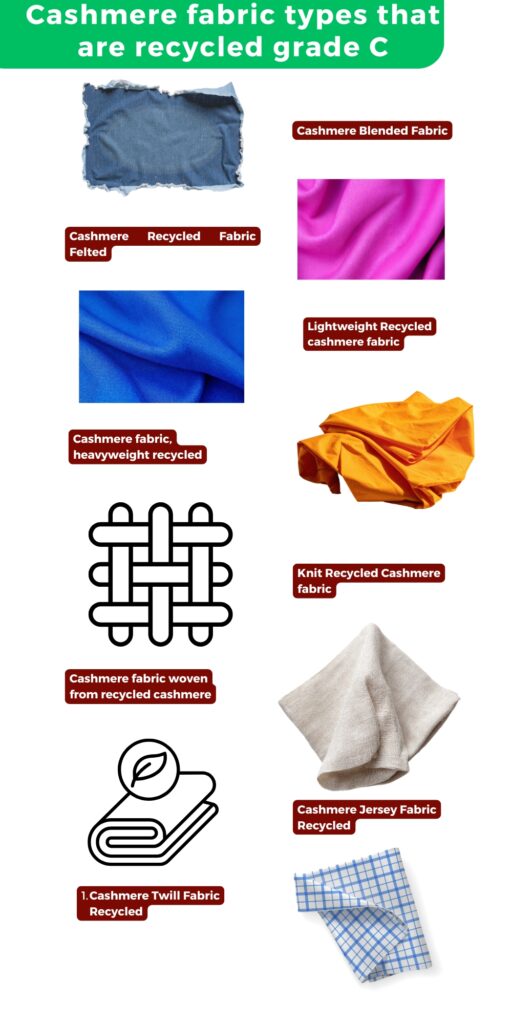
1. Cashmere Blended Fabric
The most common type of blended Recycled Grade C Cashmere is the blend. This fabric is made from Grade C cashmere mixed with natural or synthetic fibers. Wool, cotton, viscose, polyester or other fibers can be added.
The durability of the fabric is generally improved by blending the fibers. The fabric is also more affordable because the production costs have been reduced. The softness of the fabric is reduced when compared with pure cashmere, but warmth is still excellent.
Cashmere blended with recycled fibers is also widely used for sweaters, scarves and coats. It offers a good balance between comfort, sustainability and cost-efficiency.
2. Cashmere Recycled Fabric Felted
The felting process involves mattifying and compressing the fibers. Typically, heat, moisture and friction is applied. The result is a dense and sturdy fabric.
The outerwear, accessories, and hats are all suitable for this type. Insulation properties are high due to its thickness. Wind resistance is also significantly improved.
Durability is improved, even though softness may be compromised. Thus, feltted recycled cashmere is becoming popular in winter fashion as well as sustainable textile design.
3. Lightweight Recycled cashmere fabric
The Recycled Grade C Cashmere is lightweight and designed to be versatile. The fibers are spun finer, which results in thinner fabrics. Garments are breathable, and can be worn in all seasons.
The fabric is used for lightweight sweaters, shawls and layering garments. Comfort is ensured because the fabric is soft and breathable.
Moreover, recycled lightweight cashmere is appealing to eco-conscious customers who are looking for stylish yet sustainable clothing. The demand for this type of cashmere has steadily increased.
4. Cashmere fabric, heavyweight recycled
Heavyweight Recycled Grade C Cashmere is designed to provide warmth and durability. The yarns used are thicker, and the fabric density has been increased. Insulation is improved significantly.
For coats, winter scarfs, blankets and upholstery textiles, heavyweights are often chosen. They are also good for colder climates, where they provide extra warmth.
Longevity is increased by using heavier fabrics. Winter fashion collections are highly valued because of this type.
5. Knit Recycled Cashmere fabric
Knitted recycled Cashmere is made using knitting techniques instead of weaving. The fabric is then flexible and stretchable.
This type of fabric is often found in loungewear, sweaters, cardigans and socks. Comfort increases because elasticity has been improved.
Knitting allows designers to experiment and create new patterns, textures and styles. Knitted recycled cashmere is therefore a popular fabric in modern fashion.
6. Cashmere fabric woven from recycled cashmere
Interlacing yarns in a right angle produces woven recycled cashmere. The fabric is then more stable and structured.
The woven fabric is used for tailored clothing, jackets and trousers as well as luxury home textiles. Woven fabrics are perfect for structured designs because they hold their shape.
In addition, the durability of woven cashmere is higher than that of knitted varieties. Cashmere woven from recycled materials is therefore highly valued in the fashion and interior design industries.
7. Cashmere Jersey Fabric Recycled
The knitted structure of the Jersey recycled cashmere is smooth. It feels soft on the skin.
The most popular types are lightweight sweaters, casual wear and t-shirts. Comfort is increased because of the flexibility.
Moreover, recycled jersey cashmere drapes beautifully. It is often chosen for sustainable fashion collections.
8. Cashmere Twill Fabric Recycled
The diagonal weave pattern is characteristic of twill recycled cashmere fabrics. Texture is visually pleasing as a result.
The type is used for premium coats, trousers and accessories. The weave makes the garments durable.
Twill fabrics also resist wrinkles well. They are therefore ideal for everyday use.
Recycled Grade-C Cashmere Production Process
The process of production begins with the collection of fibers. The Recycled Grade C Cashmere materials are collected from old garments, textile scraps and factory waste. Materials are then sorted according to color and fiber composition.
Cleaning is done thoroughly after sorting. After sorting, the fibers are thoroughly cleaned. The fibers are then mechanically shred.
Then comes the spinning. The fibers are spun into yarn for knitting or weaving. Fabrics are then manufactured and finished to suit the intended use.
Modern recycling techniques have led to a significant improvement in fabric quality. Cashmere Grade C recycled is now widely available on global markets.
Cashmere fabric reclaimed in Grade C is a great alternative to new cashmere fabrics.
Environmental Benefits
First, we reduce waste. The number of textile landfills is reduced, and the conservation of resources improves.
Second, the water and energy used in producing cashmere is reduced compared to that of creating new fibers. The environmental impact is reduced significantly.
Economic Benefits
In addition, production costs can be reduced. In turn, luxury that is sustainable becomes more affordable.
Businesses also benefit from eco-friendly brand building. Sustainable fashion is increasingly popular among consumers.
The Benefits of Using a Practical Guide
Blending recycled fibers can often increase durability. The warmth and insulation are still impressive.
Cashmere Grade C recycled provides the perfect balance between luxury, functionality and affordability.
Cashmere Recycled Grade C Cashmere: Challenges and Opportunities
Certain challenges remain despite the benefits. The fiber length can be shorter and affect the softness. Due to the recycling process, there may also be variations in color consistency.
These issues are addressed by improved textile technologies. As a result, the quality of textiles continues to improve.
A growing awareness among consumers is also a factor. Education about recycled textiles is therefore essential.
Fashion and Industry Applications
Recycled Grade C Cashmere is used in many applications. You can use it for example:
- Sweaters, knitwear and other clothing
- Winter coats, jackets
- Scarves and gloves
- Blankets, upholstery and other products
- Fashion collections that are sustainable
Designers appreciate the adaptability of this product. Industrial uses are also expanding.
Sustainable Fashion and its Impact
Recycled Grade C Cashmere is a material that has been embraced by sustainable fashion trends. Environmental impact is a growing concern for consumers. Brands that use recycled materials have a competitive advantage.
A lot of attention is paid to ethical production methods. Transparency is key to gaining consumer trust.
Recycled Grade C Cashmere contributes to fashion initiatives that are responsible.
Recycled Grade C Cashmere: Tips on Choosing the Best Cashmere
Check the fiber composition first. Blends are often more durable.
Second, check the fabric’s texture and thickness. The intended use should be the guiding factor in selecting the fabric.
Consider brand transparency in terms of recycling practices. The certifications and sustainability statements can be valuable indicators.
Last but not least, it is important to take care of your fabric. The fabric will last longer if you wash it gently and store it carefully.
Future Trends for Recycled Grade C Cashmere
Cashmere recycled in the future looks promising. Textile recycling technology continues to improve. Fabric quality is improving steadily.
Circular fashion models also gain in popularity. Recycling, upcycling and sustainable sourcing have become industry standards.
A growing awareness among consumers is also expected. The demand for cashmere recycled is therefore expected to grow significantly in the coming years.
The conclusion of the article is:
The Recycled Grade C Cashmere is a great combination of affordability, sustainability and practicality. It may not be as soft as premium cashmere, but it is durable, warm, and has eco-friendly qualities. There are also many types, including felted, blended, lightweight, heavyweight and knit, woven and jersey.
FAQs
What is Recycled Grade C Cashmere?
Recycled Grade C Cashmere refers to lower-grade cashmere fibers recovered from old garments or textile waste and reused to produce sustainable fabrics.
Is Recycled Grade C Cashmere still warm?
Yes, it retains good insulation properties, especially when blended with wool or other fibers, making it suitable for winter clothing.
What are the main types of Recycled Grade C Cashmere?
Common types include blended, felted, lightweight, heavyweight, knit, woven, jersey, and twill recycled cashmere fabrics.