The Grade C Cashmere Wool Fabric is an affordable entry into the world luxury textiles. It is a lower-grade cashmere wool fabric, but it offers warmth, softness and versatility. is also widely used for affordable fashion, home decor and blended textile manufacturing. Understanding the different types of Grade C Cashmere Wool Fabric helps designers, manufacturers and buyers to make informed decisions.
This comprehensive guide will examine the main types of Grade C Cashmere Fabrics, their uses, benefits and care requirements. We will also highlight the processing of these fabrics and how they are popular on global textile markets.
Understanding Grade C Cashmere Wool Fabric
It is important to know what Types of Grade C Cashmere Wool Fabric means before exploring the different types. Cashmere comes from the undercoats of cashmere goats. Not all fibers are luxurious. Cashmere of grade C includes:
- Fibers that are slightly coarser
- Shorter staple lengths
- Micron count increased
- Minor texture inconsistencies
is therefore more affordable. still provides natural insulation and breathability. The fibers can be blended or treated to increase durability.
Cashmere Wool Fabrics in Grade C
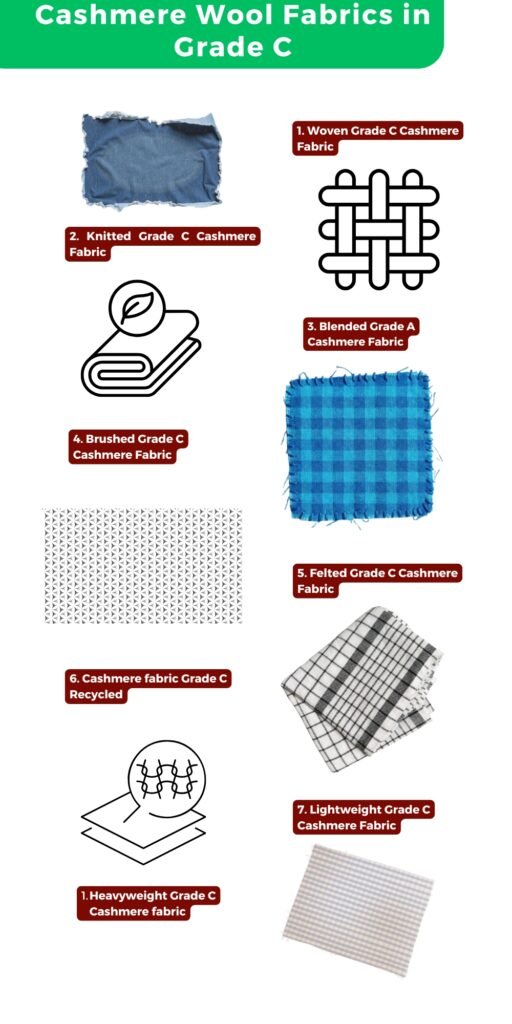
1. Woven Grade C Cashmere Fabric
Types of Grade C Cashmere Wool Fabric is woven using traditional weaving methods. The yarns interlace at right angles to form a structured fabric.
First , cashmere woven is more stable than knitted. It resists stretching. is therefore commonly used to:
- Coats
- Jackets
- Blazers
- Shawls with a structure
The fibers are slightly coarse but can be finished to a smooth surface. It is sometimes blended with synthetic or wool fibers to add strength.
Advantages:
- Durable structure
- Better shape retention
- Ideal for outerwear
may be less soft than higher grades.
2. Knitted Grade C Cashmere Fabric
Interlooping yarns creates Types of Grade C Cashmere Wool Fabric. It offers flexibility and stretch.
This type of material is used in:
- Sweaters
- Cardigans
- Scarves
- Lightweight winterwear
Due to the shorter fibers in Grade C, there may be some pilling. Modern finishing techniques, however reduce this problem.
Benefits:
- Comfortable and breathable
- Flexible Fit
- Lightweight Insulation
It is often blended with acrylic or cotton to improve performance.
3. Blended Grade A Cashmere Fabric
The most popular Types of Grade C Cashmere Wool Fabric. is a blend of cashmere and:
- Merino wool
- Cotton
- Silk
- The use of Polyester
- Viscose
reduces the cost while increasing durability. Blending also increases resistance to wear.
This type of hose is perfect for:
- All-day sweaters
- Fashion garments
- Corporate uniforms
- Clothing for mass-market consumers
Blended cashmere also is easier to care for. If synthetic fibers are used, it can be machine-washed.
4. Brushed Grade C Cashmere Fabric
Cashmere is finished on the surface. The fabric is brushed in order to create a soft texture.
Brushing increases softness, even though the fibers may be of lower quality. Because it is treated, it feels more luxurious.
Some common uses include:
- Winter scarves
- Blankets
- Cozy wraps
It is possible that heavy brushing can increase the amount of pilling.
5. Felted Grade C Cashmere Fabric
Heat, moisture and agitation are used to produce Felted Grade C Cashmere. The fibers are bonded together to form a dense fabric.
The fabric is then.
- Thicker
- More wind-resistant
- Flexible
Cashmere felt is used in:
- Winter hats
- Gloves
- Slippers
- Craft Materials
Insulation is improved despite a slight reduction in softness.
6. Cashmere fabric Grade C Recycled
Textile production has to be sustainable. Recycled Grade C Cashmere Fabric is Growing in Popularity.
Reprocessed fibers and old clothing are used to make this type. The fibers are cleaned and shredded before being spun.
Benefits include the following:
- Environmental impact is reduced
- Reduced production costs
- Sustainable branding value
Blending recycled fibers, even though they are shorter in length, improves the strength and texture.
7. Lightweight Grade C Cashmere Fabric
Cashmere Grade C is lightweight and designed for the transitional seasons. The fabric is thinner because it uses finer spinning methods.
This type of syringe is used to:
- Spring sweaters
- Layering garments
- Fashion tops
It is breathable and comfortable, but not as warm.
8. Heavyweight Grade C Cashmere fabric
Cashmere of Grade C is heavier and denser, providing superior insulation. It is denser and thicker.
is therefore suitable for:
- Winter coats
- Thermal clothing
- Thick Shawls
Some wool blends are blended with additional wool to increase warmth.
The Manufacturing Process for Grade C Cashmere Wool Fabric
There are several steps in the production process:
- Fibers from goats
- Sorting by fiber quality
- Cleaning and dehairing
- Spinning into yarn
- Weaving and knitting
- Finishing treatments
Additional processing may be needed because Grade C fibers have a coarser texture. Many factories use chemical softening to improve texture.
Cashmere Wool Fabric Grade C: Benefits
Even though it’s not a premium-grade product, it still offers significant benefits.
It is breathable, moisture-wicking, and affordable.
It is therefore highly valued in the commercial fashion market.
Textile Industry Applications
Cashmere wool fabric grade C is used widely in:
- Fast Fashion Brands
- Winter Accessories
- Home textiles
- Blended clothing lines
This grade is a good choice for large-scale production because it’s cost efficient.
Care Instructions
The fabric life can be extended by using the right care.
- Handwash in cold water
- Use mild detergent
- Avoid wringing
- Dry flat
Even though machine washing is possible, it’s recommended that you handle the blends with care.
Market Demand and Global Trends
Global textile markets continue to grow. The demand for affordable luxury fabrics is high. As a result Grade C cashmere is a major player.
Sustainability trends also support the use of recycled materials. Fashion brands focus on eco-friendly material. Cashmere Grade C recycled is predicted to gain in popularity.
The conclusion of the article is:
Grade A Cashmere Wool Fabric is a versatile, affordable, and functional fabric. It may not be as soft as higher grades but it is still warm and comfortable.
There are many types of fabrics, from woven and knitted to recycled and blended. Designers and manufacturers are able to select the right type based on budget and application.
Types of Grade C Cashmere Wool Fabric is a viable solution for commercial textile manufacturing. Its performance can be improved with the right care and finishing. This fabric type is expected to remain popular in the global market as demand for luxury at affordable prices increases. Read more: Grade B Cashmere Wool Fabric
FAQs
What is Grade C Cashmere wool fabric?
Grade C Cashmere wool fabric is a lower-grade cashmere made from slightly coarser and shorter fibers. However, it still provides warmth, insulation, and affordability for mass-market apparel.
Is Grade C cashmere soft?
Although it is not as soft as premium Grade A or B cashmere, it can still feel comfortable. Additionally, brushing and blending processes improve softness.Types of Grade C Cashmere Wool Fabric,
What is blended Grade C cashmere?
Types of Grade C Cashmere Wool Fabric with other fibers such as wool, polyester, silk, or cotton. Therefore, it becomes more affordable and durable.