Winter fashion has entered a new era of responsibility.People now care deeply about how their clothing is made.They no longer focus only on warmth and appearance.Instead, they consider environmental and ethical impact.A Recycled Fabric Winter Coat reflects this important shift.It combines modern design with sustainable materials.As climate awareness grows, fashion choices continue to evolve.Therefore, recycled winter coats now lead ethical outerwear trends.Traditional winter clothing consumes massive natural resources.This process damages ecosystems and increases pollution.Recycled fabric winter coats reduce this damage significantly.They reuse existing materials instead of creating new waste.Most importantly, these coats do not compromise performance.They provide warmth, comfort, and durability.As a result, they represent the future of winter fashion.
History of Recycled Fabric Winter Coats
The idea of recycled fabrics began in performance clothing.Outdoor brands first experimented with recycled polyester.Initially, these fabrics lacked softness and insulation.However, innovation quickly changed this limitation.Textile technology improved dramatically over time.Manufacturers learned how to refine recycled fibers.They strengthened yarns while maintaining flexibility.This advancement opened doors for winter outerwear.As sustainability gained global attention, fashion followed.Consumers demanded transparency and ethical production.Brands responded by investing in recycled materials.Thus, recycled fabric winter coats entered mainstream fashion.Today, these coats symbolize innovation and responsibility.They prove that fashion can evolve sustainably.

What Is a Recycled Fabric Winter Coat?
A Recycled Fabric Winter Coat uses materials made from waste.These materials come from previously discarded products.instead of virgin fibers, manufacturers reuse existing resources.This approach reduces environmental strain.Recycled fabrics undergo advanced processing.They are cleaned, broken down, and reshaped into fibers.These fibers are then woven into durable fabrics.Quality control ensures warmth and strength.Modern recycled winter coats meet strict performance standards.They provide insulation, breathability, and weather resistance.Therefore, they function just like traditional winter coats.
Types of Recycled Fabric Winter Coats
Recycled fabric winter coats come in many styles to suit different climates and lifestyles. Designers now combine sustainable materials with functional design. As a result, consumers can choose ethical winter outerwear without giving up comfort or fashion. Each type of recycled fabric winter coat serves a specific purpose while maintaining environmental responsibility.
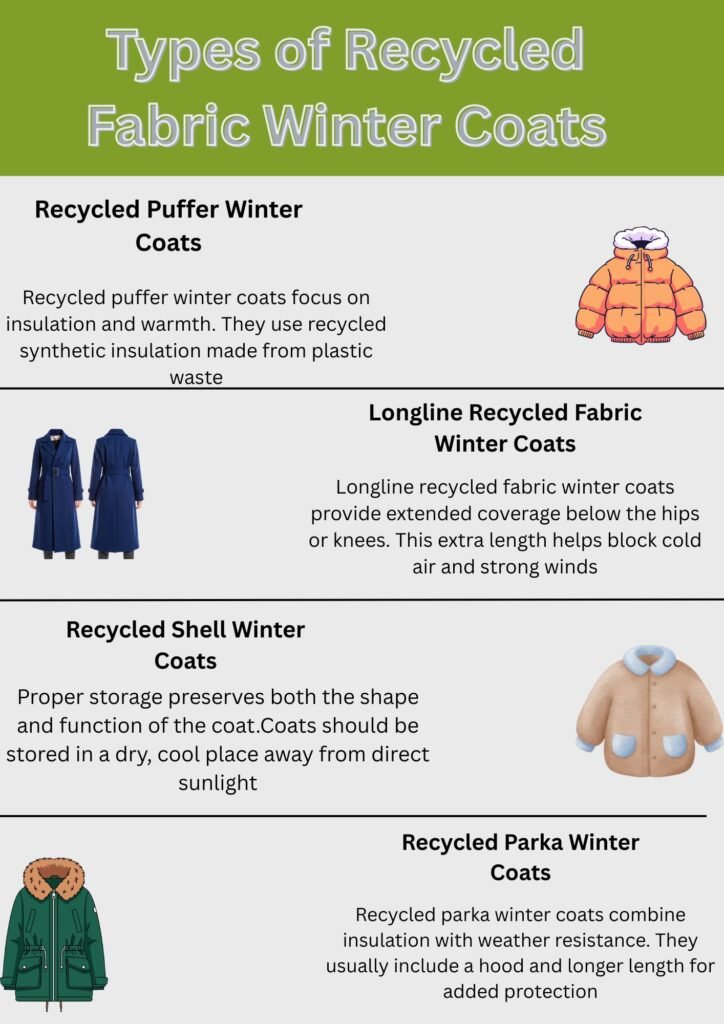
Recycled Puffer Winter Coats
Recycled puffer winter coats focus on insulation and warmth. They use recycled synthetic insulation made from plastic waste. This insulation traps body heat effectively during cold weather. At the same time, the coat remains lightweight and easy to wear. Recycled puffer coats work well for daily winter use, especially in cold urban environments.
Longline Recycled Fabric Winter Coats
Longline recycled fabric winter coats provide extended coverage below the hips or knees. This extra length helps block cold air and strong winds. As a result, wearers stay warmer during extreme winter conditions. These coats are popular for commuting and outdoor walking. Their sleek design also adds a modern fashion touch.
Recycled Shell Winter Coats
Recycled shell winter coats focus on weather protection rather than heavy insulation. They are made from recycled nylon or polyester fabrics. These coats resist wind, rain, and snow effectively. Breathable layers allow moisture to escape, which improves comfort. Recycled shell coats suit active lifestyles and outdoor winter activities.
Recycled Parka Winter Coats
Recycled parka winter coats combine insulation with weather resistance. They usually include a hood and longer length for added protection. Recycled insulation keeps the body warm during freezing temperatures. At the same time, the outer fabric blocks harsh weather. These coats work well in very cold climates and snowy conditions.
Common Recycled Materials Used in Winter Coats
Recycled fabric winter coats rely on carefully selected materials that balance warmth, durability, and sustainability. These materials come from waste sources that would otherwise harm the environment. Through advanced processing, manufacturers transform discarded items into high-quality fabrics suitable for winter outerwear. As a result, recycled materials now perform as well as traditional fabrics while offering a much lower environmental impact.
Recycled Polyester (rPET) in Winter Coats
Recycled polyester is one of the most widely used materials in recycled fabric winter coats. It is mainly produced from discarded plastic bottles that are cleaned and melted into fibers. These fibers are then spun into yarn and woven into fabric. Recycled polyester provides excellent insulation and moisture resistance. It also dries quickly and maintains its shape during long-term use. Because of these qualities, rPET works especially well for cold and wet winter conditions.
Recycled Nylon for Strength and Weather Resistance
Recycled nylon plays an important role in high-performance winter coats. Manufacturers often source it from abandoned fishing nets and industrial waste. After recycling, the material becomes strong and flexible. Recycled nylon resists tearing and abrasion, making it ideal for harsh winter environments. It also performs well against wind and snow. This durability helps extend the life of recycled fabric winter coats significantly.
Recycled Wool for Natural Warmth
Recycled wool is created from leftover wool fibers and old wool garments. These fibers are cleaned and reprocessed into usable yarn. Recycled wool retains its natural ability to trap heat and regulate body temperature. It also allows air to circulate, which prevents overheating. Because it uses existing wool, this material reduces the demand for new animal resources. As a result, recycled wool supports both sustainability and comfort.
Recycled Cotton Blends for Softness and Comfort
Recycled cotton blends are commonly used in casual recycled fabric winter coats. Cotton waste from factories and old clothing is collected and processed into new fibers. On its own, recycled cotton lacks strength for winter use. Therefore, manufacturers blend it with recycled synthetic fibers. This combination improves durability while keeping the fabric soft and breathable. These blends work well for everyday winter wear in mild to moderate cold.
Why Recycled Fabric Winter Coats Are Beneficial
Recycled fabric winter coats offer more than seasonal warmth. They represent a responsible approach to modern fashion. As environmental concerns continue to grow, consumers increasingly seek clothing that aligns with their values. A recycled fabric winter coat answers this need by combining sustainability, comfort, and long-term practicality. These coats support both personal well-being and global environmental health.
Environmental Protection Through Waste Reduction
One of the strongest benefits of recycled fabric winter coats is their ability to reduce waste. Manufacturers use discarded plastics, old garments, and industrial textile leftovers. This process prevents harmful materials from ending up in landfills or oceans. As a result, recycled winter coats help control pollution and reduce environmental damage. Over time, this approach supports a cleaner and healthier planet.
Lower Carbon Footprint in Fabric Production
Traditional fabric production consumes large amounts of energy. It also releases high levels of carbon emissions into the atmosphere. In contrast, recycled fabric winter coats require far less energy during manufacturing. Recycling existing materials reduces the need for raw resource extraction. Therefore, each recycled winter coat contributes to lowering overall carbon emissions and slowing climate change.
Reduced Water Consumption in Manufacturing
Water conservation is another major advantage of recycled fabric winter coats. Conventional textile production uses enormous quantities of freshwater. This practice strains water resources in many regions. Recycled fabrics significantly reduce water usage because they reuse existing fibers. By choosing recycled winter coats, consumers indirectly support water preservation efforts across the globe.
Long-Lasting Durability and Strength
Many people assume recycled fabrics lack durability. However, modern technology has changed this perception. Recycled fabric winter coats now match or exceed traditional coats in strength. Advanced processing techniques create fibers that resist wear and tear. As a result, these coats maintain their structure and insulation over many winter seasons. Durability makes recycled coats a practical long-term investment.
Warmth and Performance of Recycled Fabric Winter Coats
Recycled fabric winter coats deliver reliable warmth and strong performance in cold conditions. Many people assume recycled materials cannot provide proper insulation. However, modern textile technology has completely changed this perception. Manufacturers now design recycled fabrics to meet the same performance standards as traditional winter materials. As a result, recycled fabric winter coats protect the body effectively during harsh winter weather.
Insulation plays a key role in winter coat performance. Recycled winter coats often use advanced synthetic insulation made from recycled plastics. These fibers trap warm air close to the body. This trapped air creates a thermal barrier against cold temperatures. Even in freezing conditions, recycled insulation helps maintain stable body heat. Therefore, wearers stay warm during long outdoor exposure.
Wind protection also contributes to overall warmth. Many recycled fabric winter coats feature tightly woven outer shells. These shells prevent cold air from penetrating the coat. As a result, body heat remains trapped inside. This feature becomes especially important in windy winter environments. Without wind resistance, even thick insulation can lose effectiveness.
Recycled Fabric Winter Coat Versus Traditional Winter Coat
Recycled fabric winter coats and traditional winter coats serve the same basic purpose. Both aim to protect the body from cold temperatures. However, the difference lies in how they are made and how they impact the environment. Understanding this comparison helps consumers make informed and responsible choices. As sustainability becomes more important, this comparison grows increasingly relevant.
Traditional winter coats rely heavily on virgin materials. These materials include new polyester, nylon, wool, and down. Producing virgin fabrics requires extensive energy and raw resources. The process also involves high water consumption and chemical treatments. Over time, this method contributes to pollution and environmental strain. In contrast, a recycled fabric winter coat uses existing materials. Manufacturers reuse plastic waste, textile leftovers, and discarded garments. This reuse significantly reduces the need for new resource extraction.
Environmental impact remains the most noticeable difference between the two. Traditional winter coats contribute to carbon emissions during raw material production. Mining, farming, and processing increase the carbon footprint. Recycled fabric winter coats reduce emissions by shortening the production cycle. Recycling materials requires less energy than producing new fibers. As a result, recycled coats support climate-friendly fashion practices.
How to Choose the Best Recycled Fabric Winter Coat
Choosing the right recycled fabric winter coat requires thoughtful consideration. Winter conditions vary greatly from one region to another. Personal lifestyle also plays an important role in this decision. A well-chosen coat provides warmth, comfort, and long-term value. At the same time, it supports sustainable fashion choices. Understanding key factors helps ensure the best purchase.
Understanding Insulation and Warmth Levels
Insulation determines how well a recycled fabric winter coat protects against cold. Different insulation types offer different warmth levels. Recycled synthetic insulation works especially well in damp and snowy climates. It continues to insulate even when exposed to moisture. Recycled wool blends provide natural warmth and breathability. These blends suit dry and cold winter conditions. Choosing insulation based on climate ensures lasting comfort.
Evaluating Fabric Thickness and Construction
Fabric thickness plays a major role in heat retention. Thicker fabrics block cold air more effectively. They also add durability to the coat’s structure. However, heavier fabrics may feel bulky during daily use. Lightweight recycled fabrics offer flexibility and comfort. These fabrics suit mild to moderate winter temperatures. Balanced construction improves warmth without restricting movement.
Considering Weather Resistance and Climate Suitability
Weather resistance is essential for winter outerwear. Recycled fabric winter coats often include windproof and water-resistant layers. These features protect against rain, snow, and strong winds. In wet climates, waterproof coatings become especially important. In dry and windy regions, wind resistance matters more. Selecting a coat designed for local weather improves overall performance.
Choosing the Right Fit and Length
Fit influences warmth and comfort significantly. A well-fitted recycled fabric winter coat traps body heat efficiently.Loose coats allow cold air to enter. Extremely tight coats restrict movement and layering. Length also affects protection. Longer coats provide better coverage for the lower body. Shorter coats offer flexibility and ease of movement. Choosing the right fit ensures daily comfort.Style and Design Trends in Recycled Fabric Winter CoatsRecycled fabric winter coats now reflect modern fashion.Designers focus on clean and versatile aesthetics.Minimalist designs dominate current collections.They suit everyday and professional settings.These styles remain timeless and practical.Longline and puffer silhouettes stay popular.
Best Uses of a Recycled Fabric Winter Coat
Recycled fabric winter coats adapt to many situations.Their versatility increases daily comfort.For commuting, lightweight coats perform well.They provide warmth without restricting movement.During travel and outdoor activities, insulated coats excel.They resist changing weather conditions.This reliability supports active lifestyles.In extreme cold, heavily insulated coats perform best.They protect against harsh temperatures.Extended coverage improves comfort.Both casual and formal outfits benefit.Tailored styles suit professional environments.Casual designs suit relaxed winter wear.
Are Recycled Fabric Winter Coats Worth the Price?
Recycled fabric winter coats may cost more initially.However, long-term benefits outweigh the expense.Durability reduces replacement frequency.This longevity saves money over time.Environmental impact reduction adds ethical value.Supporting sustainable brands encourages innovation.This investment benefits future fashion.
How to Care for a Recycled Fabric Winter Coat
Proper care plays a major role in maintaining the quality of a recycled fabric winter coat. Although recycled materials are durable, they still need gentle handling. With correct care, these coats retain warmth, shape, and performance for many winters. Understanding basic care practices helps protect both the fabric and the environment.
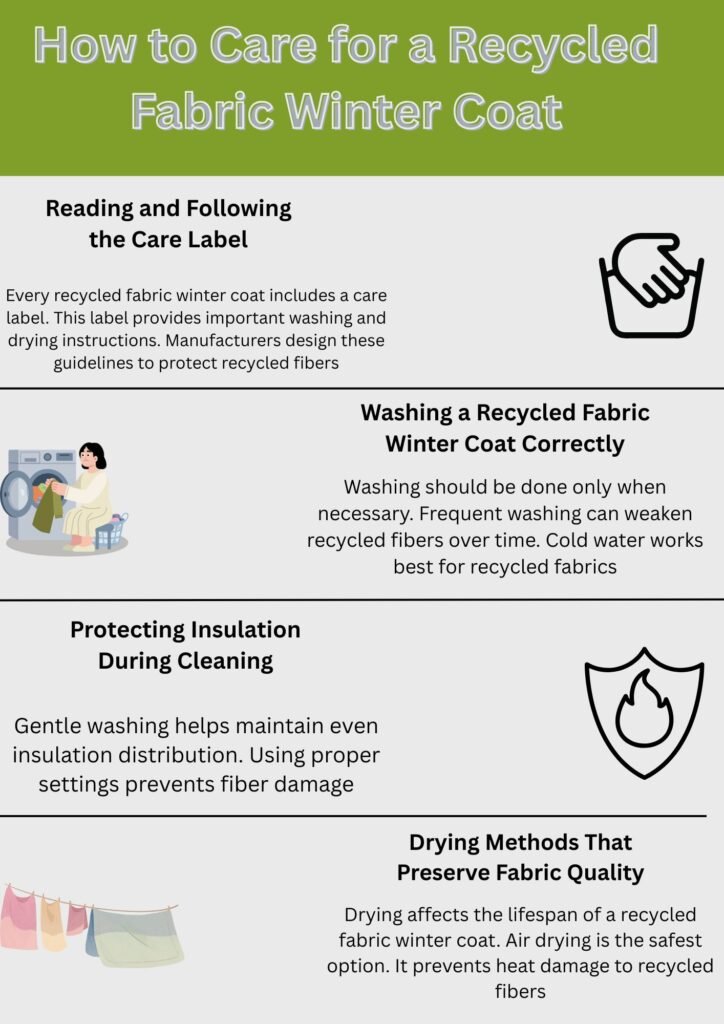
Reading and Following the Care Label
Every recycled fabric winter coat includes a care label. This label provides important washing and drying instructions. Manufacturers design these guidelines to protect recycled fibers. Ignoring the label may damage insulation or fabric coatings. Therefore, always read and follow care instructions carefully before cleaning the coat.
Washing a Recycled Fabric Winter Coat Correctly
Washing should be done only when necessary. Frequent washing can weaken recycled fibers over time. Cold water works best for recycled fabrics. Mild detergent helps preserve fabric structure. Gentle wash cycles reduce stress on insulation. Proper washing keeps the coat clean without reducing performance.
Protecting Insulation During Cleaning
Insulation requires special attention during washing. Recycled insulation can clump if handled roughly. Gentle washing helps maintain even insulation distribution. Using proper settings prevents fiber damage. After washing, reshaping the coat ensures insulation remains evenly spread.
Drying Methods That Preserve Fabric Quality
Drying affects the lifespan of a recycled fabric winter coat. Air drying is the safest option. It prevents heat damage to recycled fibers. If machine drying is necessary, low heat settings work best. High heat can damage insulation and outer coatings. Proper drying preserves warmth and fabric strength.
Conclusion
A recycled fabric winter coat is more than just a piece of clothing; it is a reflection of conscious choices and modern responsibility. Choosing recycled materials reduces environmental impact, minimizes waste, and lowers the carbon footprint associated with traditional winter coat production. At the same time, these coats offer warmth, durability, and style, proving that sustainable fashion no longer requires compromising on performance or comfort.
FAQs
Are recycled fabric winter coats as warm as traditional coats?
Yes, recycled fabric winter coats are designed to provide warmth comparable to traditional winter coats. Modern recycled materials, including synthetic insulation derived from plastic waste or recycled wool, trap heat efficiently and retain it even in damp conditions.
Are recycled fabric winter coats waterproof?
Many recycled fabric winter coats are water-resistant, although not all are fully waterproof. Coats often feature eco-conscious coatings that repel snow and light rain, preventing moisture from reaching the insulation. This ensures that the coat maintains its thermal properties during wet conditions.
Do recycled fabric winter coats shed microplastics when washed?
High-quality recycled fabric winter coats minimize microplastic shedding, thanks to improved manufacturing techniques. Fibers from recycled plastic bottles or industrial waste are treated to retain strength during washing.