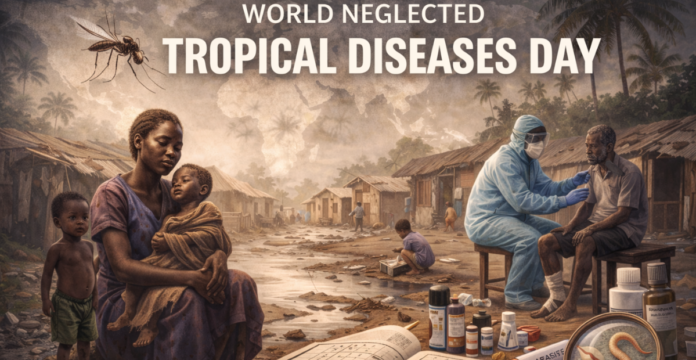
January 30 is designated World Neglected Tropical Diseases Day worldwide. This date focuses on neglected diseases impacting more than one billion global residents, particularly the poor. As a consequence of poverty, these diseases cause numerous and varied pain manifestations, create physical and mental disabilities, and deprive people of a healthy, productive life. This neglect illustrates a global failure to recognize and fulfill the basic, fundamental, and universal right to health.
World Neglected Tropical Diseases Day motivates action from all levels of government, international and national health organizations, and all tiers of society, advocating the need for proactive disease prevention and equitable accessibility to all levels of health services. Most importantly, the day draws attention to the neglected sick.
Neglected Tropical Diseases (NTDs)
Neglected Tropical Diseases (NTDs) are types of diseases called infections. They primarily developing in the tropical and sub tropical areas. They persist in the areas of less sanitation and also less clean drinking water and lessgood health care. Because of this fact thousands of people suffer trom the diseases for years without getting proper treatment and getting access for care.
NTDs are` neglected in the sense that they do not get as much consideration as other diseases that are less severe; the other diseases are however considered unlike the NTDs. Ths NTDs though considered do have have and inflict in most severe.
Some of the other common NTDs believe to have there impact are as follows:
- Dengue – A fever that here are high in mosquitos who infect people there in tropical areas and have diseases in the areas.
- Leprosy – A disorder which destroy and eats away brain nerves. And
skin - Chagas disease –
diseasecaused by insects the infections people of theirorgan's;Systemhearts and stomach. - Lymphatic filariasis (Elephantiasis)
-disease that …… ebcause of their chronic infections they arestagnatedand disabled` - Schistosomiasis –
adisease caused by the infestations of the systems of throats water which is contaminated. - Onchocerciasis (River blindness) – incapacitants of blind seeing people.
All the other diseases are getting possilbe and accessible to get into care with most of the other diseases.
Significance of World NTD Day
Due to the harsh realities of poverty, countless diseases are pushed into the shadows. World NTD Day exists to wrestle these diseases from the social and political neglect that surrounds the impoverished sick.
This day is meant to:
- Spread the message on the burden of NTDs
- Mobilize the political will and resources
- Catalyze funding on innovation and research
- Combat the associated discrimination and stigmas
- Advocate for universal health services
By providing a focused goal on the above, it aims for a sustainable impact on the international community.
World NTD Day Timeline
The annual observance of World NTD Day is to acknowledge the beginning of the countdown to the elimination of NTDs as a ‘dirty disease’ category. January 30 is of particular significance as it is the date for the first international public health ‘Treaty’ on NTDs; The London Declaration on Neglected Tropical Diseases was signed in 2012.
The declaration was the first for global health civil societies, N governments, N pharma, and N global health funders. They all pledged to control, eliminate, or even eradicate NTDs by improving access to the medicines and health services needed to strengthen health systems.
That is how January 30 was inscribed in global health and civil society history as the date of the first global health ‘treaty’ and the beginning of the NTDs into global health history co-opted as their first Treaty of Hope.
The Societal Impact of Neglected Tropical Diseases
The impact of Neglected Tropical Diseases is broad and encompasses even the most sensitive areas of social and economic well-being.
Health Consequences
NTDs can lead to:
- Chronic health issues
- Impairment
- Loss of sight
- Psychological impacts
- Shortened longevity
These conditions, without treatment, deteriorate over time.
Financial Consequences
NTDs patients faces difficulties in working or going to school. Hence:
- Households suffer financial loss
- Kids lose out on schooling
- Societies remain in a state of extreme poverty
Therefore, tackling NTDs helps to change the state of extreme poverty
NTDs And Poverty
NTDs and poverty are interconnected. Disease carrying vectors can thrive in conditions associated with poverty, such as inadequate housing, lack of safe water sources, and poor sanitation. Meanwhile, the poverty cycle can trap families as ill health prevents them from working.
World NTDs Day brings attention to this phenomenon, and highlights the need for addressing the entwined problems of health and poverty. Living conditions need to be improved alongside providing medicines.
Development Initiatives Aimed At The Total Eradication Of Neglected Tropical Diseases
In the past 10 years, we have witnessed amazing progress. Millions of patients benefitted from the global collaborations.
Key Achievements
- mass drug administration (MDA) programs
- donations of medicines from pharmaceutical companies
- enhanced disease monitoring
- expanded community health worker (CHW) programs
Consequently, multiple countries have eradicated at least one neglected tropical disease (NTD).
The World Health Organization’s (WHO) Contribution
The World Health Organization (WHO) is the most important player in the NTD field. WHO provides the necessary guidance, supports the integration of NTDs in national health systems, and monitors global progress. World Neglected Tropical Diseases Day
The WHO’s NTD roadmap focuses on:
- Reducing the need for treatment
- Improving health systems
- Documenting the elimination of specific NTDs by 2030
World NTD Day aligns with the global priorities.
Ongoing Challenges
There are numerous challenges, despite the success stories.
Key Challenges
- Funding gaps
- The altering of the disease landscape due to climate change
- War and displacement
- Fragile health systems
- Low levels of awareness
Given the above, sustained efforts are critical.
NTDs and Climate Change
NTDs are spreading more widely due to climate change. Warmer weather and flooding enable the spread of vector-borne diseases in different areas. World Neglected Tropical Diseases Day
Consequently, more people are now at risk from diseases such as dengue. World NTD Day highlights this threat.
Stigma and Discrimination
Those infected with NTDs or Neglected Tropical Diseases often suffer from social stigma and discrimination, particularly, NTDs, which have highly visible symptoms. World Neglected Tropical Diseases Day
World Neglected Tropical Diseases Day Education changes social attitudes, and with the increased accuracy of information, the World Neglected Tropical Diseases Day promotes the social inclusion and dignity, which NTDs often suffer.
How Communities Can Prevent Neglected Tropical Diseases
Prevention of World Neglected Tropical Diseases Day or NTDs is both possible and effective.
Simple Prevention Steps
- Sanitation and balanced hygiene
- Clean water and safe drinking
- Mosquito nets and protective barriers
- Adequate community nutrition education
- Health education and periodic checkups
In the long run, prevention is cost effective and life saving.
How You Can Support World Neglected Tropical Diseases Day
World Neglected Tropical Diseases Day The cause is accessible to everyone.
You may
- Disseminate information and educational materials
- Support charities and NGOs focused on health
- Mobilize and advocate for health financing at the global level
- Join advocacy and awareness marches
- Educate and inform others
Your small actions may have large consequences.
The Importance of Awareness and Education
World Neglected Tropical Diseases Day Education and commitment to the problem, for the case of NTDs, help to achieve the objectives of most ailments without complication.
World Neglected Tropical Diseases Day calls people, both at the international, national, and community levels, to focus on education for the change of attitude and behavior.
Control of New Tropical Diseases That Are Still Emerging
World Neglected Tropical Diseases Day The future relies on new partner collaboration, goodwill, and innovation. Emerging new therapeutics, vaccines, and innovative digital health solutions will further strengthen this goodwill.
With continued global support, the NTDs are forecasted to remain possible to eliminate within our lifetime, especially the more NTDs.
Final Remarks
January 30, the World Neglected Tropical Disease Day, is a clear and urgent call to recognize and value global health equity. Tropical Diseases, as the name and the word itself reflects, are Neglected, because they heavily impact the poorest and the most disenfranchised populations, and they, the diseases, are of course, preventable and curable.
Shifting global attention to the neglect of the most disenfranchised populations on the globe is a call to all advocates, to the global community.
World Neglected Tropical Diseases Day is calling on all the global partners to demonstrate global Goodwill. Learn About: School Day of Non-Violence and Peace And Martyrs’ Day