Every clothing brand reaches a point where this question becomes unavoidable — do I go white label or private label? Both manufacturing models work. Both have real advantages. But they serve very different brand goals, budgets, and growth strategies. Understanding white label vs private label denim shorts properly before you commit saves you significant time, money, and frustration down the line.
What Is White Label Denim?
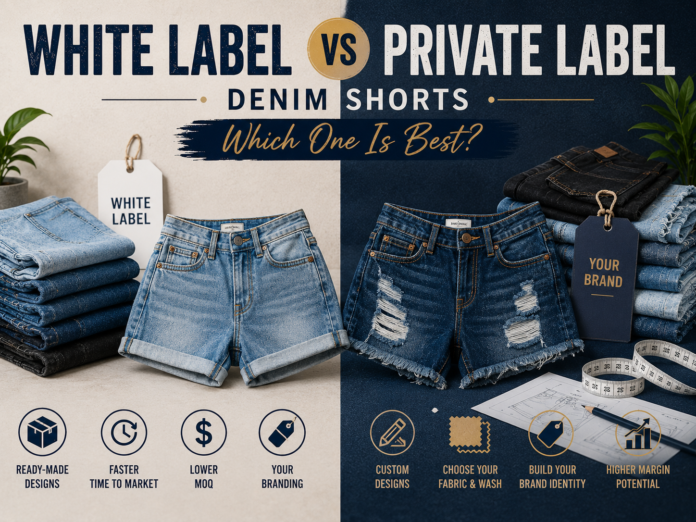
White label means a manufacturer produces a standard, pre-designed denim short that multiple brands can purchase and sell under their own branding. The product itself stays the same across buyers — only the label, tags, and packaging change.
White label suits brands that need to:
- Launch quickly without a long development process
- Keep upfront costs and MOQs low
- Test the denim shorts market before committing to custom development
- Operate with a smaller team and limited production management capacity
The core limitation is differentiation. If another brand buys the same white label short, your products look identical on the rack — and only your branding separates them.
What Is Private Label Denim?
Private label means the manufacturer develops a denim short exclusively for your brand. The fit, fabric, wash, distressing, hardware, and finishing are all custom — built specifically around your brand identity and customer needs.
A professional private label denim manufacturer gives your brand complete creative control from the very first sample. Nothing about your product exists anywhere else on the market — because it was built entirely for you.
White Label vs Private Label: Key Differences
| Feature | White Label | Private Label |
|---|---|---|
| Product Uniqueness | Shared across multiple brands | Exclusive to your brand |
| Development Time | Fast — product already exists | Longer — built from scratch |
| Upfront Cost | Lower | Higher |
| Customization Level | Label and packaging only | Full — fabric, fit, wash, hardware |
| Brand Differentiation | Low | High |
| Scalability | Limited | Unlimited |
| Long-Term Brand Value | Moderate | Significantly higher |
Which Model Builds a Stronger Denim Brand
Private label wins on brand building — every single time. When your denim shorts have a unique fit, a signature wash, and custom hardware that nobody else sells, your brand owns something real. Customers come back for your specific product — not just any denim short they could find elsewhere.
White label works as a starting point. It gets product in front of customers fast while your brand finds its footing. But brands that stay white label long-term struggle to build loyalty because their products are never truly theirs.
The strongest approach is to start white label if budget demands it — then transition to private label as revenue grows. Many successful denim apparel brands follow exactly this path.
Expanding Beyond Shorts With Private Label
The real power of private label manufacturing shows when you expand your collection. Once you establish a private label relationship with a manufacturer, developing additional products becomes significantly faster and more cost-effective.
Your manufacturer already understands your brand standards, fit preferences, and quality expectations. Adding denim jeans, denim jackets, or denim skirts to your range becomes a smooth, efficient process rather than starting from scratch with every new product category.
Brands targeting specific markets — like streetwear denim or kids denim — benefit most from private label because these customers actively seek distinctive, brand-specific products rather than generic alternatives available everywhere.
Conclusion
White label vs private label denim shorts comes down to where your brand is today and where you want it to go. White label launches fast and costs less upfront. Private label builds real brand equity, product exclusivity, and long-term customer loyalty that no white label model can replicate. Choose the model that fits your current reality — but always build toward private label. That’s where lasting denim brands are built and where serious growth begins.
FAQs
Can I switch from white label to private label later?
Absolutely. Many brands start white label to generate initial revenue, then transition to private label manufacturing as their budget and customer base grows.
Does private label require higher minimum order quantities?
Generally yes — private label MOQs are higher because production is exclusive to your brand. However, many manufacturers offer flexible MOQs for new brand partnerships.
How long does private label denim shorts development take?
From initial briefing to bulk production, private label development typically takes six to twelve weeks — including sampling, revisions, and approval stages.
Is white label denim shorts manufacturing suitable for long-term brand building?
White label works short-term for market testing and quick launches. For serious long-term brand building, private label is the stronger and more sustainable choice.