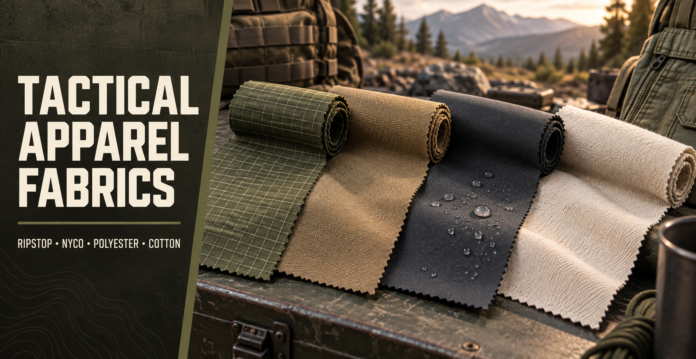
Tactical apparel fabrics must balance durability, comfort, mobility, drying speed, and protection for the intended environment. Ripstop describes a reinforced fabric structure, while NYCO is a nylon-cotton blend. Polyester offers fast drying and strong moisture management, whereas cotton provides softness and breathability but holds more water.
No material is best for every user. Hot climates, wet conditions, heavy fieldwork, casual wear, and repeated washing create different requirements. The most suitable fabric depends on fiber content, weave, weight, finish, garment construction, and expected activity.
Ripstop Is a Fabric Structure
Ripstop fabric uses thicker reinforcement yarns woven into a visible square or diamond grid. If the surface is cut or punctured, the reinforced pattern can slow the tear from spreading. This construction is common in tactical pants, field shirts, jackets, bags, tents, and other outdoor equipment.
Ripstop is not a single fiber. Manufacturers can produce it from nylon, polyester, cotton, or blended yarns, so performance varies. This ripstop guide explains how its grid construction supports tear resistance without requiring the entire textile to become extremely heavy.
NYCO Balances Nylon and Cotton
NYCO combines nylon and cotton in one fabric, often using a balanced blend, although exact ratios differ. Nylon improves strength, abrasion resistance, and durability, while cotton adds softness, air permeability, and a familiar natural feel. The result is common in uniforms, combat trousers, and field shirts.
NYCO usually feels more comfortable than an all-synthetic fabric during long wear, yet it may dry more slowly than polyester or nylon. A durable work pant may combine blended fibers, ripstop reinforcement, and stretch for field movement.
Polyester Dries Quickly
Polyester absorbs little moisture into the fiber and generally dries faster than cotton. It is strong, dimensionally stable, and well suited to base layers, lightweight shirts, fleece, linings, and warm-weather tactical clothing. It also performs reliably through frequent washing when the garment is constructed correctly.
However, tightly woven polyester can feel warm without ventilation, and untreated fabric may retain odor. Knit structure, mesh panels, moisture-management finishes, and antimicrobial treatments can improve comfort. Users should judge the full textile construction rather than assuming every polyester fabric performs identically.
Cotton Provides Natural Comfort
Cotton feels soft, breathes well, and can remain comfortable during light activity in dry conditions. It accepts dyes and finishes effectively and is widely used in tactical-inspired casual clothing. Cotton-rich fabrics also tend to feel less slick than many synthetic alternatives.
The main weakness is moisture retention. Cotton absorbs perspiration and rain, becomes heavier when wet, and dries slowly. Damp fabric can cause discomfort or chilling in cool conditions. For demanding use, manufacturers often blend cotton with nylon or polyester to improve strength and drying performance.
Nylon Adds Strength and Abrasion Resistance
Nylon provides high strength relative to its weight and handles surface abrasion well. It appears in tactical outerwear, reinforced panels, lightweight pants, and equipment. Tightly woven nylon can also resist wind, while coatings or membranes may add greater protection against rain.
The fabric can feel less breathable in dense constructions and may soften after use. Direct heat can damage synthetic fibers, so nylon is not automatically suitable for every industrial hazard. Required safety standards should guide material selection in environments involving flame, heat, or electrical risks.
Fabric Weight and Weave Matter
Fiber content alone cannot predict comfort or durability. A heavy polyester canvas behaves differently from a lightweight polyester knit, while dense cotton twill performs differently from a thin cotton jersey. Yarn size, weave density, fabric weight, brushing, and mechanical stretch change how a textile feels and performs.
This fabric guide compares common options used across tactical garments. Lighter materials support airflow and packability, while heavier fabrics usually offer more protection and structure. The right balance depends on climate and physical demands.
Tactical Fabric Selection Checklist
Start with the actual job instead of choosing by fiber name alone. Consider whether the garment will face heat, rain, abrasion, repeated washing, sharp surfaces, heavy equipment, or sustained physical activity. Protective work may also require certified materials rather than ordinary tactical fabric.
Important qualities to compare include:
- Fiber content and blend ratio
- Fabric weight and thickness
- Ripstop, twill, canvas, or knit structure
- Abrasion and tear resistance
- Drying speed and moisture control
- Airflow and heat management
- Stretch and recovery
- Colorfastness and wash durability
- Required protective standards
Matching Fabric to the Garment
Field shirts often need lighter, breathable fabric, while pants require greater abrasion resistance and stable pocket support. Jackets may use softshells, insulated textiles, or waterproof laminates. Reinforcements can add durability without making the complete garment unnecessarily heavy.
Brands developing technical collections can work with a tactical maker to match fabric, pattern, seams, pockets, finishes, and testing requirements. Material selection works best when it is planned together with the garment’s fit and purpose.
Conclusion
Tactical apparel fabrics perform differently because their fibers and constructions solve different problems. Ripstop helps control tears, NYCO balances durability with cotton comfort, polyester dries quickly, and cotton offers softness but retains more moisture.
Compare the complete fabric rather than relying on one label. Weight, weave, blend ratio, stretch, finishes, seams, and intended use determine whether the final garment will remain comfortable and dependable in real conditions.
FAQs
Is ripstop always made from nylon?
No. Ripstop can be made from nylon, polyester, cotton, or blended fibers.
What does NYCO mean?
NYCO means a nylon-cotton blend designed to combine synthetic durability with natural-fiber comfort.
Is polyester better than cotton for tactical clothing?
Polyester dries faster, while cotton often feels softer. The better choice depends on climate and activity.
Are tactical fabrics waterproof?
Not automatically. Waterproof performance usually requires a coating, membrane, sealed seams, or a combination of these features.