
Sustainable Winter Fabrics for 2025 play a critical role in responsible fashion today. As winters grow more unpredictable, people need clothing that provides reliable warmth without harming the planet. At the same time, the fashion industry remains one of the largest contributors to pollution worldwide. Therefore, fabric choices matter more now than ever before.
Climate change has intensified resource scarcity and environmental damage. Traditional winter fabrics often require excessive water, energy, and chemical use. In contrast, sustainable alternatives reduce these impacts significantly. Moreover, consumers increasingly demand transparency and ethical production. Because of this shift, 2025 marks a turning point for sustainable textiles.
Brands now invest heavily in eco-friendly winter fabrics that perform well in cold conditions. Innovation allows sustainable materials to match or exceed traditional warmth levels. As a result, consumers no longer need to compromise comfort for ethics. Eco-friendly warmth has finally become practical, stylish, and widely available.
History of Sustainable Winter Fabrics
Sustainable winter fabrics have deep historical roots that predate modern fashion systems. Long before industrial manufacturing, communities relied on locally sourced wool, hemp, and animal fibers to survive harsh winters. These materials were valued for warmth, durability, and repairability rather than trend appeal. As a result, winter garments were worn for many years and often passed down through generations. This slow and mindful approach created minimal waste and respected natural resources.
However, the industrial revolution changed textile production dramatically. Factories introduced synthetic fibers and chemical processing to meet growing demand. Consequently, production became faster but far more harmful to the environment. Water pollution, carbon emissions, and textile waste increased rapidly. Over time, these impacts became impossible to ignore. Therefore, sustainable winter fabrics re-emerged as a corrective response rather than a passing trend.
What Makes a Fabric Sustainable for Winter Wear
A sustainable winter fabric balances environmental responsibility with functional performance. It must provide insulation, durability, and comfort while minimizing ecological impact. Sustainability considers the entire life cycle of a fabric, from fiber sourcing to disposal. Therefore, a fabric cannot be called sustainable based on material alone.
Renewable and recycled fibers form the foundation of sustainable winter textiles. Renewable fibers regenerate naturally over time, while recycled fibers reduce existing waste. Both approaches lower environmental strain when used responsibly. Additionally, energy and water efficiency during production plays a crucial role. Sustainable manufacturing reduces emissions and conserves natural resources.
Biodegradability and recyclability also influence sustainability. Fabrics that decompose naturally or re-enter production cycles create less long-term waste. Furthermore, durability supports sustainability by reducing frequent replacement. When winter garments last longer, overall consumption decreases. Thermal efficiency further enhances sustainability by reducing the need for excessive layering.
Top Sustainable Winter Fabrics for 2025
Sustainable Winter Fabrics for 2025 include materials that combine warmth, ethics, and environmental responsibility. These fabrics dominate eco-conscious winter fashion and continue gaining popularity globally. Each fabric offers unique benefits depending on climate, activity level, and garment type.
Recycled wool remains one of the most effective sustainable winter fabrics. It retains excellent insulation properties while reducing textile waste significantly. By reprocessing existing wool garments, manufacturers save water and energy. Recycled wool performs well in coats, scarves, and blankets because it traps heat efficiently. Additionally, it remains breathable even in damp conditions.
Organic wool offers similar warmth with added ethical benefits. Sheep raised under organic standards avoid harmful chemicals and pesticides. This approach protects ecosystems and supports animal welfare. Organic wool naturally regulates temperature and resists odors. As a result, it suits winter sweaters, thermals, and layering garments.
Recycled polyester, often called rPET, transforms plastic waste into functional winter fibers. This process reduces plastic pollution while producing durable, lightweight fabric. rPET resists wind and moisture effectively, making it suitable for winter outerwear. However, breathability remains lower than natural fibers. Therefore, it works best in jackets and insulated shells.
Types of Sustainable Winter Fabrics for 2025
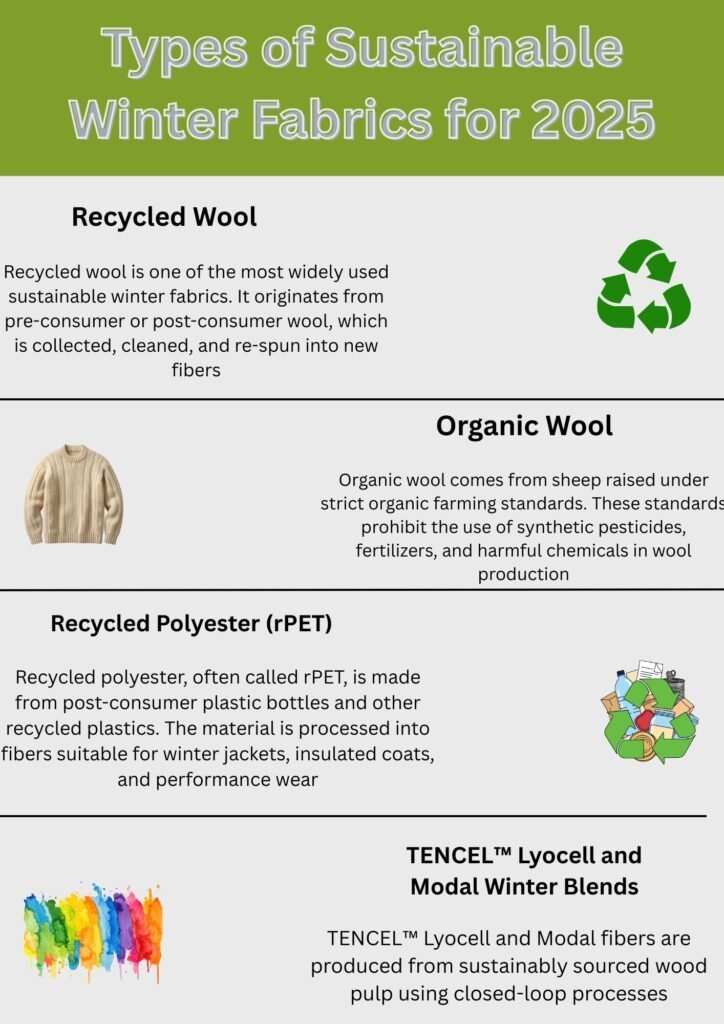
Sustainable winter fabrics for 2025 come in a variety of types, each offering unique benefits for warmth, durability, and environmental impact. Understanding the differences between these fabrics helps consumers select clothing that performs well in cold weather while supporting eco-friendly practices.
Recycled Wool
Recycled wool is one of the most widely used sustainable winter fabrics. It originates from pre-consumer or post-consumer wool, which is collected, cleaned, and re-spun into new fibers. This process reduces waste and prevents old garments from ending up in landfills. Recycled wool retains the natural warmth, breathability, and moisture-wicking properties of virgin wool. It is particularly suitable for winter coats, sweaters, and blankets.
Organic Wool
Organic wool comes from sheep raised under strict organic farming standards. These standards prohibit the use of synthetic pesticides, fertilizers, and harmful chemicals in wool production. Organic wool is softer on the skin and hypoallergenic, which is ideal for base layers and garments worn directly against the body. In addition to thermal performance, organic wool supports ethical animal welfare practices.
Recycled Polyester (rPET)
Recycled polyester, often called rPET, is made from post-consumer plastic bottles and other recycled plastics. The material is processed into fibers suitable for winter jackets, insulated coats, and performance wear. Recycled polyester reduces the reliance on fossil fuels and diverts plastic waste from oceans and landfills. Its fibers are durable, lightweight, and water-resistant, although breathability may be lower than natural fibers.
TENCEL™ Lyocell and Modal Winter Blends
TENCEL™ Lyocell and Modal fibers are produced from sustainably sourced wood pulp using closed-loop processes. This manufacturing method recycles water and solvents, reducing environmental impact. When blended for winter use, TENCEL™ fibers provide softness, breathability, and moisture control
New and Emerging Sustainable Fabric Innovations for 2025
Innovation continues reshaping Sustainable Winter Fabrics for 2025. Textile scientists now combine biology, engineering, and environmental science to create advanced materials. These innovations aim to reduce emissions while improving insulation and durability. As a result, winter fashion enters a new technological era.
Bio-engineered fabrics mimic natural insulation structures found in animals. Plant-based insulation materials replace petroleum-based fillings successfully. Lab-grown wool alternatives eliminate the need for animal farming entirely. Meanwhile, carbon-neutral textile production offsets emissions through renewable energy. Together, these advancements redefine eco-friendly winter fabrics.

Sustainable vs Traditional Winter Fabrics
Sustainable winter fabrics now rival traditional materials in performance. They provide comparable warmth while reducing environmental damage. Traditional fabrics often rely on fossil fuels and chemical treatments. In contrast, sustainable alternatives minimize pollution and waste.
Longevity improves significantly with sustainable manufacturing. Durable fabrics reduce replacement frequency and overall consumption. Although sustainable fabrics may cost more initially, long-term savings balance expenses. Maintenance also becomes easier due to improved fiber quality. Therefore, sustainability proves both practical and economical.
Best Sustainable Winter Fabrics for Extreme Cold
When facing extreme cold, choosing the right sustainable winter fabric becomes essential for both warmth and environmental responsibility. Not all eco-friendly fabrics perform equally in freezing temperatures, so understanding material properties is crucial. Fabrics designed for harsh climates must provide excellent insulation, moisture control, and wind resistance. At the same time, they should be durable and long-lasting to reduce environmental impact over repeated seasons.
Recycled Wool for Extreme Cold
Recycled wool remains one of the most effective options for extreme cold climates. Its natural crimp traps air efficiently, creating excellent insulation even in damp or snowy conditions. Moreover, recycled wool production significantly reduces energy and water usage compared to virgin wool, making it a truly eco-friendly choice. Recycled wool is ideal for heavy coats, knit sweaters, and thermal blankets. Layering multiple recycled wool garments enhances warmth without excessive bulk. Transitioning to recycled wool ensures both high performance and lower environmental impact.
Organic Wool for Deep Cold Layers
Organic wool provides warmth while supporting ethical farming practices. Sheep raised without synthetic chemicals produce fibers that are softer and hypoallergenic, which is especially important for sensitive skin in extreme cold. The fibers’ natural thermal regulation ensures comfort during fluctuating temperatures. Organic wool works best in base and mid-layers, providing a sustainable insulation system. Using organic wool in combination with recycled wool or other eco-friendly materials creates a layered approach that maximizes heat retention while remaining sustainable.
Hemp-Wool Blends for Durability and Insulation
Blending hemp with wool combines the best of both fibers. Hemp contributes exceptional durability, reducing wear and tear in harsh winter conditions. It also adds structural strength to garments, ensuring they maintain shape even under heavy use. When blended with wool, hemp improves thermal efficiency, trapping heat while remaining breathable. These blends are particularly useful in outerwear such as winter jackets, parkas, and outdoor performance gear. Their low water usage during production further strengthens their sustainability profile.
Recycled Polyester (rPET) for Wind and Moisture Protection
Recycled polyester, often derived from post-consumer plastic bottles, offers critical advantages for extreme cold environments. It resists wind and moisture, protecting the inner layers from freezing rain or snow. Although rPET is less breathable than natural fibers, its water-resistant properties make it ideal for outer shells or insulated jackets. Combining rPET with natural fibers like recycled or organic wool ensures a sustainable layering system that balances protection, warmth, and breathability. Choosing rPET over virgin polyester reduces plastic pollution and energy consumption.
How to Choose the Right Sustainable Winter Fabric in 2025
Choosing the right sustainable winter fabric depends on climate and lifestyle. Colder regions require higher insulation values. Active lifestyles benefit from breathable and moisture-wicking materials. Skin sensitivity also influences fiber selection.
Budget considerations should focus on longevity rather than initial price. Durable fabrics provide better value over time. Checking fiber blends ensures balanced performance. Certification labels confirm sustainability claims. Researching brands helps avoid greenwashing. Informed decisions support comfort, ethics, and environmental responsibility.
Certifications to Look for in Sustainable Winter Fabrics
When investing in Sustainable Winter Fabrics for 2025, certifications play a vital role in ensuring quality, ethics, and environmental responsibility. These certifications provide verification that the materials meet strict sustainability and safety standards. Without proper certifications, claims of eco-friendliness can be misleading or inaccurate. Therefore, understanding which certifications matter helps consumers make informed decisions while supporting brands that prioritize transparency and ethical production.
Global Organic Textile Standard (GOTS)
The Global Organic Textile Standard, commonly known as GOTS, is one of the most recognized certifications in sustainable textiles. It ensures that fibers are organically produced and processed in an environmentally responsible manner. For winter fabrics, this means organic wool or cotton is free from harmful pesticides and synthetic chemicals, making it safer for both the environment and the wearer. GOTS also requires compliance with strict social criteria, such as fair wages and safe working conditions, which strengthens ethical practices in the textile industry. Choosing fabrics with GOTS certification ensures warmth, comfort, and sustainability all at once.
OEKO-TEX Standard 100
OEKO-TEX Standard 100 is another key certification that focuses on chemical safety. It guarantees that textiles are free from harmful substances that could affect human health. In the context of winter fabrics, this means the fibers, dyes, and finishes used are tested for safety, even when in close contact with the skin. OEKO-TEX certification is especially important for fabrics used in base layers and inner garments, where prolonged skin contact occurs. By choosing OEKO-TEX certified fabrics, consumers protect their health while supporting low-impact production processes.
Global Recycled Standard (GRS)
The Global Recycled Standard, or GRS, ensures that recycled materials meet high environmental and social requirements. It tracks recycled content throughout production, from raw material sourcing to final textile manufacturing. For winter fabrics, GRS confirms that recycled wool, polyester, or other fibers genuinely contribute to reducing waste. Additionally, GRS promotes responsible chemical usage, water conservation, and energy efficiency during manufacturing. Selecting GRS-certified fabrics not only minimizes environmental impact but also encourages circular fashion practices, which are essential for sustainable winter clothing in 2025.

Care Tips to Make Sustainable Winter Fabrics Last Longer
Proper care is essential for maintaining the warmth, softness, and durability of Sustainable Winter Fabrics for 2025. Unlike traditional fast-fashion fabrics, eco-friendly textiles are designed to last multiple seasons. However, their longevity depends on how they are handled during washing, drying, storage, and general use. By following thoughtful care practices, you not only preserve insulation and texture but also reinforce sustainable practices by reducing unnecessary waste.
Washing Techniques for Eco-Friendly Fabrics
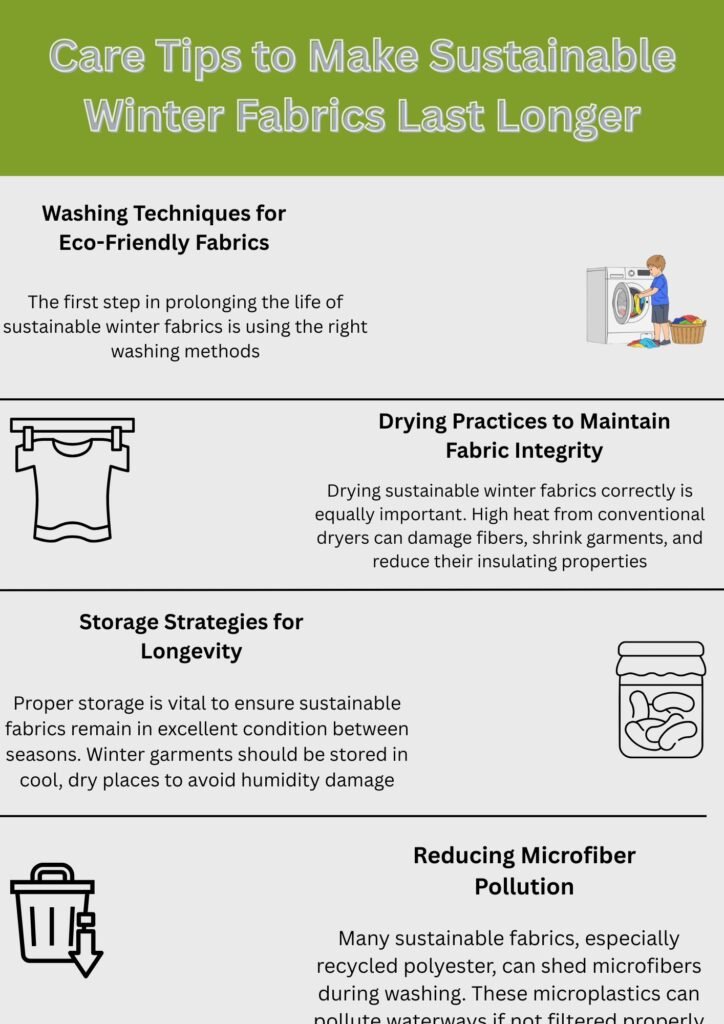
The first step in prolonging the life of sustainable winter fabrics is using the right washing methods. Cold water washing is highly recommended, as it reduces energy consumption while preventing shrinkage or fiber damage. Gentle, eco-friendly detergents are preferable, as harsh chemicals can break down natural fibers over time. Fabrics like recycled wool, organic wool, hemp-wool blends, and bamboo can all benefit from careful hand washing or a delicate machine cycle. Additionally, washing garments less frequently when they are not heavily soiled minimizes stress on fibers and helps maintain thermal efficiency. Transitioning to sustainable washing routines is a simple yet effective way to extend the lifespan of winter textiles.
Drying Practices to Maintain Fabric Integrity
Drying sustainable winter fabrics correctly is equally important. High heat from conventional dryers can damage fibers, shrink garments, and reduce their insulating properties. Instead, air drying on a flat surface or hanging in a shaded area preserves shape and texture. For example, recycled wool and hemp-wool blends retain loft and warmth much better when dried naturally. Using breathable drying racks also prevents moisture accumulation, which can cause mold or odors. By adopting low-impact drying methods, you protect the fabric’s thermal efficiency while reducing energy consumption.
Storage Strategies for Longevity
Proper storage is vital to ensure sustainable fabrics remain in excellent condition between seasons. Winter garments should be stored in cool, dry places to avoid humidity damage. Breathable storage bags or containers prevent moisture buildup and allow fibers to “breathe,” which is especially important for natural materials like organic wool and hemp blends. Avoid plastic storage, which can trap moisture and encourage mold growth. Additionally, folding heavy garments rather than hanging them reduces stretching and deformation of delicate fibers. Thoughtful storage preserves both appearance and performance year after year.
Reducing Microfiber Pollution
Many sustainable fabrics, especially recycled polyester, can shed microfibers during washing. These microplastics can pollute waterways if not filtered properly. Installing a washing machine microfiber filter or using a laundry bag designed for synthetic fibers captures loose particles effectively. Choosing fabrics with tighter weaves or blends of natural and recycled fibers also reduces shedding. By taking these steps, consumers not only protect their garments but also prevent environmental harm, reinforcing the eco-friendly purpose of these fabrics.
Common Myths About Sustainable Winter Fabrics
Many believe eco-friendly fabrics lack warmth. However, modern sustainable materials insulate efficiently. Others assume sustainable fabrics wear out quickly. In reality, durability often improves. Some think sustainable options cost too much. Long-term value proves otherwise.
Education helps eliminate these misconceptions. Innovation continues improving performance. Sustainable winter fabrics now meet extreme conditions. They compete directly with traditional alternatives. Awareness leads to better consumer choices.
Sustainability Trends Shaping Winter Fashion in 2025
Circular fashion models reduce textile waste significantly. Brands design garments for reuse and recycling. Slow fashion emphasizes quality and longevity. Local sourcing reduces transportation emissions. Minimalist winter wardrobes gain popularity.
Consumers now value transparency and ethics. Timeless designs replace fast trends. Repair culture regains importance. Digital supply chains improve efficiency. Sustainability influences every stage of winter fashion.

Conclusion
Sustainable Winter Fabrics for 2025 redefine warmth and responsibility. They balance insulation, comfort, and environmental care. Innovation continues improving performance and accessibility. Conscious consumer choices now drive industry change. Beyond 2025, sustainable winter fabrics will shape the future of fashion.
FAQs
Are sustainable winter fabrics really warm?
Yes, modern sustainable winter fabrics are designed to provide excellent warmth. Materials like recycled wool, organic wool, and hemp-wool blends offer natural insulation that traps heat efficiently. Additionally, innovative blends with TENCEL™ or recycled polyester enhance moisture management and thermal performance.
Which eco-friendly fabrics work best for snow and wet conditions?
For snow or wet winter conditions, fabrics that combine insulation and water resistance are ideal. Recycled polyester (rPET) provides excellent wind and moisture protection, making it suitable for outer layers. Blends of recycled wool and hemp add thermal efficiency while remaining breathable.
Is recycled wool better than virgin wool?
Recycled wool has several advantages over virgin wool in terms of sustainability. It reduces textile waste by reprocessing pre-consumer or post-consumer wool and saves significant energy and water compared to producing new wool.