
Softshell fabric explained in simple terms means a soft, flexible, and breathable outerwear fabric. It protects against wind, light rain, and cold air while allowing free movement. Unlike stiff jackets, softshell fabric feels comfortable and quiet during wear. Because of this balance, it has become very popular in outdoor and winter clothing. People who hike, work outdoors, or travel often choose softshell garments. They want comfort without sacrificing protection.
In recent years, outdoor clothing has shifted toward lighter and smarter designs. Heavy coats often cause overheating during activity. Softshell fabric solves this problem by releasing heat and moisture. At the same time, it blocks wind and mild weather exposure. Softshell Fabric Explained:As a result, it works well in changing conditions. This article explains softshell fabric clearly and practically.
Readers will learn what softshell fabric is and how it works. They will understand its benefits, drawbacks, and real-world uses. The article also explains care, sustainability, and buying tips. Each section uses easy words and clear explanations. By the end, readers can confidently choose softshell fabric. Let’s begin with the basics.
History Of Softshell Fabric
Softshell fabric explained in historical terms has a relatively recent origin. Unlike traditional outerwear materials such as wool or heavy nylon, softshell was created to meet the needs of modern outdoor sports. Climbers, skiers, and hikers required a fabric that allowed full freedom of movement while providing protection from wind and light rain. In the 1990s, outdoor apparel brands began experimenting with woven and layered fabrics to combine stretch, breathability, and weather resistance. These innovations gave rise to the first softshell garments.
Early softshell jackets replaced stiff hardshell layers that often trapped heat and caused discomfort during active use. Designers focused on creating a fabric that moved naturally with the body while still offering moderate protection from the elements. Stretch fibers and tightly woven polyester became common components. Softshell Fabric Explained:Over time, manufacturers added membranes or DWR coatings to improve wind and water resistance.
What Is Softshell Fabric?
Softshell fabric explained technically refers to a performance fabric system rather than a single textile. It combines comfort, stretch, and weather resistance in one layer. Manufacturers designed it to replace rigid outer shells in many situations. Unlike traditional outerwear, softshell fabric focuses on breathability and movement. This design supports active lifestyles and outdoor sports. Therefore, it fills the gap between fleece and hardshell jackets.
The origin of softshell fabric lies in outdoor sports innovation. Climbers and skiers needed flexible protection during movement. Traditional shells blocked wind but trapped sweat. This caused discomfort and cooling during rest periods. Designers responded by creating softer, stretchable fabrics. Over time, softshell fabric became a standard outdoor layer.
Softshell fabric explained accurately is not one fixed structure. Softshell Fabric Explained:Some softshell garments include membranes. Others rely on dense woven fibers. Each version offers different performance levels. This flexibility allows brands to tailor softshell fabric for specific uses. As a result, softshell clothing serves many environments.
Types of Softshell Fabric Explained
Softshell fabric explained through its types helps readers understand performance differences. Not all softshell fabrics work the same way. Manufacturers design each type for specific weather and activity levels. Some focus on breathability, while others prioritize protection. Knowing these types makes fabric selection easier. Below are the most common types of softshell fabric used today.
Woven Softshell Fabric
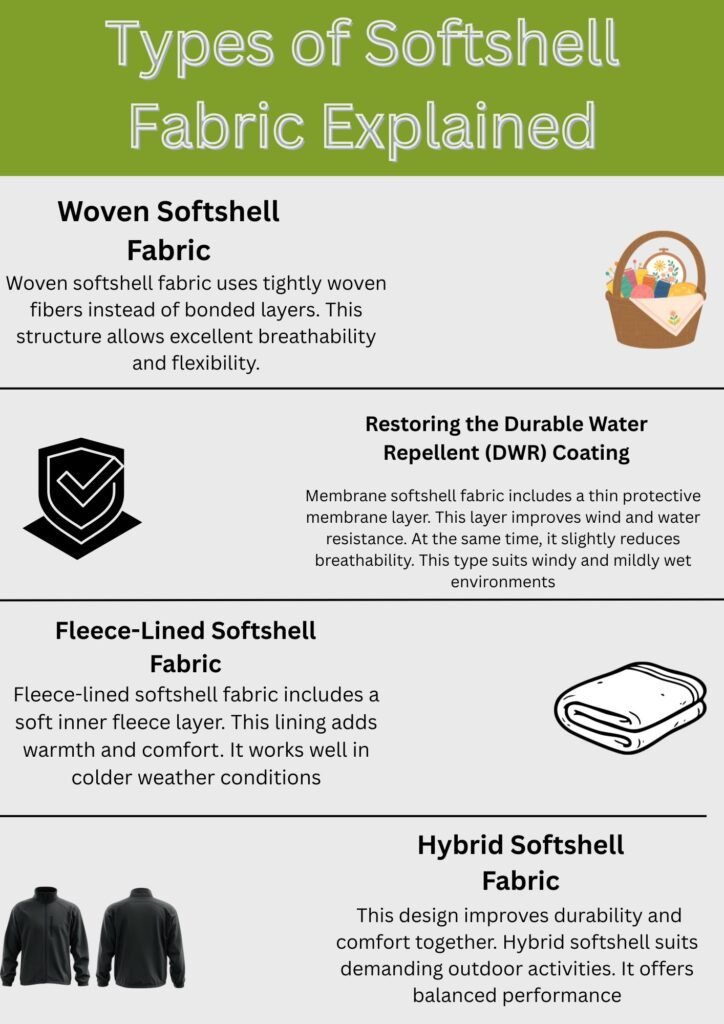
Woven softshell fabric uses tightly woven fibers instead of bonded layers. This structure allows excellent breathability and flexibility. It feels lighter and more natural during movement. Because airflow remains high, it works best for active sports. Hikers and climbers often prefer this type. It performs well in dry and cool conditions.
Membrane Softshell Fabric
Membrane softshell fabric includes a thin protective membrane layer. This layer improves wind and water resistance. At the same time, it slightly reduces breathability. This type suits windy and mildly wet environments. It offers better protection than woven softshell. Many winter softshell jackets use membranes.
Fleece-Lined Softshell Fabric
Fleece-lined softshell fabric includes a soft inner fleece layer. This lining adds warmth and comfort. It works well in colder weather conditions. Wind resistance helps retain body heat. This type feels cozy during winter activities. It suits moderate cold rather than extreme temperatures.
Hybrid Softshell Fabric
Hybrid softshell fabric combines multiple fabric types in one garment. Manufacturers place tougher panels in high-wear areas. Stretch panels appear in movement zones. This design improves durability and comfort together. Hybrid softshell suits demanding outdoor activities. It offers balanced performance.
How Softshell Fabric Is Made
Softshell fabric production uses either layered or woven construction methods. Layered softshell fabric bonds multiple layers together. Each layer performs a specific role such as weather protection or comfort. This structure improves durability and resistance. However, it may reduce airflow slightly. Manufacturers choose this method for windy conditions.
Woven softshell fabric uses tightly woven fibers instead of bonded layers. This structure increases breathability and stretch. It feels lighter and more natural during movement. Because of this, woven softshell works well for high-activity sports. Both constructions serve different performance needs. Choosing depends on climate and intensity.
Most softshell fabrics use polyester or nylon as base materials. Softshell Fabric Explained:These fibers resist abrasion and maintain shape. Elastane or spandex adds flexibility and stretch recovery. Some fabrics include a fleece inner surface for warmth. Others remain smooth and thin for lightweight use. Material selection strongly affects performance.
Key Features of Softshell Fabric Explained
Softshell fabric explained through its features shows why it performs so well. First, it provides strong wind resistance. Wind blocking reduces heat loss significantly. Second, it offers water resistance through DWR coatings. Light rain and snow bead off the surface easily.
Third, softshell fabric remains highly breathable. Heat and moisture escape during activity. Fourth, stretch and flexibility support natural movement. This reduces fatigue and improves comfort. Finally, softshell fabric feels lightweight and soft. These features combine to create a versatile outdoor fabric.
Is Softshell Fabric Waterproof or Water-Resistant?
Softshell fabric explained clearly often raises one common question about waterproofing. Many buyers expect full rain protection from outdoor clothing. However, softshell fabric works differently. It focuses more on comfort, breathability, and flexibility. Understanding this difference helps users choose the right outerwear. This section explains the truth in simple terms.
Understanding Waterproof vs Water-Resistant Fabrics
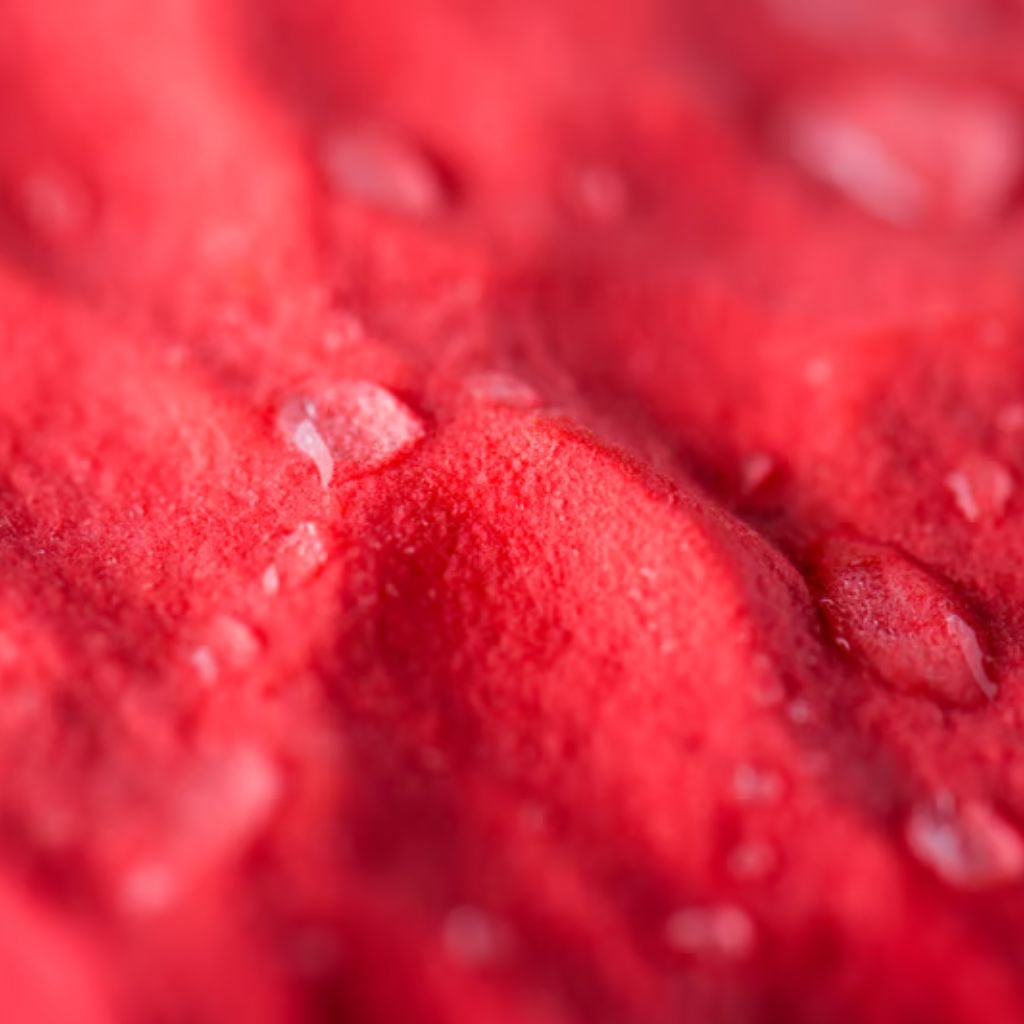
Waterproof fabrics stop water completely from entering. They use special membranes and sealed seams for protection. Rain jackets and hardshells fall into this category. In contrast, water-resistant fabrics repel water for a short time. They slow water penetration but do not block it fully. Softshell fabric belongs to the water-resistant category.
How Softshell Fabric Handles Moisture
Softshell fabric explained in performance terms shows that it handles light moisture well. Most softshell garments use a DWR coating on the surface. This coating causes water to bead and roll off. Light rain, snow, and mist usually do not soak in immediately. Therefore, softshell works well in mild and changing weather.
When Softshell Fabric Performs Best in Wet Conditions
Softshell fabric performs best during short exposure to wet conditions. It works well for light rain during hiking or commuting. Snow also does not easily penetrate softshell fabric. Because it remains breathable, it keeps the body dry from sweat. This balance makes it ideal for active outdoor use.
Limitations of Softshell Fabric in Heavy Rain
Softshell fabric explained honestly does have limits. Heavy or prolonged rain will eventually soak through the fabric. Unlike waterproof jackets, softshell seams are not sealed. Once the DWR coating wears off, water resistance decreases further. For storms or long rain exposure, a waterproof hardshell is necessary.
Softshell vs Hardshell Fabric Explained
Softshell fabric explained alongside hardshell fabric helps readers choose correctly. Both fabrics serve outdoor protection, yet they perform very differently. One focuses on comfort and movement. The other prioritizes weather defense. Understanding these differences prevents poor buying decisions. This comparison explains performance in real outdoor situations.
Weather Protection Comparison
Hardshell fabric provides maximum weather protection. It blocks heavy rain, snow, and strong wind completely. Sealed seams and waterproof membranes prevent water entry. In contrast, softshell fabric offers moderate protection. It resists wind and light moisture but allows airflow. Therefore, hardshell suits storms, while softshell suits mild conditions.
Breathability and Moisture Management
Softshell fabric explained through breathability shows a clear advantage. It allows heat and sweat to escape quickly. This keeps the body dry during physical activity. Hardshell fabric restricts airflow due to waterproof membranes. As a result, condensation can build inside. Active users often feel more comfortable in softshell.
Comfort, Flexibility, and Movement
Softshell fabric feels soft, stretchy, and quiet. It moves naturally with the body. This makes it ideal for hiking, climbing, and workwear. Hardshell fabric feels stiffer and less flexible. It may restrict movement during long wear. Comfort becomes a key difference for active use.
Weight and Packability
Softshell garments usually feel lighter and more flexible. They pack easily into bags. Hardshell jackets often feel heavier due to membranes and reinforcements. Although some modern hardshells are lightweight, they still feel rigid. For everyday use, softshell often feels more practical.
Benefits of Softshell Fabric Explained
Softshell fabric explained through its benefits shows why it is widely used in outdoor clothing. It combines comfort, flexibility, and weather resistance in one layer. Unlike stiff outer shells, it feels soft and natural during wear. This balance makes it suitable for both active and casual use. The following benefits explain its growing popularity.
Comfort and Freedom of Movement
Softshell fabric offers excellent comfort during daily wear. Stretch fibers allow the fabric to move with the body. This reduces pulling and restriction during activity. Hikers, climbers, and workers benefit from this flexibility. Because of this, users can move freely for long periods.
High Breathability for Active Use
Softshell fabric explained in terms of breathability performs very well. It allows heat and sweat to escape easily. This helps regulate body temperature during movement. As a result, wearers feel dry and comfortable. Breathability reduces overheating in changing weather.
Effective Wind Resistance
Softshell fabric blocks cold wind effectively. Wind often causes rapid heat loss outdoors. By stopping airflow, softshell helps maintain body warmth. This feature improves comfort in cool conditions. Wind resistance makes it ideal for open environments.
Lightweight and Soft Feel
Softshell fabric feels lightweight compared to traditional jackets. It does not feel bulky or heavy. The soft texture also reduces noise during movement. This quiet feel benefits outdoor activities like hiking. Many people prefer it for everyday wear.
Drawbacks of Softshell Fabric
Softshell fabric explained honestly must include its limitations. While softshell fabric offers comfort and flexibility, it does not perform perfectly in every situation. Understanding its drawbacks helps users make smarter clothing choices. These limitations become important in extreme weather or long outdoor exposure. The following points explain where softshell fabric may fall short.
Not Fully Waterproof in Heavy Rain
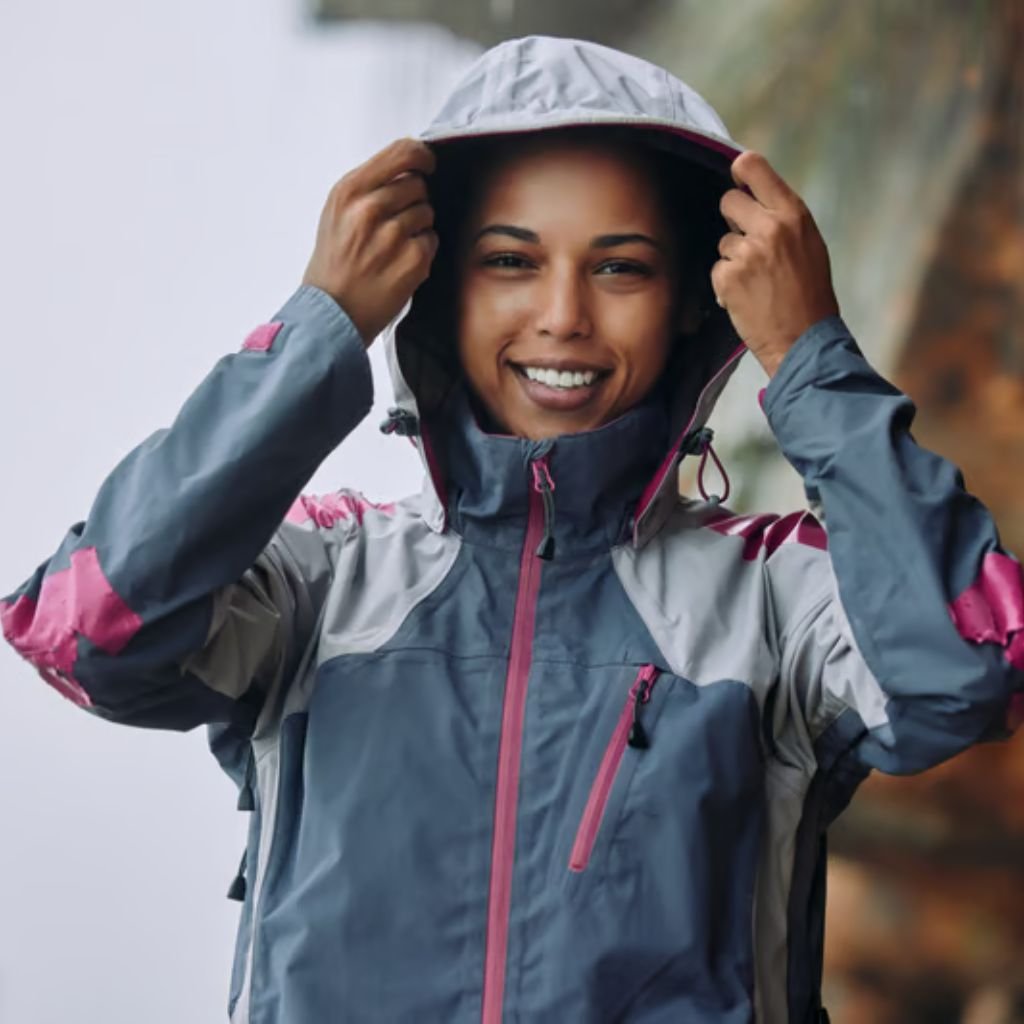
Softshell fabric is water-resistant rather than waterproof. It repels light rain, snow, and mist effectively. However, prolonged or heavy rain will eventually soak through. Unlike hardshell jackets, softshell garments usually lack sealed seams. Once the outer surface becomes saturated, moisture enters easily. For wet climates, this limitation can be problematic.
Limited Protection in Extreme Weather
Softshell fabric explained in harsh conditions shows clear limits. It cannot block heavy storms, freezing rain, or severe wind. In extreme weather, heat loss increases quickly. Softshell fabric alone may not provide enough protection. As a result, users must add extra layers. Without proper layering, comfort and safety decrease.
Less Insulation for Very Cold Temperatures
Softshell fabric focuses on breathability more than insulation. Most versions provide minimal warmth by themselves. In freezing temperatures, this becomes a disadvantage. Even fleece-lined softshell may not handle extreme cold alone. Insulated jackets perform better in such conditions. Softshell works best as part of a layering system.
Water Repellency Decreases Over Time
Softshell fabric relies on DWR coatings for water resistance. Over time, washing and wear reduce this coating. When water stops beading, fabric absorbs moisture faster. Without maintenance, performance drops noticeably. Reapplying water repellents requires time and effort. Many users overlook this care need.
Common Uses of Softshell Fabric Explained
Softshell fabric explained through its common uses shows how versatile this material truly is. It balances comfort, protection, and flexibility in many environments. Because it adapts well to movement and changing weather, designers use it across many clothing categories. From outdoor sports to everyday wear, softshell fabric serves multiple purposes. The following sections explain where it performs best.
Softshell Jackets for Outdoor Activities
Softshell jackets remain the most popular use of this fabric. They provide wind resistance and breathability during movement. Hikers and climbers rely on them for comfort. The stretch allows free arm and body motion. These jackets also feel lighter than traditional coats. As a result, they support long outdoor adventures.
Outdoor Sportswear and Performance Apparel
Softshell fabric explained in sportswear highlights its performance value. Athletes need clothing that adapts to movement. Softshell pants and tops stretch easily during activity. Breathability helps regulate body temperature. This makes the fabric suitable for skiing, cycling, and running. Comfort remains consistent during intense motion.
Hiking and Trekking Apparel
Hiking clothing often uses softshell fabric for flexibility. It handles uneven terrain and variable weather well. Wind blocking keeps hikers warm at higher elevations. Moisture escapes during uphill movement. The fabric resists light rain and snow. Therefore, trekkers prefer softshell layers.
Winter Workwear and Outdoor Jobs
Softshell fabric performs well in winter workwear. Workers need comfort during long hours outside. Softshell jackets allow movement while blocking cold air. The fabric feels lighter than insulated coats. This improves productivity and comfort. Many industries now use softshell work uniforms.
Softshell Fabric for Winter Clothing: Is It Warm Enough?
Softshell fabric explained for winter depends on design and layering. On its own, it suits mild to cold weather. Fleece-lined softshell offers added warmth. Wind blocking reduces heat loss significantly.
During activity, breathability prevents sweat buildup. This keeps the body warm and dry. In extreme cold, insulation layers become necessary. Proper layering ensures comfort and safety. Softshell works best as part of a system.
How to Care for Softshell Fabric
Softshell fabric explained in care terms requires gentle handling to maintain performance. Proper care preserves stretch, breathability, and water resistance. Many performance issues come from incorrect washing and drying. With the right methods, softshell garments last longer and perform better. The following guidelines explain how to care for softshell fabric correctly.
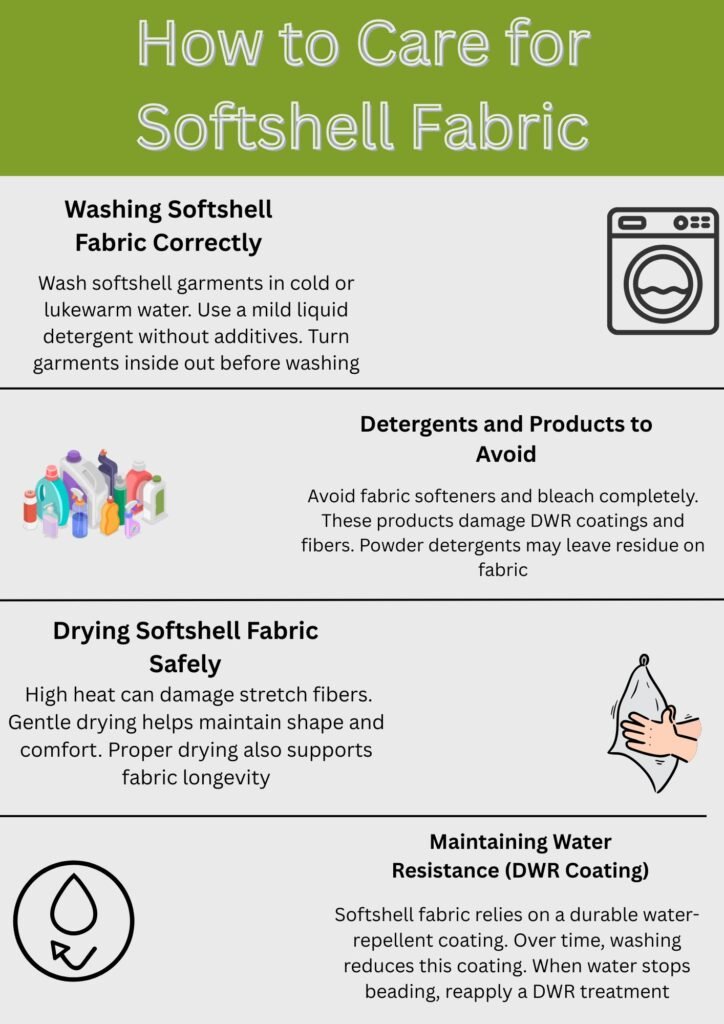
Washing Softshell Fabric Correctly
Wash softshell garments in cold or lukewarm water. Use a mild liquid detergent without additives. Turn garments inside out before washing. This reduces surface wear and protects coatings. Choose a gentle or synthetic cycle. Proper washing prevents fiber damage.
Detergents and Products to Avoid
Avoid fabric softeners and bleach completely. These products damage DWR coatings and fibers. Powder detergents may leave residue on fabric. Strong chemicals reduce breathability and stretch. Always check the care label. Using the wrong product lowers performance quickly.
Drying Softshell Fabric Safely
Air drying is the safest option for softshell fabric. Hang garments away from direct sunlight. If machine drying is necessary, use low heat. High heat can damage stretch fibers. Gentle drying helps maintain shape and comfort. Proper drying also supports fabric longevity.
Maintaining Water Resistance (DWR Coating)
Softshell fabric relies on a durable water-repellent coating. Over time, washing reduces this coating. When water stops beading, reapply a DWR treatment. Clean the garment before reproofing. Follow product instructions carefully. Restoring DWR improves weather performance.
How to Choose the Best Softshell Fabric
Softshell fabric explained selection starts with activity type. High-output sports need high breathability. Cold climates benefit from fleece backing. Stretch level affects comfort and mobility.
Fit should allow easy layering. Fabric weight affects warmth and endurance. Climate exposure also matters. Membrane softshell suits windy regions. Smart choices prevent regret.

Sustainable and Eco-Friendly Softshell Fabrics
Softshell fabric explained sustainability reflects modern fashion trends. Many brands now use recycled polyester. This reduces waste and resource use. PFC-free DWR coatings protect ecosystems.
Eco-friendly softshell maintains durability and performance. Longer garment life reduces environmental impact. Consumers now demand responsible materials. Sustainability shapes the future of outdoor clothing.
Conclusion
Softshell fabric explained fully shows strong value. It balances comfort, flexibility, and protection. It suits active outdoor lifestyles best. Layering improves its performance in harsh weather.
People who want everyday outdoor comfort should choose softshell. Understanding its limits ensures satisfaction. With proper care and use, it performs exceptionally well. For the right user, softshell fabric is absolutely worth it.
FAQs
Is softshell fabric breathable?
Yes, softshell fabric is highly breathable. It allows heat and moisture to escape during physical activity. This prevents overheating and keeps the body dry. Breathability makes it ideal for hiking, climbing, and outdoor sports. Unlike hardshell fabrics, softshell balances airflow with protection.
Can you wear softshell in the rain?
Softshell fabric is water-resistant, not waterproof. It works well in light rain, snow, or drizzle. However, it will eventually let water through in heavy or prolonged rain. For storms or wet conditions, layer a waterproof hardshell over softshell. Light rain protection is its strong point.
Is softshell better than fleece?
Softshell fabric offers more wind and water resistance than fleece. It is also more durable and flexible. Fleece is warmer in still air but lacks wind protection. Softshell is better for active movement in changing weather, while fleece is ideal for insulation layers.