Home Blog Page 48

Air Flex Knit Fabric: Ultimate Comfort for Active Lifestyles

Air Flex Knit Fabric has reshaped the way people experience comfort in clothing. Today, consumers expect fabrics to perform well while feeling soft and light. Therefore, modern textile innovation focuses on combining comfort and function. Air Flex Knit Fabric meets these expectations with ease.Moreover, this fabric delivers breathability and flexibility in one structure. It allows the body to move naturally without restriction. As a result, it has become a preferred choice for both athletes and casual users. In addition, its lightweight feel makes it ideal for long hours of wear.Furthermore, the demand for high-performance fabrics continues to grow. People now look for materials that regulate temperature and manage sweat.

History of Air Flex Knit Fabric
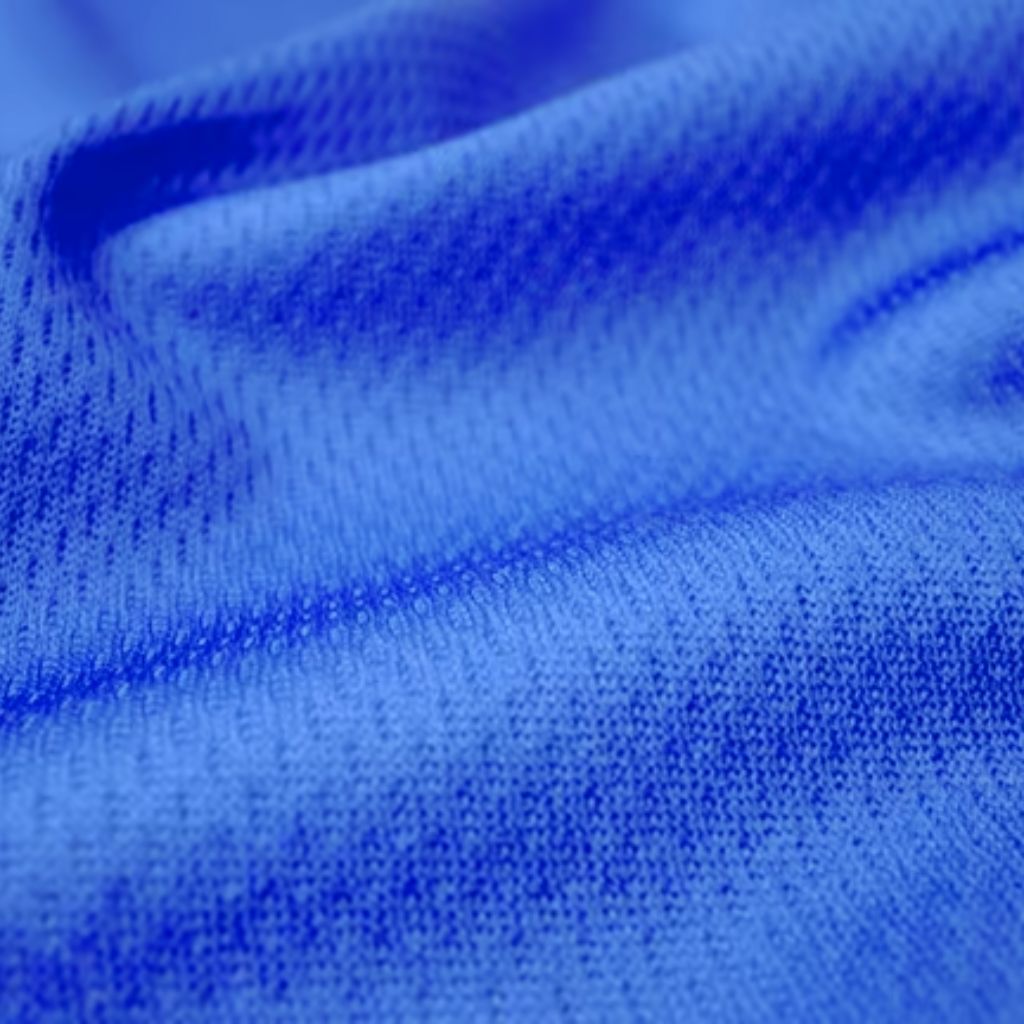
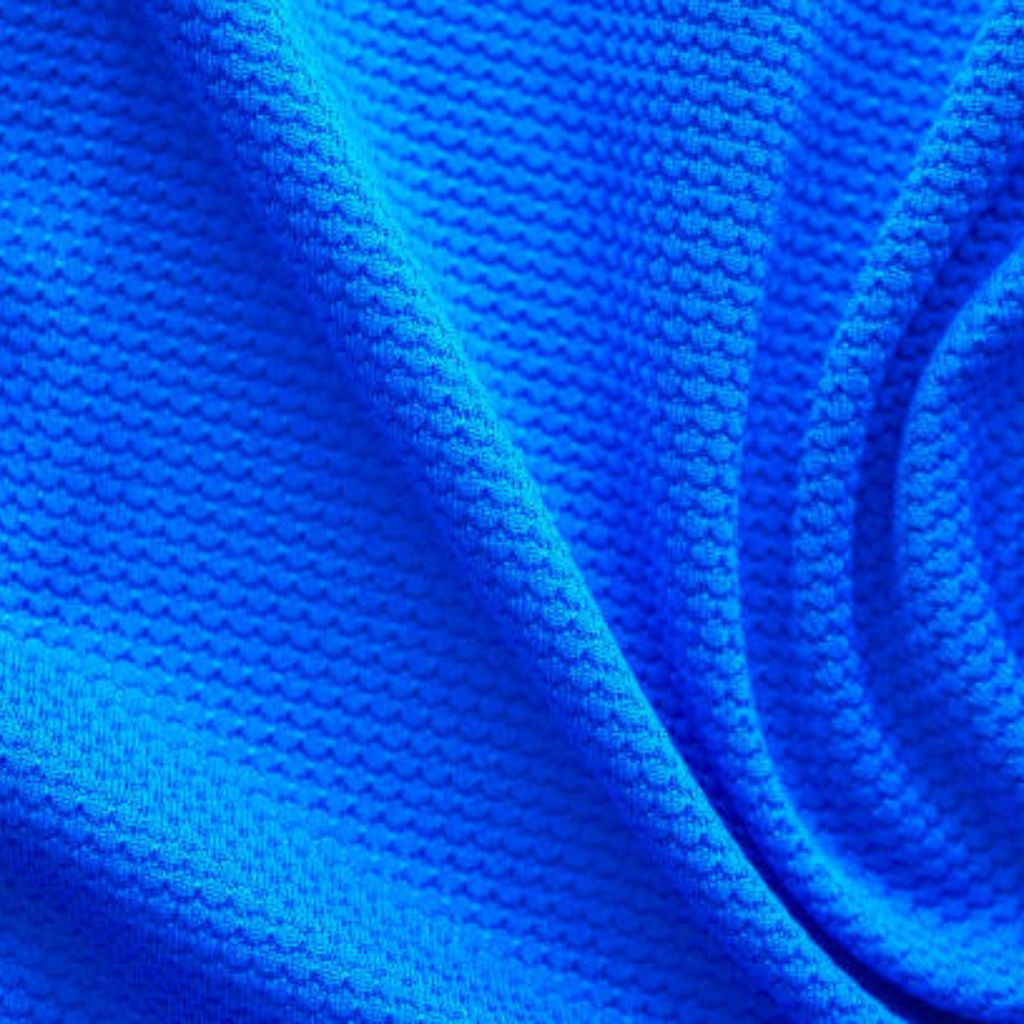
Long alt text: Macro close-up of blue knit fabric showing tight diagonal ribbing, a dense weave, and a rugged, durable texture typical of winter outerwear.
Air Flex Knit Fabric:
Caption: Close-up texture of blue knit fabric used in a military-inspired winter jacket.

The journey of Air Flex Knit Fabric began with the development of basic knit textiles. Initially, knit fabrics were valued for their softness and stretch. However, they lacked advanced performance capabilities. Therefore, they were mainly used for casual wear.Later, the introduction of synthetic fibers transformed textile production. Polyester and spandex improved strength and elasticity significantly. As a result, manufacturers started creating performance-oriented fabrics. This shift marked an important step in textile evolution.Moreover, the need for breathable sportswear increased rapidly. Engineers began designing knit structures that enhanced airflow. At the same time, moisture-wicking technology improved sweat management. Consequently, these innovations led to the creation of Air Flex Knit Fabric.Today, this fabric represents a modern solution for active lifestyles.

Types of Air Flex Knit Fabric
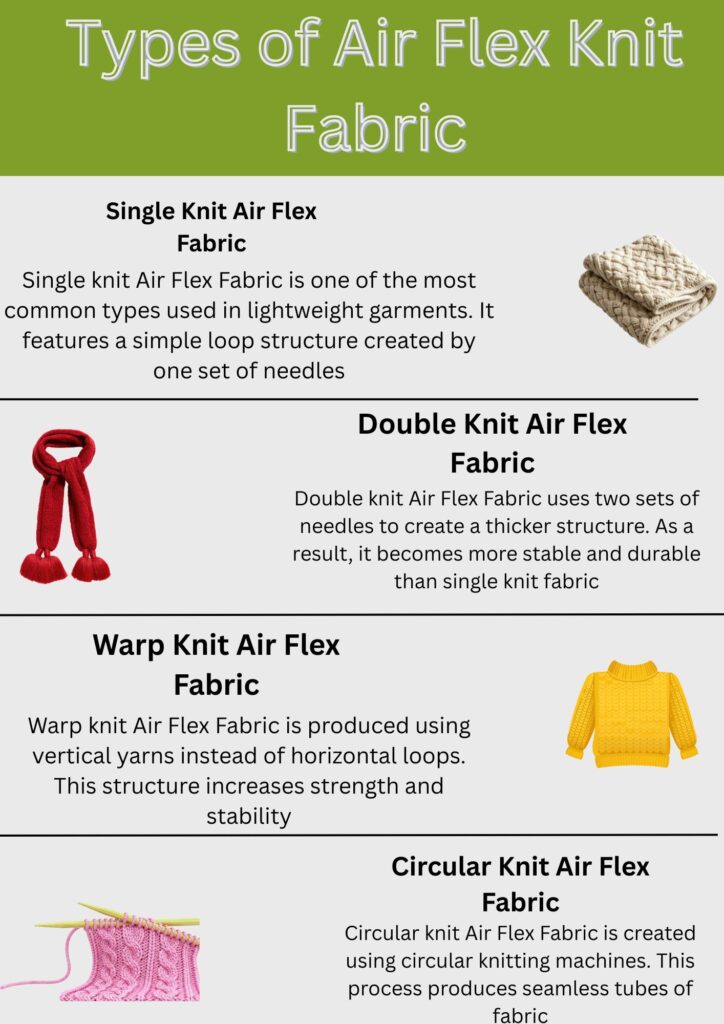
Alt text (long): An infographic titled “Types of Air Flex Knit Fabric.” It presents four sections: 1) Single Knit Air Flex Fabric with a beige knit image, 2) Double Knit Air Flex Fabric with a red scarf image, 3) Warp Knit Air Flex Fabric with a yellow sweater image, and 4) Circular Knit Air Flex Fabric with pink knitted yarn image. Each section contains bold headings and descriptive text, with light gray background bands and black dividers between sections.Air Flex Knit Fabric:
Caption: A quick guide to four fabric types used in Air Flex Knit garments: single knit, double knit, warp knit, and circular knit, with examples and care notes.

Air Flex Knit Fabric comes in several types based on knit structure and performance needs. Each type offers unique characteristics that suit different applications. Therefore, understanding these variations helps in selecting the right fabric. In addition, manufacturers design these types to balance breathability, stretch, and durability. As a result, each type serves a specific purpose in activewear and apparel production.

Single Knit Air Flex Fabric

Single knit Air Flex Fabric is one of the most common types used in lightweight garments. It features a simple loop structure created by one set of needles. Therefore, it feels soft, flexible, and breathable. This type allows air to pass easily, which keeps the body cool.

Moreover, single knit fabrics stretch well and offer good comfort for daily wear. However, they may not be as strong as other types. As a result, they are best suited for t-shirts, training tops, and light activewear.

Double Knit Air Flex Fabric

Double knit Air Flex Fabric uses two sets of needles to create a thicker structure. As a result, it becomes more stable and durable than single knit fabric. This type provides better shape retention and does not stretch out easily.

In addition, double knit fabrics feel slightly heavier but still maintain comfort. They are less prone to curling at the edges. Therefore, they are ideal for performance wear, jackets, and structured activewear garments.

Warp Knit Air Flex Fabric

Warp knit Air Flex Fabric is produced using vertical yarns instead of horizontal loops. This structure increases strength and stability. Therefore, it resists deformation and maintains its shape over time.

Moreover, warp knit fabrics offer a smoother surface and improved durability. They are often used in high-performance sportswear. As a result, they provide long-lasting comfort and support during intense activities.

Circular Knit Air Flex Fabric

Circular knit Air Flex Fabric is created using circular knitting machines. This process produces seamless tubes of fabric. Therefore, it reduces stitching and improves comfort.

In addition, this type offers consistent stretch and smooth texture. It is widely used in seamless activewear and fitted garments. As a result, it enhances both comfort and appearance.

What is Air Flex Knit Fabric?

Air Flex Knit Fabric is a high-performance textile designed for comfort and flexibility. It uses a knit structure that allows air to circulate freely. Therefore, it keeps the body cool during physical activity. At the same time, it stretches easily to support movement.The term “Air Flex” reflects its main characteristics. The word “Air” highlights its breathability, while “Flex” represents elasticity. Together, these qualities define its performance. As a result, it stands out among modern fabrics.Additionally, knit fabrics differ from woven fabrics in structure. Knit fabrics use interlocking loops of yarn, while woven fabrics use crossing threads. This difference makes knit fabrics more flexible and softer. Therefore, Air Flex Knit Fabric provides better comfort.

Key Features of Air Flex Knit Fabric
Long alt text: Macro close-up of a blue knit fabric showing tight diagonal ribbing, dense texture, and a rugged, durable feel typical of winter outerwear.
Air Flex Knit Fabric:
Caption: Close-up texture of a blue knit fabric used in a military-inspired winter jacket.

Air Flex Knit Fabric offers several advanced features that improve comfort and usability. First, its breathable knit construction allows air to pass through easily. Therefore, it prevents heat buildup and keeps the body cool during activities.In addition, the fabric provides four-way stretch flexibility. This means it stretches in multiple directions without losing shape. As a result, users experience greater freedom of movement. This feature is especially important for sports and fitness activities.Moreover, the fabric feels lightweight on the skin. It does not create a heavy or restrictive sensation. Consequently, it supports long periods of wear without discomfort. At the same time, its moisture-wicking ability helps remove sweat quickly.

How Air Flex Knit Fabric Works

Air Flex Knit Fabric functions through its unique loop-based structure. These loops create tiny gaps within the fabric. Therefore, air flows freely through the material. This airflow helps regulate body temperature effectively.Moreover, the fabric responds to body movement through its flexible loops. When stretched, the loops expand without breaking. Afterward, they return to their original shape. As a result, the fabric maintains its elasticity over time.In addition, moisture-wicking technology plays a vital role. Sweat moves from the skin to the outer surface of the fabric. Then, it spreads and evaporates quickly. Consequently, the wearer stays dry and comfortable.Furthermore, this process reduces discomfort during physical activities. It also prevents excessive moisture buildup. Therefore, Air Flex Knit Fabric enhances overall performance.

Benefits of Air Flex Knit Fabric

Comfort Benefits

Air Flex Knit Fabric provides excellent comfort for everyday wear. It feels soft and smooth against the skin. Therefore, it minimizes irritation during long use. In addition, its breathable design keeps the body cool.

Moreover, the fabric allows proper airflow, which reduces sweat accumulation. As a result, users feel fresh throughout the day. This makes it suitable for both active and casual use.

Performance Benefits

The fabric significantly improves physical performance. It supports natural body movement with its stretchable structure. Therefore, it allows users to move freely during workouts.

In addition, it regulates temperature effectively. It keeps the body cool in warm conditions. At the same time, it manages sweat efficiently. Consequently, it enhances comfort during intense activities.

Style Benefits

Air Flex Knit Fabric also supports modern fashion needs. It offers a clean and athletic appearance. Therefore, it fits well in both sportswear and casual clothing.

Furthermore, the fabric drapes smoothly on the body. This improves the overall look of garments. As a result, it combines functionality with style.

Common Uses of Air Flex Knit Fabric

Air Flex Knit Fabric is widely used across different clothing categories due to its flexibility and comfort. It supports both performance and style, which makes it highly versatile. Therefore, many industries rely on this fabric for modern apparel production. In addition, its breathable and lightweight nature enhances user experience in various conditions. As a result, it has become a preferred choice for both activewear and casual clothing.

Sportswear Applications

Air Flex Knit Fabric is commonly used in sportswear because it supports movement and performance. It allows athletes to move freely without restriction. Therefore, it is ideal for training clothes, jerseys, and athletic tops.

Moreover, its moisture-wicking ability helps manage sweat during physical activity. This keeps the body dry and comfortable. As a result, athletes can perform better without distractions.

Gym Wear and Fitness Clothing

Gym wear benefits greatly from Air Flex Knit Fabric due to its stretch and durability. It handles repeated movements such as lifting, stretching, and running. Therefore, it is perfect for gym shirts, shorts, and leggings.

In addition, the fabric remains lightweight even during intense workouts. It does not feel heavy or uncomfortable. Consequently, users can focus more on their fitness routines.

Yoga and Stretch Wear

Yoga clothing requires flexibility and softness. Air Flex Knit Fabric meets these needs effectively. It stretches with the body during different poses. Therefore, it provides comfort and support during yoga sessions.

Moreover, the smooth texture reduces friction against the skin. This helps prevent irritation. As a result, it enhances the overall yoga experience.

Running and Performance Apparel

Running apparel often uses Air Flex Knit Fabric for its breathability. It allows air to circulate, which keeps runners cool. Therefore, it improves endurance during long runs.

In addition, its quick-drying feature prevents sweat buildup. This keeps the body dry and light. Consequently, runners feel more comfortable during their activity.

Air Flex Knit Fabric vs Other Sports Fabrics
Alt text (long): Macro close-up of a blue knit fabric used in winter jackets, showing tightly woven diagonal ribbing, subtle sheen, and a rugged, durable texture suitable for outerwear.
Air Flex Knit Fabric:
Caption: Close-up texture of a blue knit fabric used in a winter jacket with a military-inspired look.

Air Flex Knit Fabric offers a balanced combination of breathability and stretch. When compared to polyester knit, it provides better airflow and flexibility. Therefore, it enhances comfort during active use.In comparison with mesh fabric, it offers more stretch and softness. While mesh provides higher ventilation, it lacks flexibility. As a result, Air Flex Knit Fabric delivers a more balanced performance.Similarly, spandex blends offer high stretch but may feel heavier. Air Flex Knit Fabric, however, maintains a lightweight feel. Therefore, it becomes more suitable for daily wear.When compared with cotton jersey, the difference becomes clear. Cotton absorbs moisture and dries slowly. On the other hand, Air Flex Knit Fabric dries quickly. Consequently, it performs better in active conditions.

How Air Flex Knit Fabric is Made

The production of Air Flex Knit Fabric involves several steps. First, manufacturers select suitable fibers such as polyester and spandex. These fibers provide strength and elasticity.Next, knitting machines create the fabric structure. They form loops that give the fabric flexibility. Therefore, the fabric gains its stretchable nature.After knitting, finishing processes improve performance. These include heat setting and moisture treatments. As a result, the fabric becomes more durable and functional.Finally, dyeing adds color and enhances appearance. Quality checks ensure consistency. Therefore, the final product meets industry standards.

Why Air Flex Knit Fabric is Popular

Air Flex Knit Fabric has gained popularity due to its unique properties. First, it offers excellent comfort for daily wear. Therefore, users prefer it over traditional fabrics.In addition, it supports active movement. Its stretchable structure allows flexibility. As a result, it suits various physical activities.Moreover, it manages moisture effectively. This keeps the body dry during workouts. Consequently, it improves overall user experience.Furthermore, the fabric combines style and function. It looks modern while delivering performance. Therefore, it appeals to a wide audience.

Air Flex Knit Fabric for Different Activities

Air Flex Knit Fabric performs well across various activities. During running, it allows airflow and reduces sweat. Therefore, it improves endurance.In gym training, it supports repeated movements. It stretches without losing shape. As a result, it enhances performance.For yoga, it offers flexibility and comfort. It moves with the body easily. Consequently, users experience better mobility.Outdoor sports also benefit from its temperature control. It keeps the body cool in warm conditions. Therefore, it is ideal for summer wear.

Fabric Composition & Technical Specifications

Air Flex Knit Fabric usually contains polyester and spandex blends. Polyester provides strength and durability. Spandex adds elasticity and flexibility.The GSM range typically falls between 120 and 220. Lower GSM offers lightweight comfort. Higher GSM provides durability.Stretch percentage often ranges from 20 to 40 percent. This ensures flexibility and recovery. Therefore, the fabric maintains its shape.Breathability depends on knit density. Looser structures allow better airflow. Finishing processes further improve performance.

Why Manufacturers Prefer Air Flex Knit Fabric
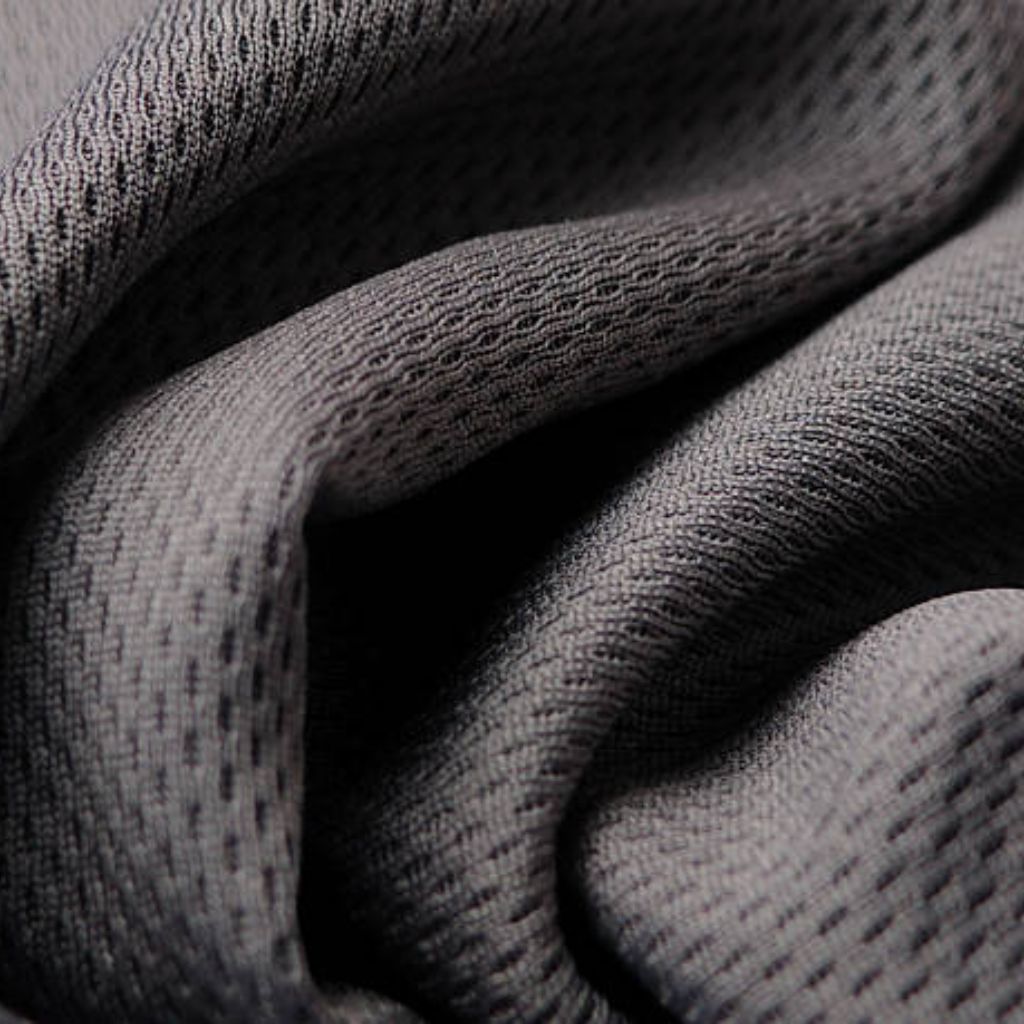
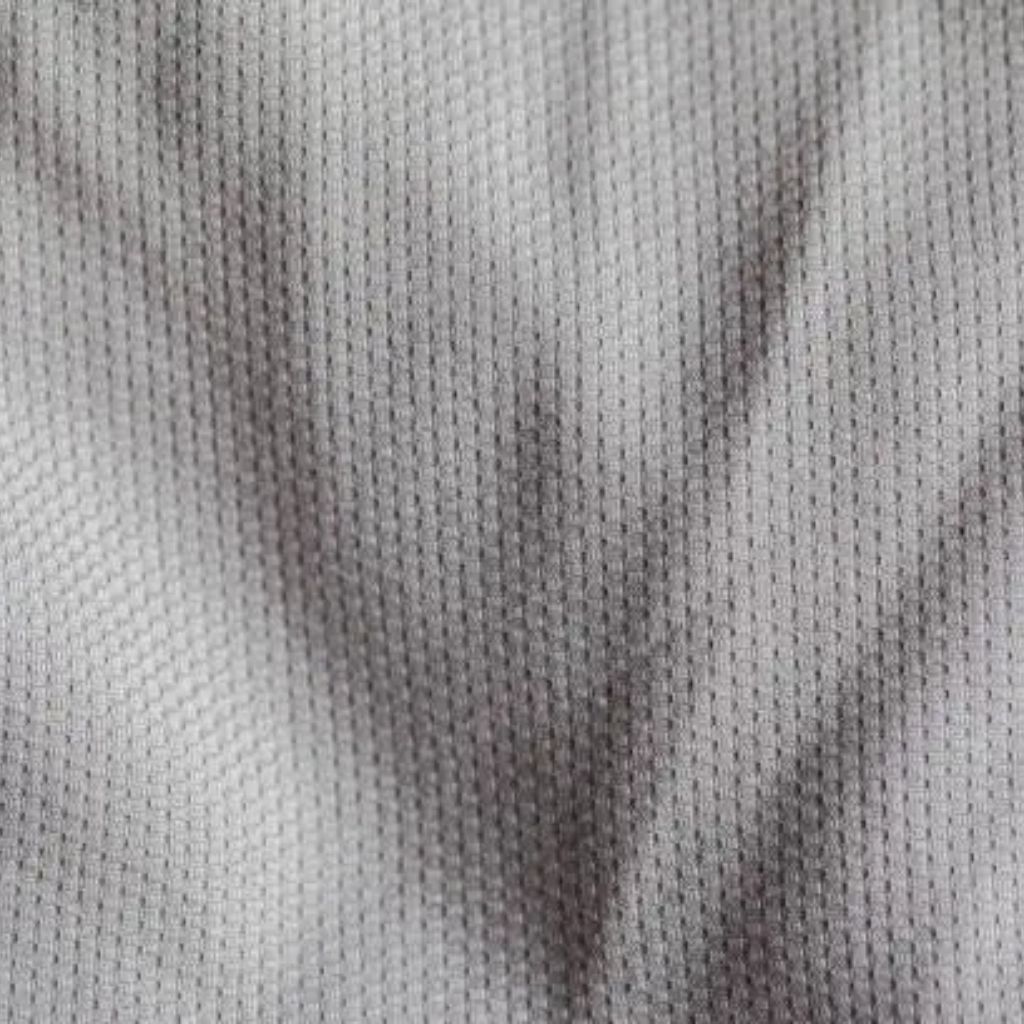
Alt text (long): Macro close-up of a gray knit fabric used in winter jackets, highlighting tightly woven, raised stitch patterns, subtle sheen, and durable, rugged texture suitable for cold-weather outerwear.
Air Flex Knit Fabric:
Caption: Close-up texture of a rugged gray knit fabric used in a military-inspired winter jacket.

Manufacturers prefer Air Flex Knit Fabric for several reasons. First, it is easy to dye and produces vibrant colors. Therefore, it enhances product appeal.In addition, it retains shape after use. This ensures long-lasting garments. As a result, customer satisfaction improves.Moreover, it offers cost efficiency. It balances performance and affordability. Therefore, it supports large-scale production.Customization options also make it attractive. Manufacturers can adjust features based on needs.

How to Choose Quality Air Flex Knit Fabric

Choosing quality Air Flex Knit Fabric requires careful attention. First, check stretch recovery by pulling the fabric gently. It should return to its original shape.Next, examine fabric density. Balanced density ensures durability and comfort. In addition, test breathability by observing airflow through the fabric.Furthermore, feel the surface texture. A smooth surface indicates better quality. Check colorfastness to ensure lasting color.Finally, test for pilling resistance. High-quality fabric resists fiber balls. Therefore, it maintains its appearance.

Sustainability & Eco-Friendly Options

Sustainability is becoming important in textile production. Many manufacturers now use recycled fibers. These reduce environmental impact.In addition, low-impact dyeing methods save water and energy. Therefore, they support eco-friendly practices.Certifications ensure safe and ethical production. Consumers prefer sustainable options. As a result, Air Flex Knit Fabric continues to evolve.

Future Trends in Air Flex Knit Fabric

The future of Air Flex Knit Fabric looks promising. Smart textiles are gaining popularity. They can monitor body conditions.Cooling technologies are also improving. They enhance temperature regulation. Therefore, comfort levels increase.Anti-odor finishes prevent bacterial growth. This keeps garments fresh. Performance fashion trends continue to grow.

Care & Maintenance of Air Flex Knit Fabric
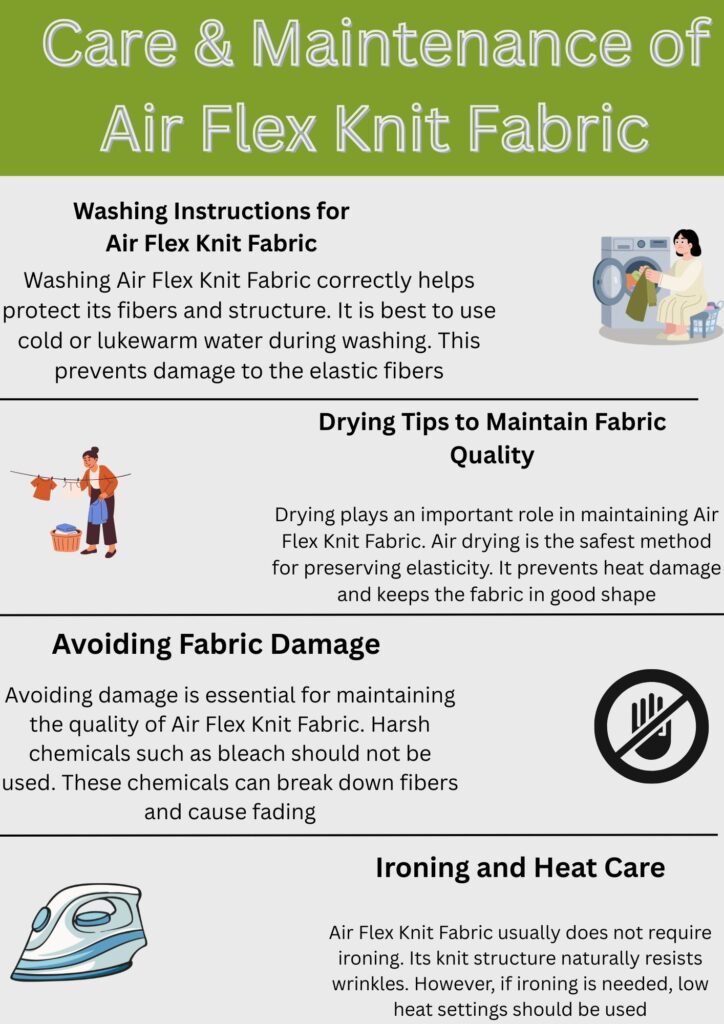
Alt text: A multi-section infographic titled “Care & Maintenance of Air Flex Knit Fabric” with a green header. Sections include “Washing Instructions for Air Flex Knit Fabric,” “Drying Tips to Maintain Fabric Quality,” “Avoiding Fabric Damage,” and “Ironing and Heat Care.” Each section features simple illustrations: a person washing clothes, a person hanging laundry, a no-bleach symbol, and an iron. The layout uses horizontal dividers and light gray background bands.
Air Flex Knit Fabric:
Caption: Care & Maintenance of Air Flex Knit Fabric: Washing, drying, fabric protection, and ironing guidance with accompanying illustrations.

Proper care keeps Air Flex Knit Fabric in excellent condition for a long time. Although this fabric is durable, it still requires careful handling. Therefore, following the right maintenance steps helps preserve its stretch and softness. In addition, good care practices maintain its breathability and performance features. As a result, the fabric continues to provide comfort during active use.

Washing Instructions for Air Flex Knit Fabric

Washing Air Flex Knit Fabric correctly helps protect its fibers and structure. It is best to use cold or lukewarm water during washing. This prevents damage to the elastic fibers. In addition, mild detergents work better because they do not harm the fabric surface.

Moreover, a gentle wash cycle reduces stress on the knit loops. Harsh washing can weaken the fabric over time. Therefore, it is important to avoid strong agitation. Turning garments inside out before washing also helps maintain color and texture.

Drying Tips to Maintain Fabric Quality

Drying plays an important role in maintaining Air Flex Knit Fabric. Air drying is the safest method for preserving elasticity. It prevents heat damage and keeps the fabric in good shape. Therefore, hanging or laying flat is recommended.

However, if machine drying is necessary, low heat should be used. High temperatures can weaken the fibers and reduce stretch. As a result, the fabric may lose its original fit. Proper drying ensures long-lasting performance.

Avoiding Fabric Damage

Avoiding damage is essential for maintaining the quality of Air Flex Knit Fabric. Harsh chemicals such as bleach should not be used. These chemicals can break down fibers and cause fading. Therefore, gentle cleaning products are always better.

In addition, rough surfaces can cause pilling. It is important to avoid friction during washing and wearing. Using laundry bags can provide extra protection. Consequently, the fabric stays smooth and attractive.

Ironing and Heat Care

Air Flex Knit Fabric usually does not require ironing. Its knit structure naturally resists wrinkles. However, if ironing is needed, low heat settings should be used. High heat can damage the elastic fibers.

Moreover, placing a cloth over the fabric while ironing adds protection. Steam can also be used carefully to remove wrinkles. Therefore, controlled heat helps maintain fabric quality.

Conclusion

Air Flex Knit Fabric offers an excellent balance of comfort and performance. It combines breathability, flexibility, and durability in one structure. Therefore, it meets the demands of modern lifestyles.Moreover, it supports both athletic and casual use. Its advanced features improve user experience. As a result, it has become a leading choice in the textile industry.

In addition, continuous innovation enhances its capabilities. Sustainable options and smart technologies shape its future. Consequently, Air Flex Knit Fabric will remain highly relevant.

FAQs

Is Air Flex Knit Fabric good for summer?

Yes, Air Flex Knit Fabric is excellent for summer wear because of its breathable structure. The knit loops allow air to circulate freely, keeping the body cool. In addition, it wicks sweat away from the skin, reducing discomfort from heat. Its lightweight feel also makes it ideal for hot and humid conditions.

Is Air Flex Knit Fabric better than mesh fabric?

Air Flex Knit Fabric offers a balance of stretch, softness, and breathability, while mesh fabric focuses primarily on ventilation. Therefore, Air Flex Knit is more suitable for activewear that requires freedom of movement and comfort. Mesh fabric might be better for areas that need maximum airflow, but Air Flex Knit delivers overall performance.

Does Air Flex Knit Fabric shrink after washing?

High-quality Air Flex Knit Fabric is designed to resist shrinkage. However, improper washing, such as using hot water or high-heat drying, can affect the size. To maintain its shape, it is best to wash in cold water, use mild detergents, and air dry whenever possible. Proper care ensures the fabric retains its original dimensions.
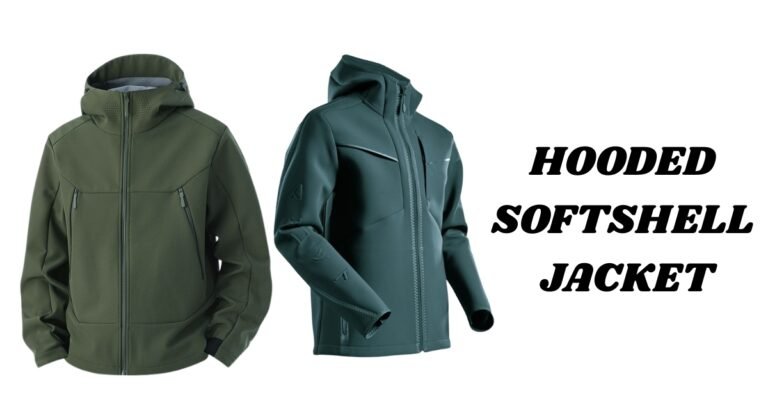
Hooded Softshell Jacket Guide: Comfort, Style & Protection

0

Outdoor clothing has changed a lot over the years. Today, people want clothing that is comfortable, stylish, and protective at the same time. Therefore, the hooded softshell jacket has become one of the most popular choices for outdoor lovers. It offers warmth, flexibility, and weather resistance. At the same time, it feels light and easy to wear.

Many people prefer this jacket because it works well in different weather conditions. Moreover, it can be used for hiking, traveling, sports, and daily wear. In addition, the built-in hood gives extra protection against wind and light rain.

In this blog, we will explore everything about hooded softshell jackets. We will also explain their features, benefits, materials, and how to choose the best one.


What Is a Hooded Softshell Jacket?

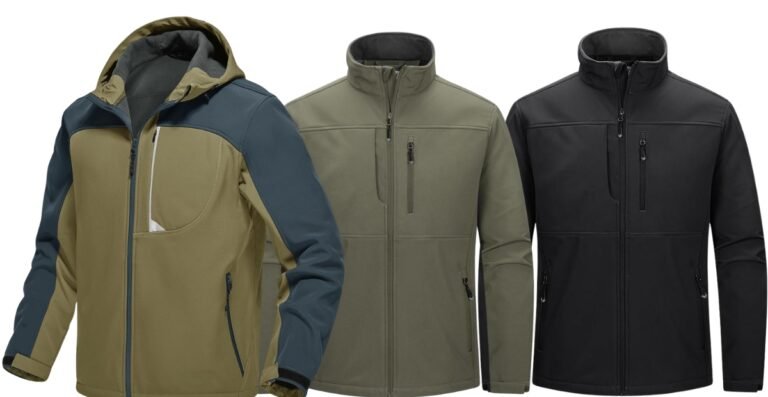
A hooded softshell jacket is a lightweight jacket made from flexible and breathable materials. It is designed to protect the body from wind, light rain, and cold temperatures. However, it is softer and more comfortable than many traditional jackets.

Softshell jackets are usually made with layered fabric. Because of this design, warmth can be provided while flexibility is maintained.

The hood is an important part of the jacket. It protects the head and neck from wind and drizzle. Therefore, extra comfort is provided during outdoor activities.


Why Hooded Softshell Jackets Are So Popular

Many outdoor jackets are available today. However, the hooded softshell jacket stands out for several reasons.

Infographic titled 'Why Hooded Softshell Jackets Are So Popular' with four rounded brown sections. Section 1: Comfort and Flexibility showing a square with arrows pointing outward. Section 2: Weather Resistance with a rain/wave illustration. Section 3: Breathability with layered fabric icon. Section 4: Lightweight Design with a feather icon.
Discover why hooded softshell jackets are a favorite: comfort and flexibility, weather resistance, breathability, and lightweight design.

1. Comfort and Flexibility

First of all, softshell jackets are very comfortable. The fabric stretches easily. Therefore, movement is not restricted.

This is especially helpful for activities like hiking, cycling, or climbing. Meanwhile, the body stays warm and protected.

2. Weather Resistance

A hooded softshell jacket can resist wind and light rain. Although it is not fully waterproof like a raincoat, it still protects well in mild weather.

Moreover, the hood adds extra protection. When the weather suddenly changes, the hood can be used quickly.

3. Breathability

Another advantage is breathability. Many heavy jackets trap heat and moisture. However, softshell jackets allow air to circulate.

Because of this, sweat can escape easily. As a result, the wearer stays comfortable even during physical activity.

4. Lightweight Design

Softshell jackets are lighter than many winter coats. Therefore, they are easy to carry and wear.

In addition, they can be packed into a bag when not needed. This makes them ideal for travelers and hikers.


Key Features of a Hooded Softshell Jacket

When you buy a hooded softshell jacket, several important features should be considered.

Adjustable Hood

Most hooded softshell jackets come with adjustable hoods. The hood can be tightened or loosened depending on the weather.

Therefore, better protection is provided when strong wind appears.

Windproof Fabric

Windproof material is usually used in softshell jackets. Because of this, cold air cannot easily enter the jacket.

As a result, the body remains warm even in windy conditions.

Water-Resistant Layer

Many jackets include a water-resistant coating. Light rain can be blocked by this layer. However, heavy rain may still pass through.

Still, it is enough for most outdoor situations.

Multiple Pockets

Another useful feature is multiple pockets. These pockets can store phones, wallets, keys, or gloves.

In addition, zipper pockets help keep items safe.

Stretchable Material

Softshell fabric is usually stretchable. Therefore, freedom of movement is increased.

This is very helpful during sports and outdoor adventures.


Materials Used in Hooded Softshell Jackets

The materials used in these jackets are carefully chosen. Each layer has a special purpose.

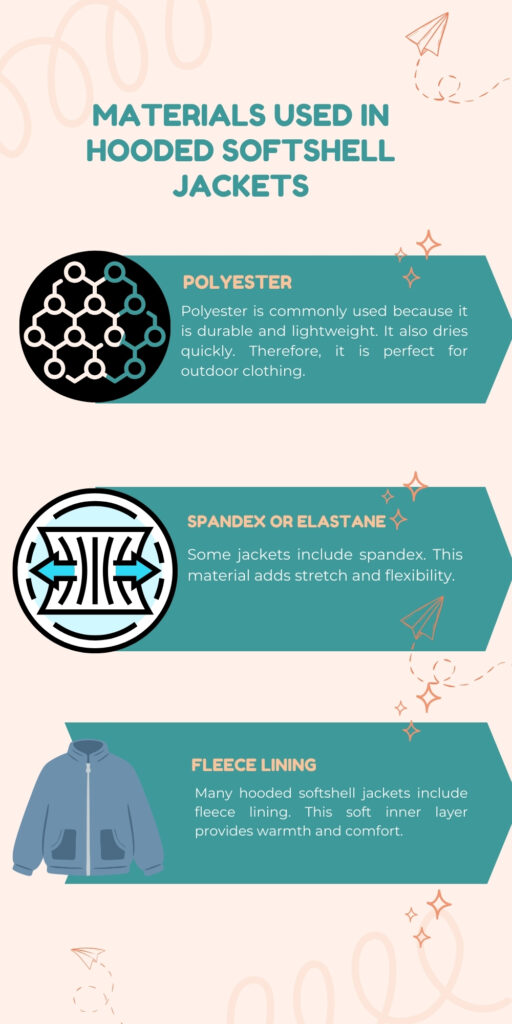
A vertical infographic highlighting materials used in hooded softshell jackets. Top heading “Materials Used in Hooded Softshell Jackets” with a soft peach background. Three teal ribbons feature icons and text: (1) POLYESTER with a circular molecular icon and description about durability and quick-drying; (2) SPANDEX OR ELASTANE with a circular graphic showing stretch arrows and brief note on stretch and flexibility; (3) FLEECE LINING with an illustrated blue jacket and note on warmth from the fleece inner layer.
Materials used in hooded softshell jackets: Polyester, Spandex/Elastane for stretch, and warm fleece lining.

Polyester

Polyester is commonly used because it is durable and lightweight. It also dries quickly. Therefore, it is perfect for outdoor clothing.

Spandex or Elastane

Some jackets include spandex. This material adds stretch and flexibility.

As a result, the jacket moves with the body easily.

Fleece Lining

Many hooded softshell jackets include fleece lining. This soft inner layer provides warmth and comfort.

Moreover, the lining feels gentle against the skin. Read more: College Style Jacket


Benefits of Wearing a Hooded Softshell Jacket

There are many benefits of wearing this type of jacket. Because of these advantages, it has become a favorite among outdoor enthusiasts.

All-Season Use

A hooded softshell jacket can be worn in many seasons. It works well in spring, autumn, and mild winter.

In addition, it can be layered with other clothing for colder temperatures.

Stylish Appearance

These jackets are not only practical but also stylish. Many modern designs are available today.

Therefore, they can be worn for casual outings as well.

Easy Maintenance

Softshell jackets are easy to care for. Most can be washed in a machine.

However, strong detergents should be avoided to protect the fabric coating.

Versatile Usage

Another advantage is versatility. The same jacket can be used for hiking, camping, travel, cycling, and everyday wear.

Because of this, it becomes a valuable part of any wardrobe.


How to Choose the Best Hooded Softshell Jacket

Choosing the right jacket can sometimes feel confusing. However, a few simple tips can help.

Check the Fit

First, the jacket should fit comfortably. It should not be too tight or too loose.

Moreover, there should be enough room for layering.

Look at the Weather Protection

Different jackets offer different levels of protection. Therefore, choose one based on your needs.

For example, hikers may prefer stronger wind resistance.

Consider Breathability

If you plan to use the jacket for sports, breathability is important.

Therefore, choose fabrics that allow airflow.

Evaluate the Hood Design

The hood should be comfortable and adjustable. Some jackets also include helmet-compatible hoods for climbing.


Hooded Softshell Jacket vs Hardshell Jacket

Many people compare softshell and hardshell jackets. However, both have different purposes.

Softshell jackets are designed for comfort and flexibility. They work best in mild weather.

On the other hand, hardshell jackets are fully waterproof. They are better for heavy rain or snow.

Therefore, the choice depends on the environment and activity.


Best Activities for Hooded Softshell Jackets

A hooded softshell jacket can be used for many activities.

Hiking

Hiking often requires lightweight and breathable clothing. Therefore, softshell jackets are perfect for trails and mountain paths.

Cycling

Cyclists need jackets that block wind but allow movement. Meanwhile, softshell fabric stretches easily.

Camping

Camping trips often involve changing weather. Therefore, a hooded softshell jacket provides reliable protection.

Traveling

Travelers prefer lightweight clothing. Because of this, softshell jackets are often packed in backpacks.


Caring for Your Hooded Softshell Jacket

Proper care will help your jacket last longer.

First, always follow the washing instructions. Most jackets can be washed in cold water.

Second, avoid fabric softeners. These products can damage the water-resistant coating.

Finally, allow the jacket to air dry. High heat should be avoided.

By following these steps, the jacket will remain effective for many years.


Why Hooded Softshell Jackets Are a Smart Investment

Buying a good jacket is always a smart decision. A hooded softshell jacket offers many advantages in one product.

It provides warmth, comfort, and weather protection. Moreover, it is lightweight and stylish.

Because of these benefits, many outdoor experts recommend it.

In addition, modern designs continue to improve every year. Therefore, better performance and comfort are constantly being offered.


Conclusion

The hooded softshell jacket is one of the most versatile pieces of outdoor clothing. It combines comfort, flexibility, and protection in a single design. Moreover, the hood adds extra defense against wind and light rain.

Because of its breathable fabric and lightweight structure, it can be worn during many activities. Hiking, cycling, camping, and traveling can all become more comfortable with the right jacket.

In addition, the stylish appearance makes it suitable for everyday wear. Therefore, it is not only practical but also fashionable.

If you want a jacket that balances performance and comfort, a hooded softshell jacket is an excellent choice.

FAQs

What is a hooded softshell jacket used for?

A hooded softshell jacket is used for outdoor activities such as hiking, cycling, camping, and travel. It provides warmth, wind resistance, and light rain protection.

Is a hooded softshell jacket waterproof?

Most hooded softshell jackets are water-resistant but not fully waterproof. They can handle light rain but not heavy storms.

Can I wear a hooded softshell jacket in winter?

Yes, it can be worn in mild winter. However, extra layers may be needed in very cold weather.

Insulated Softshell Jacket: Lightweight Warm Outdoor Wear

0

Outdoor clothing has improved a lot over the years. Today, people want jackets that are warm, comfortable, and easy to wear. However, they also want something lightweight and flexible. Therefore, the insulated softshell jacket has become one of the most popular choices for outdoor lovers.

Whether you enjoy hiking, camping, cycling, or simply walking in cold weather, this jacket can be a great option. It combines warmth, flexibility, and protection from wind. In addition, it looks stylish enough to be worn every day.

In this guide, we will explore everything about insulated softshell jackets. For example, we will discuss their features, benefits, materials, and uses. Moreover, you will learn how to choose the best one for your needs.


What Is an Insulated Softshell Jacket?

An insulated softshell jacket is a special type of outerwear designed for cold weather and outdoor activities. It combines two important features: a softshell outer layer and a warm insulating layer inside.

Softshell fabric is known for being flexible and breathable. At the same time, insulation helps keep the body warm. Therefore, when both are combined, the result is a jacket that provides comfort, warmth, and movement.

Unlike heavy winter coats, this jacket is lightweight. However, it still offers strong protection from wind and mild rain. Because of this balance, it is widely used for outdoor sports.

In many cases, synthetic insulation is used inside the jacket. This insulation traps body heat. As a result, warmth is maintained even in cool weather.


Why Insulated Softshell Jackets Are So Popular

In recent years, outdoor fashion has changed a lot. People now prefer clothing that works in different situations. Consequently, insulated softshell jackets have become extremely popular.

First of all, they are versatile. They can be worn for hiking, traveling, or daily activities. Secondly, they are lighter than traditional winter coats.

Moreover, they allow more movement. For example, climbers and cyclists prefer them because they stretch easily. Meanwhile, commuters like them because they are stylish and comfortable.

Another reason for their popularity is breathability. Heavy jackets can sometimes make you feel hot and sweaty. However, softshell jackets allow air to circulate.

As a result, your body temperature stays balanced during activity.


Key Features of an Insulated Softshell Jacket

Several features make this jacket unique. Therefore, understanding these features can help you choose the right one.

1. Lightweight Insulation

The main feature is insulation. This inner layer traps heat close to the body. As a result, warmth is provided without adding extra weight.

Most modern jackets use synthetic insulation, which works well even when slightly wet. In addition, it dries quickly.

2. Wind Resistance

Another important feature is wind protection. Cold wind can quickly reduce body temperature. However, softshell materials block most wind.

Therefore, the wearer remains comfortable even in windy conditions.

3. Breathable Fabric

Breathability is one of the biggest advantages of softshell jackets. While heavy coats trap heat, softshell fabrics allow moisture to escape.

Consequently, sweat does not build up inside the jacket. This is especially useful during physical activities like hiking or cycling.

4. Water Resistance

Although these jackets are not completely waterproof, they are water-resistant. Light rain or snow can be handled easily.

In most cases, a Durable Water Repellent (DWR) coating is applied to the fabric. As a result, water droplets roll off the surface.

5. Flexible and Stretchable

Movement is very important during outdoor activities. Fortunately, softshell fabric stretches naturally.

Therefore, it allows better mobility. For example, climbers and runners find it easier to move while wearing it.


Materials Used in Insulated Softshell Jackets

Different materials are used to create these jackets. Each layer has a specific purpose.

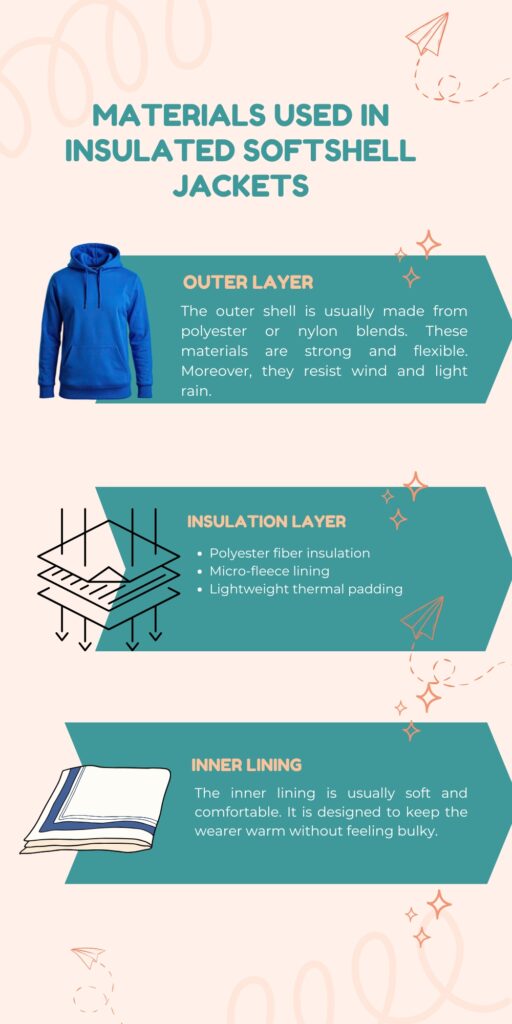
A vertical infographic detailing the materials of insulated softshell jackets, featuring sections for Outer Layer, Insulation Layer, and Inner Lining with teal banners and small illustrative icons.
Materials used in insulated softshell jackets: Outer Layer, Insulation Layer, and Inner Lining are highlighted with visuals and brief descriptions.

Outer Layer

The outer shell is usually made from polyester or nylon blends. These materials are strong and flexible. Moreover, they resist wind and light rain.

In addition, many jackets include elastane. This adds stretch to the fabric.

Insulation Layer

Inside the jacket, synthetic insulation is often used. Popular insulation types include:

  • Polyester fiber insulation
  • Micro-fleece lining
  • Lightweight thermal padding

These materials trap body heat efficiently. At the same time, they remain breathable.

Inner Lining

The inner lining is usually soft and comfortable. It is designed to keep the wearer warm without feeling bulky.

Sometimes fleece lining is added for extra warmth.


Benefits of Wearing an Insulated Softshell Jacket

There are many reasons why people choose this type of jacket. Below are some of the main benefits.

1. Comfortable Warmth

First and foremost, it provides warmth without heaviness. Traditional winter coats can feel bulky. However, insulated softshell jackets remain lightweight.

As a result, they are comfortable for long hours.

2. Excellent Mobility

Flexibility is another major advantage. Because the fabric stretches, it allows natural body movement.

Therefore, outdoor sports become easier and more enjoyable.

3. Versatile Use

These jackets are suitable for many situations. For example, they can be worn for:

  • Hiking
  • Cycling
  • Skiing
  • Traveling
  • Everyday casual wear

Consequently, one jacket can serve many purposes.

4. Stylish Design

Modern insulated softshell jackets are designed with style in mind. Many brands offer sleek and modern designs.

Therefore, they can be worn both outdoors and in the city.

5. Easy Layering

Another advantage is layering. The jacket can be worn over a light shirt or under a heavier coat.

For instance, during extremely cold weather, it can be combined with other layers.


When Should You Wear an Insulated Softshell Jacket?

These jackets are perfect for cool to moderately cold weather. They are especially useful during active outdoor activities.

For example, hikers often wear them during autumn and spring. Meanwhile, cyclists use them for windy rides.

They are also ideal for daily winter use when the weather is not extremely cold.

However, for heavy rain or extreme snowstorms, a fully waterproof hardshell jacket might be needed.


How to Choose the Best Insulated Softshell Jacket

Choosing the right jacket can make a big difference. Therefore, several factors should be considered.

1. Insulation Level

Different jackets provide different levels of warmth. If you live in a colder climate, choose thicker insulation.

However, lighter insulation works better for active sports.

2. Breathability

Breathability is very important during movement. Look for jackets that allow moisture to escape.

Otherwise, sweat may build up inside.

3. Fit and Comfort

A good fit improves comfort and performance. The jacket should not be too tight or too loose.

Additionally, adjustable cuffs and hems can improve the fit.

4. Weather Protection

If you expect wind or light rain, choose a jacket with windproof fabric and water-repellent coating.

This will provide better protection.

5. Extra Features

Many jackets include useful features such as:

  • Adjustable hood
  • Zipper pockets
  • Ventilation panels
  • Elastic cuffs

These features add convenience and functionality.


How to Care for an Insulated Softshell Jacket

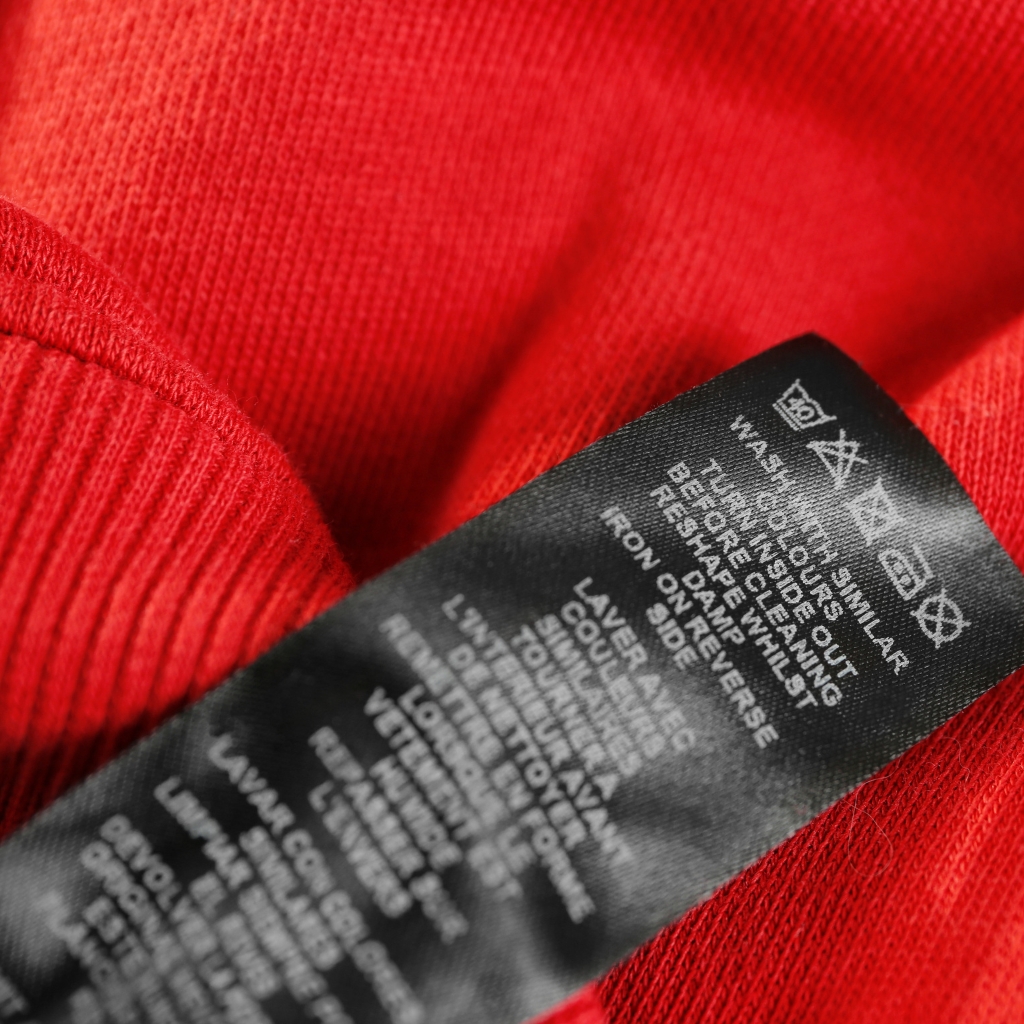
Close-up of a black care label on a red knitted fabric, showing washing instructions.
Care label on a red garment detailing washing and care instructions.

Proper care will help the jacket last longer. Fortunately, maintenance is quite simple.

First, always read the care label. Most jackets can be washed in cold water using mild detergent.

However, fabric softeners should be avoided because they can damage the water-repellent coating.

After washing, the jacket should be air-dried or tumble-dried on low heat. Sometimes, heat helps restore the DWR coating.

In addition, it is recommended to reapply water-repellent spray after several washes.


Insulated Softshell Jacket vs Other Jackets

Understanding the difference between jacket types can help you choose the right one.

Softshell vs Hardshell Jacket

Hardshell jackets are fully waterproof and designed for extreme weather. However, they are less breathable.

Softshell jackets, on the other hand, focus on flexibility and comfort.

Therefore, softshell jackets are better for active movement.

Softshell vs Fleece Jacket

Fleece jackets provide warmth but offer little wind protection.

In contrast, insulated softshell jackets provide both warmth and wind resistance.

As a result, they are more suitable for outdoor adventures.

Softshell vs Down Jacket

Down jackets are extremely warm but can be bulky.

Meanwhile, insulated softshell jackets are lighter and more flexible.

Therefore, they are ideal for activities requiring movement.


The Future of Insulated Softshell Jackets

Outdoor clothing technology continues to evolve. As a result, insulated softshell jackets are becoming even better.

New materials are being developed to improve breathability and warmth. In addition, eco-friendly fabrics are now being used.

Many brands are also focusing on sustainable production methods.

Consequently, future jackets will likely be lighter, warmer, and more environmentally friendly.


Conclusion

The insulated softshell jacket is one of the most practical pieces of outdoor clothing available today. It offers the perfect balance between warmth, comfort, and flexibility.

Because it is lightweight and breathable, it works well for many outdoor activities. Moreover, it protects against wind and light rain.

Whether you are hiking in the mountains, cycling through the city, or simply walking on a cold day, this jacket can keep you comfortable.

Therefore, investing in a high-quality insulated softshell jacket is a smart choice. With the right design and features, it can serve you well for many seasons.

In the end, outdoor adventures become more enjoyable when you have the right gear. And without a doubt, an insulated softshell jacket is one of the best options for staying warm while staying active.

FAQs

What is an insulated softshell jacket?

It is a jacket with a flexible softshell outer layer and a warm insulated inner layer designed for comfort in cool weather.

Are insulated softshell jackets waterproof?

No, they are usually water-resistant, which means they can handle light rain but not heavy storms.

Is an insulated softshell jacket good for winter?

Yes, it works well for mild to moderate winter conditions and outdoor activities.

Ice Flow Athletic Fabric: Stay Cool During Intense Workouts

Modern sportswear focuses strongly on comfort, cooling, and performance. Therefore, fabric technology now plays a major role in athletic clothing. One of the most innovative materials today is Ice Flow Athletic Fabric. This advanced textile helps athletes stay cool during demanding workouts. Moreover, it manages sweat efficiently and supports natural body movement.Athletes often train in hot and humid environments. Because of this, traditional fabrics can trap heat and moisture. As a result, athletes feel uncomfortable and tired quickly. However, cooling performance fabrics solve this problem effectively.Ice Flow Athletic Fabric uses modern textile engineering. It combines breathable fibers, moisture-wicking technology, and quick-dry materials.

History of Ice Flow Athletic Fabric

Alt text: "Close-up of light gray, quilted fabric with a subtle dotted pattern, showing soft folds and texture."
Ice Flow Athletic Fabric:
Caption: “A detailed look at the fabric texture of a light gray quilted jacket.”

The history of Ice Flow Athletic Fabric connects closely with the evolution of modern performance textiles. Although the exact name is relatively new, the technology behind cooling athletic fabrics developed over many decades. Textile engineers continuously searched for ways to keep athletes comfortable during physical activity. Therefore, innovation in sports fabrics gradually led to advanced cooling materials like Ice Flow Athletic Fabric.

During the early twentieth century, most athletes wore cotton sports clothing. Cotton felt soft and comfortable at first. However, it absorbed sweat heavily and dried very slowly. Consequently, athletes often felt wet, heavy, and uncomfortable during long workouts. Because of these problems, sports scientists and textile manufacturers began exploring better fabric solutions.

Types of Ice Flow Athletic Fabric

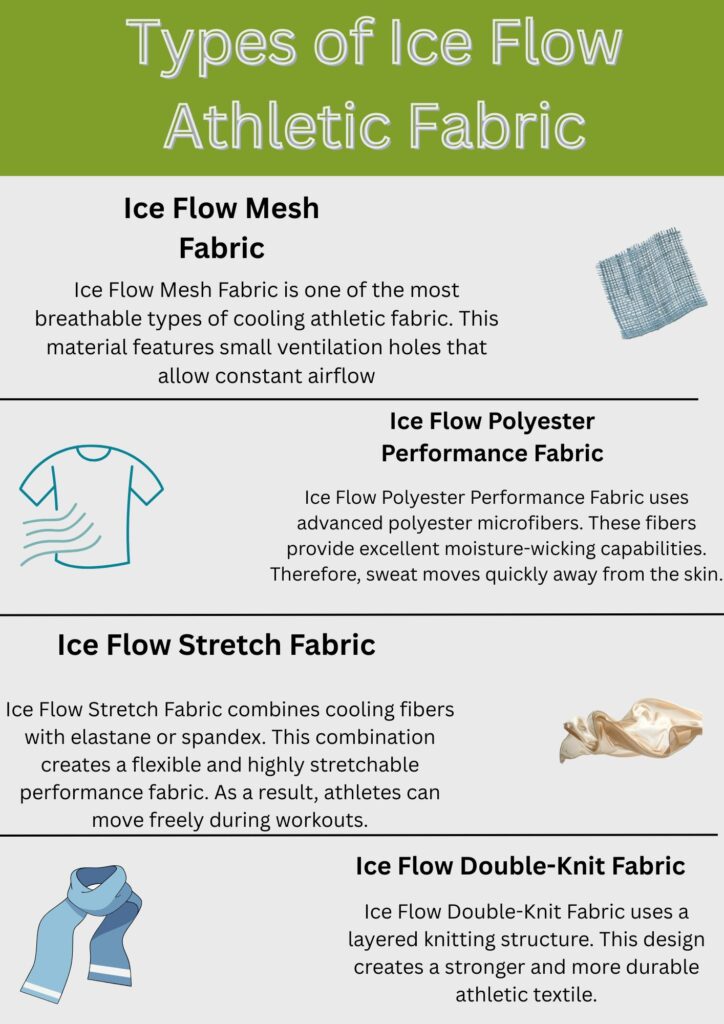
An infographic titled “Types of Ice Flow Athletic Fabric” with four sections: Ice Flow Mesh Fabric (mesh swatch image), Ice Flow Polyester Performance Fabric (t-shirt illustration), Ice Flow Stretch Fabric (fabric fiber image), and Ice Flow Double-Knit Fabric (scarf image). Each section has a brief description.
Ice Flow Athletic Fabric:
Types of Ice Flow fabrics: mesh, polyester performance, stretch, and double-knit, with simple illustrations for each.

Ice Flow Athletic Fabric comes in several types designed for different sports activities. Manufacturers adjust fiber blends, fabric structures, and ventilation patterns to improve performance. Therefore, each type serves a specific athletic purpose. Some fabrics focus on cooling and airflow, while others emphasize stretch and durability.

Ice Flow Mesh Fabric

Ice Flow Mesh Fabric is one of the most breathable types of cooling athletic fabric. This material features small ventilation holes that allow constant airflow. As a result, heat escapes quickly from the body during exercise.

Athletes often use this fabric in running shirts and training tops. The mesh structure keeps the body cooler in hot weather conditions. Furthermore, the lightweight design reduces clothing weight during intense workouts.

Ice Flow Polyester Performance Fabric

Ice Flow Polyester Performance Fabric uses advanced polyester microfibers. These fibers provide excellent moisture-wicking capabilities. Therefore, sweat moves quickly away from the skin.

This fabric type dries extremely fast compared to cotton materials. Consequently, athletes remain comfortable during long training sessions. In addition, polyester fibers resist shrinking and maintain durability after repeated washing.
Ice Flow Stretch Fabric

Ice Flow Stretch Fabric combines cooling fibers with elastane or spandex. This combination creates a flexible and highly stretchable performance fabric. As a result, athletes can move freely during workouts.

Yoga clothing, compression wear, and training leggings commonly use this fabric type. The stretch fibers allow the material to adapt to body movements. Consequently, athletes enjoy better mobility and comfort.

Ice Flow Double-Knit Fabric

Ice Flow Double-Knit Fabric uses a layered knitting structure. This design creates a stronger and more durable athletic textile. At the same time, the inner layer manages moisture while the outer layer promotes evaporation.

Because of this structure, the fabric provides excellent sweat control. Athletes stay dry even during intense training sessions. Moreover, the thicker knit improves durability and shape retention.
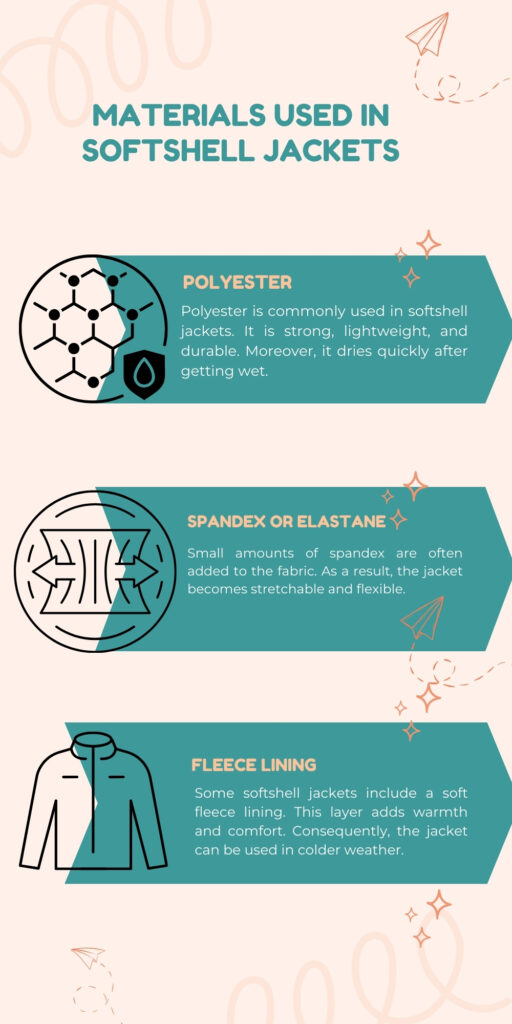
Why Ice Flow Athletic Fabric Is Important for Athletes

Ice Flow Athletic Fabric has become an essential material in modern sportswear. Athletes train harder and longer today, so their clothing must support performance. Therefore, advanced fabrics play a critical role in athletic comfort and endurance. Ice Flow performance fabric helps regulate body temperature during intense workouts. Consequently, athletes remain cooler and more focused during training sessions.

Traditional fabrics often trap heat and moisture. As a result, athletes feel heavy, wet, and uncomfortable while exercising. However, Ice Flow Athletic Fabric solves these issues effectively. The fabric allows sweat to move away from the skin quickly. Then the moisture evaporates from the outer surface. This process naturally cools the body and reduces overheating.

What Is Ice Flow Athletic Fabric?

Close-up of bright blue fabric with a textured knit pattern and soft folds.
Ice Flow Athletic Fabric:
Close-up view of vibrant blue knit fabric used in military-inspired winter jackets.

Definition and Concept

Ice Flow Athletic Fabric is a high-performance cooling textile designed for sports and fitness clothing. Manufacturers create this fabric to regulate body temperature during physical activity. Moreover, the material helps remove sweat quickly from the skin.

The concept behind this fabric focuses on moisture control and airflow. The fibers pull sweat away from the body and spread it across the surface. Consequently, the moisture evaporates rapidly. This process produces a cooling sensation during exercise.

In addition, this fabric supports freedom of movement. Athletes can stretch, run, and train without restriction. Therefore, the material improves both comfort and performance during workouts.

How It Differs from Traditional Sports Fabrics

Traditional cotton fabrics absorb sweat but dry slowly. As a result, the clothing becomes heavy and uncomfortable. However, Ice Flow Athletic Fabric behaves differently.

Instead of holding moisture, the fabric moves sweat away from the skin. Therefore, athletes remain dry and comfortable longer. Moreover, the fabric promotes airflow through micro-ventilation structures.

Additionally, this fabric weighs much less than many traditional materials. Because of this, athletes experience less fatigue during long workouts.

Key Materials Used in Ice Flow Fabric

Manufacturers use several advanced fibers to produce Ice Flow performance fabric. These fibers improve durability and moisture control.

Common materials include:

  • Polyester microfibers
  • Nylon performance fibers
  • Elastane or spandex blends
  • Cooling yarn technologies

These fibers work together to create a breathable and flexible fabric structure. Consequently, the material offers cooling, stretch, and durability.

How Ice Flow Athletic Fabric Works

Cooling Technology Explained

Cooling fabrics rely on advanced textile engineering. Ice Flow Athletic Fabric uses specially designed yarn structures. These structures create channels that allow heat to escape quickly.

When the body sweats, the fabric spreads moisture across its surface. As the moisture evaporates, it removes heat from the skin. Therefore, the body naturally cools down.

Furthermore, many versions include cool-touch fibers. These fibers feel cool when they contact the skin. As a result, athletes experience instant comfort during exercise.

Moisture-Wicking Mechanism

Moisture-wicking technology plays a major role in Ice Flow sports fabric. The fibers pull sweat away from the skin using capillary action. This process moves moisture through the fabric layers.

Once the sweat reaches the outer surface, it spreads across a larger area. Consequently, evaporation occurs faster. Therefore, athletes remain dry even during intense workouts.

Moreover, this mechanism prevents sweat accumulation. Because of this, athletes avoid the sticky feeling often caused by traditional fabrics.

Breathability and Ventilation Features

Breathability improves comfort during training. Ice Flow Athletic Fabric contains micro-ventilation zones. These zones allow air to circulate freely.

As fresh air enters the fabric, warm air escapes quickly. Consequently, body temperature remains stable. This airflow also supports sweat evaporation.

Many designs also include mesh panels. These panels increase airflow in high-sweat areas. Therefore, athletes stay cooler during demanding workouts.

Best Materials Used in Ice Flow Athletic Fabric

Close-up of light blue knitted fabric with a subtle, uniform pattern, showing soft folds.
Ice Flow Athletic Fabric:
Close-up of a light blue military-inspired winter jacket fabric.

Ice Flow Athletic Fabric performs well because of the advanced materials used in its construction. Textile manufacturers carefully select fibers that provide cooling, breathability, and durability. Therefore, the quality of materials directly affects the performance of athletic clothing.

Polyester Microfiber

Polyester microfiber is one of the most widely used materials in cooling athletic fabrics. This fiber is extremely lightweight and durable. Moreover, it provides excellent moisture-wicking performance.

The microfiber structure helps move sweat away from the skin quickly. Consequently, moisture spreads across the fabric surface and evaporates faster. This process creates a cooling effect during workouts.

Nylon Performance Fiber

Nylon is another important material used in Ice Flow Athletic Fabric. This fiber is strong, smooth, and highly durable. Because of its strength, nylon fabrics withstand intense training conditions.
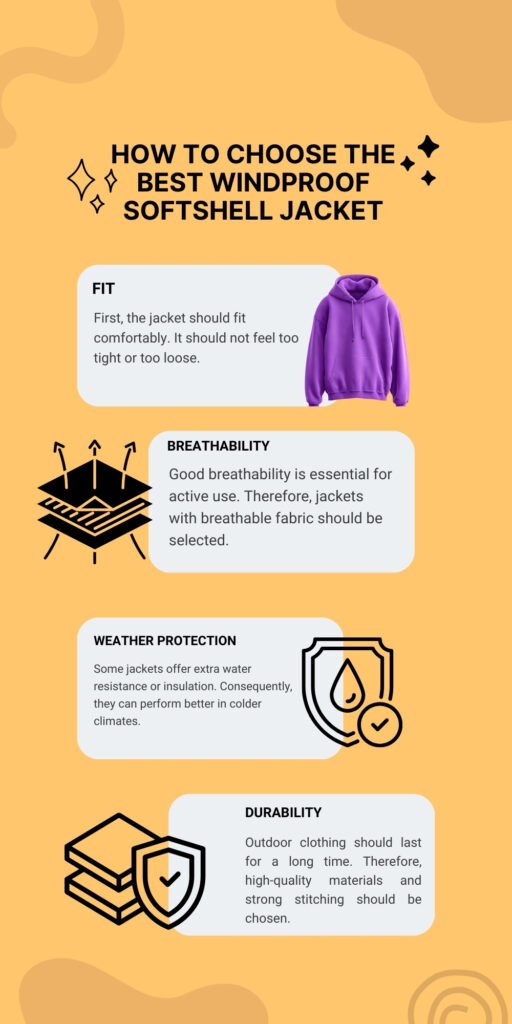
In addition, nylon provides a soft and comfortable texture against the skin. Many athletes prefer nylon-based sportswear for long training sessions. The fiber also supports good airflow and moisture control.
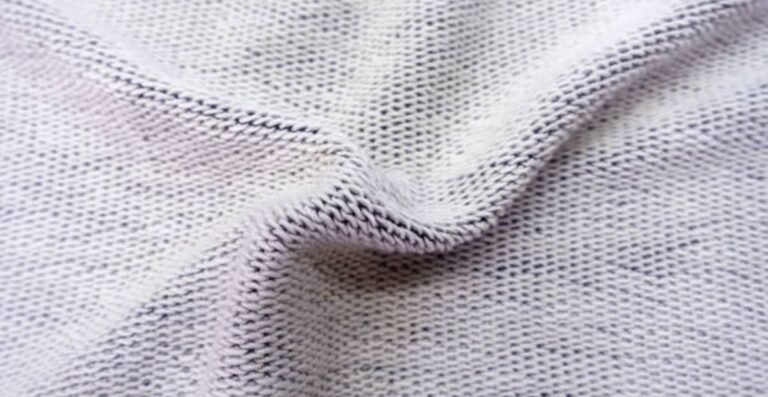
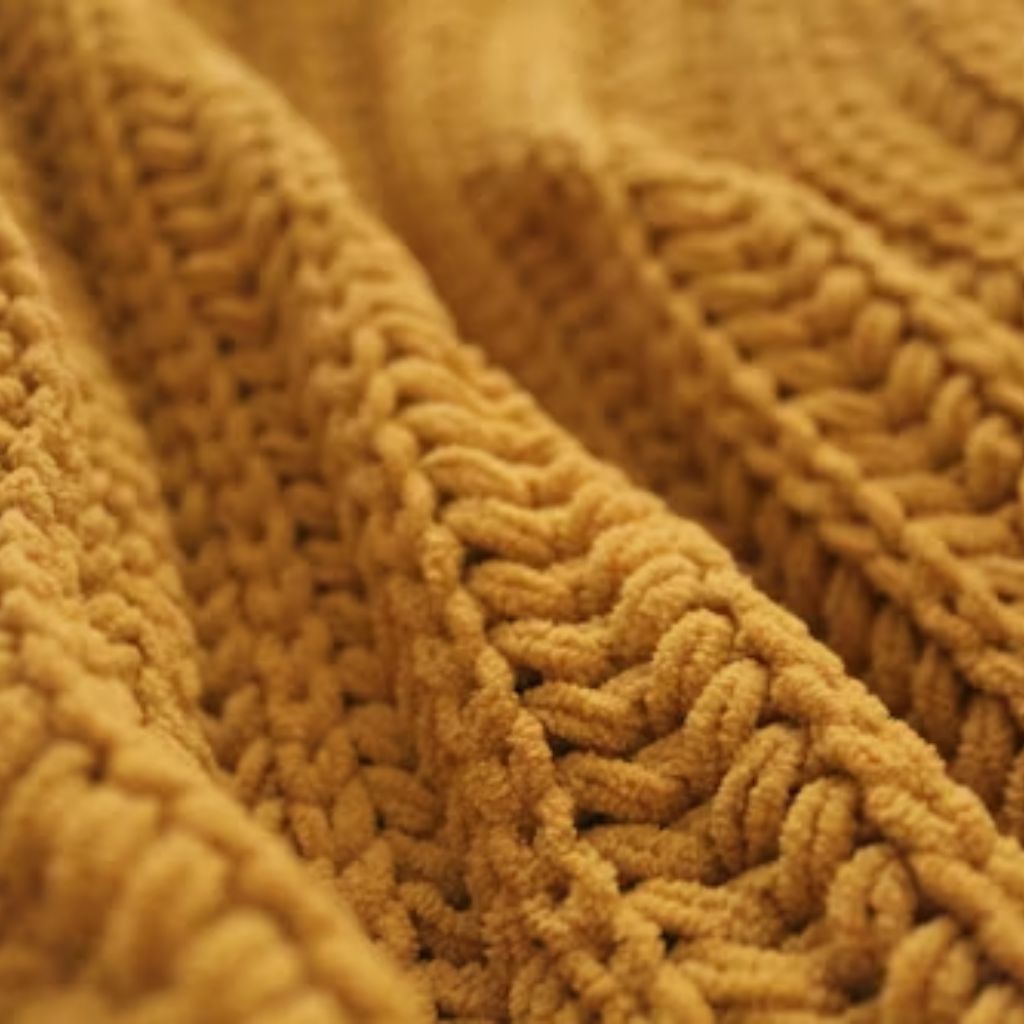
Elastane (Spandex) Stretch Fiber

Elastane, also known as spandex, provides flexibility in Ice Flow performance fabrics. This fiber allows clothing to stretch and return to its original shape easily.

Athletic movements require bending, stretching, and jumping. Therefore, stretch fibers improve comfort during physical activity. Clothing made with elastane adapts naturally to body movement.

Recycled Polyester

Recycled polyester has become increasingly important in sustainable sportswear. Manufacturers produce this material using recycled plastic bottles and waste materials.

Despite being environmentally friendly, recycled polyester still offers strong performance qualities. It maintains the moisture-wicking ability and durability of traditional polyester fibers.

Key Features of Ice Flow Athletic Fabric

Ice Flow cooling performance fabric offers several important features that support athletic performance.

Moisture-Wicking Capability
This fabric efficiently pulls sweat away from the skin. As a result, athletes remain dry and comfortable. Furthermore, the moisture evaporates quickly, preventing sweat buildup during long training sessions.

Quick-Dry Technology
Ice Flow sports fabric dries significantly faster than cotton materials. Therefore, athletes experience less discomfort during intense exercise. Additionally, quick drying helps prevent odor and bacteria growth.

Lightweight Structure
The fabric uses lightweight fibers that reduce clothing weight. Consequently, athletes move freely without feeling restricted. This feature also reduces fatigue during long workouts.

Breathability
Advanced ventilation structures allow constant airflow. As a result, heat escapes easily from the body. Therefore, athletes maintain better temperature control during physical activity.

Stretch and Flexibility
Many Ice Flow fabrics contain elastane blends. These fibers allow the fabric to stretch naturally. Consequently, athletes enjoy full range of motion during training and sports.

Odor Resistance
Some versions include antimicrobial treatments. These treatments prevent odor-causing bacteria. Therefore, sportswear remains fresh even after intense workouts.

Benefits of Ice Flow Athletic Fabric for Athletes

Athletes benefit greatly from high-performance fabrics. Ice Flow Athletic Fabric provides several practical advantages during training.First, the fabric keeps the body cool during workouts. Because moisture evaporates quickly, the skin temperature remains comfortable. Therefore, athletes avoid overheating.Second, the material prevents sweat buildup. Traditional fabrics often trap moisture against the skin. However, Ice Flow fabric continuously moves sweat away from the body.Third, athletes enjoy greater comfort during long training sessions. The lightweight and flexible material allows natural movement. Consequently, athletes focus more on performance rather than clothing discomfort.Additionally, cooling fabrics can enhance athletic performance. When the body remains cool, endurance improves. Therefore, athletes can train longer and more effectively.

Common Uses of Ice Flow Athletic Fabric

Close-up of light gray, textured fabric with a subtle military-inspired pattern.
Ice Flow Athletic Fabric:
Close-up view of a textured winter jacket fabric.

Ice Flow performance fabric appears in many types of sportswear. Because of its cooling and moisture-control properties, manufacturers use it widely in athletic clothing.

Running Shirts

Running shirts often use Ice Flow cooling fabric. Runners sweat heavily during long distances. Therefore, moisture-wicking fabrics help keep the body dry and cool.

These shirts usually feature breathable mesh panels. As a result, airflow increases during running sessions.

Gym Wear

Gym clothing must support flexibility and comfort. Ice Flow Athletic Fabric provides both qualities. Therefore, many gym shirts and training tops use this material.

Additionally, the fabric handles repeated sweating effectively. This feature makes it ideal for weight training and cardio exercises.

Training Shorts

Athletic shorts benefit greatly from lightweight fabrics. Ice Flow performance material allows free movement during workouts. Consequently, athletes can perform squats, jumps, and sprints comfortably.

The quick-dry feature also improves hygiene after intense exercise.

Yoga Clothing

Yoga clothing requires stretch and breathability. Ice Flow sports fabric contains elastane fibers. Therefore, it supports flexible movement and body stretching.

Moreover, breathable materials prevent overheating during long yoga sessions.

Outdoor Sports Apparel

Outdoor athletes often face hot environments. Ice Flow Athletic Fabric helps regulate body temperature during outdoor activities. Therefore, it appears in hiking shirts, cycling jerseys, and training tops.

These garments protect athletes from excessive heat during extended activities.

Ice Flow Athletic Fabric vs Other Performance Fabrics

Different fabrics serve different athletic purposes. However, Ice Flow cooling fabric offers unique advantages compared to other materials.

Fabric TypeBreathabilityMoisture ControlWeightStretch
Ice Flow Athletic FabricExcellentExcellentVery LightHigh
Polyester Performance FabricGoodGoodLightMedium
Nylon Athletic FabricModerateGoodMediumMedium
Spandex BlendsModerateLowLightVery High

Ice Flow fabric combines several advantages simultaneously. Therefore, it often performs better in hot training environments.

How to Choose Clothing Made with Ice Flow Athletic Fabric

Choosing the right sportswear requires careful consideration. Several factors determine the quality and performance of Ice Flow Athletic Fabric clothing.First, examine the fabric blend. High-quality sportswear often combines polyester, nylon, and elastane fibers. This combination provides durability and flexibility.Second, evaluate the breathability level. Look for mesh panels or ventilation zones. These features increase airflow during exercise.Third, consider the stretch capability. Clothing should allow full movement during workouts. Fabrics containing elastane provide better flexibility.Finally, check the durability of the material. Quality cooling fabrics should withstand frequent washing and intense training sessions.

Environmental Impact and Sustainability

The sportswear industry increasingly focuses on sustainability. Therefore, many manufacturers now develop eco-friendly Ice Flow Athletic Fabric.Some companies use recycled polyester fibers made from plastic bottles. This process reduces environmental waste while producing durable fabric.Additionally, modern manufacturing methods reduce water consumption. Many textile factories now use energy-efficient dyeing processes.Furthermore, durable fabrics reduce clothing waste. Long-lasting sportswear requires fewer replacements. Consequently, sustainable athletic fabrics support environmental protection.Sustainable sportswear continues growing as consumers prefer eco-friendly products.

Future Trends in Cooling Athletic Fabrics

Textile innovation continues evolving rapidly. Future cooling fabrics will become even more advanced.One major trend involves smart textiles. These fabrics may monitor body temperature and adjust cooling performance automatically.Another development includes temperature-regulating fibers. These fibers adapt to changing environmental conditions. Therefore, athletes remain comfortable in different climates.Additionally, researchers are developing nanotechnology fabrics. These fabrics improve moisture control and durability.Sportswear companies also explore bio-based fibers for sustainable performance clothing. Consequently, future athletic fabrics will combine performance and environmental responsibility.

Care and Maintenance of Ice Flow Athletic Fabric

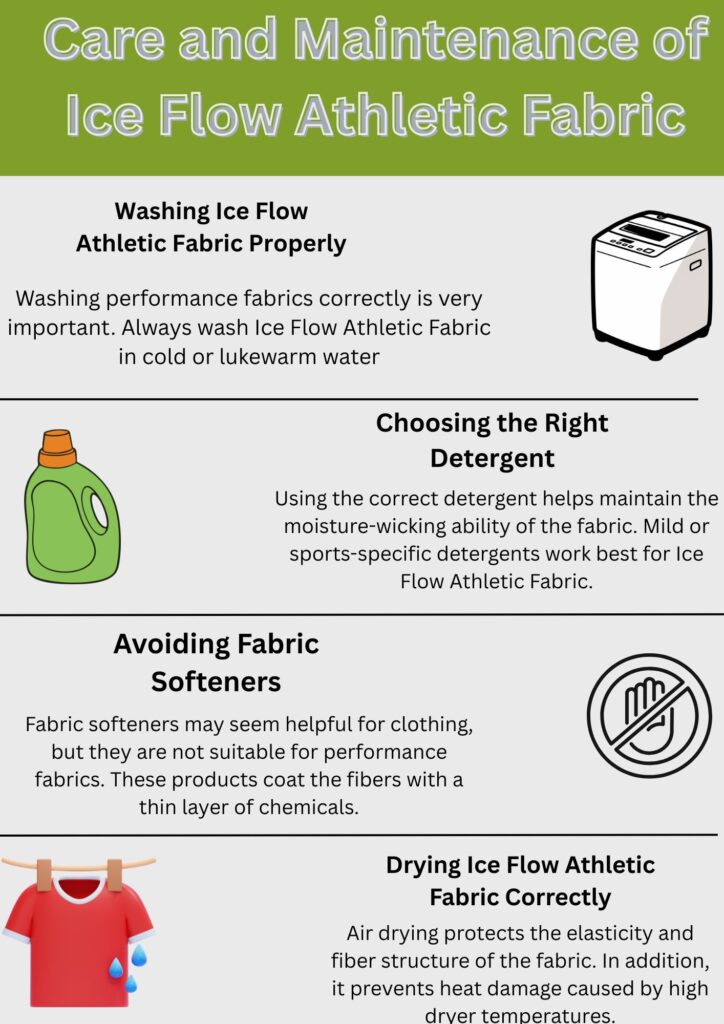
A vertically arranged infographic titled “Care and Maintenance of Ice Flow Athletic Fabric” with sections on Washing, Choosing the Right Detergent, Avoiding Fabric Softeners, and Drying Ice Flow Athletic Fabric Correctly. Illustrated icons accompany each section: a washing machine, a detergent bottle, a no-hands icon, and a red shirt with water droplets.
Ice Flow Athletic Fabric:
Care and maintenance tips for Ice Flow Athletic Fabric: wash in cold water, choose the right detergent, avoid fabric softeners, and air-dry to protect elasticity.

Proper care helps maintain the cooling performance of Ice Flow Athletic Fabric. Although this fabric is durable, it still requires correct washing and drying methods. Therefore, athletes should follow specific care guidelines to protect the fabric structure.

Washing Ice Flow Athletic Fabric Properly

Washing performance fabrics correctly is very important. Always wash Ice Flow Athletic Fabric in cold or lukewarm water. High temperatures may weaken synthetic fibers and reduce fabric performance.

Use a gentle washing cycle when possible. This setting protects the fabric from excessive friction inside the washing machine. Moreover, turning garments inside out helps protect the outer surface of the fabric.

Choosing the Right Detergent

Using the correct detergent helps maintain the moisture-wicking ability of the fabric. Mild or sports-specific detergents work best for Ice Flow Athletic Fabric.

Strong chemical detergents can damage performance fibers. As a result, the fabric may lose its cooling and sweat-control properties. Therefore, athletes should choose gentle cleaning products.

Avoiding Fabric Softeners

Fabric softeners may seem helpful for clothing, but they are not suitable for performance fabrics. These products coat the fibers with a thin layer of chemicals.

Because of this coating, the fabric channels that move moisture may become blocked. Consequently, Ice Flow Athletic Fabric may lose its moisture-wicking ability.

Drying Ice Flow Athletic Fabric Correctly

Drying methods also affect the performance of cooling athletic fabrics. The best method is air drying. Hang the clothing on a rack or clothesline in a well-ventilated area.

Air drying protects the elasticity and fiber structure of the fabric. In addition, it prevents heat damage caused by high dryer temperatures.

Conclusion

Ice Flow Athletic Fabric represents a major advancement in modern sportswear technology. The fabric combines cooling performance, moisture-wicking capability, and lightweight comfort. Consequently, athletes experience better comfort during demanding workouts.

Moreover, the fabric supports natural movement and efficient temperature control. These qualities help athletes maintain endurance and focus during training sessions. Therefore, many sports brands now incorporate cooling fabrics into their designs.

FAQs

Is Ice Flow Athletic Fabric good for hot weather?

Yes, Ice Flow Athletic Fabric performs extremely well in hot environments. The fabric allows heat to escape while removing sweat quickly. Therefore, athletes stay cooler during exercise.

Is Ice Flow fabric breathable?

Yes, the fabric provides excellent breathability. Micro-ventilation structures allow air circulation through the material. Consequently, body temperature remains balanced during workouts.

What sports are best suited for this fabric?

Ice Flow cooling fabric works well for many sports. Running, cycling, gym training, yoga, and hiking benefit greatly from its cooling properties.

Is Ice Flow fabric durable?

Yes, most versions use strong synthetic fibers such as polyester and nylon. These fibers resist wear and repeated washing. Therefore, the fabric remains durable for long-term athletic use.

Arctic Cool Performance Fabric: Ultimate Cooling Sportswear

Arctic Cool Performance Fabric is a modern textile designed for cooling and comfort. It helps athletes stay cool during intense workouts and outdoor activities. This fabric uses advanced moisture-management technology to control sweat and body heat. As a result, it improves comfort in warm environments.Moreover, many sports brands now use Arctic Cool Performance Fabric in athletic clothing. The fabric absorbs sweat and moves it away from the skin quickly. Consequently, athletes feel dry even during long training sessions. This ability makes it one of the most popular cooling sports fabrics today.Cooling fabrics have become very popular in modern sportswear. First, athletes demand materials that improve comfort during workouts.

History of Arctic Cool Performance Fabric

Close-up of a textured military-inspired winter jacket fabric in dark tones with red accents, showing a rugged, quilted weave.
Arctic Cool Performance Fabric:
Military-inspired winter jacket fabric: bold, rugged texture and color contrast.

Cooling fabrics developed from early moisture-wicking textile technologies. Initially, sportswear companies used synthetic fibers to manage sweat. Polyester and nylon fabrics improved durability and moisture control.Later, textile engineers began experimenting with cooling technologies. They created fabrics that improved evaporation and airflow. Consequently, these innovations led to modern cooling performance fabrics.Eventually, brands developed Arctic Cool Performance Fabric to enhance comfort in extreme heat. This technology combines breathable materials with advanced moisture management systems. Today, athletes, runners, and gym users rely on these fabrics worldwide.

Types of Arctic Cool Performance Fabric

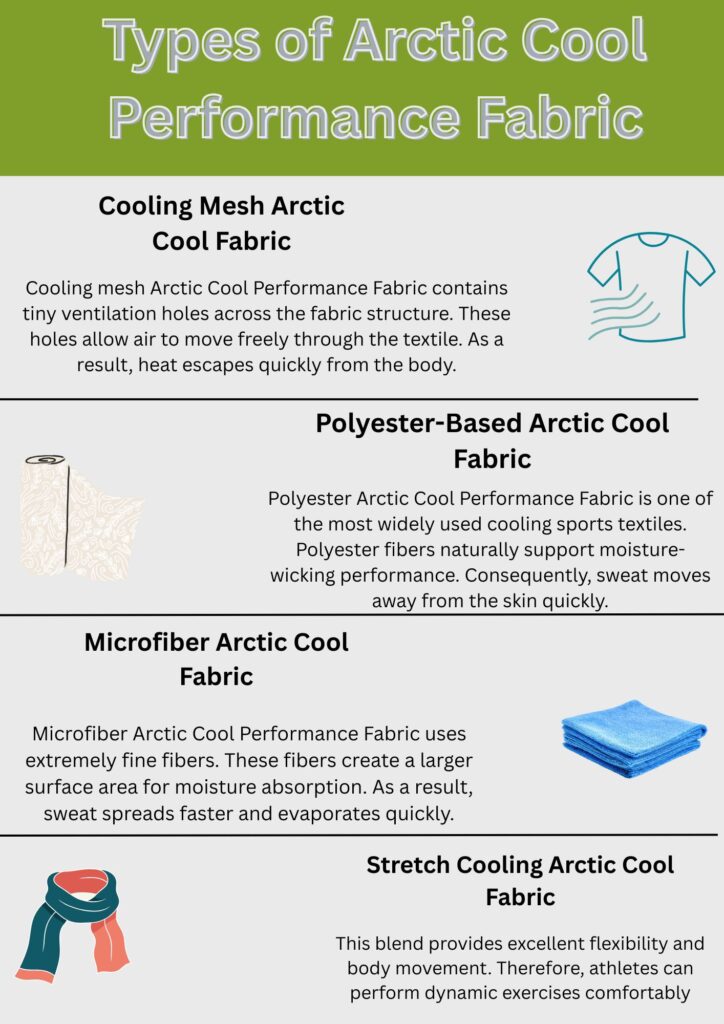
An infographic titled “Types of Arctic Cool Performance Fabric” with four sections: Cooling Mesh Arctic Cool Fabric, Polyester-Based Arctic Cool Fabric, Microfiber Arctic Cool Fabric, and Stretch Cooling Arctic Cool Fabric. Each section includes a short description and a relevant icon (shirt with airflow, rolled fabric, stack of towels, scarf).
Arctic Cool Performance Fabric:
Types of Arctic Cool Performance Fabric: a quick overview of four fabric varieties and their cooling features.

Arctic Cool Performance Fabric comes in several specialized types designed for different sports and climates. Each type focuses on cooling, moisture control, flexibility, and breathability. Therefore, manufacturers design various fabric structures to improve athletic comfort.

Cooling Mesh Arctic Cool Fabric

Cooling mesh Arctic Cool Performance Fabric contains tiny ventilation holes across the fabric structure. These holes allow air to move freely through the textile. As a result, heat escapes quickly from the body.

Furthermore, mesh cooling fabric dries very fast after absorbing sweat. This feature helps athletes remain comfortable during intense workouts. Therefore, sports shirts, gym tops, and training jerseys often use cooling mesh fabrics.

Polyester-Based Arctic Cool Fabric

Polyester Arctic Cool Performance Fabric is one of the most widely used cooling sports textiles. Polyester fibers naturally support moisture-wicking performance. Consequently, sweat moves away from the skin quickly.

Additionally, polyester fabrics resist wrinkles, shrinking, and stretching. These properties make them durable for frequent sports use. Therefore, many running shirts, training clothes, and activewear collections use polyester cooling fabrics.

Microfiber Arctic Cool Fabric

Microfiber Arctic Cool Performance Fabric uses extremely fine fibers. These fibers create a larger surface area for moisture absorption. As a result, sweat spreads faster and evaporates quickly.

Moreover, microfiber fabrics feel smooth and soft on the skin. This comfort improves the overall workout experience. Consequently, many premium sportswear brands use microfiber cooling fabrics in high-performance athletic clothing.

Stretch Cooling Arctic Cool Fabric

Stretch Arctic Cool Performance Fabric combines cooling fibers with elastic materials such as spandex or elastane. This blend provides excellent flexibility and body movement. Therefore, athletes can perform dynamic exercises comfortably.

Additionally, stretch cooling fabric maintains its shape even after repeated use. This durability makes it ideal for leggings, compression shirts, and yoga wear. Consequently, athletes benefit from both cooling performance and mobility.

Why Arctic Cool Performance Fabric Is Popular in Sportswear

Arctic Cool Performance Fabric has become extremely popular in modern sportswear. Athletes and fitness enthusiasts prefer fabrics that improve comfort during exercise. Therefore, cooling performance fabrics play a major role in athletic clothing today.Moreover, workouts often produce large amounts of sweat and body heat. Traditional fabrics struggle to manage moisture and temperature. However, Arctic Cool Performance Fabric solves these problems through advanced textile technology. Consequently, many sportswear brands now use cooling fabrics in their products.In addition, this breathable athletic fabric improves airflow and moisture control. These features help athletes stay comfortable even in hot environments. As a result, the popularity of Arctic Cool Performance Fabric continues to grow across the sportswear industry.

What Is Arctic Cool Performance Fabric?

Close-up of a military-inspired winter jacket fabric in dark tones with red accents and a rugged, textured surface.
Arctic Cool Performance Fabric:
Military-inspired winter jacket fabric: bold color contrast and textured material.

Definition and Concept

Arctic Cool Performance Fabric refers to a cooling sports textile designed for temperature control. It manages sweat, airflow, and body heat during physical activity. Consequently, it keeps athletes cool and dry.

Moreover, this fabric combines synthetic fibers with advanced textile engineering. Manufacturers design the fibers to absorb moisture quickly. Then, they release it through evaporation. Therefore, the body stays cooler during exercise.

Technology Behind Cooling Fabrics

Cooling fabrics use advanced textile technologies to regulate body temperature. First, they use moisture-wicking fiber structures. These fibers pull sweat away from the skin surface.

Next, evaporation technology helps moisture dry quickly. As the sweat evaporates, it cools the body naturally. Additionally, many cooling fabrics include micro-ventilation structures. These structures improve airflow through the fabric.

Materials Used in Arctic Cool Performance Fabric

Manufacturers usually create Arctic Cool Performance Fabric using synthetic fiber blends. These materials improve durability and moisture control. Polyester is one of the most common fibers used.

Additionally, nylon fibers add strength and flexibility to the fabric. Spandex often provides stretch and comfort. Some fabrics also include microfiber technology. This combination creates a lightweight, breathable athletic fabric.

How Arctic Cool Performance Fabric Works

Arctic Cool Performance Fabric works through advanced moisture and airflow management. These systems help regulate body temperature during exercise. Consequently, athletes remain comfortable in hot environments.

Moisture-Wicking Technology

Moisture-wicking technology moves sweat away from the skin surface. The fibers absorb moisture quickly and spread it across the fabric. This process increases evaporation speed.

Therefore, sweat does not remain on the body. Athletes feel dry and comfortable during workouts. Furthermore, this system reduces the sticky feeling often caused by sweat.

Sweat Evaporation Process

After moisture spreads through the fabric, evaporation begins. Air exposure allows sweat to dry quickly. As evaporation occurs, the body loses heat.

Consequently, this natural cooling effect helps regulate body temperature. Athletes experience a refreshing cooling sensation. Therefore, they can train longer in warm weather.

Air Circulation and Ventilation

Breathable athletic fabrics allow air to move freely through the material. This airflow improves ventilation and cooling performance. Consequently, trapped heat escapes quickly.

Additionally, mesh or micro-ventilation structures increase breathability. These features make Arctic Cool Performance Fabric ideal for sportswear. As a result, athletes stay cool and comfortable.

Key Features of Arctic Cool Performance Fabric

Arctic Cool Performance Fabric offers many important features. These qualities make it ideal for sportswear and athletic clothing.

Moisture-Wicking Ability

This fabric quickly absorbs and transports sweat away from the skin. As a result, athletes remain dry during intense activity. The moisture spreads across the fabric surface for faster evaporation.

Quick-Dry Technology

Quick-dry technology helps the fabric dry rapidly after absorbing sweat. Therefore, clothing remains light and comfortable. This feature also prevents the heavy feeling caused by wet fabric.

Breathability

Breathable athletic fabric allows air circulation through the material. Consequently, heat escapes from the body. This process improves cooling and comfort.

Lightweight Feel

Arctic Cool Performance Fabric feels very light on the skin. Athletes can move freely without feeling restricted. This lightweight quality improves comfort during long workouts.

Stretch and Flexibility

Many cooling performance fabrics include spandex fibers. These fibers provide excellent stretch and flexibility. As a result, athletes enjoy better movement and comfort.

Odor Resistance

Some fabrics include antimicrobial technology. This technology prevents odor-causing bacteria growth. Therefore, sportswear stays fresher for longer periods.

Temperature Regulation

The fabric balances body heat and airflow efficiently. Consequently, athletes stay cool during exercise. This temperature control improves overall performance.

Benefits of Arctic Cool Performance Fabric

Arctic Cool Performance Fabric provides many advantages for athletes and active individuals. These benefits improve comfort, performance, and durability.

Keeps Athletes Cool During Workouts

First, the fabric removes sweat quickly from the skin. Then, evaporation creates a natural cooling effect. Consequently, athletes feel refreshed during training sessions.

Reduces Sweat Buildup

Sweat buildup often causes discomfort during exercise. However, moisture-wicking cooling fabric prevents this problem. Therefore, athletes remain dry even during intense workouts.

Prevents Skin Irritation

Sweat and friction often cause skin irritation. However, breathable cooling fabrics reduce moisture and heat. Consequently, the skin remains healthier and more comfortable.

Improves Comfort in Hot Weather

Hot weather workouts can be challenging. However, Arctic Cool Performance Fabric regulates body temperature effectively. Therefore, athletes feel comfortable even during summer training.

Enhances Athletic Performance

Comfort plays a key role in sports performance. When athletes stay cool, they maintain energy levels longer. Consequently, cooling fabrics support better endurance and focus.

Arctic Cool Performance Fabric vs Other Cooling Fabrics

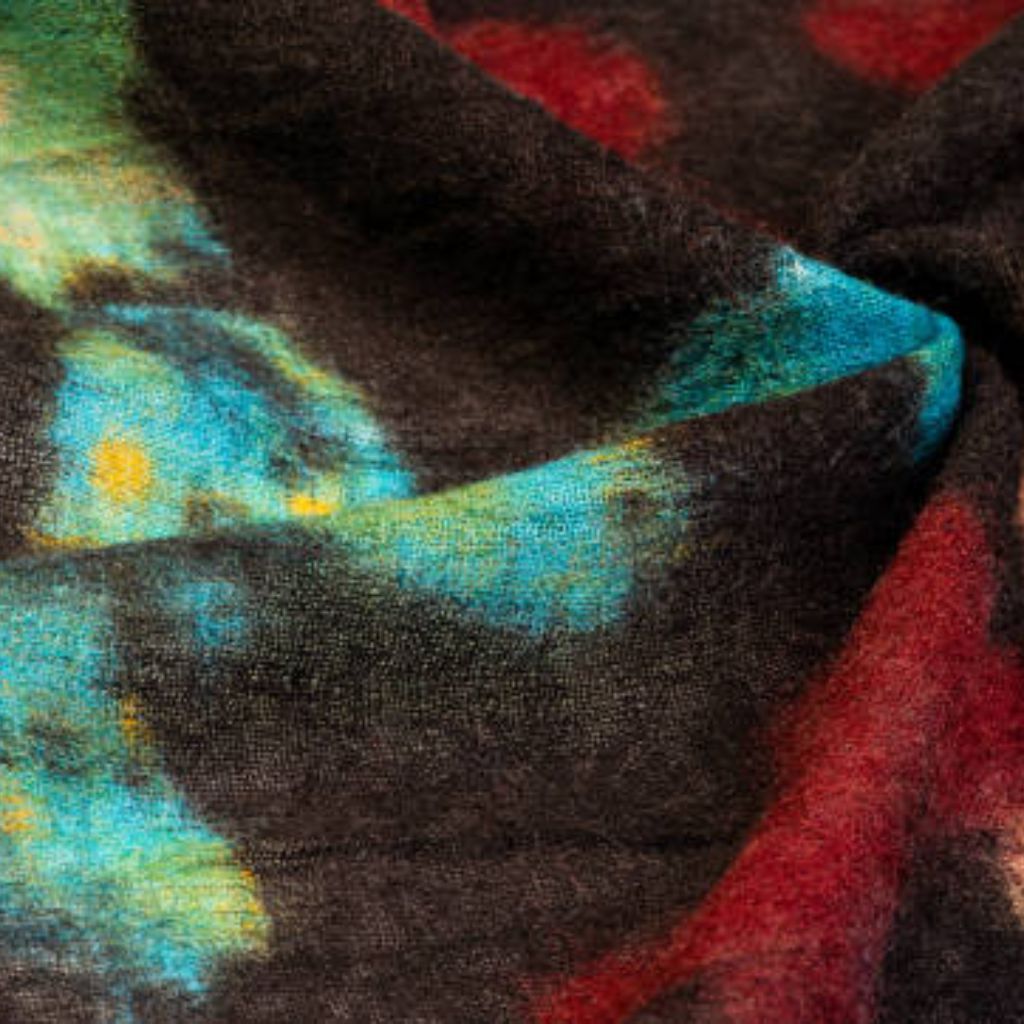
A close-up of a colorful, military-inspired winter jacket fabric with a mix of black, red, teal, and yellow tones and a soft, textured surface.
Arctic Cool Performance Fabric:
Military-inspired winter jacket fabric: bold color blocking and rugged texture.

Many cooling fabrics exist in the sportswear industry. However, Arctic Cool Performance Fabric offers unique advantages.

Fabric TypeCooling AbilityBreathabilityDrying Speed
Arctic Cool Performance FabricExcellentVery HighVery Fast
Moisture-Wicking FabricGoodModerateFast
Polyester Performance FabricGoodModerateModerate
Mesh Athletic FabricModerateHighFast
Cooling Microfiber FabricVery GoodHighFast

Therefore, Arctic Cool fabrics provide balanced cooling and moisture management.

Arctic Cool Fabric vs Traditional Cotton

Traditional cotton fabrics differ greatly from Arctic Cool Performance Fabric. Cotton absorbs sweat but dries slowly. Consequently, clothing becomes heavy and uncomfortable.In contrast, cooling performance fabric dries quickly. Sweat evaporates faster and cools the body. Therefore, athletes feel lighter and more comfortable.

Additionally, cotton lacks advanced moisture-wicking technology. However, Arctic Cool fabrics manage sweat efficiently. As a result, they perform better during sports activities.

Common Uses of Arctic Cool Performance Fabric

Additionally, the lightweight structure of this cooling performance fabric improves comfort during intense workouts. People who train in hot climates benefit greatly from these textiles. Consequently, Arctic Cool fabric has become a popular choice for summer sportswear and active lifestyles.

Sportswear and Gym Clothing

Sportswear manufacturers commonly use Arctic Cool Performance Fabric in gym clothing. Athletes need fabrics that control sweat and maintain comfort. Therefore, cooling fabrics help keep the body dry during workouts.

Furthermore, the breathable athletic fabric improves airflow and reduces heat buildup. As a result, gym users can exercise longer without feeling uncomfortable. Many gym shirts, tank tops, and training shorts use this cooling material.

Running Shirts and Shorts

Running apparel often uses Arctic Cool Performance Fabric because runners produce large amounts of sweat. The moisture-wicking cooling fabric quickly moves sweat away from the body. Consequently, runners stay cooler during long-distance runs.

Additionally, the lightweight structure prevents clothing from feeling heavy. This feature improves comfort and mobility. Therefore, many professional running shirts and shorts use advanced cooling fabrics.

Training Apparel

Training apparel requires flexibility and breathability. Arctic Cool Performance Fabric provides both features effectively. Therefore, athletes can perform intense training sessions comfortably.

Moreover, stretchable cooling fabrics allow full body movement. This quality is important for strength training, cross-training, and fitness workouts. As a result, many training jackets, compression shirts, and performance tops use this fabric.

Outdoor Clothing

Outdoor activities often expose athletes to heat and humidity. Arctic Cool Performance Fabric helps regulate body temperature in these conditions. Consequently, hikers, cyclists, and climbers prefer this cooling fabric.

Additionally, the fabric dries quickly after sweat or light rain exposure. This feature keeps outdoor clothing comfortable for long periods. Therefore, many outdoor sports brands use cooling fabrics in their apparel.

How to Choose the Best Arctic Cool Performance Fabric

Choosing the right cooling performance fabric improves comfort and durability. Several important factors should guide the selection process.

Fabric Composition

First, check the fiber blend used in the fabric. Polyester and nylon blends often provide excellent cooling performance. Spandex adds flexibility and comfort.

GSM Weight

GSM refers to the fabric weight per square meter. Lightweight fabrics feel cooler and more breathable. Therefore, athletes often prefer lower GSM fabrics for sportswear.

Stretchability

Stretch fabrics improve movement during workouts. Therefore, many athletes prefer fabrics containing spandex. This feature increases comfort and flexibility.

Durability

Sportswear fabrics must withstand frequent washing and intense activity. High-quality cooling fabrics maintain performance over time. Therefore, durability remains very important.

Climate Suitability

Climate also influences fabric choice. Lightweight cooling fabrics perform best in hot environments. Consequently, athletes in warm regions benefit greatly from Arctic Cool fabrics.

Pros and Cons of Arctic Cool Performance Fabric

Pros

Arctic Cool Performance Fabric provides excellent cooling and breathability. It dries quickly and remains lightweight during workouts. Additionally, it improves comfort in hot climates.

Cons

However, high-quality cooling fabrics can be more expensive. Some blends may lose performance after many washes. Therefore, proper care remains very important.

Sustainability and Environmental Impact

Many textile companies now produce eco-friendly cooling fabrics. Recycled polyester helps reduce plastic waste. Consequently, sustainable sportswear is becoming more popular.Additionally, manufacturers develop biodegradable performance fibers. These materials reduce environmental impact. Therefore, cooling sportswear continues to evolve toward sustainability.

Future Trends in Cooling Performance Fabrics

Cooling fabric technology continues to improve rapidly. Researchers now develop smart textiles that regulate temperature automatically. These fabrics respond to body heat and sweat levels.Nanotechnology fabrics also show great potential. Tiny particles enhance moisture control and cooling performance. Additionally, advanced microfiber systems improve evaporation efficiency.Therefore, the future of Arctic Cool Performance Fabric looks very promising. Athletes will enjoy even better comfort and performance.

Care of Arctic Cool Performance Fabric

An infographic titled “Care of Arctic Cool Performance Fabric” with four sections: Washing Arctic Cool Performance Fabric, Use Mild Detergents, Avoid Fabric Softeners, and Proper Drying Methods. Each section includes a brief description and a related icon (washing machine, detergent bottle, no fabric softener symbol, and drying clothes).
Arctic Cool Performance Fabric:
Care of Arctic Cool Performance Fabric: practical tips for washing, detergents, avoiding softeners, and drying to preserve fabric performance.

In addition, correct maintenance helps preserve breathability and stretch. Many cooling fabrics include synthetic fibers that require specific washing methods. Therefore, understanding the correct care routine helps maintain the performance of Arctic Cool sportswear.

Washing Arctic Cool Performance Fabric

First, wash Arctic Cool Performance Fabric using cold or lukewarm water. Hot water may damage the moisture-wicking fibers and reduce cooling performance. Therefore, a gentle washing cycle works best for athletic clothing.

Additionally, turn the garments inside out before washing them. This method protects the outer fabric surface from friction. Furthermore, washing sportswear separately from heavy clothing prevents fabric damage. Consequently, the cooling fabric stays smooth and durable.

Use Mild Detergents

Mild detergents work best for breathable athletic fabrics. Strong chemicals may weaken synthetic fibers and affect moisture-management properties. Therefore, gentle detergents help maintain the cooling performance.

Moreover, avoid using bleach when washing Arctic Cool Performance Fabric. Bleach can damage fabric fibers and reduce elasticity. As a result, the fabric may lose both durability and comfort.

Avoid Fabric Softeners

Fabric softeners should not be used with cooling performance fabrics. These products leave a coating on the fibers. Consequently, the moisture-wicking channels become blocked.

When the fibers cannot absorb and release sweat efficiently, the cooling effect becomes weaker. Therefore, skipping fabric softener helps maintain the natural performance of Arctic Cool sportswear.

Proper Drying Methods

Air drying is the safest method for Arctic Cool Performance Fabric. Hanging the garments in a ventilated area allows natural drying. This process protects the fiber structure and stretchability.

However, if machine drying is necessary, use a low-heat setting. High temperatures can damage the cooling fibers. Therefore, gentle drying methods help preserve breathability and comfort.

Conclusion

Arctic Cool Performance Fabric has become an essential innovation in modern sportswear. Athletes need clothing that supports comfort during intense activity. Therefore, cooling performance fabrics provide an effective solution for managing heat and sweat.

Moreover, this advanced fabric combines moisture-wicking technology, breathability, and lightweight design. These features help regulate body temperature and maintain dryness during workouts. As a result, athletes experience greater comfort even in hot and humid environments.

FAQs

What is Arctic Cool Performance Fabric?

Arctic Cool Performance Fabric is a cooling sports textile designed for temperature regulation. It manages sweat and airflow during exercise.

Is Arctic Cool fabric good for workouts?

Yes, this fabric performs very well during workouts. It keeps athletes cool, dry, and comfortable.

Does Arctic Cool fabric keep you cool?

Yes. Moisture-wicking technology and fast evaporation create a natural cooling effect.

Is Arctic Cool fabric better than cotton?

Yes, for sportswear. It dries faster, manages sweat better, and improves comfort during exercise.

Vapor Flow Athletic Fabric: Lightweight Fabric for Training

Vapor Flow Athletic Fabric is a modern performance textile designed for sportswear and training clothing. It focuses on moisture management, breathability, and lightweight comfort. Athletes need fabrics that help them stay dry during intense activity. Therefore, this advanced fabric uses special fibers and knitting structures.In simple words, Vapor Flow Athletic Fabric quickly moves sweat away from the body. After that, it spreads moisture across the surface for fast evaporation. As a result, athletes remain cool and comfortable for longer periods.Moreover, manufacturers design this fabric to support body movement. It stretches easily while maintaining its shape. Consequently, it works well for both casual workouts and professional training.

Why Vapor Flow Athletic Fabric Is Popular in Modern Sportswear

A close-up of purple fabric with a subtle dotted texture and soft folds, suggesting a breathable, athletic material.
Vapor Flow Athletic Fabric:
Close-up of purple military-inspired jacket fabric with a fine dotted weave.

Sportswear technology has changed significantly during the last decade. Athletes now demand fabrics that enhance performance and comfort. Therefore, Vapor Flow Athletic Fabric became popular among designers and athletes alike.First, the fabric manages sweat effectively. When athletes sweat heavily, moisture quickly moves away from their skin. As a result, their body temperature stays more stable.Second, the fabric offers excellent breathability. Air easily passes through the material. Consequently, the body remains cooler during workouts.Additionally, Vapor Flow fabric feels extremely light. Athletes often prefer clothing that does not restrict movement. Therefore, lightweight textiles provide a major advantage.Because of these benefits, sports brands increasingly choose Vapor Flow performance fabric for training collections.

Types of Vapor Flow Athletic Fabric

An infographic titled “Types of Vapor Flow Athletic Fabric” on a green header. Four sections appear stacked with dividers:
Lightweight Vapor Flow Fabric: description about ultra-light construction and breathability, with a small scarf icon on the right.
Stretch Vapor Flow Fabric: description about yoga, pilates, and functional training with a decorative fabric roll icon on the left.
Mesh Vapor Flow Fabric: description about moisture-wicking technology and ventilation with a small blue mesh tile icon on the right.
Thermal Vapor Flow Fabric: description about cooler training environments with a purple wavy fabric icon on the left.
Each section uses bold headings and body text, separated by horizontal dividers.Vapor Flow Athletic Fabric:
Types of Vapor Flow Athletic Fabrics: lightweight, stretch, mesh, and thermal varieties with icons and descriptions.

Vapor Flow Athletic Fabric comes in several variations. Each type serves a specific athletic purpose. Manufacturers design these types by adjusting fiber blends, knitting structures, and ventilation systems. As a result, athletes can choose the fabric that best suits their training needs.

Lightweight Vapor Flow Fabric

Lightweight Vapor Flow fabric is one of the most popular types used in athletic clothing. This fabric focuses on ultra-light construction and excellent breathability. As a result, athletes experience minimal fabric weight during movement.

The material uses fine synthetic fibers that create a soft and smooth texture. These fibers allow sweat to move quickly away from the body. Consequently, runners and endurance athletes often prefer this type of Vapor Flow fabric.

Stretch Vapor Flow Fabric

Stretch Vapor Flow fabric provides enhanced flexibility for dynamic athletic movements. This type usually includes elastane or spandex fibers. Therefore, the fabric stretches easily in multiple directions.

Athletes performing activities such as yoga, pilates, and functional training benefit greatly from this fabric. It supports wide body movements without restricting motion.

Mesh Vapor Flow Fabric

Mesh Vapor Flow fabric combines moisture-wicking technology with advanced ventilation. This type contains small open structures that allow air to circulate freely.

Because of this design, body heat escapes more quickly during intense workouts. Athletes who perform high-intensity training often prefer mesh Vapor Flow clothing.

Thermal Vapor Flow Fabric

Thermal Vapor Flow fabric is designed for cooler training environments. Unlike lightweight versions, this type provides mild insulation while maintaining breathability.

The fabric traps a small layer of warm air close to the body. At the same time, it continues to move sweat away from the skin. Consequently, athletes remain warm without feeling wet or uncomfortable.

How Vapor Flow Athletic Fabric Improves Athletic Performance

Performance clothing plays an important role in modern athletics. Proper fabric supports movement and improves comfort during activity. Therefore, Vapor Flow Athletic Fabric directly contributes to better training experiences.First, it regulates body temperature efficiently. Sweat evaporates quickly, which prevents overheating. As a result, athletes maintain energy during long sessions.Second, the lightweight structure reduces unnecessary weight. Even small reductions in clothing weight improve mobility.Furthermore, the flexible design supports dynamic movement. Athletes can stretch, run, or jump comfortably.Because of these features, many professional athletes prefer advanced moisture-management fabrics for training.

History of Vapor Flow Athletic Fabric

A close-up of orange fabric with a small dotted texture, showing soft folds and a smooth, matte surface.
Vapor Flow Athletic Fabric:
Close-up of orange military-inspired jacket fabric with a dotted weave.

Sports fabrics have evolved greatly over time. Earlier athletic clothing used natural materials like cotton and wool. However, those fabrics absorbed sweat heavily. As a result, they often became uncomfortable during exercise.During the late twentieth century, textile engineers began experimenting with synthetic performance fibers. Polyester and nylon fabrics improved moisture control. Nevertheless, they still lacked advanced breathability systems.Later, sports technology companies developed specialized moisture-wicking textiles. Engineers created fibers that pull sweat away from the skin. At the same time, new knitting structures improved airflow.Consequently, Vapor Flow Athletic Fabric emerged as a modern evolution of performance textiles. It combines moisture-channeling fibers with breathable knit structures.

What Makes Vapor Flow Athletic Fabric Unique?

Advanced Moisture-Wicking Technology

One key feature of Vapor Flow Athletic Fabric is advanced moisture-wicking technology. This system quickly transfers sweat away from the skin surface.First, special fibers absorb moisture from the body. After that, the fabric spreads the moisture across a larger area. Consequently, evaporation happens faster.Because sweat disappears quickly, athletes feel dry during workouts. Moreover, dry skin reduces irritation and discomfort.Therefore, moisture-wicking technology remains one of the most important features of this fabric.

Breathability and Airflow Design

Breathability is another defining feature of Vapor Flow performance fabric. Designers create micro ventilation channels inside the fabric structure.These channels allow fresh air to circulate through the material. As a result, heat escapes easily during exercise.Additionally, airflow prevents excessive sweating. When the body stays cooler, athletes maintain better endurance.Therefore, breathable fabric construction improves both comfort and performance.

Lightweight and Flexible Structure

Modern athletes prefer clothing that feels almost weightless. Vapor Flow Athletic Fabric addresses this need with a lightweight fiber structure.The fabric uses thin yet durable synthetic fibers. Consequently, the material remains light without sacrificing strength.Furthermore, it stretches naturally with body movement. Athletes can perform high-intensity exercises without restriction.Because of its flexibility and lightness, this fabric suits many types of sports apparel.

Key Features of Vapor Flow Athletic Fabric

Moisture Wicking Technology

Moisture management remains the core feature of Vapor Flow Athletic Fabric. The fabric actively pulls sweat away from the skin.After that, moisture spreads across the outer surface. Consequently, evaporation occurs faster than traditional fabrics.This process keeps athletes dry even during intense training sessions. Therefore, the fabric supports better comfort and hygiene.

Breathable Micro-Vent Structure

Another important feature is the breathable micro-vent structure. Tiny ventilation openings allow air to move freely through the fabric.Because of this design, heat escapes quickly. At the same time, fresh air reaches the skin.Consequently, athletes feel cooler and more refreshed during workouts.

Quick-Dry Performance

Quick-dry performance helps athletes remain comfortable during activity. The fabric dries significantly faster than cotton materials.Even after heavy sweating, moisture disappears within minutes. Therefore, clothing does not feel heavy or sticky.Quick drying also prevents bacterial growth and odor formation.

Four-Way Stretch Flexibility

Flexibility plays a major role in athletic performance. Vapor Flow Athletic Fabric usually includes four-way stretch capability.This means the fabric stretches both vertically and horizontally. As a result, athletes enjoy full movement freedom.Stretchable fabrics support dynamic activities like running, yoga, and training.

Odor and Sweat Control

Many Vapor Flow fabrics include odor-control treatments. These treatments reduce bacteria that cause unpleasant smells.As a result, sportswear remains fresher for longer periods. Athletes also feel more confident during workouts.Therefore, odor control technology adds another important benefit.

Common Uses of Vapor Flow Athletic Fabric

Vapor Flow Athletic Fabric is widely used in modern sportswear and training clothing. The fabric provides excellent moisture control, breathability, and lightweight comfort. Therefore, many athletic apparel manufacturers prefer this material for performance garments.

Running Apparel

Running clothing often uses Vapor Flow Athletic Fabric because runners sweat heavily during long distances. The fabric quickly moves moisture away from the skin. As a result, runners remain cool and dry during training.

Furthermore, the lightweight structure reduces unnecessary clothing weight. This feature allows runners to move freely without feeling restricted. Many modern running shirts, shorts, and tank tops use Vapor Flow fabric for this reason.

Gym and Workout Wear

Gym workouts usually involve intense physical movement and heavy sweating. Therefore, gym clothing requires strong moisture management. Vapor Flow Athletic Fabric performs well in such conditions.

The fabric absorbs sweat and spreads it across the surface for faster evaporation. As a result, athletes stay dry even during high-intensity workouts.

Training and Performance Clothing

Professional athletes often require specialized training clothing. Vapor Flow Athletic Fabric offers durability, flexibility, and comfort during demanding training sessions.

For example, sports training shirts and compression garments frequently use this fabric technology. The fabric helps maintain body temperature while reducing sweat buildup.

Yoga and Fitness Outfits

Yoga and fitness activities require clothing that allows full body flexibility. Vapor Flow Athletic Fabric provides excellent stretch and softness. Consequently, yoga practitioners can move comfortably in different poses.

Furthermore, the moisture-wicking system keeps the body dry during heated workouts. Many yoga tops, leggings, and sports bras use Vapor Flow performance fabric.

Benefits of Vapor Flow Athletic Fabric for Athletes

A close-up of textured fabric in blue tones, showing a smooth, soft weave with subtle folds.
Vapor Flow Athletic Fabric:
Close-up of blue military-inspired jacket fabric with a rugged weave.

Vapor Flow Athletic Fabric offers several practical benefits for athletes. First, it keeps the body cool and dry during intense workouts. Moisture evaporates quickly, which improves comfort.Second, the fabric reduces sweat accumulation. As a result, clothing does not feel heavy or sticky.Third, it improves overall comfort during exercise. Lightweight material prevents irritation and friction.Additionally, flexible fabric allows unrestricted body movement. Athletes can stretch and train freely.Because of these advantages, Vapor Flow performance fabric has become a preferred choice for modern sportswear.

Vapor Flow Athletic Fabric vs Traditional Sports Fabrics

Vapor Flow vs Cotton

Cotton is comfortable but absorbs large amounts of moisture. Therefore, it often becomes wet during exercise.In contrast, Vapor Flow Athletic Fabric moves moisture away quickly. Consequently, athletes remain dry for longer.Moreover, cotton dries slowly while Vapor Flow dries quickly.

Vapor Flow vs Polyester

Standard polyester fabrics provide decent durability. However, they may trap heat during activity.Vapor Flow technology improves airflow and cooling. Therefore, athletes experience better temperature control.Additionally, specialized knitting structures enhance moisture evaporation.

Vapor Flow vs Mesh Performance Fabric

Mesh fabrics provide ventilation but sometimes lack moisture management. Sweat may remain on the skin.Vapor Flow Athletic Fabric combines ventilation with moisture-wicking technology. Therefore, it offers more balanced performance.As a result, athletes enjoy better cooling and dryness.

Best Uses of Vapor Flow Athletic Fabric

Running Apparel

Running clothing benefits greatly from lightweight fabrics. Vapor Flow Athletic Fabric keeps runners cool during long distances.Moisture evaporates quickly, preventing overheating.

Gym Wear

Gym workouts often involve heavy sweating. Therefore, moisture-wicking fabrics are essential.Vapor Flow gym wear keeps athletes dry and comfortable during strength training.

Training Clothing

Training sessions require flexible clothing. Vapor Flow Athletic Fabric provides stretch and breathability.Consequently, athletes perform exercises without restrictions.

Yoga and Fitness Outfits

Yoga clothing must allow complete body movement. Stretchable Vapor Flow fabric supports flexibility and comfort.Additionally, it keeps practitioners dry during hot yoga sessions.

Outdoor Sportswear

Outdoor athletes face changing temperatures. Breathable performance fabrics help regulate body heat.Therefore, Vapor Flow sportswear works well for cycling, hiking, and outdoor training.

How Vapor Flow Technology Improves Athletic Performance

Vapor Flow technology supports athletic performance in several ways. First, it regulates body temperature efficiently. Athletes remain cooler during intense workouts.Second, the sweat evaporation system prevents excessive moisture buildup. Consequently, clothing remains light and comfortable.Additionally, smooth fabric surfaces reduce friction against the skin. Therefore, athletes experience fewer skin irritations.Because of these benefits, Vapor Flow performance textiles enhance overall training efficiency.

How Vapor Flow Athletic Fabric Is Manufactured

Manufacturers create Vapor Flow Athletic Fabric using advanced textile technologies. First, engineers select high-performance synthetic fibers. Polyester and nylon blends often provide durability and flexibility.Next, specialized knitting machines create breathable fabric structures. Micro ventilation channels improve airflow.After that, moisture-wicking treatments enhance sweat management. These treatments help transport moisture away from the body.Finally, quality testing ensures the fabric meets sports performance standards.

How to Choose the Best Vapor Flow Athletic Fabric Clothing

A close-up shot of dark blue and black fabric with a subtle dotted texture, showing diagonal lines and soft folds.
Vapor Flow Athletic Fabric:
Close-up of a military-inspired winter jacket fabric with a rugged, textured weave.

Choosing the right Vapor Flow sportswear requires attention to several factors.First, check the fabric blend quality. High-quality fibers improve durability and comfort.Second, consider breathability ratings. Fabrics with better airflow keep athletes cooler.Third, evaluate stretch capability. Flexible fabrics support dynamic movement.Finally, examine durability and stitching quality. Well-constructed clothing lasts longer during regular training.

Future Trends in Athletic Performance Fabrics

Sports textile technology continues to evolve rapidly. Researchers are developing smart moisture-control fabrics.These fabrics can respond to body temperature and humidity levels. As a result, athletes may experience even better cooling.Additionally, sustainable athletic fabrics are becoming more popular. Many companies now use recycled fibers to reduce environmental impact.Finally, next-generation cooling fabrics may include phase-change materials. These materials actively regulate body temperature.Therefore, the future of performance textiles looks promising.

Care and Maintenance of Vapor Flow Athletic Fabric

A vertical infographic titled “Care and Maintenance of Vapor Flow Athletic Fabric” with a green header. The content sections include: “Proper Washing Techniques” with a washing icon and description about washing in cold or lukewarm water; “Avoid Fabric Softeners and Bleach” with a detergent bottle icon and text about coatings harming fibers; “Drying Recommendations for Performance Fabrics” with a T-shirt hanging on a line and notes on air drying as the safest option; and “Maintaining Moisture-Wicking Performance” with a moisture droplet icon and explanation that sweat oils and detergent residues can accumulate and athletes should wash workout clothing afterward. Subheadings are separated by horizontal lines.
Vapor Flow Athletic Fabric:
Care and Maintenance tips for Vapor Flow Athletic Fabric: washing in cold water, avoiding fabric softeners and bleach, air drying, and keeping moisture-wicking performance.

Proper care keeps Vapor Flow Athletic Fabric performing at its best. Performance fabrics contain advanced fibers and moisture-wicking structures. Therefore, they require gentle cleaning and proper maintenance. If athletes follow the right care methods, the fabric will maintain its breathability, flexibility, and quick-dry performance for a long time.

Proper Washing Techniques

Washing Vapor Flow Athletic Fabric correctly helps maintain its moisture-wicking ability. First, always wash the clothing in cold or lukewarm water. High temperatures may weaken the synthetic fibers used in the fabric.

Additionally, athletes should use mild liquid detergents. Gentle detergents clean sweat and dirt without damaging performance fibers. On the other hand, strong chemicals may block the micro-vent channels of the fabric.

Avoid Fabric Softeners and Bleach

Fabric softeners may seem helpful for clothing. However, they can harm Vapor Flow Athletic Fabric. These products coat the fibers with chemical layers. Consequently, the moisture-wicking system becomes less effective.

Similarly, bleach should be avoided whenever possible. Bleach chemicals can damage synthetic fibers and weaken fabric strength. Over time, this damage may reduce durability and flexibility.

Therefore, athletes should choose simple detergents without additives. This small step helps maintain the natural breathability and sweat-control features of the fabric.

Drying Recommendations for Performance Fabrics

Drying methods also affect the lifespan of Vapor Flow training fabrics. Air drying remains the safest option for performance clothing. Hanging garments in a ventilated area allows moisture to evaporate naturally.

However, low-temperature tumble drying may be acceptable for some garments. Athletes should always read the care label before using a dryer. Excessive heat can damage elastic fibers and reduce stretch performance.

Additionally, avoid ironing Vapor Flow Athletic Fabric. High heat may melt synthetic fibers or flatten ventilation structures. Consequently, airflow and moisture control may decrease.

Maintaining Moisture-Wicking Performance

Over time, sweat oils and detergent residue may accumulate inside the fabric. Therefore, athletes should wash workout clothing regularly after use. Clean fabric performs much better than sweat-soaked material.

Occasionally, using a sports-specific detergent can help remove stubborn sweat residue. These detergents restore the moisture-channeling ability of performance fabrics.

Conclusion

Vapor Flow Athletic Fabric represents a major advancement in sports textile technology. It combines lightweight comfort, moisture-wicking capability, and excellent breathability. Therefore, athletes experience improved comfort and performance during training.Moreover, flexible construction supports full body movement. As a result, the fabric works well for many sports activities. From running apparel to gym wear, Vapor Flow performance fabric continues to gain popularity.

FAQs

What is Vapor Flow Athletic Fabric?

Vapor Flow Athletic Fabric is a high-performance textile designed for sportswear and training clothing. It uses advanced moisture-wicking fibers and breathable knitting structures. As a result, the fabric quickly pulls sweat away from the skin. After that, moisture spreads across the surface and evaporates faster. Consequently, athletes stay cool, dry, and comfortable during intense workouts and physical activities.

Why is Vapor Flow Athletic Fabric good for sportswear?

Vapor Flow Athletic Fabric works well for sportswear because it manages sweat and improves airflow. Athletes often sweat heavily during training sessions. Therefore, fabrics must remove moisture quickly. This fabric allows air circulation while maintaining a lightweight structure. As a result, athletes experience less discomfort and better temperature control during exercise.

Is Vapor Flow Athletic Fabric breathable?

Yes, Vapor Flow Athletic Fabric is highly breathable. The fabric contains micro-vent channels and lightweight fibers that allow air to move easily through the material. Consequently, heat escapes from the body during physical activity. This airflow system helps athletes stay cooler and prevents excessive sweating during long workouts.

Rapid Dry Sports Fabric: High-Performance Athletic Material

Rapid Dry Sports Fabric plays a major role in modern athletic clothing. Athletes demand comfort, dryness, and performance during intense activities. Therefore, textile engineers developed advanced fabrics that dry quickly and control sweat. Rapid dry materials solve many problems caused by traditional fabrics.

Rapid Dry Sports Fabric refers to specialized athletic textiles that remove sweat and dry quickly. These fabrics keep the body comfortable even during intense workouts. Furthermore, the technology improves airflow and reduces moisture buildup. As a result, athletes remain cool and focused during training.

Modern sportswear brands widely use rapid dry fabrics in their products. Running shirts, gym clothing, and sports jerseys often rely on this technology. In addition, the fabric prevents sweat from sticking to the skin. Consequently, athletes experience fewer distractions during exercise.

Moreover, rapid dry technology helps regulate body temperature effectively. When sweat evaporates quickly, the body naturally cools down. Therefore, athletes perform longer and recover faster. Because of these advantages, rapid dry sports fabrics have become essential for modern performance apparel.

History of Rapid Dry Sports Fabric

“Close-up of bright lime-green fabric with a fine, dotted texture, typical of a sporty, military-inspired winter jacket.”
Rapid Dry Sports Fabric:
“Close-up detail of lime-green military-inspired winter jacket fabric.”

The history of Rapid Dry Sports Fabric connects closely with the development of modern performance textiles. Athletes always needed clothing that could handle sweat and movement. However, traditional materials such as cotton could not manage moisture effectively. Cotton absorbed sweat and remained wet for long periods. Therefore, athletes often felt uncomfortable during training and competition.

During the mid-20th century, textile manufacturers began experimenting with synthetic fibers. Polyester and nylon quickly gained popularity because they were lightweight and durable. In addition, these fibers absorbed less water than natural fabrics. As a result, sportswear companies started using synthetic materials for athletic clothing.

Types of Rapid Dry Sports Fabric

“Infographic titled ‘Types of Rapid Dry Sports Fabric’ with four sections: Polyester Rapid Dry Fabric, Nylon Rapid Dry Fabric, Spandex Blend Rapid Dry Fabric, and Microfiber Rapid Dry Fabric. Each section includes a short description and a small illustration (fabric swatch, shirt with ball, folded towel, and microfiber cloth).”Rapid Dry Sports Fabric:
“Types of rapid-dry fabrics and their brief characteristics.”

Rapid Dry Sports Fabric comes in several types based on fiber composition and fabric structure. Each type offers unique advantages for different athletic activities. Manufacturers design these fabrics to manage sweat, improve airflow, and enhance athletic comfort. Therefore, selecting the right type of rapid dry fabric can significantly improve sports performance.

Polyester Rapid Dry Fabric

Polyester rapid dry fabric remains the most widely used material in sportswear. Manufacturers prefer polyester because it dries quickly and resists moisture absorption. Therefore, sweat spreads across the surface instead of soaking into the fibers.

This fabric also offers excellent durability and shape retention. Athletes can wash it frequently without losing performance quality. Additionally, polyester fabrics often include special fiber shapes that improve moisture movement.

Nylon Rapid Dry Fabric

Nylon rapid dry fabric provides strength and smooth texture in athletic clothing. Compared with polyester, nylon feels softer against the skin. Therefore, many athletes prefer it for comfort during long workouts.

Nylon fibers also resist abrasion and wear effectively. This durability makes them suitable for high-performance sports garments. Furthermore, nylon dries relatively fast and maintains flexibility during intense activity.

Spandex Blend Rapid Dry Fabric

Spandex blend rapid dry fabric combines moisture control with superior stretchability. Manufacturers usually mix a small percentage of spandex with polyester or nylon. As a result, the fabric becomes highly flexible and body-fitting.

This elasticity allows garments to move naturally with the body. Therefore, athletes experience unrestricted movement during exercise. Spandex blends also maintain their shape even after repeated stretching.

Microfiber Rapid Dry Fabric

Microfiber rapid dry fabric uses extremely fine synthetic fibers. These fibers are thinner than traditional textile yarns. Consequently, they create a larger surface area for moisture evaporation.

This structure allows sweat to spread quickly across the fabric surface. Therefore, the garment dries faster than standard sports fabrics. Microfiber fabrics also feel soft and lightweight against the skin.

What Is Rapid Dry Sports Fabric?

Definition and Basic Concept

Rapid Dry Sports Fabric is a specialized textile designed to dry sweat quickly. Unlike regular fabrics, it actively moves moisture away from the skin. Consequently, sweat spreads across the fabric surface and evaporates faster.

Manufacturers design this fabric using advanced fibers and knitting structures. These fibers create channels that transport sweat efficiently. Therefore, athletes feel dry even during intense workouts. In simple terms, the fabric works as a moisture control system.

How Rapid-Dry Technology Works

Rapid-dry technology works by moving moisture from the inner layer to the outer surface. First, sweat absorbs into microfibers within the fabric. Then, these fibers spread moisture across a wider area.

Because the moisture spreads quickly, evaporation occurs faster. As a result, the garment dries rapidly. This process keeps athletes comfortable during long training sessions.

Difference Between Rapid Dry and Regular Moisture-Wicking Fabrics

Many people confuse rapid dry fabrics with standard moisture-wicking materials. However, rapid dry technology offers faster evaporation rates. It not only moves sweat away but also accelerates drying.

Regular moisture-wicking fabrics remove sweat slowly. In contrast, rapid dry fabrics use advanced microfiber structures. Therefore, they provide better comfort during high-intensity sports.

Key Features of Rapid Dry Sports Fabric

“Close-up of light gray fabric with a subtle dotted texture, typical of a warm, military-inspired winter jacket.”Rapid Dry Sports Fabric:
“Close-up detail of a light gray military-inspired winter jacket fabric.”

Moisture-Wicking Technology

Moisture-wicking technology remains the most important feature of rapid dry fabrics. It actively pulls sweat away from the skin surface. As a result, the body stays dry during exercise.

The fabric distributes sweat across the outer layer quickly. Therefore, evaporation occurs faster. This feature helps athletes maintain comfort during intense physical activity.

Quick Evaporation Capability

Rapid dry fabrics allow sweat to evaporate much faster than regular textiles. The fabric surface spreads moisture widely across fibers. Consequently, heat and airflow remove moisture quickly.

This fast evaporation reduces dampness inside sports clothing. Athletes therefore experience less discomfort during training. Moreover, the body cools naturally as sweat disappears.

Breathability and Ventilation

Breathability is another essential feature of rapid dry sports fabric. Small gaps within the textile allow air circulation. As fresh air enters, heat escapes from the garment.

Better ventilation prevents overheating during workouts. Therefore, athletes remain comfortable for longer periods. Breathable fabrics also reduce sweat accumulation.

Lightweight and Stretchability

Rapid dry fabrics remain lightweight and flexible. These characteristics improve mobility during sports activities. Athletes move freely without feeling restricted.

Many fabrics include elastic fibers to increase stretchability. Consequently, garments fit the body comfortably. This flexibility improves performance during running, yoga, and gym training.

Odor Resistance

Sweat often causes unpleasant odors during workouts. However, many rapid dry fabrics include antimicrobial treatments. These treatments slow bacterial growth inside the fabric.

As a result, the garment remains fresher for longer periods. Athletes therefore feel more confident during long training sessions. Odor resistance also improves hygiene in sportswear.

Durability for Intense Workouts

Athletic clothing must withstand frequent washing and heavy use. Rapid dry sports fabrics provide excellent durability. Strong synthetic fibers maintain their structure even after repeated workouts.

Therefore, the fabric retains performance properties over time. This durability makes it ideal for professional sportswear. Athletes benefit from long-lasting comfort and reliability.

How Rapid Dry Technology Works

Sweat Absorption and Evaporation Process

Rapid dry sports fabrics follow a two-step moisture control process. First, the fabric absorbs sweat from the skin. Then, it spreads moisture across the outer surface.

Because the moisture spreads quickly, evaporation becomes faster. Airflow then removes the moisture efficiently. Consequently, the athlete remains cool and dry during activity.

Microfiber Structure

Most rapid dry fabrics use extremely fine fibers called microfibers. These fibers are thinner than human hair. Their small size creates a large surface area.

A larger surface area allows faster moisture distribution. Therefore, evaporation improves significantly. This microfiber structure forms the foundation of rapid dry technology.

Capillary Action in Performance Fabrics

Capillary action plays a critical role in moisture management. This process moves liquid through narrow spaces within fibers. As sweat enters the fabric, capillary channels pull it outward.

Because the moisture spreads rapidly, it evaporates faster. This scientific principle helps rapid dry fabrics perform efficiently. Consequently, athletes experience superior comfort.

Materials Used in Rapid Dry Sports Fabric

Polyester Performance Fibers

Polyester remains the most common material in rapid dry sports fabrics. It naturally resists moisture absorption. Therefore, sweat spreads across the fabric instead of soaking inside.

Modern polyester fibers include engineered cross-sections. These structures improve moisture movement and drying speed. As a result, polyester sportswear performs exceptionally well.

Nylon Blends

Nylon blends also appear frequently in rapid dry fabrics. Nylon provides strength, durability, and smooth texture. Therefore, garments maintain their shape even after repeated use.

Additionally, nylon fibers improve resistance to wear and tear. Athletes therefore enjoy long-lasting sports clothing. Nylon also contributes to lightweight performance.

Spandex for Flexibility

Spandex adds stretch and flexibility to athletic fabrics. Even a small percentage improves garment elasticity significantly. Consequently, clothing adapts to body movement during exercise.

Spandex also enhances comfort and fit. Athletes therefore experience greater freedom during sports activities. This material plays a vital role in modern performance apparel.

Advanced Microfiber Fabrics

Advanced microfiber fabrics represent the latest innovation in rapid dry technology. These fibers remain extremely thin and lightweight. Therefore, they maximize surface area for evaporation.

Manufacturers engineer microfiber fabrics for superior moisture transport. As a result, athletes experience faster drying and improved cooling. These fabrics define the future of sportswear textiles.

Benefits of Rapid Dry Sports Fabric

“Close-up of bright blue textured fabric with a honeycomb-like weave, likely from a military-inspired winter jacket.”Rapid Dry Sports Fabric:
“Close-up detail of blue military-inspired winter jacket fabric.”

Keeps Athletes Cool and Dry

Rapid dry sports fabric helps athletes stay comfortable during intense training. It removes sweat quickly and encourages evaporation. Consequently, body temperature remains stable.

Cooling occurs naturally when sweat evaporates. Therefore, athletes avoid overheating during long workouts. This advantage improves endurance and performance.

Prevents Skin Irritation

Wet clothing often causes friction against the skin. However, rapid dry fabrics reduce moisture accumulation. As a result, the risk of chafing decreases significantly.

Athletes therefore experience greater comfort during extended activities. Dry fabrics also prevent rashes and irritation. This benefit becomes especially important during running or cycling.

Enhances Workout Performance

Comfort directly influences athletic performance. When athletes remain dry, they move more freely. Consequently, they maintain focus and energy.

Rapid dry fabrics reduce distractions caused by sweat. Therefore, athletes perform better during training sessions. Improved comfort leads to stronger physical results.

Reduces Sweat Buildup

Sweat buildup makes clothing heavy and uncomfortable. Rapid dry fabrics prevent this problem effectively. They quickly move moisture away from the body.

Therefore, garments remain lightweight throughout exercise. Athletes feel less burdened by wet clothing. This feature improves both comfort and mobility.

Applications of Rapid Dry Sports Fabric

Rapid dry fabrics appear in many types of sportswear today. Their performance benefits make them ideal for demanding physical activities. Therefore, sports brands widely use them in athletic clothing.Running shirts often use rapid dry materials to keep runners comfortable. These fabrics prevent sweat from soaking the garment. Consequently, runners maintain better endurance.Gym wear also benefits from rapid dry technology. Athletes performing strength training or cardio remain dry throughout workouts. Furthermore, the fabric allows full body movement.Yoga clothing frequently includes rapid dry fabrics. The material stretches easily while controlling sweat. Therefore, practitioners maintain comfort during challenging poses.Sports jerseys also rely on rapid dry fabrics. Team sports generate heavy sweating during matches.

Rapid Dry Fabric for Different Sports

“Close-up of a textured fabric with a dotted, pebbled pattern, likely from a military-inspired winter jacket.”
Rapid Dry Sports Fabric:
“Close-up detail of a textured winter jacket fabric.”

Running

Running produces continuous sweat during long distances. Rapid dry fabrics remove moisture quickly from the skin. Therefore, runners remain comfortable throughout the race.

Lightweight garments also reduce fatigue during movement. Consequently, runners maintain better speed and endurance.

Cycling

Cycling requires clothing that manages sweat during long rides. Rapid dry fabrics provide excellent ventilation and moisture control. Therefore, cyclists remain dry during intense pedaling.

The fabric also reduces friction during long-distance rides. Consequently, cyclists experience improved comfort.

Gym Training

Gym workouts involve varied movements and heavy sweating. Rapid dry fabrics maintain dryness throughout intense exercises. Therefore, athletes feel more confident during training.

Stretchable fabrics also allow unrestricted movement. This flexibility improves performance during strength and cardio workouts.

Football

Football players require durable and breathable jerseys. Rapid dry fabrics handle heavy sweating during matches. Therefore, players remain cool on the field.

Quick-drying materials also prevent heavy clothing. As a result, players move faster during the game.

Outdoor Sports

Outdoor sports expose athletes to heat, humidity, and physical activity. Rapid dry fabrics manage sweat efficiently in such conditions. Therefore, athletes remain comfortable during hiking, trekking, or climbing.

These fabrics also dry quickly after rain or humidity. Consequently, they perform well in challenging environments.

How to Choose the Best Rapid Dry Sports Fabric

Selecting the right rapid dry fabric requires careful evaluation. Several factors influence comfort and performance in sportswear.First, consider the fabric weight. Lightweight fabrics improve breathability and comfort. Therefore, athletes prefer them for intense workouts.Next, examine the breathability level. Fabrics with better ventilation keep the body cooler. Consequently, they prevent overheating during exercise.Stretch capability also matters greatly. Flexible fabrics improve mobility during sports. Therefore, athletes should choose fabrics containing spandex.Finally, check the fabric blend composition. Polyester blends often provide excellent moisture control. Consequently, they deliver reliable performance in athletic clothing.

Future Trends in Rapid Dry Sports Fabrics

The future of rapid dry sports fabrics looks extremely promising. Textile scientists continue developing smarter materials for athletes. These innovations improve comfort, sustainability, and performance.Smart textiles represent one major advancement. These fabrics monitor body temperature and moisture levels. Consequently, athletes receive real-time performance feedback.Eco-friendly fabrics also gain popularity in sportswear. Manufacturers now produce recycled polyester performance fabrics. Therefore, sports brands reduce environmental impact.Sustainable sportswear materials will shape the future industry. Natural fibers combined with advanced technology offer improved performance. Consequently, athletes will enjoy both comfort and environmental.

Care and Maintenance of Rapid Dry Sports Fabric

“Infographic titled ‘Care and Maintenance of Rapid Dry Sports Fabric’ with five sections: Wash with Mild Detergent (text and a small illustration of washing hands and a bottle), Use Cold or Lukewarm Water (illustration of hands holding a bottle), Avoid Fabric Softeners (illustration of a pink detergent bottle and soft towels), and Air Dry Instead of Machine Drying (illustration of clothes on a clothesline). Each section has a brief explanation.”Rapid Dry Sports Fabric:
“Care tips for rapid-dry sports fabric: gentle washing, cold water, no fabric softeners, and air drying.”

Proper care is essential to maintain the performance of Rapid Dry Sports Fabric. These fabrics contain advanced fibers that manage sweat and moisture efficiently. However, improper washing or drying can damage their moisture-wicking ability. Therefore, athletes must follow proper care techniques to preserve fabric quality.

Wash with Mild Detergent

Using a mild detergent is very important when washing rapid dry sportswear. Strong detergents often contain chemicals that damage synthetic fibers. Therefore, they can reduce the fabric’s moisture-wicking ability.

A gentle detergent cleans sweat and dirt without harming the fibers. It also helps preserve the fabric’s structure and softness. Consequently, the garment continues to perform well during workouts.

Use Cold or Lukewarm Water

Cold or lukewarm water works best for washing rapid dry sports fabrics. Hot water can weaken synthetic fibers such as polyester and spandex. Therefore, high temperatures may reduce fabric durability.

Cold water protects elasticity and color quality. It also prevents shrinkage in performance clothing. As a result, sports garments maintain their original shape and fit.

Avoid Fabric Softeners

Fabric softeners may seem helpful, but they harm rapid dry fabrics. These products leave a coating on the fibers. Consequently, they block the channels that move sweat away from the skin.

When moisture channels become blocked, the fabric cannot dry quickly. Therefore, athletes may experience discomfort during workouts. Avoiding fabric softeners helps maintain the garment’s rapid-dry performance.

Air Dry Instead of Machine Drying

Air drying remains the safest method for drying rapid dry sportswear. High heat from dryers may damage microfiber structures. Therefore, excessive heat can weaken moisture-management properties.

Hanging garments in a ventilated space allows natural drying. This process protects fiber strength and flexibility. Consequently, the fabric maintains its lightweight performance.

Conclusion

Rapid Dry Sports Fabric has transformed modern athletic clothing. Its advanced moisture control technology keeps athletes cool, dry, and comfortable. Moreover, lightweight materials improve movement and performance during intense workouts.

The fabric works through microfiber structures and capillary action. These features move sweat quickly and accelerate evaporation. Consequently, athletes experience better comfort during training and competition.

FAQs

What is rapid dry sports fabric used for?

Rapid dry sports fabric is mainly used in athletic clothing. It appears in running shirts, gym wear, sports jerseys, and outdoor apparel.

Is rapid dry fabric better than cotton for workouts?

Yes. Rapid dry fabric dries much faster than cotton. Cotton absorbs sweat and remains wet for long periods.

How does rapid dry fabric keep athletes cool?

The fabric spreads sweat across its surface. Then airflow causes rapid evaporation, which naturally cools the body.

Is rapid dry fabric good for summer sports?

Yes. Rapid dry sports fabrics provide excellent ventilation and fast drying. Therefore, they work perfectly for summer workouts.

Windproof Softshell Jacket: Best Outdoor Protection Guide

0

Outdoor activities are loved by many people. Whether someone enjoys hiking, cycling, running, or traveling, the right clothing is always important. However, strong wind can quickly make a pleasant day uncomfortable. Therefore, wearing the right jacket becomes essential.

A windproof softshell jacket is designed to solve this problem. It protects the body from cold winds while still allowing comfort and movement. Moreover, it is lighter and more flexible than many heavy jackets. Because of this, outdoor lovers often prefer it.

In this guide, we will explore everything about windproof softshell jackets. We will discuss their features, benefits, materials, and uses. In addition, you will learn how to choose the best jacket for your needs.


What Is a Windproof Softshell Jacket?

A windproof softshell jacket is a lightweight outer layer that blocks strong wind while staying breathable. Unlike heavy winter coats, it is designed for active movement. Therefore, it is often used during sports and outdoor adventures.

The jacket is usually made with flexible fabrics. As a result, the wearer can move freely without feeling restricted. Moreover, the fabric is often treated to resist light rain and moisture.

Softshell jackets are different from hardshell jackets. While hardshell jackets focus mainly on waterproof protection, softshell jackets focus on comfort, flexibility, and wind resistance.

Because of these qualities, they are widely used for outdoor activities.


Why Wind Protection Is Important

Wind may look harmless, but it can affect body temperature quickly. When wind blows across the skin, heat is lost faster. Therefore, the body can feel much colder than the actual temperature.

This effect is often called wind chill. As a result, outdoor activities may become uncomfortable or even unsafe.

However, when a windproof jacket is worn, this problem is greatly reduced. The wind is blocked by the fabric, and warmth stays close to the body.

Therefore, a windproof softshell jacket becomes a reliable piece of outdoor clothing.


Key Features of a Windproof Softshell Jacket

A good windproof softshell jacket offers many helpful features. Each feature improves comfort and performance.

1. Windproof Fabric

First and most importantly, windproof material is used in the jacket. The fabric is tightly woven so wind cannot easily pass through.

Because of this design, cold air is kept outside while body warmth remains inside.

2. Breathability

Although wind is blocked, air can still circulate slowly through the material. Therefore, sweat and heat can escape.

As a result, the wearer stays dry and comfortable during physical activity.

3. Flexible Material

Softshell jackets are made with stretchable fabric. Consequently, they allow natural body movement.

This flexibility is especially helpful for sports such as hiking, cycling, or climbing.

4. Lightweight Design

Another advantage is the lightweight construction. Heavy jackets can slow movement. However, softshell jackets are easy to wear for long periods.

Therefore, they are perfect for active outdoor use.

5. Water Resistance

Many windproof softshell jackets are also water-resistant. Light rain and snow can be handled easily.

However, they are not always fully waterproof. Still, they provide enough protection for most situations.


Materials Used in Softshell Jackets

The materials used in softshell jackets play an important role in their performance.

Infographic titled 'Materials Used in Softshell Jackets' with three teal banners describing Polyester, Spandex or Elastane, and Fleece Lining. Each banner includes a circular icon and a short paragraph explaining the material's properties and benefits.
Materials Used in Softshell Jackets

Polyester

Polyester is commonly used in softshell jackets. It is strong, lightweight, and durable. Moreover, it dries quickly after getting wet.

Because of these qualities, it is perfect for outdoor clothing.

Spandex or Elastane

Small amounts of spandex are often added to the fabric. As a result, the jacket becomes stretchable and flexible.

Therefore, movement becomes easier and more comfortable.

Fleece Lining

Some softshell jackets include a soft fleece lining. This layer adds warmth and comfort. Consequently, the jacket can be used in colder weather.


Benefits of Wearing a Windproof Softshell Jacket

Many advantages can be enjoyed when a windproof softshell jacket is worn.

Comfort During Outdoor Activities

First, the jacket allows natural movement. Because of its stretchable design, it does not feel tight or heavy.

Therefore, activities such as hiking or running can be enjoyed comfortably.

Protection from Cold Winds

Strong wind can reduce body temperature quickly. However, windproof material keeps cold air away.

As a result, warmth is preserved even in windy conditions.

Versatile Usage

Softshell jackets are suitable for many situations. They can be worn for sports, travel, casual outings, or daily use.

Moreover, they can easily be layered with other clothing.

Stylish Appearance

Another benefit is style. Softshell jackets often have modern designs and sleek shapes.

Therefore, they look good both outdoors and in urban settings.


Best Activities for Wearing a Windproof Softshell Jacket

Windproof softshell jackets are useful in many situations.

Infographic titled 'Best Activities for Wearing a Windproof Softshell Jacket' with four rounded brown panels. Each panel features an illustration: a hiker with backpack for Hiking, a girl cyclist on a bike for Cycling, two runners for Running, and a traveler with a suitcase for Traveling. Each panel includes a short description of the activity.
Best Activities for Wearing a Windproof Softshell Jacket

Hiking

Hiking often involves changing weather conditions. Wind may become strong at higher altitudes. However, a softshell jacket protects the body while allowing movement.

Cycling

Cyclists face strong wind resistance while riding. Therefore, windproof jackets are commonly worn by cyclists.

The jacket keeps the rider warm without causing overheating.

Running

During running, the body produces heat quickly. However, cold wind can still cause discomfort.

A breathable windproof jacket provides the perfect balance.

Traveling

Travelers often experience different climates. Because softshell jackets are lightweight and easy to pack, they are excellent travel companions.


How to Choose the Best Windproof Softshell Jacket

Choosing the right jacket is important. Therefore, several factors should be considered.

Infographic titled 'How to Choose the Best Windproof Softshell Jacket' on an orange background. Four white rounded boxes with icons and short text describe features: FIT (fit should be comfortable, not too tight or loose) next to a purple hoodie image; BREATHABILITY with a graphic of a breathable structure; WEATHER PROTECTION with a shield icon; DURABILITY with a shield and layers icon. Each box contains explanatory text about the feature.
How to Choose the Best Windproof Softshell Jacket

Fit

First, the jacket should fit comfortably. It should not feel too tight or too loose.

A proper fit allows layering underneath if needed.

Breathability

Good breathability is essential for active use. Therefore, jackets with breathable fabric should be selected.

Weather Protection

Some jackets offer extra water resistance or insulation. Consequently, they can perform better in colder climates.

Durability

Outdoor clothing should last for a long time. Therefore, high-quality materials and strong stitching should be chosen.


How to Care for a Softshell Jacket

Proper care helps a jacket last longer.

First, the jacket should be washed according to the manufacturer’s instructions. Usually, gentle washing is recommended.

Moreover, strong detergents should be avoided because they can damage the fabric coating.

After washing, the jacket should be air-dried. High heat may damage the material.

When these steps are followed, the jacket can remain in good condition for many years.


Softshell Jacket vs Other Jackets

Many people wonder how softshell jackets compare with other types.

Softshell vs Hardshell Jackets

Hardshell jackets focus mainly on waterproof protection. However, they are often less breathable.

Softshell jackets, on the other hand, provide better comfort and flexibility.

Softshell vs Fleece Jackets

Fleece jackets provide warmth but do not block wind effectively.

However, softshell jackets combine warmth with wind protection.


Why Outdoor Enthusiasts Prefer Softshell Jackets

Outdoor enthusiasts often choose softshell jackets because they offer the perfect balance of protection and comfort.

First, they protect against wind. Second, they allow free movement. Third, they remain breathable during activity.

Moreover, modern designs make them stylish as well as functional.

Because of these benefits, they have become a favorite choice for many outdoor lovers.


Future Trends in Softshell Jackets

Outdoor clothing technology continues to improve. Therefore, new softshell jackets are becoming even better.

For example, eco-friendly fabrics are now being used by many manufacturers. As a result, jackets are becoming more sustainable.

In addition, new fabric technologies improve breathability and durability.

Consequently, the future of softshell jackets looks promising.


Conclusion

A windproof softshell jacket is one of the most practical pieces of outdoor clothing. It provides protection from strong wind while maintaining comfort and flexibility.

Moreover, it is lightweight, breathable, and stylish. Because of these qualities, it is suitable for hiking, cycling, traveling, and daily use.

When the right jacket is chosen, outdoor adventures become more enjoyable and comfortable. Therefore, investing in a high-quality windproof softshell jacket is a smart decision for anyone who enjoys spending time outdoors.

FAQs

What is a windproof softshell jacket used for?

A windproof softshell jacket is used for outdoor activities such as hiking, cycling, running, and traveling. It protects the body from wind while staying breathable.

Are softshell jackets waterproof?

Most softshell jackets are water-resistant but not fully waterproof. However, they can handle light rain and snow.

Can a windproof softshell jacket be worn in winter?

Yes, it can be worn in winter, especially when layered with warm clothing underneath.

Dry Flow Cooling Knit: Best Fabric for Hot Weather Training

Dry Flow Cooling Knit is a modern performance textile designed for intense workouts and hot climates. Manufacturers engineer this fabric using advanced knitting technology and specialized synthetic fibers. As a result, the material promotes strong airflow and rapid moisture evaporation.Athletes often experience excessive sweating during training. Therefore, sportswear must control moisture and body heat effectively. Dry Flow Cooling Knit fabric solves this problem by combining breathability with fast-drying properties.

Moreover, the knit structure allows air to move freely through the garment. Consequently, the wearer feels cooler during physical activities. This feature makes the fabric ideal for gym sessions, running, and outdoor sports.Modern sportswear must perform beyond simple comfort. Athletes require clothing that supports endurance, temperature control, and mobility. Therefore, cooling fabrics like Dry Flow Cooling Knit play an essential role in athletic performance.

History of Dry Flow Cooling Knit Fabric

Close-up of mustard-yellow, chunky knit fabric with thick, twisted yarns creating a textured, cable-like pattern.
Dry Flow Cooling Knit:
Macro view of a mustard-toned knitted fabric used in a military-inspired winter jacket.

The development of Dry Flow Cooling Knit fabric connects closely with the evolution of modern performance textiles. In earlier centuries, athletes mainly wore natural fibers such as cotton and wool. These fabrics provided comfort and softness. However, they absorbed large amounts of sweat and dried very slowly. As a result, athletes often felt heavy and uncomfortable during training.

During the mid-20th century, textile manufacturers started experimenting with synthetic fibers. Materials such as polyester and nylon began to replace traditional fabrics in sportswear. These fibers were lighter and stronger than natural materials. Moreover, they dried faster and resisted damage from frequent washing. Because of these advantages, synthetic fabrics became popular in athletic clothing.

Types of Dry Flow Cooling Knit Fabric

An infographic titled “Types of Dry Flow Cooling Knit Fabric” with four sections separated by horizontal dividers:
Micro-Vent Dry Flow Cooling Knit: small to medium knitting illustration on the right; text explains extremely fine ventilation channels for continuous air circulation.
Mesh Dry Flow Cooling Knit: shirt icon on the left; text states the design increases airflow for outdoor training.
Compression Dry Flow Cooling Knit: blue ball of yarn icon on the right; text describes cooling technology with muscle support and moisture control.
Ultra-Light Dry Flow Cooling Knit: red knit cap icon on the left; text notes minimal weight and maximum comfort.Dry Flow Cooling Knit:
Types of Dry Flow Cooling Knit Fabric: micro-vent, mesh, compression, and ultra-light variants for improved ventilation and comfort.

Dry Flow Cooling Knit fabrics come in several specialized types. Each type is designed for different performance needs and training conditions. Manufacturers adjust yarn structures, fiber blends, and knit patterns to improve cooling efficiency. As a result, athletes can choose fabrics that match their specific activity levels.

Micro-Vent Dry Flow Cooling Knit

Micro-Vent Dry Flow Cooling Knit fabrics use extremely fine ventilation channels within the knit structure. These channels allow air to circulate continuously across the fabric surface. As a result, body heat escapes quickly during intense workouts.

Additionally, the micro-vent design enhances moisture evaporation. Sweat spreads across the fabric and dries rapidly. Therefore, athletes remain cooler and more comfortable during high-intensity training sessions.

Mesh Dry Flow Cooling Knit

Mesh Dry Flow Cooling Knit fabrics feature a visible open-knit structure. This design increases airflow significantly compared to regular knit fabrics. Consequently, the fabric provides excellent ventilation during outdoor training.

Furthermore, mesh cooling knit fabrics are lightweight and flexible. Many running shirts and training jerseys use this material. Because of its breathable nature, it works especially well in hot and humid climates.

Compression Dry Flow Cooling Knit

Compression Dry Flow Cooling Knit fabrics combine cooling technology with muscle support. The knit structure fits closely to the body while maintaining airflow and moisture control.

This type of fabric helps improve blood circulation during workouts. As a result, athletes may experience better endurance and faster recovery. Compression cooling knit fabrics are commonly used in performance leggings and training tops.

Ultra-Light Dry Flow Cooling Knit

Ultra-Light Dry Flow Cooling Knit fabrics focus on minimal weight and maximum comfort. Manufacturers create these fabrics using extremely fine synthetic fibers.

Because of their lightweight structure, these fabrics feel almost weightless during workouts. Moreover, they dry very quickly after absorbing sweat. Therefore, they are ideal for running shirts, summer training gear, and lightweight gym clothing.

What Is Dry Flow Cooling Knit Fabric?

Definition and Concept

Dry Flow Cooling Knit fabric refers to a specially engineered textile that focuses on cooling, breathability, and moisture control. Manufacturers create this fabric using advanced knitting machines and high-performance yarns.The concept behind Dry Flow Cooling Knit is simple yet effective. The fabric quickly pulls sweat away from the skin. Then it spreads the moisture across the outer surface of the material.

Because of this process, sweat evaporates faster. Consequently, the wearer stays dry and comfortable even during intense workouts.

How Cooling Knit Technology Works

Cooling knit technology works through a combination of fiber engineering and knit structure design. Performance fibers absorb moisture quickly and transfer it away from the skin.Afterward, the knit pattern allows air to circulate freely around the body. This airflow speeds up the evaporation process. As a result, the body cools naturally during exercise.

Furthermore, many cooling knit fabrics use micro-channel yarn technology. These tiny channels move moisture efficiently through the fabric layers. Therefore, the cooling effect becomes stronger during physical activity.

Difference Between Traditional Knit Fabric and Cooling Knit Fabric

Traditional knit fabrics usually focus on softness and elasticity. While these fabrics provide comfort, they often trap heat and moisture. Consequently, athletes may feel warm and sweaty during workouts.Dry Flow Cooling Knit fabrics function differently. They prioritize moisture management and airflow. Therefore, they perform better during high-intensity activities.

Additionally, cooling knit fabrics dry much faster than regular knits. This feature prevents heavy and damp clothing during exercise. As a result, athletes experience greater comfort and mobility.

Key Features of Dry Flow Cooling Knit

Close-up of a mustard-yellow knitted fabric with a chunky, textured weave and folded sections, showing thick ribbing along edges.
Dry Flow Cooling Knit:
Close-up texture detail of a mustard-yellow knitted fabric from a military-inspired winter jacket.

Dry Flow Cooling Knit fabrics include several advanced features that support athletic performance. These characteristics help athletes stay comfortable during challenging workouts. Moreover, the fabric design enhances cooling efficiency and durability.

The combination of moisture control, breathability, and flexibility makes this fabric ideal for sportswear. Therefore, many athletic brands prefer this textile for training garments.

Moisture-Wicking Technology

Moisture-wicking technology is one of the most important features of Dry Flow Cooling Knit fabrics. The fibers quickly pull sweat away from the skin. Consequently, the body remains dry during exercise.After absorbing sweat, the fabric spreads the moisture across a larger surface area. This process accelerates evaporation. As a result, athletes experience faster cooling.

Furthermore, moisture-wicking fabrics reduce skin irritation caused by damp clothing. Therefore, athletes remain comfortable even during long workouts.

Breathability

Breathability plays a vital role in cooling knit fabrics. The knit structure contains small air channels that allow airflow through the garment. Therefore, heat escapes from the body easily.As airflow increases, the fabric maintains a cooler internal environment. Consequently, athletes avoid overheating during intense training.

Additionally, breathable fabrics improve comfort in humid weather conditions. This feature makes Dry Flow Cooling Knit perfect for summer workouts.

Quick-Dry Performance

Quick-dry performance distinguishes Dry Flow Cooling Knit from many traditional fabrics. Performance fibers resist water absorption and dry rapidly.When sweat spreads across the fabric surface, evaporation occurs quickly. As a result, the garment dries faster than cotton or regular knit fabrics.

This feature prevents heavy and damp clothing during workouts. Consequently, athletes maintain comfort and mobility throughout training sessions.

Lightweight Comfort

Dry Flow Cooling Knit fabrics use lightweight fibers that reduce garment weight. Because of this design, athletes experience minimal fabric resistance during movement.Lightweight sportswear also helps regulate body temperature more efficiently. Heavy fabrics often trap heat around the body. However, cooling knit fabrics promote airflow and cooling.

Therefore, athletes enjoy better comfort and freedom of movement during training.

Stretch and Flexibility

Stretch capability is another key feature of Dry Flow Cooling Knit fabrics. Many versions include elastane or flexible yarn blends.These materials allow the fabric to stretch naturally with body movement. As a result, athletes perform dynamic exercises comfortably.

Moreover, the fabric quickly returns to its original shape after stretching. This elasticity improves garment durability and long-term performance.

Common Uses of Dry Flow Cooling Knit Fabric

Dry Flow Cooling Knit fabric is widely used in modern sportswear and activewear. Its breathable structure and moisture-wicking ability make it ideal for activities that involve heavy sweating. Therefore, many clothing manufacturers prefer this fabric for performance garments.

Sportswear and Athletic Apparel

Sportswear is one of the most common applications of Dry Flow Cooling Knit fabric. Many athletic brands use this fabric in performance shirts, shorts, and jerseys. These garments must control sweat and body heat during intense physical activity.

Furthermore, the breathable knit structure helps maintain airflow around the body. As a result, athletes stay cooler and more comfortable during training sessions. This feature makes Dry Flow Cooling Knit fabric very popular in professional sportswear design.

Gym and Fitness Clothing

Gym clothing frequently uses Dry Flow Cooling Knit technology. Fitness activities such as weight training, cardio workouts, and aerobics produce significant body heat. Therefore, moisture-wicking fabrics become essential for comfort.

Additionally, the fabric dries quickly after absorbing sweat. This quick-dry performance prevents clothing from feeling heavy during workouts. Consequently, gym enthusiasts prefer cooling knit fabrics for their daily training sessions.

Running Shirts and Training Wear

Running apparel often includes Dry Flow Cooling Knit fabrics. Runners typically train outdoors in warm environments. Because of this, breathable clothing becomes very important.

The cooling knit structure allows air to circulate around the body while running. At the same time, sweat moves away from the skin quickly. As a result, runners experience less discomfort and better endurance during long-distance training.

Outdoor Sports Apparel

Outdoor sports activities require clothing that can handle varying weather conditions. Hiking, cycling, tennis, and football players often wear garments made with Dry Flow Cooling Knit fabric.

The fabric helps regulate body temperature during prolonged outdoor activities. Moreover, its lightweight structure prevents overheating under direct sunlight. Therefore, outdoor athletes benefit greatly from this cooling textile.

Benefits of Dry Flow Cooling Knit Fabric

Close-up of dark gray knitted fabric with a tight, ribbed texture and visible stitching, showing a folded edge.
Dry Flow Cooling Knit:
Close-up texture detail of a military-inspired winter jacket knit.

Dry Flow Cooling Knit fabrics offer numerous advantages for athletes and active individuals. These benefits explain why the material is widely used in modern sportswear.One major benefit is improved temperature control. The breathable knit structure allows heat to escape quickly. Consequently, athletes stay cooler during workouts.Another advantage involves moisture management. The fabric removes sweat efficiently and prevents moisture buildup. Therefore, athletes remain dry even during intense training.Additionally, the fabric improves comfort in hot weather environments. Many outdoor athletes train under direct sunlight. Cooling knit fabrics help reduce heat stress in these conditions.Dry Flow Cooling Knit also enhances athletic performance. When athletes feel comfortable, they can focus better on their training routines. Consequently, endurance and workout efficiency improve.

Finally, the fabric reduces odor and bacterial growth. Quick-dry technology prevents moisture accumulation that encourages bacteria. Therefore, sportswear stays fresher for longer periods.

How Dry Flow Cooling Knit Technology Works

Dry Flow Cooling Knit technology relies on several scientific principles. These principles combine textile engineering with moisture management techniques.First, advanced fiber structures transport moisture quickly from the skin. Special fiber cross-sections improve sweat absorption and movement.Second, cooling yarn technology enhances airflow within the fabric. Many yarns contain micro-channels that improve ventilation.Third, the moisture evaporation process provides natural cooling. When sweat evaporates from the fabric surface, it removes heat from the body.

Finally, the knit structure supports continuous air circulation. The open knit design allows fresh air to move through the garment during movement. Consequently, athletes experience a consistent cooling effect.

Applications of Dry Flow Cooling Knit

Dry Flow Cooling Knit fabrics serve many applications in the sportswear industry. Their cooling and breathable properties make them highly versatile.Sportswear and athletic apparel represent the most common use. Performance shirts, shorts, and jerseys frequently use cooling knit fabrics.Gym clothing also benefits greatly from this material. Workout tops and training shorts require moisture management and flexibility.Running shirts and training wear often feature Dry Flow Cooling Knit technology. Runners train in warm conditions and require breathable clothing.Outdoor apparel also uses cooling knit fabrics. Hiking shirts and cycling jerseys rely on airflow and sweat control.

Finally, summer activewear frequently includes this textile. Lightweight yoga tops and fitness shirts benefit from cooling knit technology.

Why Athletes Prefer Dry Flow Cooling Knit

Athletes choose Dry Flow Cooling Knit fabrics because they improve comfort during workouts. The cooling properties reduce heat buildup and maintain body temperature.Runners benefit from lightweight and breathable fabrics during long distances. Cooling knit materials prevent overheating.Gym athletes also appreciate moisture-wicking properties. Strength training sessions produce significant sweat.Outdoor sports players rely on cooling fabrics during competitions. Breathable clothing supports endurance and comfort.

Fitness enthusiasts also prefer Dry Flow Cooling Knit for daily workouts. The fabric supports flexibility and long training sessions.

How to Choose High-Quality Dry Flow Cooling Knit Fabric

Choosing quality Dry Flow Cooling Knit fabric requires attention to several important factors.Fabric weight plays a key role in comfort. Lightweight fabrics between 120 and 180 GSM usually provide better breathability.Stretch capability also improves athletic movement. Fabrics with elastane offer better flexibility.Durability is another important factor. High-quality yarns resist wear and repeated washing.Breathability level should also be considered carefully. Open knit structures allow stronger airflow.

Finally, fabric blends influence performance. Polyester-elastane blends usually provide the best moisture control.

Sustainability and Eco-Friendly Cooling Fabrics

Close-up of a textured fabric with a tight, small-scale waffle or honeycomb knit pattern in a brown-beige color, showing soft folds and shading.
Dry Flow Cooling Knit:
Close-up of a brown-beige quilted knit texture from a military-inspired winter jacket.

Sustainability has become an important topic in textile manufacturing. Many brands now produce eco-friendly cooling knit fabrics.Recycled polyester cooling knits reduce plastic waste significantly. Manufacturers transform plastic bottles into high-performance fibers.Eco-friendly textile production also reduces environmental impact. Modern factories use safer chemicals and energy-efficient processes.Additionally, some cooling fabrics require less water during manufacturing. These innovations help conserve valuable natural resources.Consequently, sustainable Dry Flow Cooling Knit fabrics support both performance and environmental responsibility.

Future Trends in Cooling Knit Technology

Cooling textile technology continues to evolve rapidly. Researchers are developing new materials that improve performance.Smart cooling textiles represent a major innovation. These fabrics respond to body temperature and environmental conditions.Temperature-regulating fibers also improve comfort. Some materials absorb heat and release it slowly.Artificial intelligence now assists textile engineers in designing advanced fabrics. AI helps create optimized fiber structures and knit patterns.Therefore, future Dry Flow Cooling Knit fabrics will likely offer even better cooling, durability, and comfort for athletes worldwide.

Care and Maintenance of Dry Flow Cooling Knit Fabric

A vertically arranged infographic titled “Care and Maintenance of Dry Flow Cooling Knit Fabric.” It has four sections separated by horizontal dividers:
Washing with Cold or Mild Warm Water: small faucet icon; text explains washing protects fabric fibers and that high temperatures may weaken synthetic yarns.
Using Mild and Gentle Detergents: pink detergent bottle icon; text explains detergents clean effectively without harming fabric structure and remove sweat, dirt, and odor without blocking fiber channels.
Avoiding Fabric Softeners: hand warning icon; text notes softeners can block micro-channels inside performance fibers, affecting moisture transfer and airflow.
Drying at Low Heat or Air Drying: clothesline with a shirt icon; text states drying methods impact longevity and air drying is safest to protect delicate fibers.Dry Flow Cooling Knit:
Care and maintenance tips for Dry Flow Cooling Knit Fabric: washing with cold or mild warm water, using mild detergents, avoiding fabric softeners, and drying at low heat or air drying.

Proper care plays an important role in maintaining the performance of Dry Flow Cooling Knit fabrics. These textiles are designed with advanced moisture-wicking fibers and breathable knit structures. However, incorrect washing or drying methods can reduce their cooling efficiency. Therefore, athletes and users must follow proper care routines.

Washing with Cold or Mild Warm Water

Washing Dry Flow Cooling Knit garments with cold or mild warm water protects the fabric fibers. High temperatures may weaken the synthetic yarns used in performance textiles. Therefore, using moderate water temperatures helps preserve the fabric structure.

Additionally, cold water washing prevents damage to moisture-wicking channels within the fibers. These channels allow sweat to move away from the skin quickly. When the fabric structure remains intact, the cooling performance stays effective.

Using Mild and Gentle Detergents

Choosing a gentle detergent is very important for performance fabrics. Harsh chemicals and strong cleaning agents may damage the fibers. Consequently, the moisture-wicking capability of the fabric can decrease.

Mild detergents clean the garment effectively without harming the fabric structure. Furthermore, they remove sweat, dirt, and odor without blocking the fiber channels. As a result, Dry Flow Cooling Knit fabrics maintain their breathability and cooling properties.

Avoiding Fabric Softeners

Fabric softeners should be avoided when washing cooling knit garments. Although they make clothing feel soft, they can block the micro-channels inside performance fibers. These channels are essential for moisture transfer and airflow.

When fabric softeners coat the fibers, the fabric may lose its moisture-wicking ability. Consequently, sweat may remain trapped inside the garment. Avoiding fabric softeners helps maintain the natural cooling function of Dry Flow Cooling Knit fabrics.

Drying at Low Heat or Air Drying

Drying methods also affect the longevity of cooling knit fabrics. Air drying is usually the safest method because it protects delicate performance fibers. Hanging the garment in a shaded area allows moisture to evaporate naturally.

If a dryer is used, it should operate at a low heat setting. Excessive heat can damage the knit structure and reduce elasticity. Therefore, gentle drying methods help preserve both flexibility and cooling performance.

Conclusion

Dry Flow Cooling Knit fabric has become an essential material in modern sportswear and activewear. Its advanced design focuses on breathability, moisture management, and temperature control. As a result, athletes and fitness enthusiasts can train comfortably even in hot weather conditions. Unlike traditional fabrics, this cooling knit technology actively supports the body’s natural cooling process.

FAQs

What is Dry Flow Cooling Knit fabric?

Dry Flow Cooling Knit fabric is a high-performance textile designed for hot weather training. It uses advanced knit structures and moisture-wicking fibers to control sweat and heat. As a result, the fabric helps athletes stay cool and comfortable during intense workouts.

Why is Dry Flow Cooling Knit fabric good for hot weather?

Dry Flow Cooling Knit fabric performs well in hot weather because it manages moisture efficiently. The fibers pull sweat away from the skin and spread it across the fabric surface. Consequently, the moisture evaporates quickly.

Is Dry Flow Cooling Knit better than cotton for sportswear?

Yes, Dry Flow Cooling Knit fabric usually performs better than cotton in athletic activities. Cotton absorbs sweat but dries very slowly. Because of this, cotton clothing can feel heavy and uncomfortable during workouts.

Waterproof Softshell Jacket: Best Choice for Outdoor Gear

0

Outdoor clothing has evolved greatly over the years. Today, people expect their gear to be comfortable, stylish, and protective at the same time. One piece of clothing that perfectly meets these expectations is the waterproof softshell jacket. It combines flexibility, breathability, and reliable weather protection. As a result, it has become one of the most popular choices for outdoor enthusiasts.

Moreover, modern lifestyles require clothing that can adapt to changing weather conditions. Therefore, a waterproof softshell jacket is considered a practical and versatile solution. Whether you are hiking in the mountains, cycling through the city, or simply commuting to work, this jacket can provide the comfort and protection you need.

In this guide, we will explore everything about waterproof softshell jackets, including their features, benefits, materials, uses, and tips for choosing the right one.


What Is a Waterproof Softshell Jacket?

A waterproof softshell jacket is a lightweight outerwear garment designed to protect the wearer from wind, light rain, and cold temperatures. Unlike traditional hard shell jackets, it offers greater flexibility and comfort.

Typically, softshell jackets are made from woven fabrics that stretch easily. In addition, they often include a water-repellent or waterproof coating. Because of this design, they provide a balance between weather protection and breathability.

Furthermore, these jackets are commonly used for outdoor activities where movement and comfort are essential. For instance, hikers, climbers, and cyclists frequently prefer waterproof softshell jackets over heavier alternatives.


Why Waterproof Softshell Jackets Are So Popular

Over the past decade, waterproof softshell jackets have gained immense popularity. Several reasons explain this trend.

First, they offer exceptional comfort. Traditional waterproof jackets can sometimes feel stiff and restrictive. However, softshell jackets allow the body to move freely.

Second, breathability is significantly improved. When people engage in physical activities, body heat increases quickly. Fortunately, the breathable design of softshell fabrics helps release excess heat.

Finally, these jackets provide reliable protection from light rain and wind. Therefore, they are ideal for unpredictable weather conditions.

Because of these advantages, waterproof softshell jackets have become essential gear for both athletes and casual users.


Key Features of Waterproof Softshell Jackets

Waterproof softshell jackets are designed with several important features that enhance their performance.

1. Waterproof or Water-Resistant Protection

One of the main benefits is protection from rain. Many softshell jackets include a durable water-repellent (DWR) coating. As a result, water droplets roll off the fabric rather than soaking into it.

In some advanced models, waterproof membranes are also used. Consequently, better protection is provided during heavier rainfall.

2. Breathable Fabric

Breathability is another crucial feature. During outdoor activities, sweat can build up quickly. However, softshell materials allow moisture to escape.

Therefore, the wearer remains dry and comfortable even during intense movement.

3. Flexible and Stretchable Design

Softshell jackets are well known for their flexibility. Because stretchable fabrics are used, the jacket moves naturally with the body.

This feature is especially useful for activities such as climbing, skiing, or cycling.

4. Wind Resistance

Cold wind can significantly reduce body temperature. Fortunately, waterproof softshell jackets are designed to block strong winds.

As a result, they provide warmth without requiring heavy insulation.

5. Lightweight Construction

Another advantage is the lightweight design. Compared to bulky winter coats, softshell jackets are much easier to wear and carry.

Consequently, they are perfect for travel and outdoor adventures.


Waterproof Softshell vs Traditional Waterproof Jackets

Many people wonder how waterproof softshell jackets differ from traditional waterproof jackets.

Traditional waterproof jackets, often known as hardshell jackets, focus primarily on maximum rain protection. However, they may feel rigid and less breathable.

In contrast, waterproof softshell jackets prioritize comfort and flexibility. Although they may not always offer the same level of waterproofing as hardshell jackets, they provide superior breathability and movement.

Therefore, they are better suited for active outdoor activities.


Benefits of Wearing a Waterproof Softshell Jacket

There are many reasons why people prefer waterproof softshell jackets.

1. Versatility

These jackets can be used in many situations. For example, they are suitable for hiking, traveling, commuting, and sports.

Moreover, they work well in different weather conditions. Whether it is windy, slightly rainy, or cool, a waterproof softshell jacket can handle it.

2. Comfort During Activity

Physical activities require clothing that moves with the body. Fortunately, softshell fabrics are highly flexible.

Because of this flexibility, the jacket never feels restrictive.

3. Protection Without Bulk

Many winter jackets provide warmth but feel heavy. However, waterproof softshell jackets deliver protection while remaining lightweight.

Therefore, they are much more comfortable for long periods of wear.

4. Stylish Appearance

Another benefit is style. Modern softshell jackets are designed with sleek and fashionable cuts.

Consequently, they are often worn not only for outdoor activities but also for everyday casual wear.

5. Easy Maintenance

These jackets are relatively easy to maintain. Most can be washed using mild detergent and simple washing instructions.

As a result, they remain functional for many years.


Materials Used in Waterproof Softshell Jackets

The performance of a waterproof softshell jacket depends largely on the materials used in its construction.

A vertical infographic titled “Materials Used in Waterproof Softshell Jackets” with four teal circular icons and corresponding text blocks describing Polyester, Nylon, Spandex or Elastane, and Waterproof Membranes.
An infographic detailing common materials used in waterproof softshell jackets: polyester, nylon, spandex/elastane, and waterproof membranes.

Polyester

Polyester is commonly used because it is durable and lightweight. In addition, it dries quickly and resists moisture effectively.

Nylon

Nylon is another popular material. It offers excellent strength and abrasion resistance. Therefore, it is ideal for outdoor environments.

Spandex or Elastane

Stretchable fibers such as spandex provide flexibility. Because of this, the jacket can move easily with the body.

Waterproof Membranes

Some high-performance softshell jackets include special waterproof membranes. These membranes allow moisture to escape while blocking rain.

Consequently, comfort and protection are improved simultaneously.


Best Activities for Waterproof Softshell Jackets

Waterproof softshell jackets are extremely versatile. They are suitable for a wide range of activities.

For example:

  • Hiking in changing weather
  • Cycling or mountain biking
  • Camping and outdoor exploration
  • Running or jogging
  • Traveling and sightseeing
  • Everyday commuting

Because these jackets are both comfortable and protective, they can easily adapt to different situations.


How to Choose the Best Waterproof Softshell Jacket

Choosing the right jacket requires careful consideration.

Consider Weather Conditions

First, think about the climate where the jacket will be used. If heavy rain is expected, a jacket with strong waterproof features should be selected.

Check Breathability

Breathability is essential for active users. Therefore, look for jackets designed with ventilation and moisture management.

Evaluate Fit and Comfort

A good softshell jacket should fit comfortably. It should allow freedom of movement while still maintaining a streamlined shape.

Look for Useful Features

Additional features can improve convenience. For example:

  • Adjustable hood
  • Waterproof zippers
  • Ventilation panels
  • Secure pockets

These small details often make a big difference.

Choose Durable Materials

Outdoor gear must withstand rough conditions. Therefore, durable fabrics and high-quality stitching are important.


Caring for Your Waterproof Softshell Jacket

A laundry scene with a blue detergent bottle, white towels, and cotton bolls; a bold banner across reads “FABRIC SOFTENERS SHOULD BE AVOIDED.”
A reminder to avoid fabric softeners for laundry.

Proper care can extend the lifespan of your jacket.

First, always follow the manufacturer’s washing instructions. Usually, gentle washing with mild detergent is recommended.

Moreover, fabric softeners should be avoided because they may damage the waterproof coating.

Over time, the water-repellent coating may wear off. However, it can be restored using specialized waterproofing sprays.

Finally, store the jacket in a dry and ventilated space to maintain its quality.


Waterproof Softshell Jackets in Modern Fashion

Interestingly, waterproof softshell jackets have become popular not only in outdoor sports but also in everyday fashion.

Many clothing brands now design stylish versions that combine functionality with urban aesthetics. As a result, these jackets are commonly seen in cities as well as nature trails.

Furthermore, their lightweight design makes them ideal for daily commuting.

Because of this combination of style and performance, waterproof softshell jackets continue to grow in popularity.


Why a Waterproof Softshell Jacket Is Worth Buying

Investing in a waterproof softshell jacket can be a smart decision.

First, it offers reliable protection against wind and light rain. Second, it provides exceptional comfort and flexibility. Finally, it can be used in a wide variety of situations.

Because of these advantages, many outdoor enthusiasts consider it an essential part of their wardrobe.


Conclusion

A waterproof softshell jacket is one of the most practical and versatile pieces of outerwear available today. It combines breathability, flexibility, and weather resistance in a lightweight design.

Moreover, it is suitable for both outdoor adventures and everyday use. Whether you are hiking, cycling, traveling, or simply enjoying cool weather, this jacket can provide the comfort and protection you need.

Although it may not completely replace heavy winter coats or fully waterproof shells, it remains an excellent option for mild to moderate weather conditions.

Therefore, anyone who values comfort, mobility, and reliable protection should consider adding a waterproof softshell jacket to their wardrobe.

FAQs

What is a waterproof softshell jacket?

A waterproof softshell jacket is a lightweight outerwear piece designed to provide flexibility, breathability, and protection from wind and rain during outdoor activities.

Are waterproof softshell jackets fully waterproof?

Some waterproof softshell jackets offer strong water protection, but many are water-resistant and designed to handle light to moderate rain rather than heavy storms.

When should you wear a waterproof softshell jacket?

You can wear a waterproof softshell jacket during hiking, cycling, camping, traveling, or everyday outdoor activities in cool or slightly rainy weather.