Home Blog Page 120

Rayon Poplin Fabric: Lightweight, Smooth, & Perfect for Style


Poplin fabric, and particularly Rayon Poplin Fabric is a fabric that never gets old. Fashion might change, but the Rayon Poplin Fabric will always stay in demand. It has a certain texture, and a quality Rayon Fabric has a certain smoothness making it great for stylish and comfortable clothes. For designers as well as home dressers, the Rayon Poplin Fabric is versatile enough for almost everything. From a light summer Rayon dress to a spring Rayon fabric shirt saying warm summer nights, it adds charm. This is why a lot of modern dressers have a fascination for the Rayon Poplin Fabric.


What is so Special About Rayon Poplin Fabric
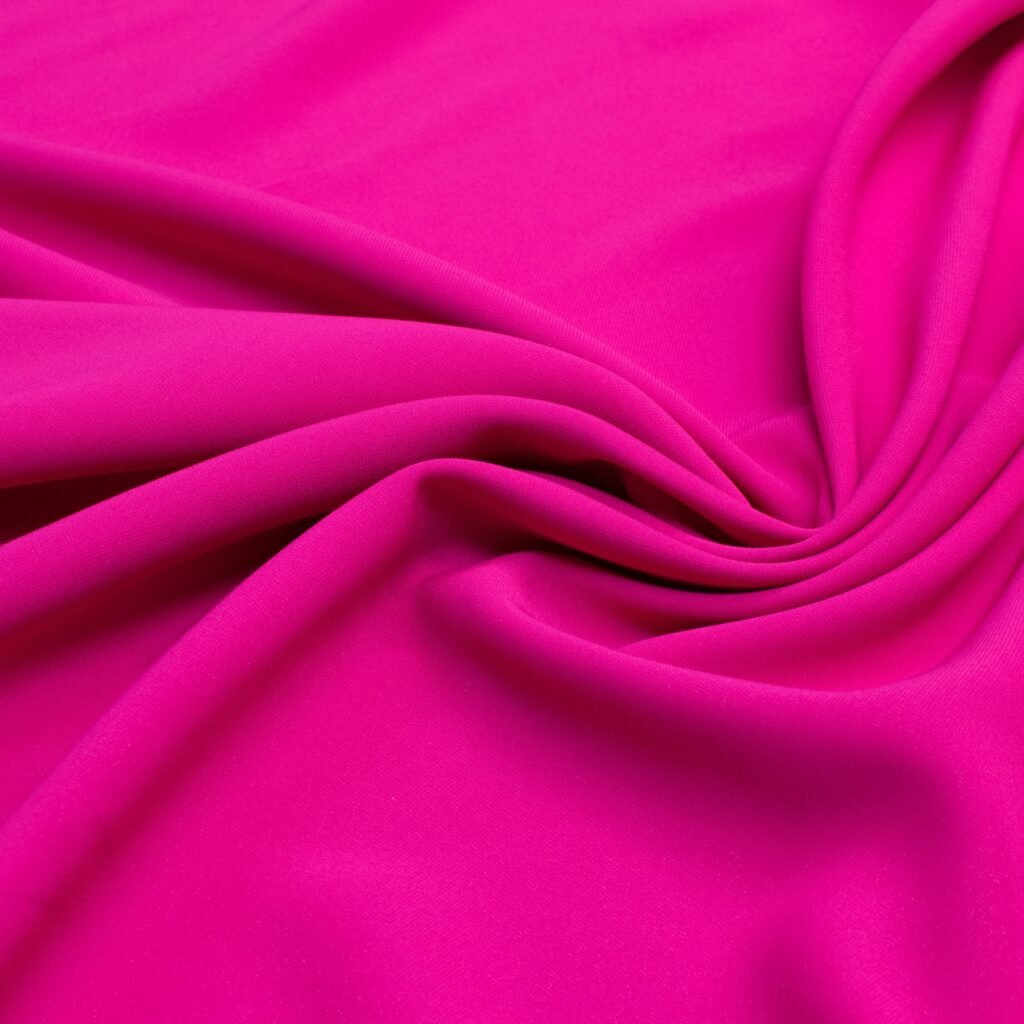
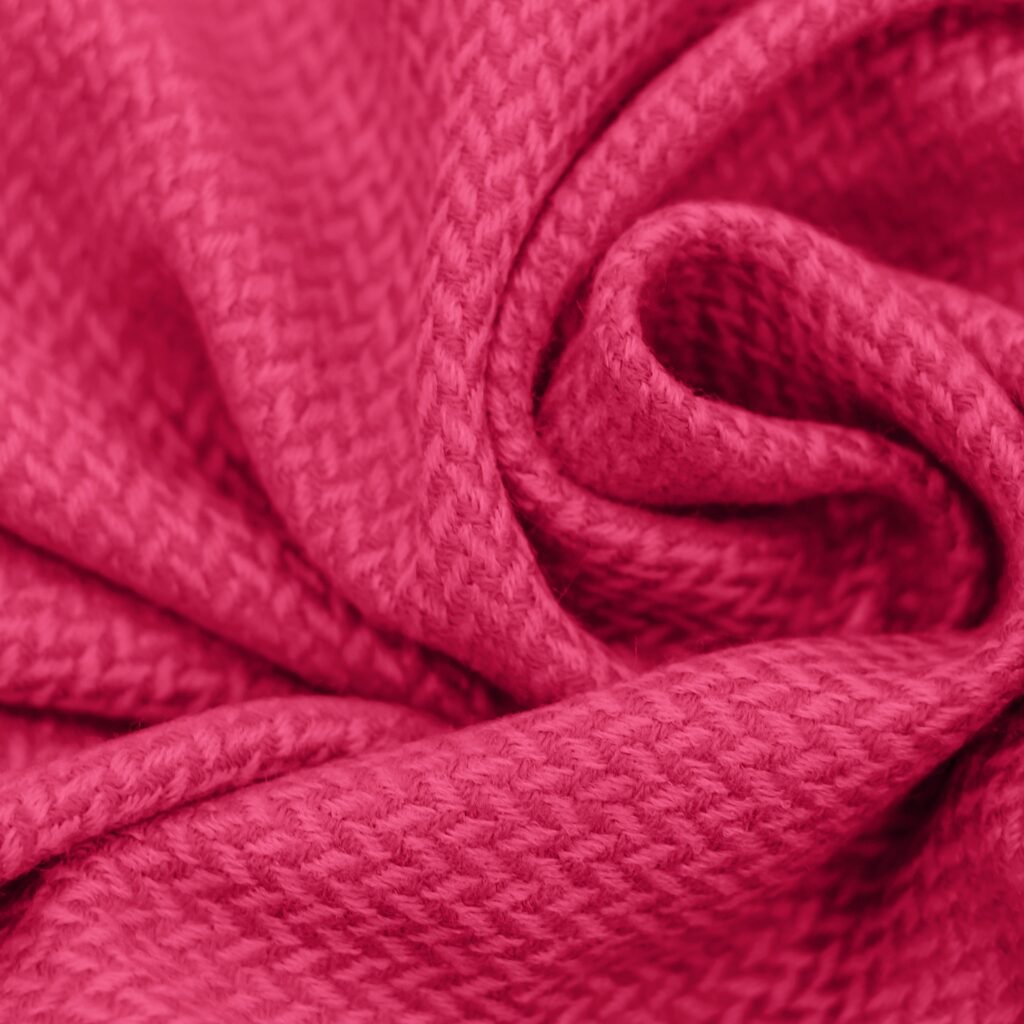
A vivid magenta rayon poplin fabric spread with soft folds and gentle sheen, showcasing smooth, tightly woven texture.
Vivid rayon poplin: a sleek, drapable fabric with a crisp feel and radiant color.

Like all fabric has a story, with Rayon Poplin Fabric it’s a story of lightness, comfort and the ease of almost any attire. The feeling of it being light can also be the ease to be worn in any of the four seasons. The feeling of it being light can also be the ease of it being worn in any of the four seasons. The feeling of it being light can also be the ease of it being worn in any of the four seasons. The material can be worn in all the seasons, but it is summer and light warm spring attire is the season when it is the most desirable. The fabric drapes beautifully and adds a certain polish to an outfit.


The Soft & Smooth Feel Everyone Loves
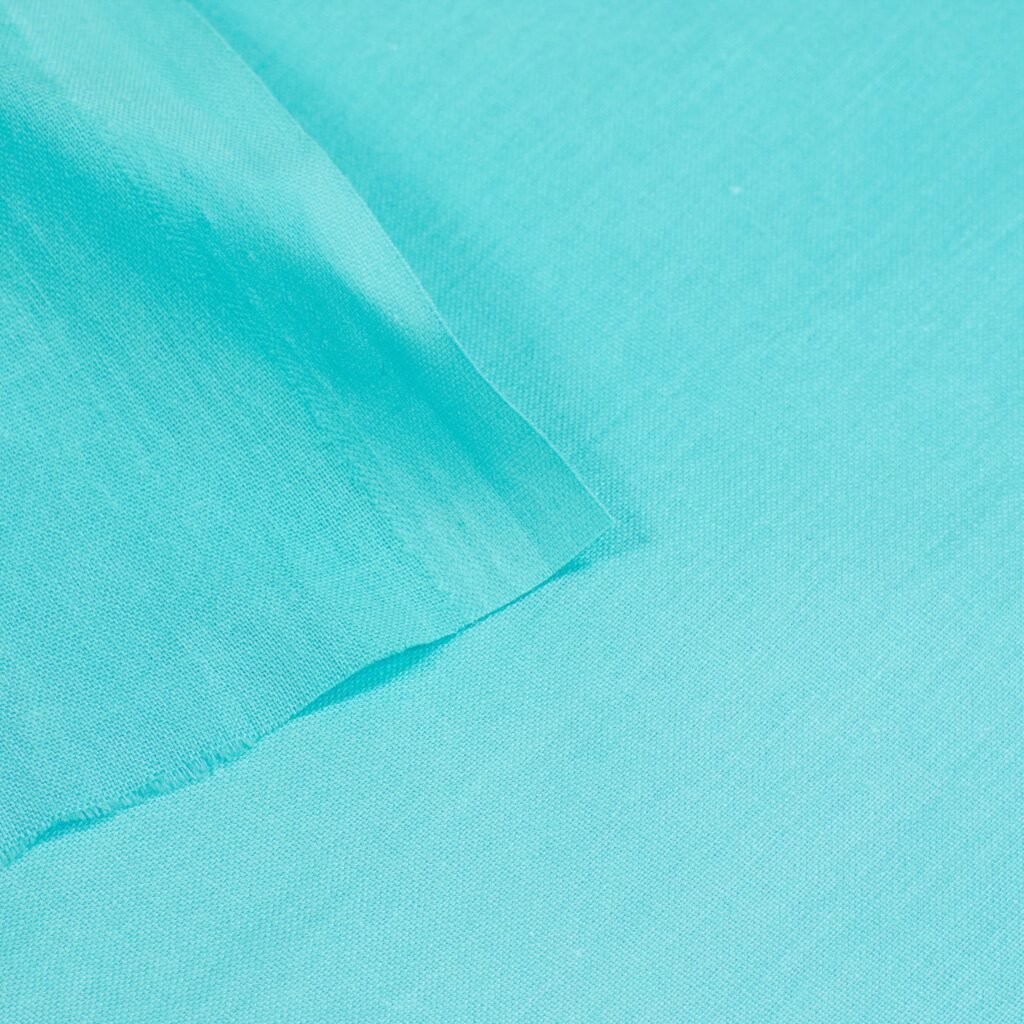
A close-up image showing smooth, finely textured turquoise fabric with soft folds and a gentle sheen.
The soft, smooth feel everyone loves. Luxurious softness you can feel. Soft, smooth fabric you’ll want to touch.

Clothing comfort often depends on texture, and Rayon Poplin Fabric excels in that area. Its surface feels gentle, smooth, and breathable. When you wear it, it almost feels like a second skin. The fibers allow air to move easily, keeping you cool even on warm days. The smooth finish gives clothing a polished look while staying easy to maintain. This texture makes it a favorite for blouses, shirts, and flowy dresses. Every touch reminds you of its softness, creating a pleasant wearing experience each time.


A Lightweight Fabric for Every Season
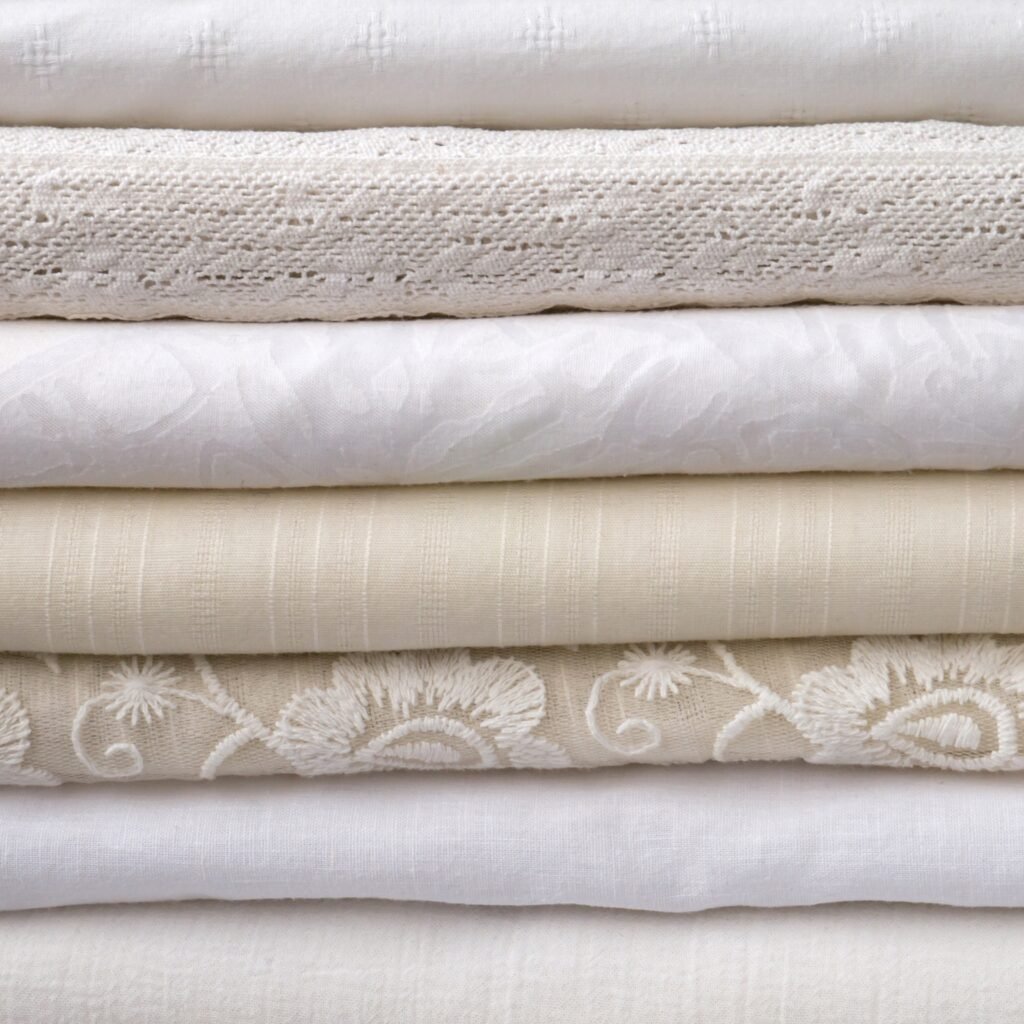
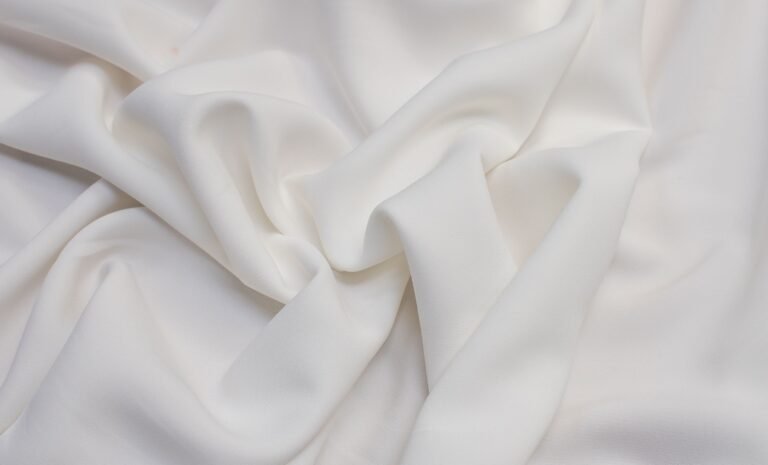
A stack of neatly folded lightweight fabrics in neutral tones (white, cream, ivory) with various textures including smooth plain weave, delicate lace, subtle stripes, and floral jacquard designs.
A versatile, lightweight fabric collection in neutral shades—perfect for year-round fashion and home textiles.

Many fabrics are too heavy for summer or too thin for winter. Rayon Poplin Fabric manages to stay perfect all year round. Its lightweight nature helps you stay cool, yet it can also layer well in cooler months. This makes it a flexible option for all types of climates. It doesn’t trap heat, so your skin breathes easily. When the temperature drops, it can be paired with jackets or scarves without feeling bulky. This seasonal flexibility adds to its growing popularity in the fashion world.


Rayon Poplin Fabric Balances Style & Durability
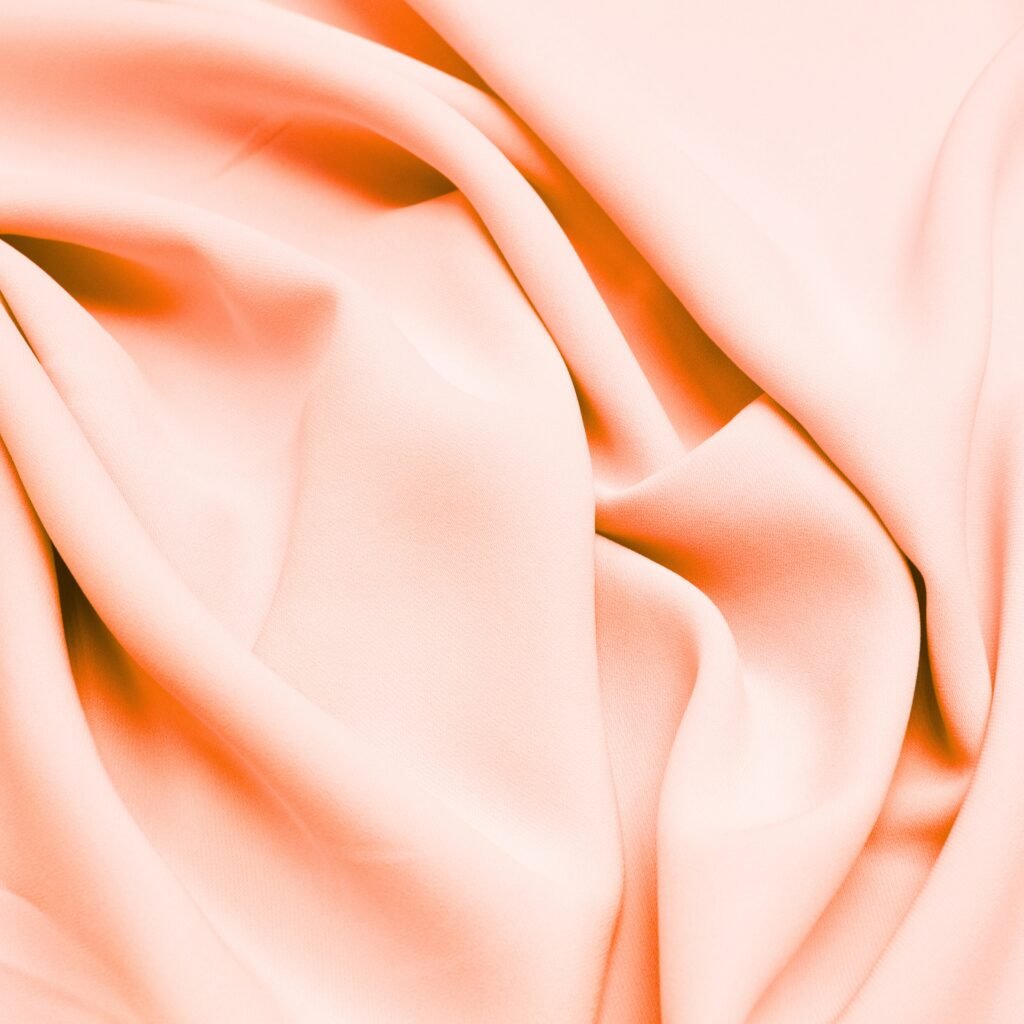
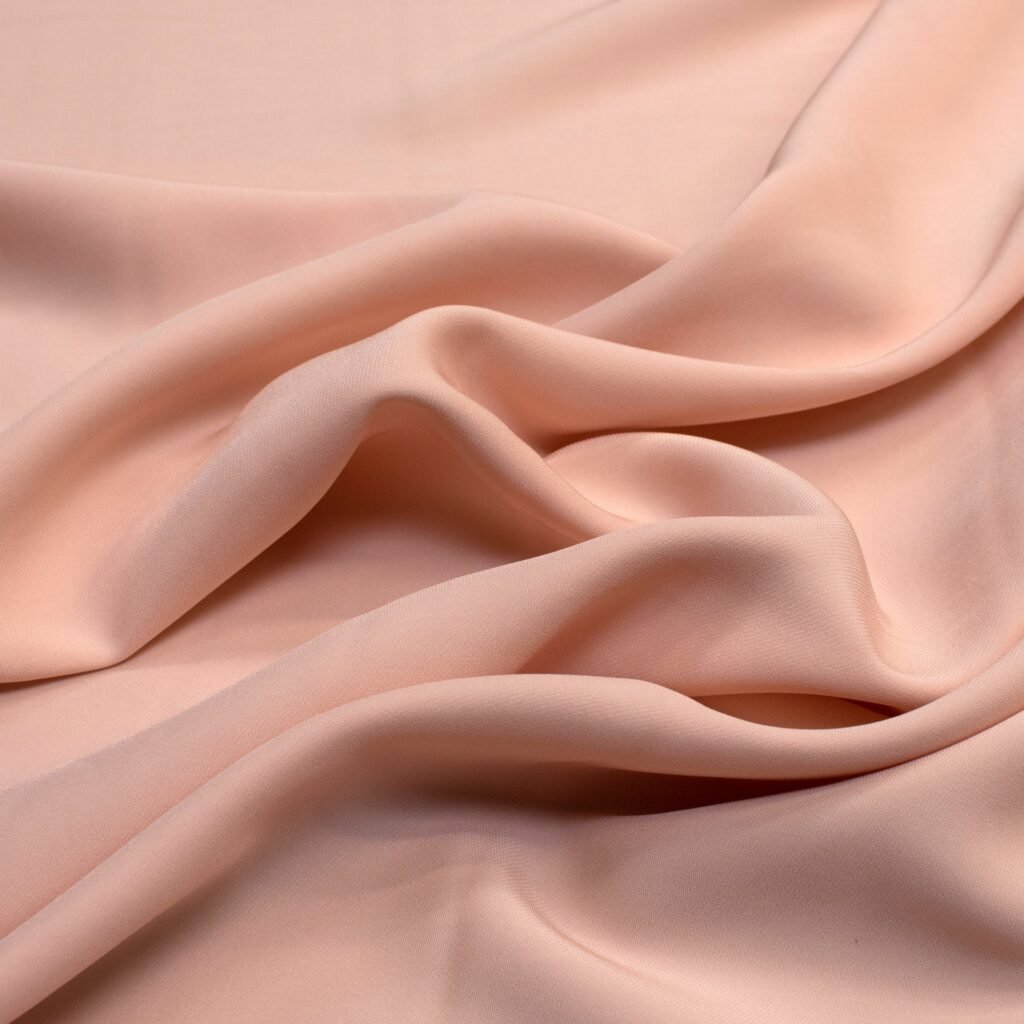
“Close-up of soft peach-pink rayon poplin fabric with gentle folds and smooth, matte surface.”
Rayon Poplin Fabric: where delicate drape meets durable construction—effortlessly chic, with a breathable, smooth finish for everyday elegance.

Strength and Style go hand in hand. Rayon Poplin Fabric provides both without trade offs. Its tightly woven construction ensures every piece has lasting quality and smoothness. Even after countless washes, the fabric refuses to lose its prestigious look and feel. Its longevity allows you to keep your most cherished outfits even longer. Soft as it may be, it has a durability and wear resistance that outlasts most materials in its category. The fabric keeps dye beautifully, and the colors remain vibrant. This combination of attributes ensures that the fabric covers every functional aspect as you enjoy the fashion it provides.


Perfect Drape for Elegant Designs

Designs can be created, or destroyed, by the way a fabric drapes. Rayon Poplin Fabric has the perfect drape to make clothing take on a beautifully elegant silhouette. It flows without restriction and flatters the body, creating a visual harmony that captivates without clinging. Its versatility allows designers to construct both structured and free forms with equal ease. Once inserted into the garment, it does not shift position and remains smooth, allowing for effortless stitching. The overall look is enhanced by the drape, whether it is for a formal dress or a casual skirt. This beautiful drape provides the clothing with an air of professionalism and sophistication.


The Weaving Process and Its Quality

Every Rayon Poplin Fabric begins with a meticulous weaving procedure. Poplin is produced by a plain weave. Therefore, it is crafted with a fine ribbed design. The assembled weave and rayon fibers create a firm and soft fabric. This construction promotes breathability and helps resist wrinkles. Each thread contributes to its strength and smoothness. This construction is behind its lasting and premium feel.


The Popularity Of Rayon Poplin Fabric Among Designers

Fashion designers have a tendency to seek out fabrics that not only look beautiful but also perform well. Rayon Poplin Fabric fulfills all these requirements. This is due to the fact that it is simple to cut, easy to sew, and once completed, it drapes beautifully. In addition to this, it displays and secures prints and colors with breathtaking clarity. This fabric is perfect for designing contemporary shirts or elegant summer dresses. Its adaptability and versatility inspire limitless design ingenuity. Most professionals appreciate its dependability to preserve and minimize fabric, which saves time. This makes the fabric an affordable, trendy, and fashionable choice for all designers.


Best of Both Worlds

Versatility is truly an asset to any fabric. Rayon Poplin Fabric adapts to both everyday and corporate attire. Its softness and cooling properties make it ideal to wear at any time. For formal occasions such as office functions or parties, it exudes a sophisticated and polished look. Its smooth texture finish transforms any clothing to look clean and classy. Be it shirts, skirts, or trousers, all garments look tailored. Its natural sheen maintains a look of understated luxury. You can wear it with many accessories for a more polished look, or leave it simple for everyday comfort.


All Day Wearability

Rayon Poplin Fabric gives wearers all day comfort from dawn to dusk. It is lightweight and flowing so there is no restriction of body motion. It is ideal for warm and humid climates because it is light and flowing. Active wearers can move with ease and it won’t lose its fresh and breathable feel even after hours of wear. It is even better for those who prefer soft and comfy clothes as it absorbs moisture better than many synthetic fabrics. Wear it once, and you’ll want to keep wearing it to feel confident and comfortable.


Easy Care & Maintenance

For busy people, everyday fabrics with low maintenance are essential. Rayon Poplin Fabric is perfect for that. It is easy to wash and dries quickly. You only need to lightly press it to take out the wrinkles, as it readily becomes smooth. The fabric retains its shape very well, so after laundering, the clothing looks the same. Despite its delicate feel, it can withstand frequent laundering in comparison to many other natural fabrics. This makes it perfect for modern living where quick care routines are the norm. You can keep it looking new with minimal effort.


Colors That Stay Bright & Beautiful

Nobody likes faded clothes. Rayon Poplin Fabric is known for holding color brilliantly. Its fibers absorb dye deeply, creating rich and lasting shades. The fabric’s smooth surface reflects light evenly, giving each color a vivid shine. Even after many washes, the tones remain strong and lively. This feature makes it perfect for printed patterns and solid designs. Designers use it confidently, knowing the final product will stay bright. This ability to maintain color adds great value to every piece made from it.


An Eco-Conscious Option in Today’s Fashion

Considering the sustainability of fabrics has become popular nowadays. Rayon Poplin Fabric is a more sustainable option for those seeking sus Sustainability . It is prepared from a natural substance, cellulose, a component of plants. Though it is partially altered chemically, a partially plant-based portions remains. This offers a better environmental profile than numerous synthetic fabrics. It is breathable, and the biodegradability adds to the advantages. It shows that a reduction in waste is possible while keeping fashion alive. Concern for the environment and fashion can coexist.


Inspiration for Fashion Versatility

Most of the time, fashion creativity is sparked from the appropriate material. Rayon Poplin Fabric has countless options for the design imagination. It can take folds, forms, and stitching that are easily modified to numerous silhouettes. It can be utilized in a variety of pieces, from flared prairie dresses to tailored blazers to uncomplicated tops. It can also be layered for additional contrast or varied forms. Its smooth surfaces make it attractive for embroidery, lace work, or printed artwork. It offers opportunities for new creation in every piece. Versatility in fabric inspires every beginner or expert designer.


Cooling Effect on Your Skin

When wearing Rayon Poplin Fabric, the cooling effect is pleasant. The fibers are permeable, allowing the passage of free air. This helps prevent overheating during hot weather. It also help keeps the body dry to prevent the moisture. Tropical countries prefer this fabric to help cool the body. The soft fibers also help reduce skin irritation. This also helps people with sensitive skin. Getting comfort and freshness helps feel better.


Rayon Poplin Fabric & the Runways

The journey of Rayon Poplin Fabric begins in fabric stores, and in some cases ends on fashion runways. It captures attention from everyday customers to the highest designers. People appreciate the gentle feel and the graceful way the fabric falls on the body. Fashion industry loves the ease of changing the fabric into different stylish attires. Rayon Poplin Fabric can be turned into anything from a casual top to a lavish red carpet gown and still be eye catching. It’s one of the fabrics that has the ability to balance function and style. More designers are proving the fabric has excellent quality.


Identifying Authentic Rayon Poplin Fabric

It is essential to recognize Rayon Poplin Fabric in order to buy it. Authentic fabric feels smooth yet a bit crisp to the touch. It is light, but not flimsy. It is firm, not flimsy. The weave is fine and evenly spaced, without gaps. It is translucent and strong enough to withstand light. When draped over the hand, it falls beautifully. It is these characteristics which tell real poplin from its cheaper alternatives. Positive results are assured in clothing projects and style is guaranteed to last in a longer period of time.


Ideal for Home Sewing Hobbyists

Most home sewers work to enrich their fabric collection. Rayon Poplin Fabric is wonderful for this. It is easy to cut, handle and sew, which is a great advantage for beginners. It also does not move too much during sewing which allows for accurate seams. It also takes patterns and pleats. When a project is completed, the end result is professional and well proportioned. This fabric is wonderful for summer dresses or light curtains. It is a wonderful to introduce comfort and creativity to a sewing environment. It provides a great fabric to work with.


A Classic Choice with a Modern Twist

Some fabrics, like Rayon Poplin Fabric, will always be in style. Even with the decades that have passed, it continues to feel contemporary. Poplin’s clean and smooth textures complement modern attire beautifully. It has that touch of boldness that speaks modernity. Even with the evolution of fashion, poplin fabric has remained relevant. It firmly shows that classics can be revitalized and made modern. No matter the trends, poplin fabric will always be in style.


Conclusion:

Each Rayon Poplin Fabric contains the story of every piece of clothing. It tells a story of comfort, charm, and beauty. Because of poplin’s versatility, it will always be a top pick for numerous designs and styles for every season. It will always keep you cool, and its elegant smoothness will always pop. It can be casual yet poplin will always keep you professionally polished for formal events. It tells timeless stories that will always feel right.

FAQs

1. What is Rayon Poplin Fabric?

Rayon Poplin Fabric is a lightweight, smooth, and breathable textile made from semi-synthetic rayon fibers. It offers a crisp texture and soft drape, ideal for both casual and formal wear.

2. Is Rayon Poplin Fabric comfortable to wear?

Yes, Rayon Poplin Fabric feels soft and cool on the skin. Its smooth finish and airy structure make it perfect for warm climates.

3. What are the main uses of Rayon Poplin Fabric?

This fabric is commonly used for shirts, blouses, dresses, and skirts. Many designers also choose Rayon Poplin Fabric for lightweight pants and summer outfits.
Everything About Sherpa Cotton Fabric Uses, Benefits &Care Tips

When the temperature falls and you want something to feel snug and warm, Sherpa cotton fabric is the go to fabric. Sherpa cotton is almost the warmest and coziest fabric there is, while also being breathable. Sherpa cotton can be used to make jackets and blankets and even home decor.

Sherpa cotton fabric is a favorite because of its unique qualities. In this guide you will understand everything there is to know about Sherpa cotton fabric; its origin, texture, uses, benefits, instructions on how to take care of it, and styling suggestions.

What is Sherpa cotton fabric?

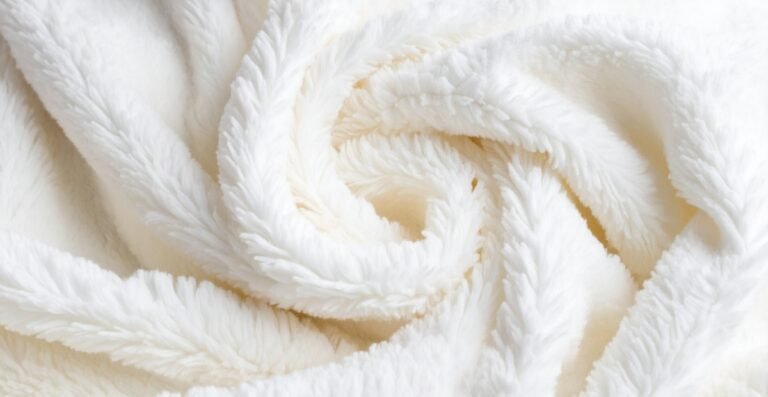
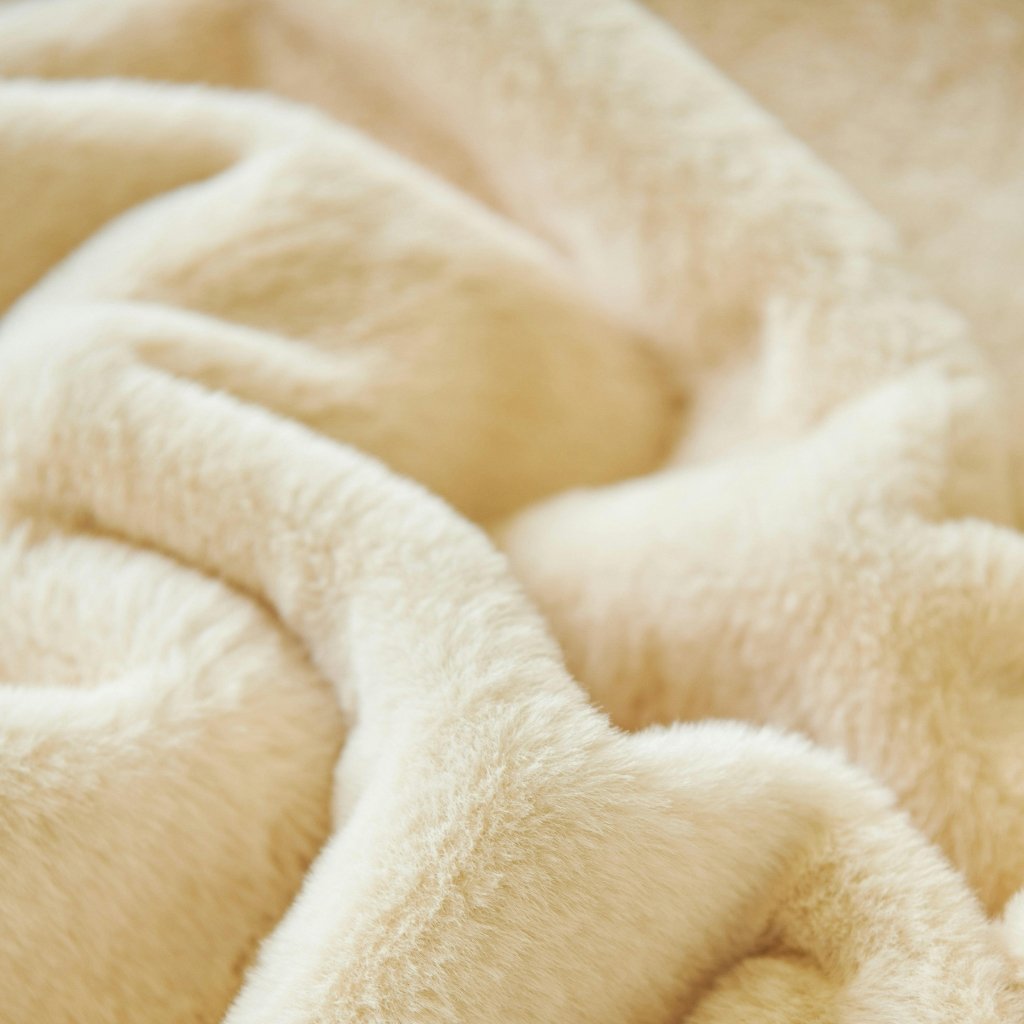
Close-up of soft, cream-colored plush blanket with folds and gentle texture.
Cozy cream plush blanket bunched in silky folds.

Sherpa cotton fabric is a type of fabric that is made from cotton, or a combination of cotton and polyester. It is designed to feel and look like sheep wool. Sherpa cotton is lightweight in comparison to sheep wool, and it is also easier to look after. One side of the fabric is smooth while the other side is fluffy like the fleece of a lamb.

Sherpa cotton is soft, insulating, and allows air flow. It is also gentle on the skin, making it ideal for clothing, blankets, and accessories.

The Origin and History of Sherpa Fabric

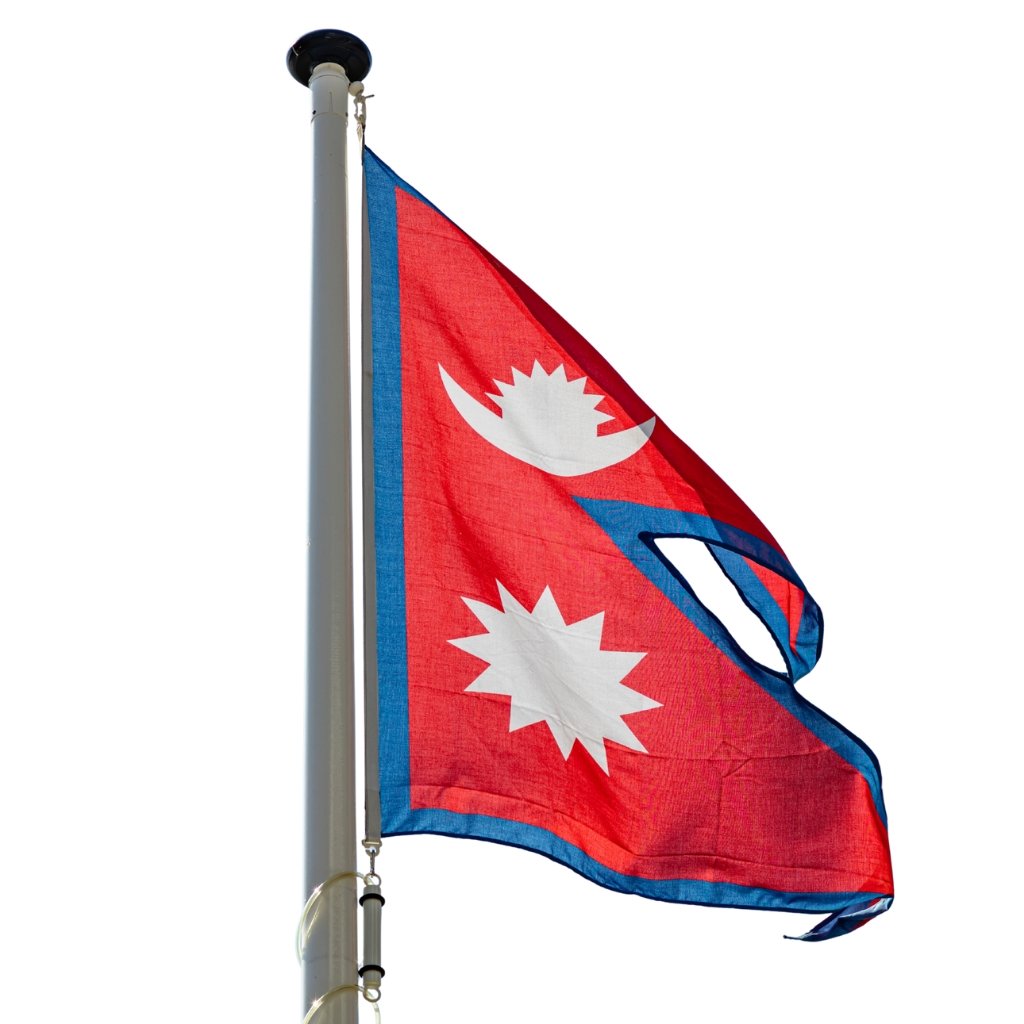
Red flag with blue border featuring white sun emblem, attached to a flagpole and fluttering in the wind."
Red flag with blue border featuring white sun emblem, attached to a flagpole and fluttering in the wind.
The Nepali flag in motion on a clear day.

The word Sherpa comes from the Sherpa people of Nepal. The Sherpa people live in the cold Himalayas. Wool-lined clothing made by the Sherpa inspired fabric manufacturers. People wanted to replicate the warmth of wool, but take the heaviness of real wool out of the equation.

As time progressed, people started to prefer cotton for Sherpa fabric. Cotton is renewable, hypoallergenic, and easy to care for. Sherpa cotton is also used in apparel brands that focus on comfort, in home decor, and in sustainable, environmentally-friendly clothing of the modern eco apparel brands.

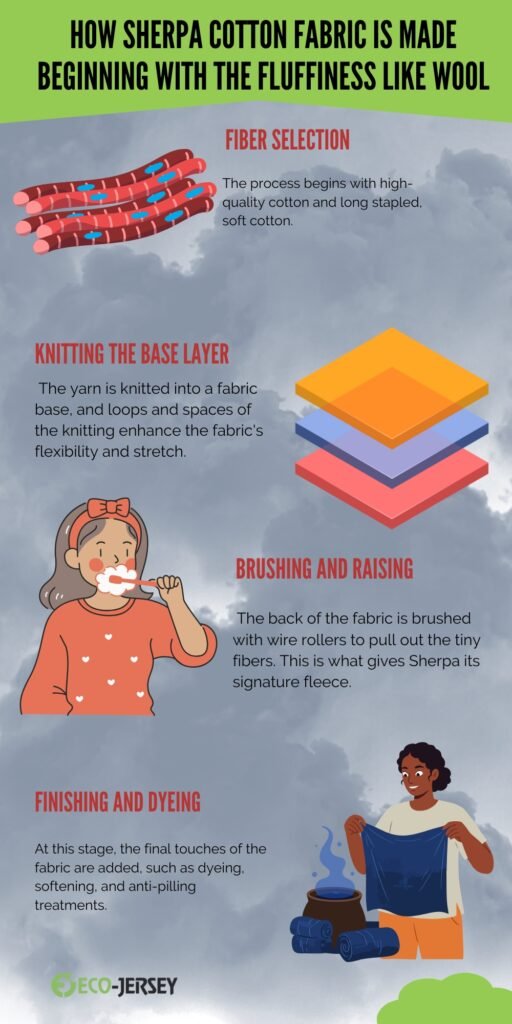
How Sherpa Cotton Fabric Is Made Beginning with the fluffiness Like Wool

An infographic titled 'How Sherpa Cotton Fabric Is Made Beginning With The Fluffiness Like Wool' showing five stages: Fiber Selection (red fiber bundles), Knitting the Base Layer (stacked colorful fabric layers), Brushing and Raising (a girl brushing fabric), Finishing and Dyeing (a person holding dyed fabric), and finishing touches with a small logo 'Eco-Jersey' at the bottom. A cloudy sky background with green header.
How Sherpa cotton fabric is produced—from fiber selection to finishing and dyeing, capturing the fluffy, wool-like Sherpa texture.

Fiber Selection – The process begins with high-quality cotton and long stapled, soft cotton. Sometimes, a small percentage of polyester is added to improve resilience and reduce shrinkage, but it is usually.

Knitting the Base Layer – The yarn is knitted into a fabric base, and loops and spaces of the knitting enhance the fabric’s flexibility and stretch.

Brushing and Raising – The back of the fabric is brushed with wire rollers to pull out the tiny fibers. This is what gives Sherpa its signature fleece.

Finishing and Dyeing – At this stage, the final touches of the fabric are added, such as dyeing, softening, and anti-pilling treatments. After this, the fabric feels lightweight yet warm, soft yet durable.

The result is a luxuriously plush textile that combines the coziness of wool with the breathability of cotton.

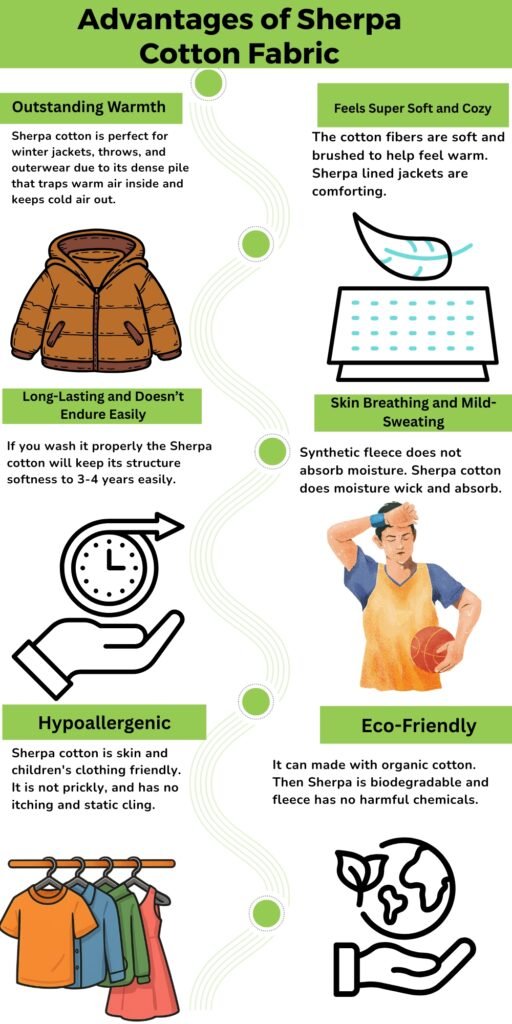
Advantages of Sherpa Cotton Fabric

An infographic titled “Advantages of Sherpa Cotton Fabric.” The layout features two vertical columns with green section headers and illustrations. Left column sections from top to bottom: a brown puffer jacket under “Outstanding Warmth,” a clock-like icon with a hand under “Long-Lasting and Doesn’t Endure Easily,” a simple hand icon under “Hypoallergenic,” and a row of colorful clothing under a small green header. Right column sections from top to bottom: a curved fabric or scarf icon over a cushion under “Feels Super Soft and Cozy,” a person sweating under “Skin Breathing and Mild-Sweating,” a person holding a basketball under “Eco-Friendly,” and a globe with a hand under the same label. Decorative circular dots line a wavy center divider.
Advantages of Sherpa Cotton Fabric: highlighting warmth, softness, durability, skin-friendly properties, breathability, eco-friendliness, and an overview of uses.
  1. Outstanding Warmth

Sherpa cotton is perfect for winter jackets, throws, and outerwear due to its dense pile that traps warm air inside and keeps cold air out. It even looks heavy, yet surprisingly light effortless.See more….Corduroy Cotton Fabric

  1. Feels Super Soft and Cozy

The cotton fibers are soft and brushed to help feel warm. Sherpa lined jackets are comforting. You can wrap Sherpa lined jackets and blankets as well. You will not feel any irritation.

  1. Skin Breathing and Mild-Sweating

Synthetic fleece does not absorb moisture. Sherpa cotton does moisture wick and absorb. Plus it allows skin to breathe. Fore-Active movement like walking a lot it helps with sweating and shy discomfort.

  1. Long-Lasting and Doesn’t Endure Easily

If you wash it properly the Sherpa cotton will keep its structure softness to 3-4 years easily. And with no pilling-tearing- flattening you can safely say it is worth the investment. Read more…..Canvas Cotton Fabric

  1. Hypoallergenic

Sherpa cotton is skin and children’s clothing friendly. It is not prickly, and has no itching and static cling.

  1. Eco-Friendly

It can made with organic cotton. Then Sherpa is biodegradable and fleece has no harmful chemicals.

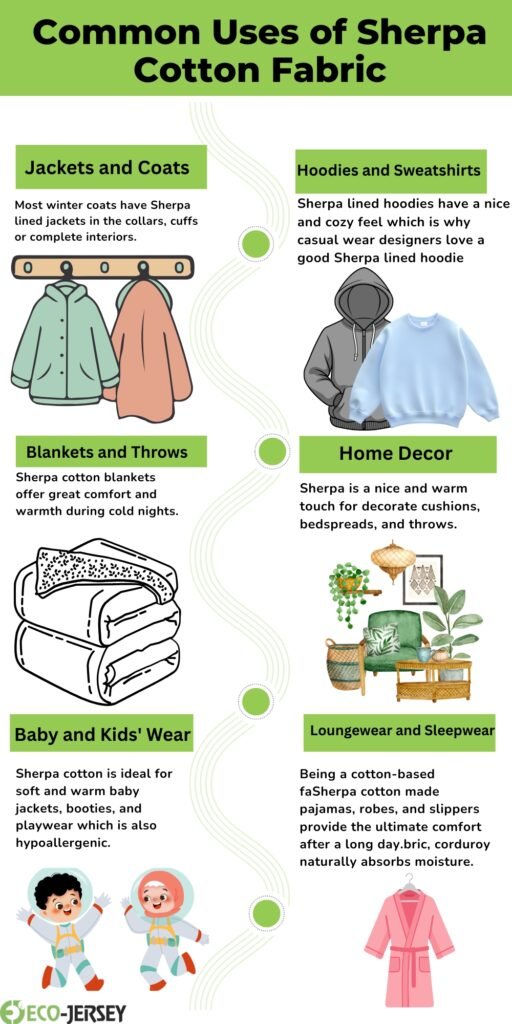
Common Uses of Sherpa Cotton Fabric

An infographic titled “Common Uses of Sherpa Cotton Fabric” with a green header. It has eight sections arranged along a winding vertical path:
Jackets and Coats: two jackets hanging on a rack; brief description about winter coats.
Hoodies and Sweatshirts: a person in a gray hoodie and a blue Sherpa-lined hoodie; casual wear note.
Blankets and Throws: a stack of folded blankets/throws; note about warmth and comfort.
Home Decor: a cozy arrangement of plants, cushions, and decor items.
Baby and Kids’ Wear: illustrations of two children in cozy outfits; hypoallergenic claim.
Loungewear and Sleepwear: a pink robe illustration; description of comfort and moisture absorption.
(Central connector visuals) light green circular icons connecting sections along a curvy line.
Eco-Jersey logo at the bottom left corner.
Common Uses of Sherpa Cotton Fabric: from jackets and hoodies to blankets, home decor, and comfortable loungewear—showcasing the warmth, softness, and versatility of sherpa cotton for everyday wear and home textiles.

Sherpa cotton is very versatile.

  1. Jackets and Coats

Most winter coats have Sherpa lined jackets in the collars, cuffs or complete interiors. It adds warmth in the winter without the added weight of the coat.

  1. Hoodies and Sweatshirts

Sherpa lined hoodies have a nice and cozy feel which is why casual wear designers love a good Sherpa lined hoodie. They’re comfortable and are great for lounging, walking outside, or going on a trip.

  1. Blankets and Throws

Sherpa cotton blankets offer great comfort and warmth during cold nights. Their soft, fluffy surface works like a feel and breathable cooling cotton.Read more….French Terry Fabric

  1. Home Decor

Sherpa is a nice and warm touch for decorate cushions, bedspreads, and throws. It gives a lovely rustic look to the home during winter which adds warmth and is great for winter season.

  1. Baby and Kids’ Wear

Sherpa cotton is ideal for soft and warm baby jackets, booties, and playwear which is also hypoallergenic. It will warm and comfort kids while keeping irritation away.

  1. Loungewear and Sleepwear

Sherpa cotton made pajamas, robes, and slippers provide the ultimate comfort after a long day.

“`html
FeatureSherpa Cotton FabricFleece Fabric
MaterialNatural cotton or cotton blendUsually synthetic polyester
TextureSoft, wool-like, fluffySmooth, brushed both sides
WarmthExcellent insulationHigh warmth but less breathable
BreathabilityHighModerate
Eco-FriendlinessBiodegradable, sustainableNon-biodegradable
MaintenanceEasy with proper careEasier and dries faster

While fleece might be easier to dry, Sherpa cotton wins in breathability, comfort, and eco-friendliness.

“`

How to Care for Sherpa Cotton Fabric

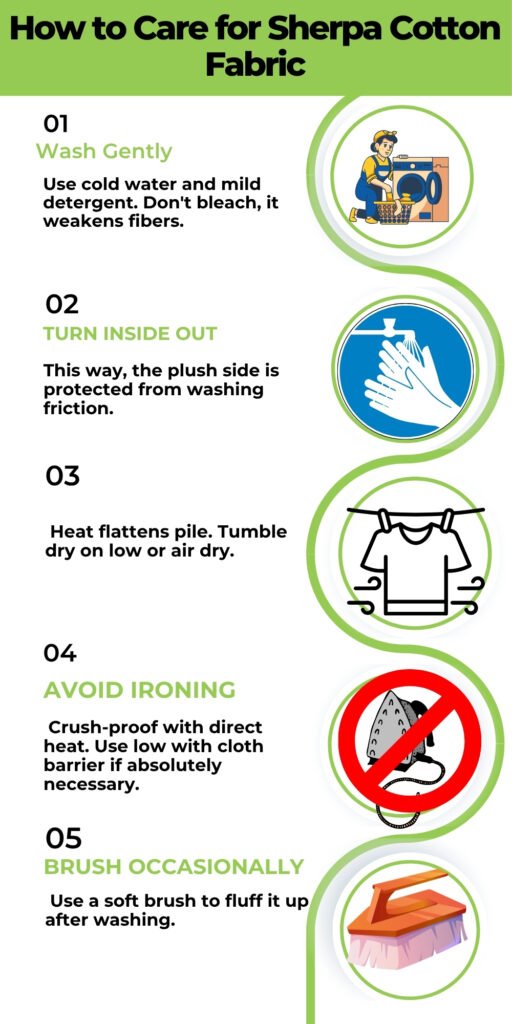
Infographic titled ‘How to Care for Sherpa Cotton Fabric’ with five labeled steps: 01 Wash Gently (illustration of washing machine), 02 Turn Inside Out (gloved hands), 03 Heat flatten piles (shirt on a rack), 04 Avoid Ironing (iron with a red prohibition circle), 05 Brush Occasionally (brush). Each step is accompanied by a green, circular icon and curved decorative lines.
How to care for Sherpa cotton fabric: five simple guidelines to keep it soft and durable.” “Care tips for Sherpa fabric: gentle washing, turning inside out, air-drying, minimal ironing, and occasional brushing.” “Step-by-step care for Sherpa cotton fabric.

To keep your Sherpa cotton items fluffy and fresh, here is how to care for them.

Wash Gently: Use cold water and mild detergent. Don’t bleach, it weakens fibers.

Turn Inside Out: This way, the plush side is protected from washing friction.

Air Dry: Heat flattens pile. Tumble dry on low or air dry.

Avoid Ironing: Crush-proof with direct heat. Use low with cloth barrier if absolutely necessary.

Brush Occasionally: Use a soft brush to fluff it up after washing.

These steps will help your Sherpa cotton fabric to maintain its soft, luxurious texture for a long time.

Environmental Benefits of Sherpa Cotton

The Sherpa that’s made from cotton is eco-friendly and much better than synthetic fleece! It is compostable, renewable, and biodegradable. Also, if it is made from organic cotton, it will be even better, as it will lower the use of chemicals and water waste.

Using Sherpa cotton contributes to sustainable fashion, and it is a positive step towards reducing microplastic pollution and unethical textile production. Read more…..Poplin Cotton Fabric

Disadvantages of Sherpa Cotton Fabric

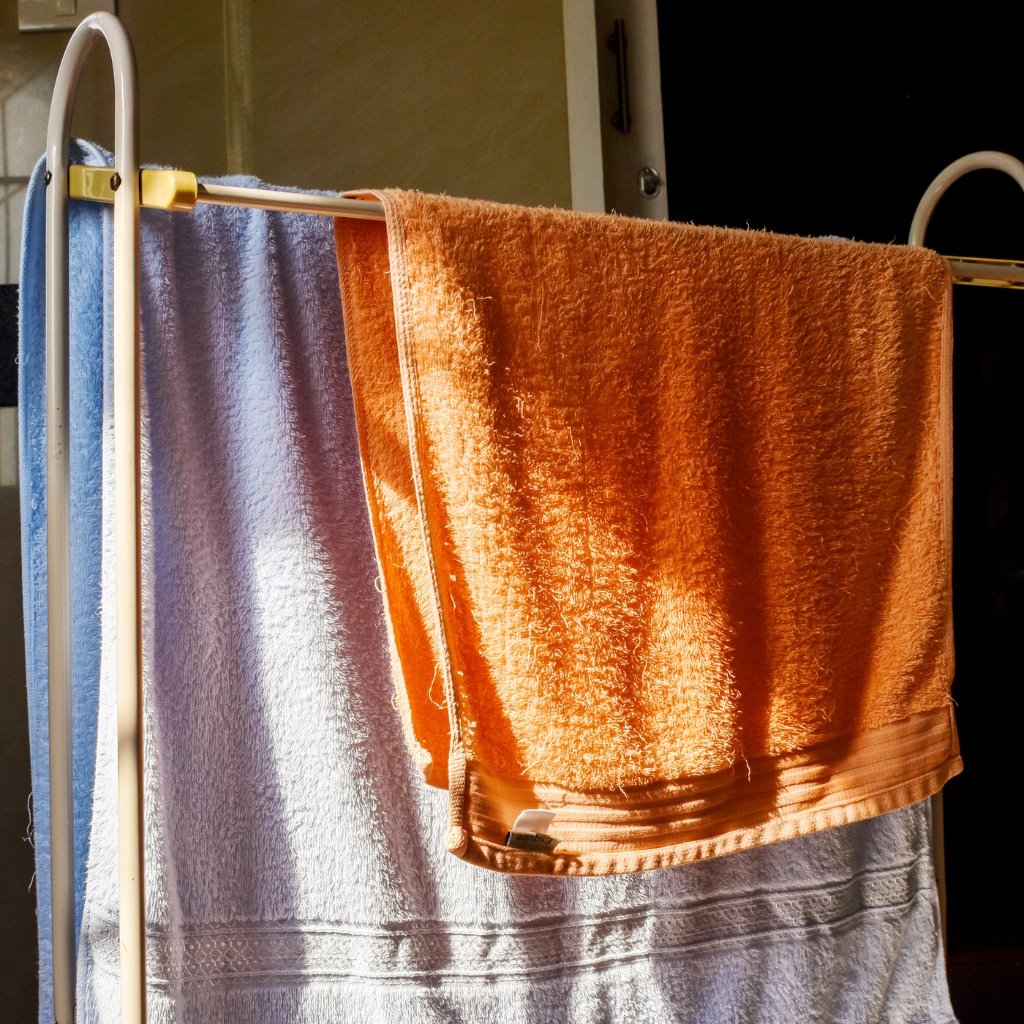
Two towels hanging on a clothes rack: a bright orange towel in front and a light blue towel behind it.
Bright orange towel draped over a white towel rack with a pale blue towel behind it.

Sherpa cotton has a few downsides despite all the advantages that it has.

  • Hot water shrinkage.
  • Long drying time due to the thick pile.
  • Without care, drying, and use, the matting and flattening of the surface will occur.
  • In certain activewear, its weight will bear an impact as it is heavier than polyester fleece.

The remaining downsides, which include the natural source, warmth, and comfort of the fabric, will be overshadowed.

Styling Ideas with Sherpa Cotton

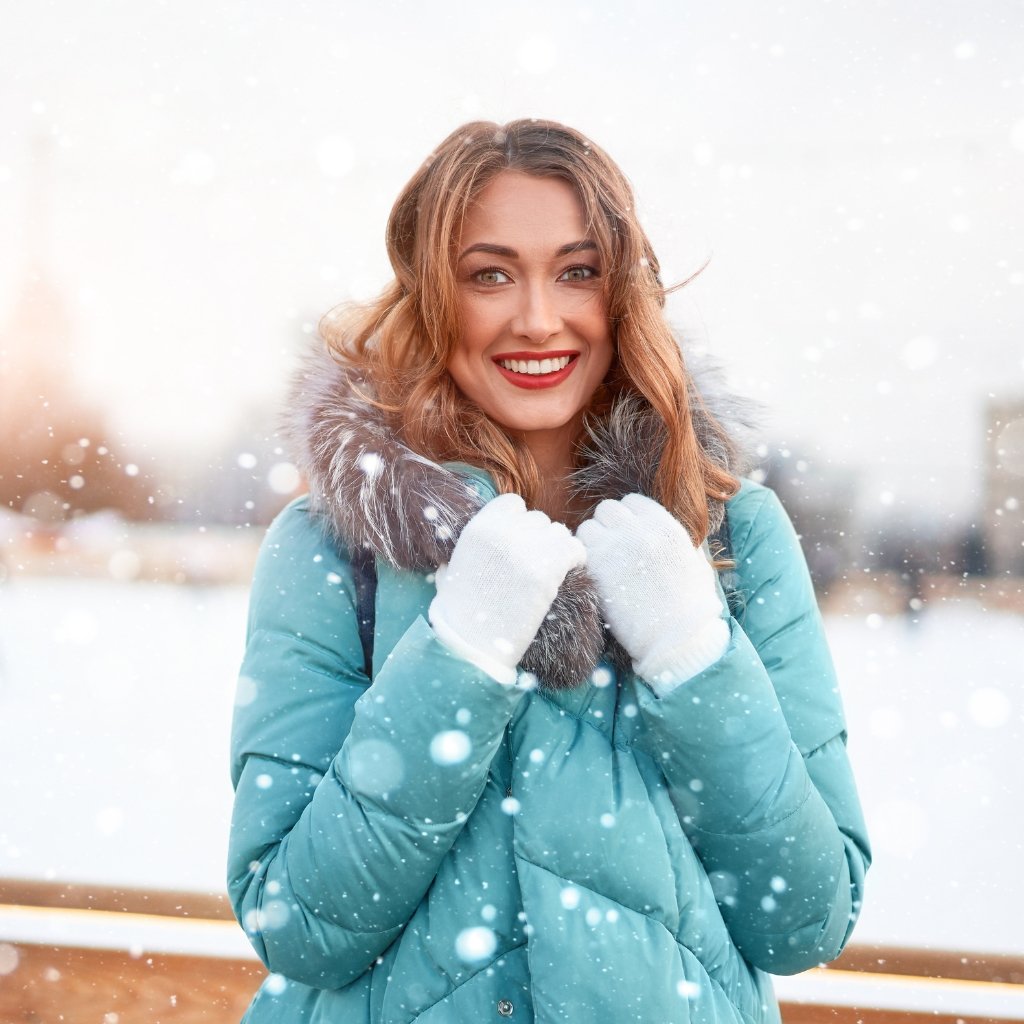
A smiling woman with light brown hair wearing a teal winter coat with a fur-lined hood and white gloves, standing in a snowy outdoor setting with soft falling snow in the foreground and background.
Embracing the winter wonderland in style.

Sherpa cotton is versatile, and it can improve the style of your wardrobe and the décor of your house.

Fashion Tip: For a cozy winter look, wear a Sherpa-lined denim jacket with some boots.

Casual Wear: For an easy and stylish outfit, wear joggers with a Sherpa-hoodie.

Home Touch: Add some Sherpa blankets or cushion covers to your living room for added warmth and texture.

Outdoor Use: For road trips and cool evenings, keep a Sherpa throw in your car.

With its neutral shades of cream, beige, gray, and brown, it goes great with pretty much every color scheme out there.

More Modern Brands with Sherpa Cotton

Since Sherpa cotton is renewable and biodegradable, modern brands are switching to it for their eco friendly collections. Sherpa cotton also looks versatile and has a luxurious feel, so it’s great for designers to work with.

With Sherpa cotton, consumers enjoy greater comfort and lower their carbon footprint, so it’s a win for both the environment and the customers

“`html
AspectSummary
MaterialSherpa cotton is made from natural cotton or cotton blends, while fleece is typically synthetic polyester.
TextureSherpa cotton has a soft, wool-like, and fluffy feel, whereas fleece is smooth and brushed on both sides.
WarmthBoth fabrics offer warmth, but Sherpa cotton provides excellent insulation with better breathability.
BreathabilitySherpa cotton is highly breathable, while fleece has moderate airflow and can feel less airy.
Eco-FriendlinessSherpa cotton is biodegradable and sustainable, making it an eco-friendly choice compared to non-biodegradable fleece.
MaintenanceSherpa cotton requires gentle care but remains durable; fleece dries faster and is easier to maintain.
Overall ComparisonWhile fleece is easier to dry, Sherpa cotton excels in comfort, breathability, and environmental sustainability.
“`

Conclusion

In a world of increased focus on comfort and sustainability, the blend of luxury and practicality has made Sherpa cotton fabric so popular. It is warm enough to keep you cozy during winter, soft enough for everyday wear, and natural enough for eco friendly living.

No matter if you put it on, in your home, or with your accessories, Sherpa cotton will always give you cozy warmth and a classic look. After feeling the softness, it is easy to see why this fabric has become so popular in every modern home.

FAQs

What is Sherpa cotton fabric made of?

Sherpa cotton fabric is made from 100% natural cotton or a cotton-polyester blend. Its wool-like texture provides warmth and softness without irritation.

Is Sherpa cotton fabric eco-friendly?

Yes, when made from 100% cotton, it is biodegradable and sustainable, making it an eco-friendly alternative to synthetic fleece.

What are the common uses of Sherpa cotton fabric?

Sherpa cotton is used in jackets, hoodies, blankets, home décor items, and loungewear because of its plush texture and excellent insulation.

Pashmina Wool Fabric: History, Properties, and Timeless Luxury

Pashmina wool fabric is known for softness and warmth, and elegance and beauty. Being a product of the remote areas of the Himalayas, this fabric radiates luxury and class and is also a fabric of utmost bespoken refinement. Pashmina wol fabric is a material which can be classified as ‘Soft Gold’ as it embodies elegance, comfort, and heritage. Moreover, it is a material which can be described as timeless beauty, and for this reason has not aged a day for centuries. The history, properties, uses and care of a Pashmina wools fabric explains each of these facets.

History of Pashmina Wools Fabric

The Pashmina wol fabric story begins in Kashmir Valley, where artisans learned to weave the fine wool fabric from the Changthangi goat, which lives at high altitudes in Ladakh and Tibet. The word Pashmina is derived from the Persian word Pashm which translates to “soft gold” or “fine wool.”

Pashmina shawls were historically among the most prized possessions. They were especially cherished by the Mughal emperors of India, which included Pashmina-loving Emperor Akbar, and later, shawls became the emblem of elegance and of one’s cultural pride in the world. Even now, the what is wool fabric is worn and celebrated as a global sign of luxury, tradition, and craftsmanship.

Characteristics of Pashmina Wool Fabric

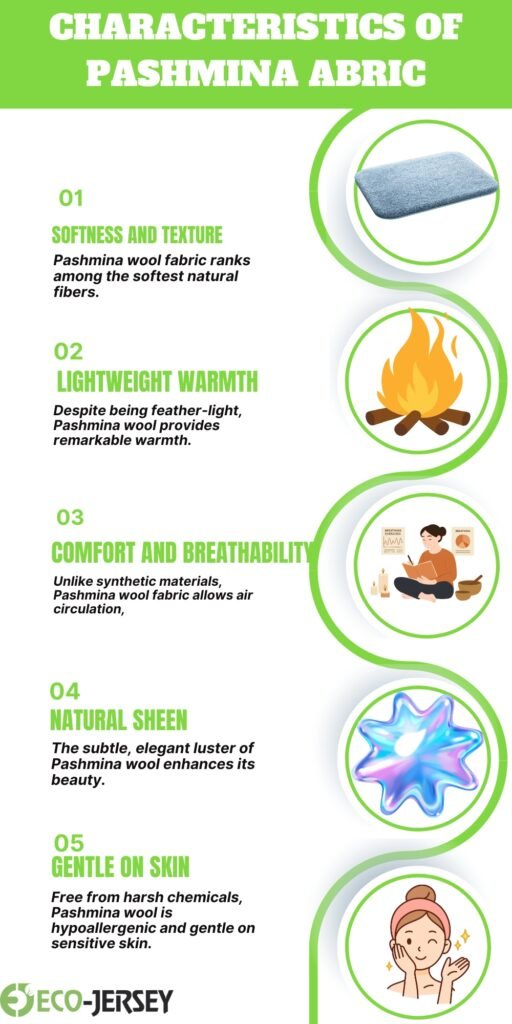
An infographic titled “CHARACTERISTICS OF PASHMINA ACRIC” (typo in image; should be “PASHMINA ACRIC”/“PASHMINA ACRIC” appears). Layout shows five circular icons along a green circular path on the right and numbered sections on the left with green headings:
Softness and Texture: small paragraph about Pashmina wool fibers being among the softest natural fibers; image of a folded blue fabric.
Lightweight Warmth: paragraph noting remarkable warmth despite feather-light feel; image of a campfire.
Comfort and Breathability: paragraph about air circulation in Pashmina wool; image of a person reading.
Natural Sheen: paragraph about subtle lustre enhancing beauty; image of a colorful star-like sheen.
Gentle on Skin: paragraph about hypoallergenic and gentle on sensitive skin; image of a person applying skincare.
Footer shows a logo “ECO-JERSEY.
Key characteristics of Pashmina wool: softness, lightweight warmth, comfort and breathability, natural sheen, and skin-friendly properties, illustrated with circular icons.

The distinguishing features of Pashmina wol fabric are its unique fiber quality and the natural performance features of the fabric. Its fine texture and warm insulating characteristics are perfect for high quality garments and accessory lines.

1. Softness and Texture

Pashmina wol fabric ranks high on the softness scale as the fibers are extremely fine and are comprised of only 12–16 microns. The fine quality of the Pashmina wools fabric assures the wearer of a smooth and delicate touch to their skin, to an extent of providing an incomparable softness for one’s comfort.

2. Lightweight Warmth

Pashmina is light but still keeps you warm. Its fine fibers trap enough air to keep the body warm in the cold.

3. Comfort and Convenience

Pashmina warm cloth is not like the synthetic and airless fabrics. It keeps the individual feeling stowed and comfortable in the various climates. It really satisfies both the need to is warm and to breathe.

4. Natural Sheen

Pashmina’s luxury is in the simple. It is woven to give a soft luster glow when it is dyed.

5. Gentle on Skin

Pashmina warm cloth is unfussy and free from the chemicals. It makes Pashmina warm cloth ideal for people with sensitive skin.

Manufacturing Process of Pashmina Wools Fabric

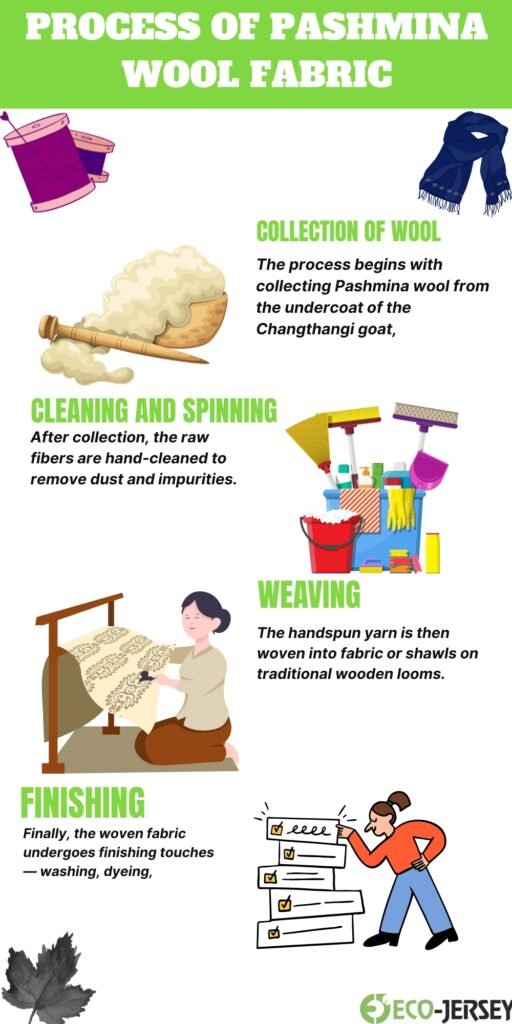
An illustrated infographic titled “Process of Pashmina Wool Fabric.” It shows five steps with icons: Collection of Wool (spools and a scarf), Cleaning and Spinning (a wool tuft and a combing tool), Weaving (yarn and looms), Finishing (a person inspecting finished fabric with a checklist), and decorative textiles in bright green headings and friendly cartoon drawings.
Process of Pashmina Wool Fabric: from collection to finishing, highlighting the key steps—collection, cleaning and spinning, weaving, and finishing.

The making of Pashmina wol fabric is an intricate and time-consuming process, requiring expertise and patience.

  1. Collection of Wool:
    Pashmina wool is obtained by combing the undercoat of the Changthangi goat during the molting season. This process ensures the animals are not harmed.
  2. Cleaning and Spinning:
    After collection, the raw fibers are hand-cleaned and spun into fine yarn using traditional spinning wheels, known as charkhas.
  3. Weaving:
    The yarn is then handwoven on wooden looms into fabric or shawls. Skilled artisans use precise techniques to maintain the softness and strength of the fibers.
  4. Finishing:
    The final product is washed, dyed, and sometimes embroidered with intricate patterns to enhance its beauty.

Each step adds value and uniqueness, making authentic Pashmina wools fabric truly special.

Uses of Pashmina Wool Fabric

Fashion and Home Décor use Pashmina wools fabric.

Fashion

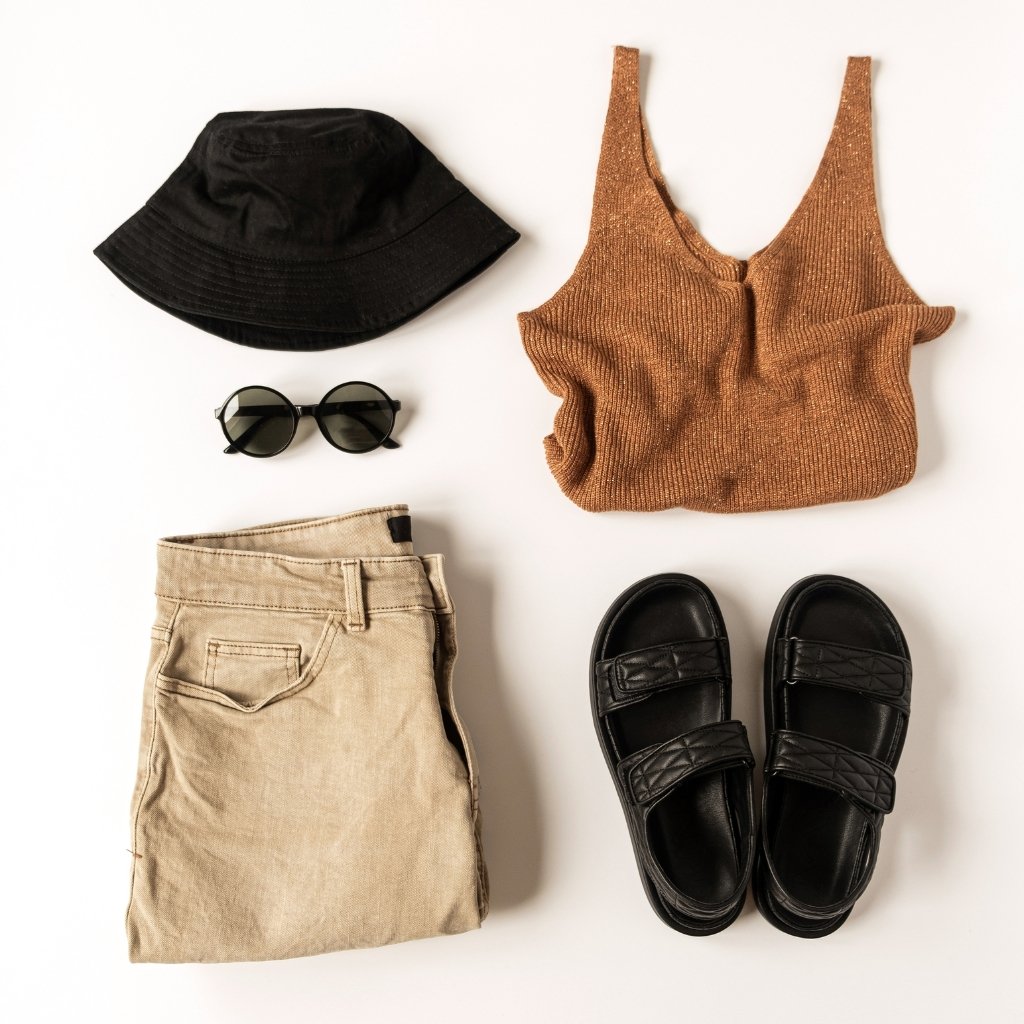
Flat lay of fashion items on a white background: a black bucket hat, round black sunglasses, beige folded shorts, a copper-brown knit tank top, and black sandals arranged neatly.
Effortless summer layers: lightweight pashmina-wool fabric meets casual staples for a chic, breathable look.

Pashmina is a design favourite.

  • Shawls and scarves
  • Stoles and wraps
  • Lightweight coats and jackets
  • Evening wear and accessories

Its use is because it is timeless and versatile. Most Pashmina design incorporate coats as it can be used over both casual and formal attires.

Home Décor

A bright, modern living room with light gray walls, a white ceiling fan, and a white fireplace. Cream tufted sofas face each other around a glass coffee table with gold frames. A cream rug sits on hardwood floors. Decorative pillows in brown and rust tones add color. Green potted plants flank the fireplace, and a large wall art piece with warm tones hangs on the left. Floor-to-ceiling windows and a mirror above the mantel reflect natural light.
Cozy modern living room with warm, earthy accents and luxurious pashmina-wool comfort touches.

Pashmina wol fabric can be used in the interior design as:

  • Cushion covers
  • Throws and blankets
  • Decorative wall hangings

The warmth in Pashmina wools fabric can elevate an interior/ambiance.

Benefits of Pashmina Wool Fabric

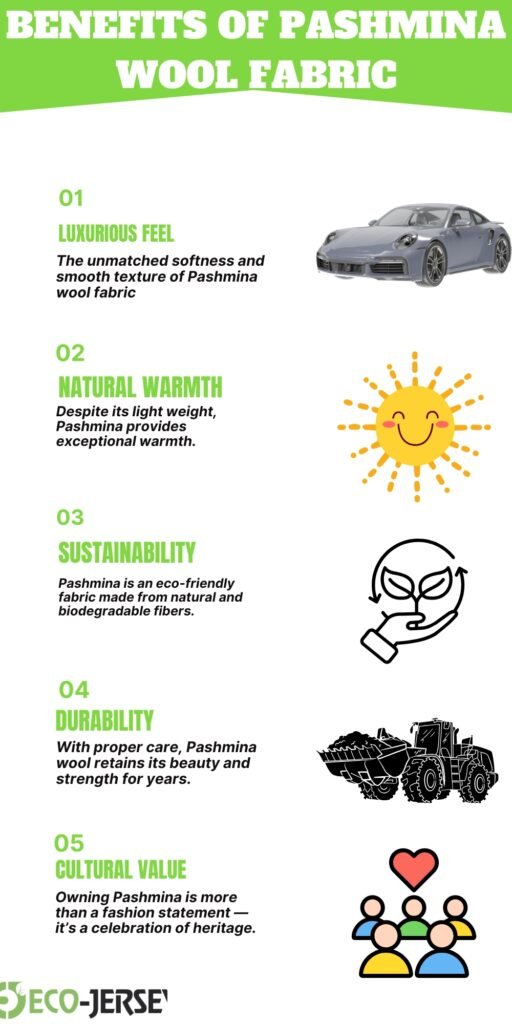
A vertical infographic titled “Benefits of Pashmina Wool Fabric” with a bright green header. On the left, five numbered sections (01–05) list benefits in bold green headings and black body text: 01 Luxurious Feel, 02 Natural Warmth, 03 Sustainability, 04 Durability, 05 Cultural Value. Each section has a small, simple icon on the right: a sports car for 01, a smiling sun for 02, a hand holding a leaf for 03, a rugged tractor/gear-style machinery image for 04, and a diverse group of people with a heart for 05. The infographic includes the logo “ECO-JERSE” at the bottom left.

Pashmina wool fabric offers countless benefits:

  1. Luxurious Feel: The softness and texture offers a premium fabric.
  2. Natural Warmth: While not being suffocating, Pashmina does provide some degree of insulation.
  3. Sustainability: Pashmina’s natural, biodegradable, and eco-friendly.
  4. Durability: Pashmina is charming and will last for many years, even with minimal care.
  5. Cultural Value: Pashmina ownership symbolizes and appreciation of culture and Pashmina’s artisans.

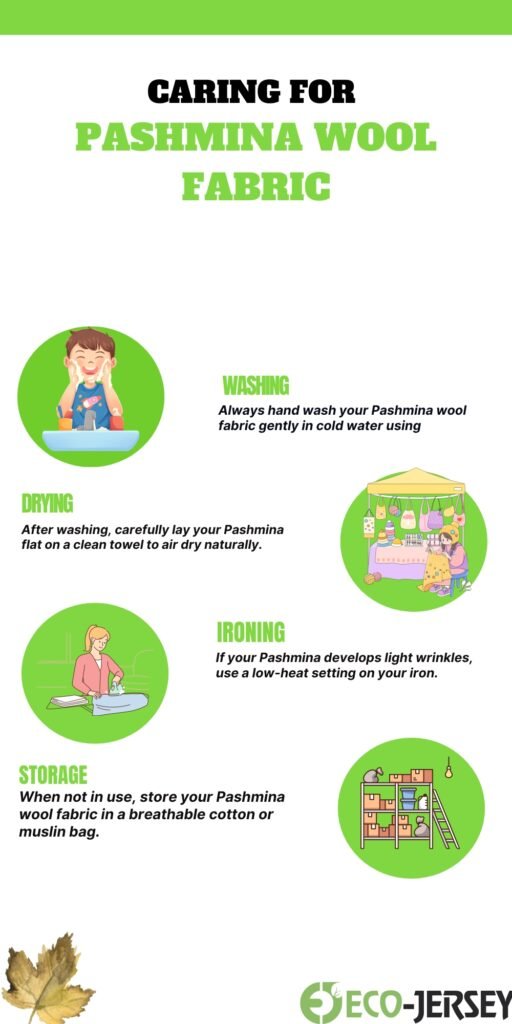
Caring for Pashmina Wool Fabric

Infographic titled ‘Caring for Pashmina Wool Fabric’ with green accents. Five illustrated steps: Washing (child washing fabric), Drying (flat lay on towel), Ironing (person ironing), Storage (cotton/muslin bag), and a storage scene with a shelf. Each step includes a short instruction.
Caring for Pashmina Wool Fabric: washing, drying, ironing, and storage instructions.

Although Pashmina wool fabric is delicate, proper care ensures it remains in pristine condition.

  1. Washing:
    Always hand wash in cold water using mild detergent. Avoid wringing or twisting to protect the fibers.
  2. Drying:
    Lay it flat on a clean towel and allow it to air dry naturally. Never hang Pashmina while wet, as it may stretch.
  3. Ironing:
    Use a low-heat setting and place a cloth between the iron and fabric. Steam lightly if needed.
  4. Storage:
    Store Pashmina in a breathable cotton bag to protect it from moths. Avoid plastic storage, which traps moisture.

Through these steps, the fabric’s quality and longevity can be maintained effortlessly.

Pashmina’s Sustainability and Ethical Value

Pashmina wool fabric is a representation of luxury—but also a model of sustainability. As Pashmina wool fabric is produced from natural fibers, it is also biodegradable and renewable. Also, authentic Pashmina production has kept Himalayan communities hand-weaving this fabric supporting their livelihoods.

Pashmina is also far from being an alternative. Pashmina production has a low environmental footprint compared to synthetics. As production of Pashmina is also slow, it is aligned with modern eco-conscious lifestyles as it involves slow fashion, high quality, and ethical sourcing.

Conclusion

The Pashmina wool fabric has a soft texture, a luxurious feel, and a beautiful deep cultural heritage. It has remained a symbol of grace, comfort, and timeless craftsmanship from royal courts to modern runways. With proper care, this natural fabric can last for decades, providing warmth and elegance in every thread.

FAQs

What is Pashmina wool fabric made from?

Pashmina wool fabric is made from the fine undercoat of the Changthangi goat found in the Himalayan region. Its fibers are handspun and woven for luxurious softness.

How is Pashmina different from Cashmere?

All Pashmina is a type of cashmere, but it’s finer and softer. Pashmina specifically refers to high-quality fibers sourced from Himalayan goats.

Is Pashmina wool fabric suitable for everyday wear?

Yes, Pashmina is durable yet lightweight. It’s ideal for daily use in mild or cool climates, offering warmth and elegance without heaviness.

What Is Cotton Voile Fabric? The Ultimate Guide

Introduction

Cotton voile fabric is a fine quality, semi-sheer and breathable cloth of fine, high quality cotton fibers. Even the name of the material, voile, translates to veil in French, which is how exactly it looks and feels, transparent and airy. This fabric is characterized by soft feel and light drape hence being a perfect item of the summer and light home decoration works. what is cotton voile fabric

What is cotton voile fabric really supposed to be though? what is cotton voile fabric It is appealing in terms of being elegant and comfortable at the same time. It is popular among the fashion designers to make breezy dresses, blouses and scarves. what is cotton voile fabric At the same time, stylists of homes are in love with it because of sheer curtains that allow the sun to pass through them and add a layer of sophistication to it. Cotton voile is one of the most flexible light garments in the modern world by its elegant movement and cooling qualities.what is cotton voile fabric

The History and Genesis of Cotton Voile.

The word voile is derived in the French language that refers to the veil, which is light and clear.what is cotton voile fabric History of cotton voile is very ancient and can be traced back to European textile craftsmanship. It was originally made out of silk or a mixture of silk and cotton; this was highly valued by the rich as it had a smooth feel and looked very good.what is cotton voile fabric

With the development of the weaving technology, cotton became a favorite fiber to use in the production of voile because it was comfortable, breathable, and affordable. Small-scale weaving crafts were mastered in areas that were known to produce cotton like India, Egypt. what is cotton voile fabric? Voile would eventually be embraced in the West and the East, where it is appreciated in its classic and traditional elegance, as well as its flexibility to conform to new trends of design.

How Cotton Voile Is Made

Cotton voile is made with the help of high quality of cotton fibers which are spun into fine threads with utmost care. what is cotton voile fabric? The weaving process is plain weave format, the warp and weft threads go across one another to form a smooth, soft and semi-transparent cloth. This is a basic, but accurate method that guarantees the material is lightweight and crisp at the same time.what is cotton voile fabric

Voile is a little crisp and transparent as opposed to other lightweight cottons like lawn, muslin or batiste. Cotton lawn is denser and smoother whereas muslin is in a looser weave and rougher. On the contrary, Batiste is not as soft and sheer. These small differences render voile ideal in the production of lightweight clothes that flow well and at the same time are resistant.

Key Characteristics of Cotton Voile Fabric

Here are the main features that define this elegant fabric:

CharacteristicDescription
TextureSmooth and crisp, yet soft to the touch.
WeightLightweight and airy, perfect for summer wear.
TransparencySemi-sheer or sheer, depending on the weave density.
DurabilityDespite being thin, it is fairly strong and long-lasting.
ComfortBreathable and cool, ideal for warm climates.
DrapeFalls gracefully, enhancing the elegance of any design.


Each of these traits contributes to why cotton voile is admired in both fashion and interior design. It offers an airy feel without compromising strength or versatility.

Cotton Voile vs. Other Fabrics

Knowing the comparisons of cotton voile when compared to other similar materials would assist in your decision of the fabric used in your project.what is cotton voile fabric

Cotton Voile vs. Cotton Lawn

Cotton lawn is more heavy and smooth than voile. It is also tighter weaved hence not so transparent, but still breathable. Voile, on the contrary, is lighter and much more delicate, and is best suited to clothing.

Cotton Voile vs. Chiffon

Chiffon is typically created using artificial materials such as polyester or silk and provides the garment with a slippery, sleek texture. On the contrary, cotton voile is natural, matte and simpler to sew. Chiffon is more classy to wear when attending a formal event; on the other hand, voile is preferable when wearing casual clothes that are easy to wear.

Cotton Voile vs. Muslin

Muslin is coarse and crude in contrast to voile. It is weaker and more relaxed and thus not as hardy. Voile is more constrained and, as a result, will have a higher shape retention, which is more planed on long-lasting garments and drapes.

Common Uses of Cotton Voile Fabric

Cotton voile is an excellent cloth loved because of its versatility and attractiveness. The lightness and breathability of it enable it to be used in various creative uses.

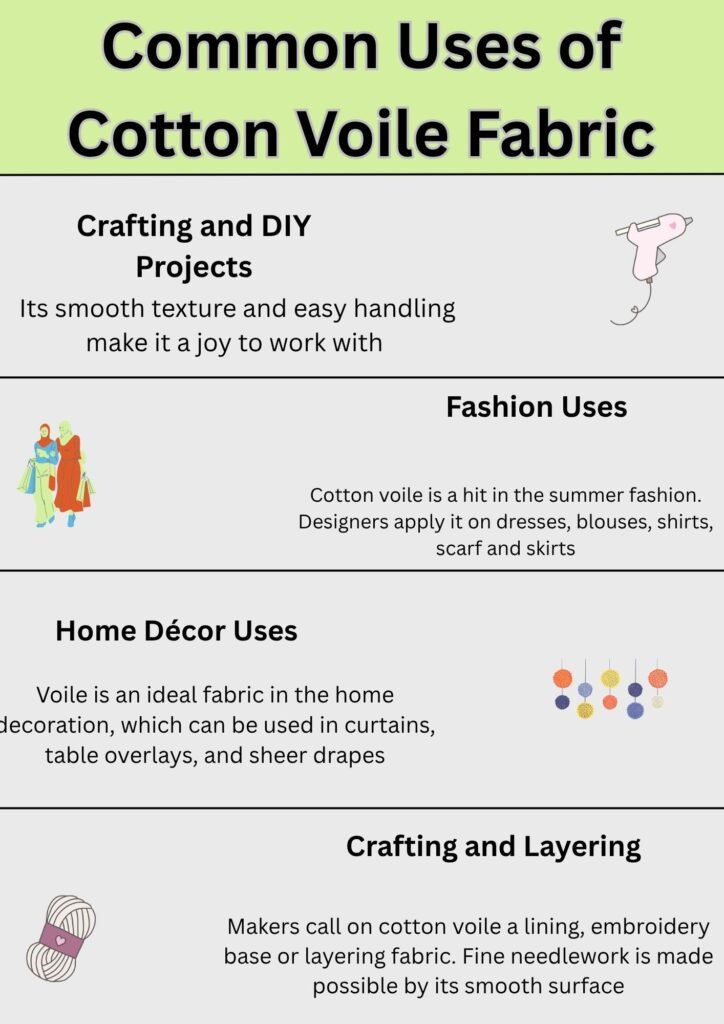
Alt Text:
Infographic listing common uses of cotton voile fabric, including crafting, fashion, home décor, and layering, with illustrations.📝 Caption:
Infographic showing the versatile uses of cotton voile fabric in DIY projects, fashion, home décor, and fine needlework.📄 Description:
The image is an infographic titled "Common Uses of Cotton Voile Fabric" with a light green header. It is divided into four sections:Crafting and DIY Projects – Highlights the smooth texture and easy handling of cotton voile, making it ideal for crafting.Fashion Uses – Notes its popularity in summer fashion, commonly used for dresses, blouses, shirts, scarves, and skirts.Home Décor Uses – Describes cotton voile as suitable for home décor items like curtains, table overlays, and sheer drapes.Crafting and Layering – Points out its use as a lining, embroidery base, or layering fabric, thanks to its smooth surface aiding fine needlework.Each section is accompanied by relevant illustrations such as a glue gun, fashion figures, decorative hanging balls, and a ball of yarn.

Crafting and DIY Projects

Cotton voile isn’t just for designers it’s also popular among hobbyists and crafters. Its smooth texture and easy handling make it a joy to work with. Since it’s lightweight and stable, it can be layered, embroidered, or even quilted without adding bulk.

Fashion Uses

Cotton voile is a hit in the summer fashion. Designers apply it on dresses, blouses, shirts, scarf and skirts. Its semi-sheer nature gives clothes a romantic feel without making them hot and stuffy.

Home Décor Uses

Voile is an ideal fabric in the home decoration, which can be used in curtains, table overlays, and sheer drapes. The cloth allows free passage of natural light and some privacy. It adds a soft, luxurious atmosphere to rooms and bedrooms in particular, particularly where there is an abundance of light.

Crafting and Layering

Makers call on cotton voile a lining, embroidery base or layering fabric. Fine needlework is made possible by its smooth surface, and its semi-sheer nature brings depth to overlay textile art.

Advantages of Cotton Voile

Cotton voile has a plethora of advantages that make it one of the fabrics planting in the desire of both a designer and a homemaker:

  • Breathable and Lightweight- It is ideal during warm weather conditions, and the air moves freely.
  • Soft against the Skin- This is also smooth and comfortable to wear even in the long run.
  • Natural and Eco-Friendly- It is biodegradable and made of 100 percent cotton.
  • Simple to Stain and Print – The surface easily takes up colors hence perfect on patterns.
  • Beautiful Drape – It is a graceful flowing, which causes clothes and curtains to fall stylishly.

All these attributes combine and make cotton voile a convenient, yet luxurious fabric that is comfortable and stylish.

Disadvantages of Cotton Voile

Though cotton voile is beautiful, there are some few weaknesses on this fabric that you need to pay attention to:

  • Slightly Transparent- Most clothes crafted in voile need a lining to be a modesty garment.
  • Wrinkles Easily – It takes the light weight cotton fibers less time to crease, and thus must be ironed carefully.
  • Sensitive Cleaning Requirement- The fragile cloth will wear out when it is roughly washed or when heated.

Despite this, well-care means that voile will stay alluring over the years with these limitations.

How to Care for Cotton Voile Fabric

To know how to take care of the cotton voile will be beneficial to remain soft and last long. It is a sensitive cloth and thus requires handling.

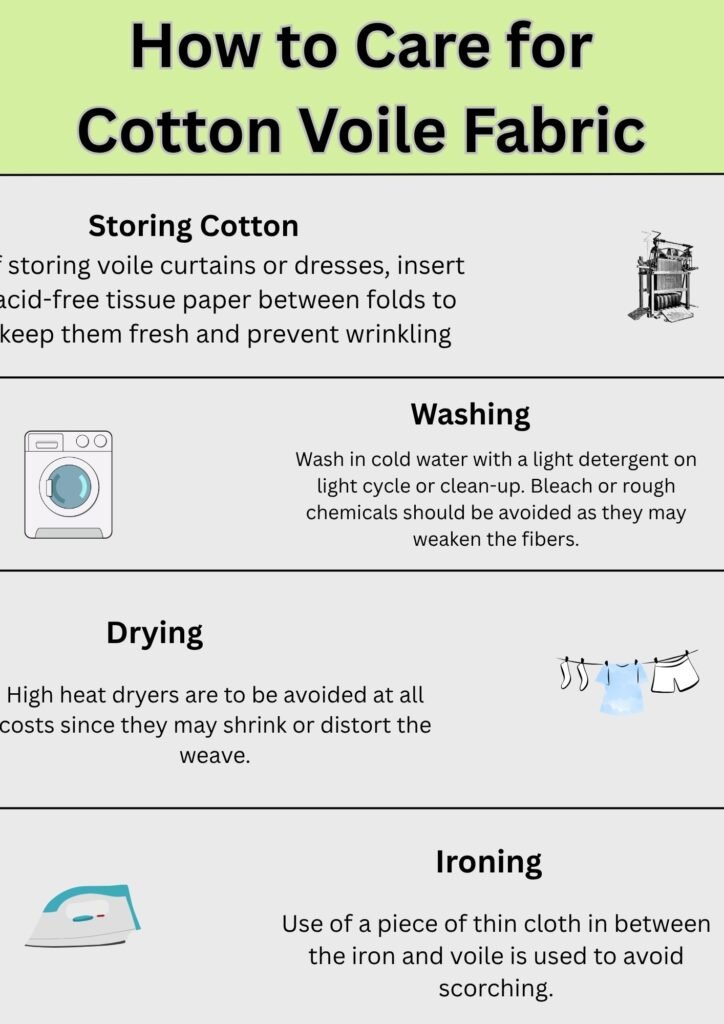
Alt Text:Infographic titled "How to Care for Cotton Voile Fabric" with sections on storing, washing, drying, and ironing the fabric, along with relevant icons.Caption:A step-by-step care guide for maintaining the quality and longevity of cotton voile fabric, covering storage, washing, drying, and ironing tips.Description:This infographic provides clear instructions on how to properly care for cotton voile fabric. It highlights four key areas:Storing Cotton – Insert acid-free tissue paper between folds of voile garments or curtains to prevent wrinkling and keep them fresh.Washing – Use cold water with light detergent on a gentle cycle; avoid bleach or harsh chemicals to protect the delicate fibers.Drying – Avoid high-heat dryers to prevent shrinkage or distortion of the weave; air drying is preferred.Ironing – Place a thin cloth between the iron and the voile fabric to avoid scorching while pressing.Each section is supported by simple illustrations, making the care routine easy to follow and visually accessible.

Storing Cotton

If storing voile curtains or dresses, insert acid-free tissue paper between folds to keep them fresh and prevent wrinkling.Proper storage extends the life of cotton voile, especially for seasonal clothing or delicate décor items.

Washing

Wash in cold water with a light detergent on light cycle or clean-up. Bleach or rough chemicals should be avoided as they may weaken the fibers.

Drying

Wipe the fabric either flat or hanging in shade. High heat dryers are to be avoided at all costs since they may shrink or distort the weave.

Ironing

In case of wrinkle formation, iron at low temperature when the garment is a little wet. Use of a piece of thin cloth in between the iron and voile is used to avoid scorching.

These few tips of care are all you need to keep your voile soft, bright, airy and lasting.

Where to Buy Cotton Voile Fabric

Cotton voile fabric is readily available online or in the local fabric shops. Different common retailers sell in different colours and prints.

  • Etsy: Good with hand-dyed and crafted ones.
  • Amazon: large selection of voile by the yard.
  • Fabric.com or Mood fabrics: have a reputation of quality designer voile.

To shop, enter such words as buy cotton voile fabric online or cotton voile by the yard to make the right choice.

Conclusion

You have an idea of what cotton voile fabric is, and it is not hard to understand why it is popular all over the world. What is cotton voile fabric? Having originated in France, voile became one of the primary items to choose when a person cares about the beauty and comfort.

It is ideal in summer dresses, airy curtains, and any type of creative work since it is lightweight, breathable, and has a soft texture.what is cotton voile fabric? Cotton voile is a delicate fabric but it is so beautiful and graceful that the trouble is worth the reward.

Therefore, consider this lovely cloth during your next sewing or interior designing. Cotton voile is the best touch of elegance and delicacy to any creation be it a light outfit or a dreamy curtain.
Read More>> what is combed cotton fabric?

FAQs

Does cotton voile suit summer?

Yes! Voice is the best material to use in summer since it is lightweight, breathable, and airy. It makes you cool even during hot and humid weather.

Is cotton voile see-through?

Cotton voile is semi clear, thus it contains light and still covers the body partially. In case of a modest dress, a lining is frequently attached.

Is cotton voile 100% cotton?

Majority of cotton voiles are 100 per cent natural cotton fabric, although there are few combinations with polyester or silk to enhance strength or lustre.

Is cotton voile breathable?

Absolutely. Its fine weave is permeable to air, and it is one of the breathable cotton fabrics when used in warm weather.

What is the distinction between voile and muslin?

Muslin is loosely weaved and coarser than voile. Voile on the contrary is more delicate, gentle, and hardwearing, having a crisp, exquisite finish.

What Is Pima Cotton? The Luxury Fiber Explained

Introduction

Cotton is a natural fabric that is quite popular in the world as it is comfortable and versatile. Not all cotton is, however, created equal. Among them, one of the types is Pima cotton, which is luxurious, durable, and extremely soft. It has been referred to as the cashmere of cotton due to its superior feel and longevity.what is pima cotton

Have you always wondered why Pima cotton is soft and lasts longer than ordinary cotton? The trick is on its extra-long fibers and quality cultivation process. Pima cotton is commonly applied in high-quality clothing and high-quality bedding due to its smooth and great strength properties.what is Pima cotton

As a sustainable and high-quality fabric has become more popular, it would be helpful to know what Pima cotton fabric actually is to make wiser choices when purchasing the textile. We shall discuss its meaning, origin, and its exclusive advantages that earn it a luxury of choice.

What Is Pima Cotton? Definition and Important Characteristics

Pima cotton is a brand of extra-long staple (ELS) cotton that is recognized to be of high quality with respect to softness and durability. Pima is a term used to refer to a certain type of cotton plant (Gossypium barbadense), whose fibers are longer and more fine than a normal cotton. These fibers are long than 1.4 inches and are used in preparation of smooth and strong yarns.what is Pima cotton

This cotton is referred to as Pima Native American, as they assisted in its growing in the southwest of the United States in the early 1900s. Its characteristic properties are a smooth feel, low shine and pilling resistant nature.

Due to these qualities, Pima cotton fabric bathes the skin and does not deteriorate despite multiple washing. When someone tries to answer the question of what is Pima cotton, the answer is not very complex, it is a high-quality, long-staple cotton that is regarded as luxurious, strong, and comfortable.

Pima Cotton History and Origin

Persons started with the story of Pima cotton thousands of years ago in Peru where the early civilizations cultivated extra-long staple cotton in coastal valleys. This type of cotton later made its way to Egypt where it later developed to become the famous Egyptian cotton in the world.

These long-staple cotton seeds were introduced into the U.S. in the early 20 th century by American scientists. what is Pima cottonThey also worked with the Pima tribe in Arizona that cultivated and refined the crop. So, the name Pima cotton was formed to depict high quality ELS cotton grown in America.

The three big manufacturers today are the United States, Peru and Australia. The climate of each area gives ideal growing conditions, i.e. warm temperatures and low humidity and fertile soil.what is Pima cotton The Peruvian Pima cotton is considered to be pure whereas the American Pima cotton is considered to be very consistent and strong.what is Pima cotton

Pima cotton How it’s made: Field to Fabric.

The manufacturing of the Pima cotton fabric is done through some very keen processes that maintain the high standard of the fibers.

  • Cultivating and Harvesting: Pima cotton plants need warm weather and fertile soils. The cotton bolls are harvested either manually or with modern machines and make sure the fibers are not damaged.
  • Ginning Process: The uncooked cotton is taken to ginning mills where seeds are extracted. The fibers are also longer and thus, Pima cotton has to be handled carefully to prevent its destruction.
  • Spinning and Weaving: The refined fibers are reeled into thin and strong strands. These are then woven into fabrics which are smooth and lustrous.what is Pima cotton

Pima cotton is produced to preserve the fibre length and uniformity compared to the ordinary cotton. This leaves behind a resistant fraying fabric and a soft fabric even after years of usage.

Pima Cotton Characteristics and Benefits.

The beauty of Pima cotton is in the fact that this kind of cotton combines softness, strength, and elegance. The main features and advantages of it are listed below:

  • Unequalled softness: The longer than extra fibers provide a smooth and silky skin-feel that feels soft on the skin.
  • Extraordinary Fibrosis: Pima cotton is 2 times stronger than ordinary cotton that results in clothing and sheets being durable.
  • Breathability: its natural fabrics permit airflow to make you cool in hot seasons.
  • Retention of color: Pima cotton takes on dye intensively thus ensuring that colors are vivid and bright after numerous rinses.
  • Pill Resistance: The long straight fibers do not form lint and retain a fresh appearance.

It is due to these reasons that Pima cotton fabric is used as a favorite in luxury shirts, soft Tshirts, and hotel-grade bedding. By opting to buy Pima, people opt to buy comfort, elegance, and durability.what is Pima cotton

Pima Cotton vs Regular Cotton: The Real Difference.

Even though they belong to the same family of plants, Pima cotton and regular cotton differ in length and quality of the fiber.

FeaturePima CottonRegular Cotton
Fiber LengthExtra-long (over 1.4 inches)Short to medium (under 1 inch)
SoftnessVery soft and silkyCoarser texture
DurabilityExtremely strongWears out faster
Color RetentionExcellentFades over time
CostHigherMore affordable

Pima cotton is smoother, stronger, and more luxurious than regular cotton. Although it costs more, its longevity often makes it more economical in the long run. Understanding this helps buyers appreciate what Pima cotton fabric truly represents — lasting comfort and elegance.

Pima vs Egyptian Cotton: The Contest of Luxury Fibers.

The Egyptian cotton and Pima cotton compete in the luxury cotton market and they are at the top of the cotton industry. They have identical genetic background and structure of fibers.what is Pima cotton

Nonetheless, Egyptian cotton is mainly cultivated in the Nile river valley with Pima cotton being cultivated in the U.S., Peru, and Australia. Egyptian cotton is commonly hand-picked, which means ultimate softness, whereas Pima cotton can be guaranteed to maintain the same level of quality and is produced through new agriculture and high regulation.what is Pima cotton?

To the majority of the consumers, Pima cotton is available in a more accessible and affordable way without having to lose the luxury.what is Pima cotton The two fabrics offer comfort, durability, and sophistication, which has seen them serve as bedding and clothing.

Is Pima Cotton Worth It? The Value of True Quality

The question that lingers on the minds of many is whether Pima cotton is all it is being billed to be. The answer to this is a resounding yes – and the following are the reasons.

Pima, cotton garments and sheets have a very long service life compared to ordinary cotton. Even when they have been washed over the years, the material retains its shape and color.what is Pima cotton A Pima cotton T-shirt is soft and smooth as opposed to a regular cotton one that can be worn in no time.

It is rather expensive in the short term, however, its quality and comfortability justify the price. Pima cotton is one of the goods that blend performance and elegance in the best ways possible in the luxury fabrics industry.

Common Uses of Pima Cotton

The softness and strength of pima cotton has made the product useful in high-quality textile products. It can be used in some applications such as

Alt Text:
Infographic titled "Common Uses of Pima Cotton" showing four sections that describe how Pima cotton is used in clothing, bedding, towels, and baby wear, with small icons illustrating each use.Caption:
An infographic illustrating the most common uses of Pima cotton, highlighting its role in everyday clothing, luxury bedding, premium towels, and baby accessories due to its softness and durability.Description:
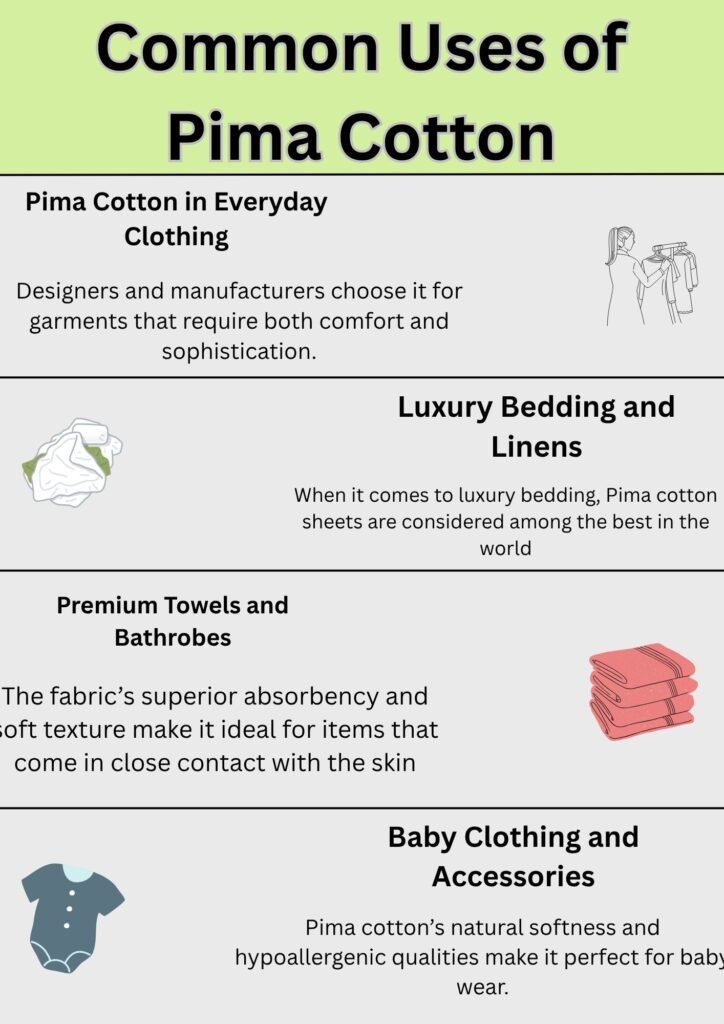
This infographic titled “Common Uses of Pima Cotton” presents four main applications of this luxury fiber. The first section, Pima Cotton in Everyday Clothing, explains that designers choose it for garments that balance comfort and sophistication. The second section, Luxury Bedding and Linens, notes that Pima cotton sheets are among the best in the world for their quality and softness. The third section, Premium Towels and Bathrobes, emphasizes the fabric’s superior absorbency and gentle texture, ideal for close skin contact. Lastly, Baby Clothing and Accessories highlights its natural softness and hypoallergenic properties, making it perfect for baby wear. The infographic uses simple icons like clothing, folded towels, and baby outfits to visually support each point.

Pima Cotton in Everyday Clothing

One of the most popular uses of Pima cotton is in apparel. Designers and manufacturers choose it for garments that require both comfort and sophistication.

Luxury Bedding and Linens

When it comes to luxury bedding, Pima cotton sheets are considered among the best in the world. The fabric’s soft, silky feel creates a soothing sleeping experience, while its strength ensures the sheets remain smooth and intact over time.

Premium Towels and Bathrobes

Another major application of Pima cotton is in the production of luxurious towels and bathrobes. The fabric’s superior absorbency and soft texture make it ideal for items that come in close contact with the skin.

Baby Clothing and Accessories

Pima cotton’s natural softness and hypoallergenic qualities make it perfect for baby wear. Baby clothes, blankets, and swaddles made from Pima cotton provide gentle comfort without irritating delicate skin.

Pima Cotton Caring: Pima Cotton Care.

In order to maintain the quality and softness of your Pima cotton products, it is advisable to observe the following simple tips on how to care about them:

  • Cleaning: Cold or lukewarm water and a mild detergent. Do not use bleach as it makes fibers weak.
  • Drying: Dry or tumble dry on low-heat to avoid shrinkage.
  • Ironing: When necessary, use a warm iron but not a hot one.

With proper care, your Pima cotton sheets, shirts and towels will last many years. Washing instructions are always put on the product labels to ensure that the fiber is not damaged.

Environmentally friendly nature of Pima Cotton.

Pima cotton has also received sustainability attention in the recent years. Pima products are durable and therefore need fewer replacements, which reduce waste in the textile. Organic Pima cotton that is grown in absence of harmful pesticides and chemicals is today available in many producers.

Moreover, the U.S and Peru farms tend to adhere to environment friendly irrigation and harvesting practices. Pima cotton is a sustainable source of clothing and home textile products due to its durability and natural composition. Sustainable cotton such as Pima is also a good option that can be chosen to ensure environmental protection and provide a long-term comfort.

Effects of Pima Cotton

Pima cotton has far-reaching effects that extend beyond comfort and softness. Its influence can be seen in how it transforms the textile industry, improves consumer experiences, and supports sustainability. Because of its premium quality, it creates lasting impacts on fashion, manufacturing, and the environment. Below are some of the key effects of Pima cotton that make it a valuable fiber worldwide.

Alt Text:
An infographic titled “Effects of Pima Cotton” highlighting four main benefits: comfort and quality, durability and longevity, aesthetic appeal, and environmental sustainability.Caption:
Infographic showing the key effects of Pima cotton, including its superior comfort, long-lasting durability, elegant appearance, and eco-friendly qualities.Description:
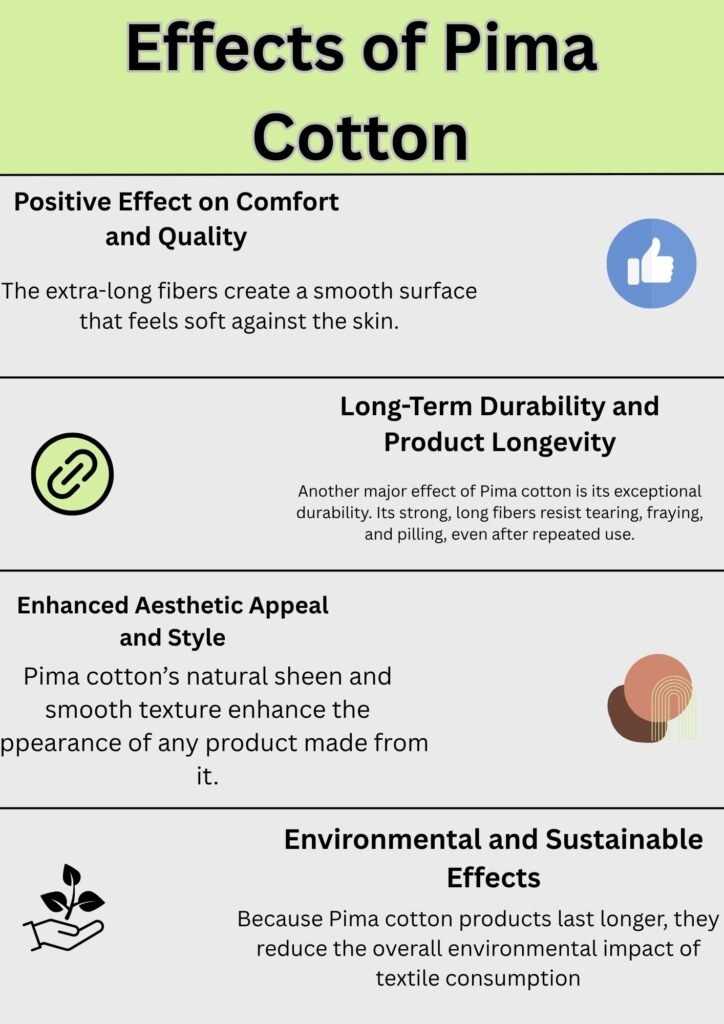
This infographic visually explains the main effects of Pima cotton. It includes four sections:Positive Effect on Comfort and Quality – The extra-long fibers create a smooth, soft surface that feels gentle on the skin.Long-Term Durability and Product Longevity – Pima cotton’s strong fibers resist tearing, fraying, and pilling, even after many uses.Enhanced Aesthetic Appeal and Style – Its natural sheen and smooth texture elevate the visual appeal of garments and fabrics.Environmental and Sustainable Effects – Because Pima cotton lasts longer, it helps reduce waste and lowers the environmental impact of textile consumption.

Positive Effect on Comfort and Quality

The most immediate effect of Pima cotton is its luxurious comfort. The extra-long fibers create a smooth surface that feels soft against the skin.

Long-Term Durability and Product Longevity

Another major effect of Pima cotton is its exceptional durability. Its strong, long fibers resist tearing, fraying, and pilling, even after repeated use.

Enhanced Aesthetic Appeal and Style

Pima cotton’s natural sheen and smooth texture enhance the appearance of any product made from it. Whether used in shirts, dresses, or bedding, the fabric maintains a crisp, elegant look.

Environmental and Sustainable Effects

Because Pima cotton products last longer, they reduce the overall environmental impact of textile consumption. Fewer replacements mean lower production demands, conserving water, energy, and raw materials.

Conclusion

So, what is Pima cotton really? It is not merely a blanket, but a symbol of warmth, quality and taste. Pima cotton is among the best of the fabrics in the present-day world due to its long fibers, superior softness, and strength.

It provides a long-term value and comfort that regular cotton cannot provide whether it be used in exquisite clothing, cushy bedding, or luxurious towels. Always look at labels when shopping, and make sure that the label says 100% Pima cotton, then you are sure that you are purchasing some quality, which will last long.

The fabric Pima cotton is one of the enduring fabrics in the world, and where contentment blends with enduring performance.

Read More>> What is cotton voile fabric?

FAQs

Why is Pima cotton not like other cottons?

It has extra-long fibers, which are much soft, strong and have high color retention as opposed to regular cotton.

Is Pima cotton 100% cotton?

Pima cotton is of course all natural and pure cotton fibers.

Is Pima cotton suitable during hot weather?

Absolutely. Its breathable weave ensures that the body is cool and comfortable.

Does Pima cotton shrink?

It can slightly shrink when it is washed with hot water, and an adequate care can help to avoid its obvious shrinkage.

Is there better Pima cotton than Egyptian cotton?

They are both of the premium type, though Pima cotton has a more regular quality, and is generally cheaper.

Tartan Wool Fabric Guide: Heritage, Benefits, and Fashion Trends

Throughout the centuries, Tartan Wool Fabric has evolved to become a fabric that defines and carries the warm traditions of the Scottish Heritage. Tartan has endured the test of time to adapt to modern fashion, all the while keeping its charm and style. Tartan is also exceptionally warm and soft to the touch, making it perfect to be a staple in high fashion collections as well as well everyday clothing. This guide is about the history and versatile uses of Tartan Fabric.

A Brief History of Tartan Wool Fabric

In then ancient Scotland, Tartan Wool Fabric was a source of as identity pride. Each clan was given a unique Tartan Pattern, was woven from hand-spun wool and dyed with natural pigments. It was also a source of loyalty and a representation of the family.

In the 18th century, tartan fabric became famous around Europe and the world, gaining popularity with soldiers, then aristocrats, and eventually civilians, all who fell in love with its ageless appeal. In time, tartan fabric was closely tied to Scottish heritage and became part of the country’s formal national costume.

Today, the wool tartan fabric is still adored by countless fashion designers. Tartan wool’s timeless nature and cultural value makes it outstanding in fashion, from kilts and coats, to scarves.

Tartan Wool Fabric Characteristics

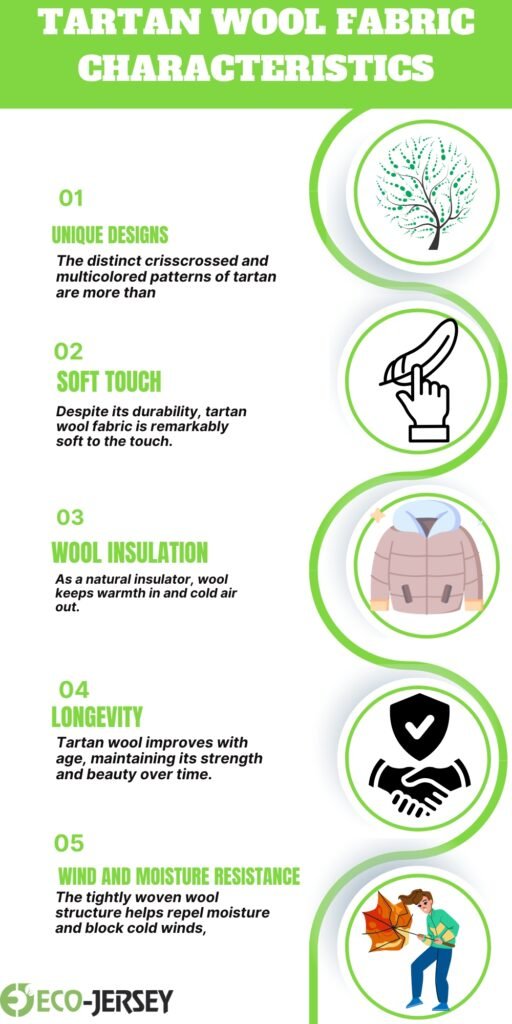
An infographic titled “Tartan Wool Fabric Characteristics” listing five features with icons: 01 Unique Designs, 02 Soft Touch, 03 Wool Insulation, 04 Longevity, 05 Wind and Moisture Resistance. Each item has a brief description and circular green-framed icons on the right.
Tartan wool fabric: five key characteristics highlighted with simple icons—unique designs, soft touch, wool insulation, longevity, and wind/moisture resistance.

Tartan fabric is gorgeous and useful. Made from the finest wool, it is warm, comfortable, and strong. It is also “well woven” meaning it has the right amount of rigidity and the right amount of flexibility, making it useful for a multitude of things.

Some important features are:

  • Unique Designs: It might seem pretty but there is thought behind the crisscrossed and multicolored patterns as it makes a strong statement.
  • Soft Touch: It is wool, but it is not harsh, it is very soft and it is also strong.
  • Wool Insulation: Wool insulated well against the cold air.
  • Longevity: It will improve with age, to a point of tartan being old and well loved.
  • Wind and Moisture: It can withstand dry, cold, and windy air, like it repell moisture.

Different Kinds of Tartan Wool Fabric

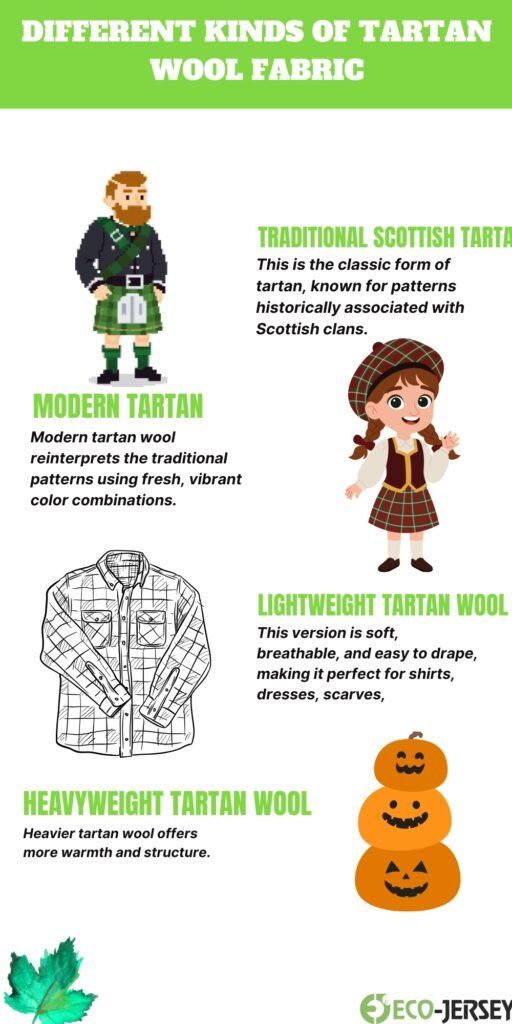
An infographic titled ‘Different Kinds of Tartan Wool Fabric’ showing four tartan wool types: modern tartan with a bearded man in a kilt, traditional Scottish tartan with a girl in a tartan dress, heavyweight tartan wool illustrated by a plaid shirt, and lightweight tartan wool depicted by stacked pumpkins. Each section includes a bold green heading and a short descriptive paragraph.
Different kinds of tartan wool fabric: modern, traditional, heavyweight, and lightweight varieties with brief descriptions.

Even though all tartans have a checked pattern and use the same basic materials, there are substantial differences between them. They may be different because of the finish, the technique, or the quality of the custom woven tartans. Here are some common examples:

  1. Traditional Scottish Tartan: Authentic patterns tied to Scottish clans.
  2. Modern Tartan: Fresh color combinations are contemporary.
  3. Lightweight Tartan Wool: Good for shirts, dresses, and some accessories.
  4. Heavyweight Tartan Wool: Good for kilts, coats, and upholstery.

Despite these differences, each variation still feels like tartan. One can use them for different styles and to decorate.

Values of Tartan Wool Fabric

Because of the single woven constructions for the soft tartan wool fabric, this textile can be extremely versatile. Here are some of the best qualities:

  • Breathability: Integrated airflow.
  • Elasticity: Stretched without loosing form.
  • Fire Resistance: Double knit wool fabric burns, so added safety.
  • Sustainability: Renewable and biodegradable materials.

These qualities are why soft tartan wool fabric can be woven with styles and practicality.

Benefits of Tartan Wool Fabric

Tartan wool fabric has a lot of great advantages that explain how it has lasted so long:

  1. Timeless Elegance. Its heritage design adds sophistication to any outfit.
  2. Comfortable Warmth. Wool fibers provide natural insulation.
  3. Durability. With proper care, tartan garments retain their beauty for decades.
  4. Versatility. It has many uses, ranging from apparel to home decorating.
  5. Eco-Friendly Nature. Wool is a natural fiber, so it fits eco-friendly fashion.

Plus, because of their really modern styles, designers appreciate that they retain their traditional look.

Uses of Tartan Wool Fabric

The many uses of tartan wool fabric are nearly endless. Below are some of the more common ones.

1. Fashion and Apparel

A flat lay of summery casual outfit pieces on a soft pink background. A light pink cropped tank top, blue denim shorts, white sneakers, a beige bucket hat, and a pair of brown sunglasses. A delicate necklace with a circular pendant rests on the top, and a small white flower stem is in the corner.
Summer-ready flat lay: pastel pink top, distressed denim shorts, white sneakers, a bucket hat, and chic accessories.

Tartan wool is used to design and make kilts, skirts, coats, blazers, and scarves. It is great for tailored pieces because of the way it holds its structured drape, and also because its softness. Designers like to use tartan with leather or denim for a more modern look.

2. Home Décor

A bright dining room with a large wooden table and eight upholstered chairs. A crystal chandelier hangs above the table, and a vase of flowers sits in the center. The room has light-colored walls and tiled floors, with a modern fireplace visible in the adjacent living area.
Warm, elegant dining room featuring a solid wood table, neutral upholstered chairs, and a sparkling crystal chandelier.

But aside from clothing, tartan wool fabric also beautifies home interiors. Cushions, throws, curtains, and upholstery rely on this fabric. The depth and dimension of living spaces are enhanced by the rich colors and patterns furnishings of this kind provide. These additions also provide warmth and a sense of coziness.

3. Accessories

Close-up of a tartan wool fabric swatch among a colorful array of fashion accessories and clothing items.
A vibrant studio flat lay featuring tartan wool fabric nestled with scarves, jewelry, sunglasses, a camera, and other stylish accessories.

Stylish bags, hats, and gloves can also be made from tartan wool. The fabric’s striking pattern makes everyday accessories more interesting.

4. Uniforms and Costumes

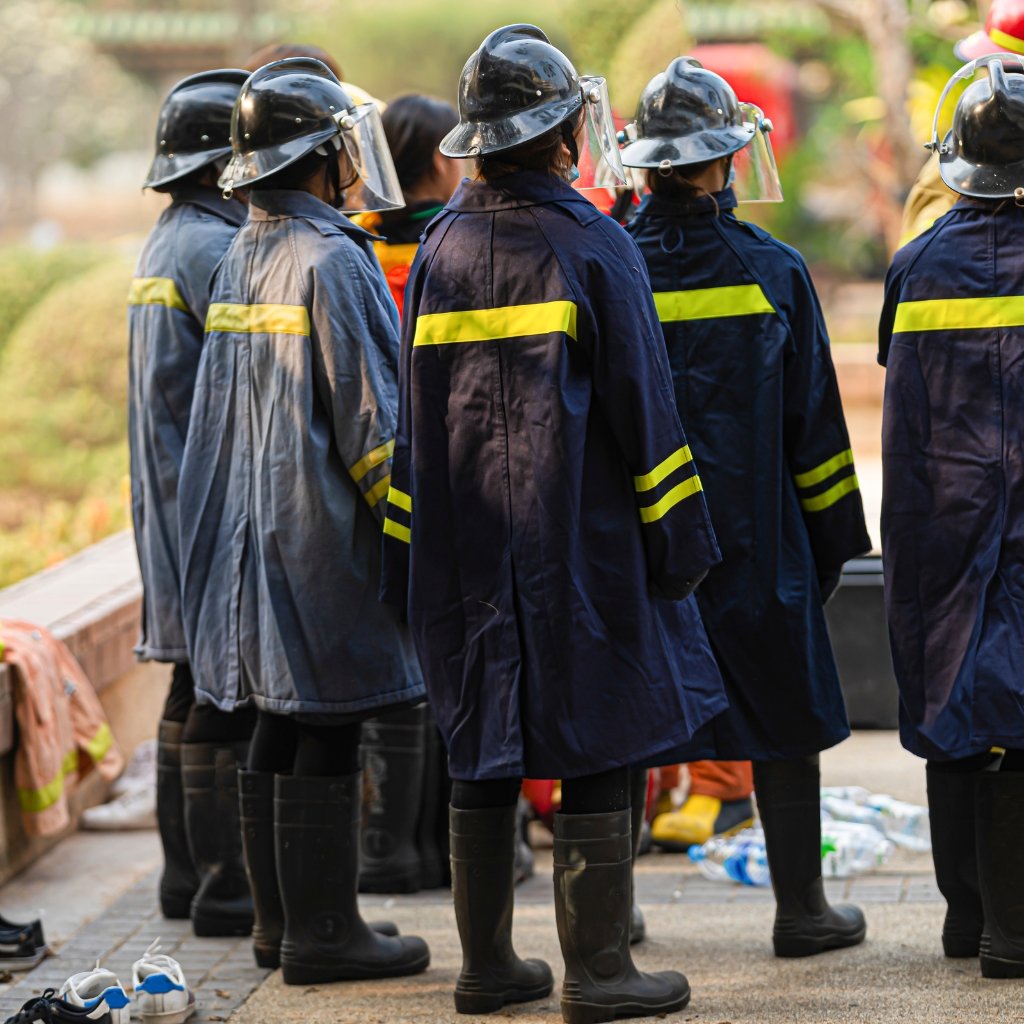
Group of firefighters wearing dark blue uniforms with reflective yellow stripes and helmets, standing outdoors on a paved area; scattered footwear and gear on the ground nearby, blurred background.
Firefighters in tartan wool-like uniforms prepare for briefing outdoors, highlighting the contrast of dark blue coats with bright reflective stripes.

Because of its history, tartan fabric is still very important for traditional and ceremonial clothing around the world.

Care and Maintenance Tips

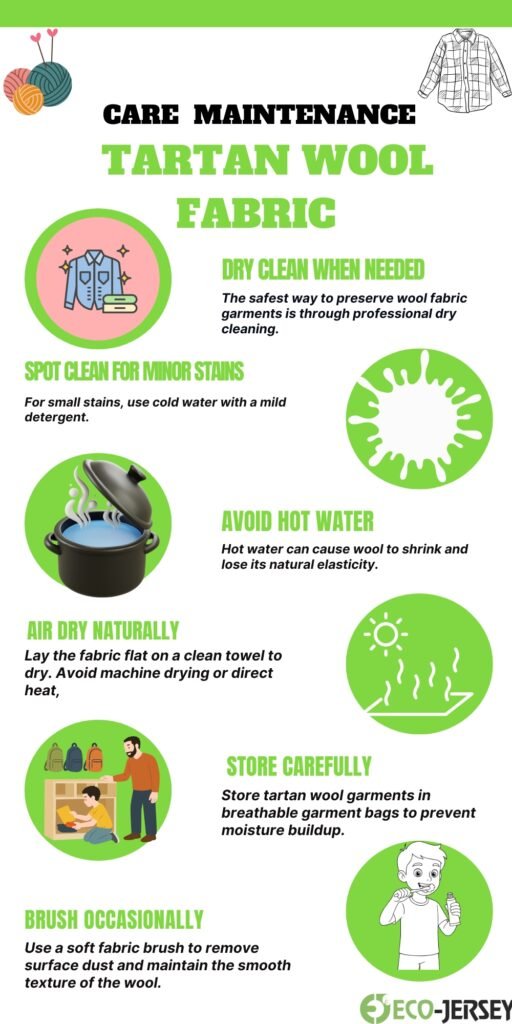
An informational infographic about care maintenance for tartan wool fabric. Includes bold headings such as “CARE MAINTENANCE” and “TARTAN WOOL FABRIC” with green and pink circular icons illustrating care steps: spot cleaning, avoiding hot water, air drying, washing guidance, storage tips, brushing, and professional dry cleaning. Text blocks describe methods like cold water spot cleaning, using a mild detergent, laying flat to dry, and storing in breathable garment bags. Cartoon-style illustrations accompany each tip.
Care tips for tartan wool fabric: spot clean, avoid hot water, air dry, store properly, and brush occasionally.

Taking care of tartan wool fabric gently is the best way to keep its quality and ensure it lasts a long time. Here are some easy ways to take care of it:

  • Dry Clean When Needed: The best way to keep what is wool fabric garments is to have them professionally cleaned.
  • Spot Clean for Minor Stains: Use cold water and a mild detergent to clean a small area.
  • Avoid Hot Water: Wool can shrink if hot water is used.
  • Air Dry Naturally: Dry the wool flat instead of machine drying.
  • Store Carefully: To avoid moth damage, keep the wool fabric in a breathable garment bag.
  • Brush Occasionally: Use a soft brush to remove dust from the fabric.

Tartan wool fabric will last many years if it is cared for correctly, and its color, texture, and strength will be preserved.

Why Tartan Wool Fabric is Still Popular

One of the reasons Tartan wool fabric is still popular is its ease of use and sensitivity to various cultural practices. It conveys a sense of style and warmth. It is a welcome addition to any collection, whether clothing, decor, or a home, because of its long-lasting and “luxurious” appearance.

In addition to the fabric’s long-lasting qualities, its use in clothing is sustainable and natural, which is important to people who are environmentally friendly. Tartan wool is a symbol of sustainable fashion as the world becomes more focused on it.

Conclusion

Tartan wool is more than a piece of fabric; it is a cultural artifact. It is a blend of history, craftsmanship, and purpose. The Highlands of Scotland and the global fashion runways are combined in it. It commercializes the the cultural fabric of Scotland and demonstrates the cultural innovation in design.

FAQs

What makes tartan wool fabric special?

Tartan wool fabric has a special place for its iconic checked design, diverse history, and its warm, soft, and comfortable wool texture.

Can you wear tartan wool fabric any time of the year?

Tartan wool is best for colder months, but lightweight styles offer comfort and breathability for any season.

How do you clean tartan wool fabric?

For best results, have your tartan wool fabric dry cleaned. For light cleaning, you can use cold water and a gentle detergent, then blot the stain.

French Terry Fabric: The Perfect Blend of Comfort and Style

If we’re talking about comfy and classy materials, French Terry ranks off the top. French Terry provides the ideal blend of warmth, and breathability. French Terry is also soft on the skin, and cozy enough to wear every day. French Terry is so versatile that it carries wardrobes and is used in everyday items such as sweatshirts and joggers or fashionable street wear.

Almost every closet in the world now includes a French Terry and it is easy to see why. In the following sections, I will identify and explain the attributes of French Terry, its advantages, why it is used in everyday fashion and its versatility from the viewpoint of comfort, style to efficiency.

What is French Terry Fabric?

A close-up view of soft, textured blue fabric with thick plush loops and gentle folds.
Soft blue terry fabric with rich texture and folds.

French Terry is a knitted fabric using the looping technique. The inside of the fabric includes soft, un-cut loops, and the outside is smooth. The outer side of the fabric is sleek and fashionable. The loops on the inside provides moisture control, and breathability, meaning that the fabric can be used in clothing and textiles that can be absorbent. Read more….Terry Cloth Fabric

Most French Terry is cotton made, though it is common to blend it with other materials such as polyester and spandex. The cotton softens the moisture absorbing properties of the fabric, and breathability, polyester in the blend enhances the durability, and shape retention of the fabric while spandex allows it to stretch.

Curiously, the word “terry” comes from the French word tirer, which means “to pull.” This describes the technique of pulling loops of yarn through the cloth. Unlike regular terry cloth which has loops on either side, French Terry has loops on only one side, which makes it lighter and a lot more versatile.

How is French Terry Fabric Made

An infographic about how French terry fabric is made, featuring illustrations of fiber selection, circular knitting, dyeing and finishing, quality testing, and people working with yarns and fabric.
How French terry fabric is made — a quick look at fiber selection, circular knitting, dyeing, finishing, and quality testing.

French Terry fabric production has a circular knitting technique. This is what makes the fabric very flexible and stretchy. This is ideal for activewear and loungewear. Here is how it is made:

Fiber Selection:

Cotton, polyester, and spandex yarns are picked depending on how soft and stretchy they are.

Circular Knitting:

The yarns are looped in a continuous, circular fashion. Uncut loops are made on one side and a smooth surface is formed on the opposite side. See more….Corduroy Cotton Fabric

Dyeing and Finishing:

The fabric is dyed and completed to improve the color, texture, and durability.

Quality Testing:

Each batch is checked for uniformity in weight, stretch, and comfort.

This is how a mid-weight, breathable fabric is made. It is soft on the skin and provides insulation for mild to cool weather.

What Makes French Terry Special

A vertical infographic titled “What Makes French Terry Special” with sections on Softness and Comfort, Medium Weight, Breathability, Excellent Absorbency, Natural Stretch, Easy to Maintain, Durable. Includes illustrations of a bed, yarn and knitting patterns, fabric layers, a washing machine, and folded blue towels.
What Makes French Terry Special — a visual guide to its key qualities and care.

French Terry is known as the “all-season comfort fabric” due to its unique combination of warmth and breathability. Here are the reasons why French Terry is known as the “all-season comfort” fabric:

  1. 1. Softness and Comfort

The most loved characteristic of French Terry is its plush and gentle. Its fleece is soft and is great for everyday wear due to the soft looped fleece. See more…..Scrim Cotton Fabric

  1. Medium Weight

Unlike heavy fleece, French Terry offers lightweight warmth. It’s not too thick, yet it provides just enough coziness for cool days and nights.

  1. Excellent Absorbency

French Terry is also very absorbent. The fabric’s internal loops trap moisture, which helps keep you dry during exercise.

  1. Breathability

Because air flows easily through the knit structure, French Terry prevents overheating and promotes comfort.

  1. Natural Stretch

The knit combination offers great mobility. It is also made to stretch even more when spandex is added.

  1. Easy to Maintain

French Terry fabric is machine-washable and requires no special care. It resists wrinkling and maintains its shape well.

  1. Durable

Thanks to its tight weave and cotton base, French Terry is resistant to pilling, tearing, and shrinkage.

Different Kinds of French Terry Fabric

Infographic titled 'Different Kinds of French Terry Fabric' showing five fabric types: 100% Cotton French Terry with a pink sweater, Cotton-Polyester Blend with a spiral graphic, Stretch French Terry with a curved square and arrows, Organic French Terry with a rolled fabric, and the Eco-Jersey logo at the bottom.
Explore the five main types of French terry fabrics—100% cotton, cotton-polyester blend, stretch French terry, and organic French terry—along with a visual guide to their properties and uses.

Even though French Terry fabric is similar in structure, there are many different kinds depending on fiber content and purposes intended. Read more…..Lawn Cotton Fabric

  1. 100% Cotton French Terry

This kind is made from all cotton, therefore it is soft, breathable, and an excellent moisture absorbent. It is great for casual and children’s clothing.

  1. Cotton-Polyester Blend

Due to the addition of polyester, the fabric becomes more strengthened, colorfast, and more wrinkle resistant. It is ideal for the polyester blend to be used for the manufacturing of sweatshirts, joggers, and activewear.

  1. Stretch French Terry

This type comprises a little spandex, which gives more elasticity and recovery — ideal for leggings, fitted tops, or yoga outfits.
  1. Organic French Terry

This form is composed of organic cotton, so it is sustainable and also chemical and eco free.

Reasons for the Popularity of French Terry Fabric

Infographic titled ‘Reasons for the Popularity of French Terry Fabric’ featuring six panels with headings: Perfect for Every Season, Wicks Moisture, Warm and Lightweight, Stylish Look, Wrinkle-Resistant, Sustainable Options, each with a small illustration.
Overview of why French Terry fabric is popular: versatile warmth, moisture-wicking, lightweight comfort, stylish looks, wrinkle resistance, and sustainable options.

There are many reasons why French Terry remains a favorite fabric among designers and customers.

  1. Perfect for Every Season

French Terry fabric offers warmth during wintry conditions, and breathability during the warm summer days. it can be used all year round.

  1. Wicks Moisture

Because of the loops on the underside of the fabric, it is designed to absorb sweat and moisture to keep you comfortable while doing physical activities.

  1. Warm and Lightweight

French Terry provides warmth without the heaviness, which makes it easy to layer. On the other hand, fleece fabrics provide bulkiness.

  1. Stylish Look

The fabric’s nice and smooth outer surface makes it clean and polished, making it good enough to wear as loungewear and casual streetwear.

  1. Wrinkle-Resistant

The blended types of fabrics cuts down on the wrinkles and shrinking which means, less work for you.

  1. Sustainable Options

For those who care for the environment, organic and recycled options of French Terry fabrics are available these days.

Uses of French Terry Fabric

An infographic titled “Uses of French Terry Fabric” showing various clothing categories (Sweatshirts and Hoodies, Joggers and Sweatpants, Activewear, Loungewear, Baby and Kids’ Clothing, Dresses and Tunics, Accessories) with small illustrations and short descriptions along a curved timeline.
Uses of French Terry Fabric: A visual guide to where French terry can be used, from everyday casual wear to children’s clothing and accessories.

The flexibility and comfort of French Terry makes it a popular choice for many types of apparel. Below are a few of the most common uses.

  1. Sweatshirts and Hoodies

The most popular use for French Terry. Its soft loops and smooth exterior make it perfect for pullovers and hooded sweatshirts.

  1. Joggers and Sweatpants

The French Terry Joggers are breathable and stylish, making them comfy enough to wear on long car rides, while working out, or just lounging around.

  1. Activewear

It makes a great choice for workout clothes like yoga tops, gym shorts, and zip-up jackets because it is stretchy and absorbent.

  1. Loungewear

French Terry is soft and cozy enough for relaxing indoors, making it great for robes or pajama sets.

  1. Baby and Kids’ Clothing

French Terry is great for baby rompers and children’s playwear because it is gentle on their skin.

  1. Dresses and Tunics

Lightweight French terry fabric helps dresses keep that relaxed feel and light fit.

  1. Accessories

Because of its flexible softness, French terry fabric is also used for headbands, scarves, and hats.

French Terry vs. Fleece: What’s the Difference?

Although French Terry and Fleece may look similar, they differ in texture, warmth, and purpose. Here’s a quick and easy comparison to help you understand:

FeatureFrench TerryFleece
TextureLooped inside, smooth outsideBrushed and fluffy on both sides
WarmthMedium warmth, suitable for mild weatherHigh warmth, great for cold climates
WeightMid-weight and easy to layerHeavier and more insulating
BreathabilityHighly breathable and airyModerately breathable
Moisture AbsorptionExcellent moisture absorption and comfortLimited moisture absorption
Best ForYear-round wear, workouts, and casual outfitsCold-weather clothing and cozy outerwear

In short, French Terry offers breathability and comfort for all seasons, while Fleece provides extra warmth for winter wear.

Maintaining French Terry Fabric

A close-up of white fabric being washed in soapy water with lots of bubbles around it.
Laundry time: white fabric soaking in soapy bubbles.

Maintaining French terry is simple, however, to ensure its longevity there are steps one must follow.

Wash in Cold Water:

Wash in cold or lukewarm water to prevent shrinkage.

Gentle Cycle:

Select a gentle cycle to avoid being too harsh on the fabric loops.

Avoid Harsh Detergents:

Weakened fabric fibers can be a result of strong chemical detergents.

No Fabric Softeners:

The softener can damage the fabric’s surface and reduce absorbency.

Air Dry:

To prevent damage, avoid high heat in the dryer.

Iron Lightly:

If needed, the fabric may be ironed on the low side at a low temp.

If you want your French Terry clothes to stay nice for a long time, follow these easy tips.

Why Pick French Terry?

French Terry has a lot to offer. It’s warm but breathable, soft but durable, stylish but functional, and a lot more. It’s a great pick if you want something comfortable to wear all day and still look good.

French Terry is great for working out, lounging, or doing chores around the house. It stretches, and moves with you, and give you comfort. And with new fabric options coming, you can French Terry and still stay comfortable.

French Terry in Eco-Friendly Fashion

Sustainable materials are French Terry fits in. Eco-friendly French Terry is made with cotton and helps lower negative impact on the environment. It’s great for the planet and great for you.

French Terry can be made with recycled polyester too, and it helps reduce waste. Since French Terry lasts a long time, it also reduces the need to frequently replace it.

French Terry is comfortable and good for the environment.

Styling French Terry Fabric

Need some tips on how to style your French Terry pieces? Here are some ideas:

For a Relaxed look: Try French Terry hoodies with joggers or leggings.

For Streetwear: French Terry sweatshirts look awesome with jeans and sneakers.

For gym: A lightweight French Terry zip-up jacket works great with athletic shorts.

For Travel: You’ll feel great on long trips in a French Terry set.

For Home: You’ll really love your French Terry robe or pajama set for a cozy, relaxed feel.

The versatility French Terry offers makes it a great choice.

Pros and Cons of French Terry Fabric

Pros

  • Soft, breathable, and cozy
  • Stretchy and flexible
  • Durable and easy to care for
  • Suitable for all seasons
  • Stylish and versatile
  • Available in sustainable versions

Cons

  • Not ideal for extreme cold
  • Can shrink if washed improperly
  • May pill slightly over time
  • The benefits highly outweigh the few drawbacks, and that makes French Terry a favorite.

Conclusion

French Terry has all the comfort, chic look and functionality that you need, making it a must-have in this modern world. Its soft inner loops, lightweight warmth and breathability makes it the ideal all around fabric for the year.

French Terry is perfect if you’re lounging at home, going to the gym, or putting together a nice casual outfit. It gives you the comfort you deserve and the ease to move around. Plus, it comes in eco-friendly options, so it is as great for your skin as it is for the environment.

Next time you grab your favorite joggers or sweatshirt, think of the French Terry fabric that gives them their comfort.

FAQs

What is French Terry fabric?

French Terry is a knit fabric featuring soft loops on the inside and a smooth surface on the outside. It’s breathable, moisture-absorbent, and perfect for activewear or loungewear.

Is French Terry fabric good for summer?

Yes! French Terry’s breathable texture and lightweight design make it ideal for warm weather. It keeps you cool while still offering light warmth when temperatures drop.

How is French Terry different from fleece?

French Terry has unbrushed loops on the inside, while fleece is brushed to create a fluffy feel. As a result, French Terry is lighter and more breathable, while fleece is warmer and cozier.

Gabardine Wool Fabric: Properties, Uses, and Benefits

Gabardine wool fabric is durable, has a smooth finish, and is everlasting. It is widely used in the fashion world, especially not only because it is elegant but also because it is functionally sophisticated. It has a graceful finish and a structure drape, along with being resistant to wrinkles. It is a fabric of camo, works in all seasons, and is a staple in professional attire. It can be used to make tailored suits and stylish coats.

This article covers everything there is to know about Gabardine wool fabric. Its history, properties, benefits, and uses and care tips will be covered to understand, and you will know why it is a fabric still loved and used in fashion and for home décor.

History of Gabardine Wool Fabric

Gabardine wool was invented in the 19th century, by an English tailor, Thomas Burberry. At first, it was used as a tightly woven and water resistant fabric for outdoor and military wears. As time passed it became more refined and durable, it also gained popularity with professional wear and high fashion.

As designers started incorporating gabardine into their creations, it became “the fabric of elegance and functionality” for trousers, skirts, coats, and suits. Today, it symbolizes quality and style in fashion.

What is unique about gabardine wool fabric?

Infographic titled ‘What Makes Gabardine Fabric Unique?’ with five sections listed: 01 Durability, 02 Wrinkle Resistance, 03 Smooth Finish, 04 Water Resistance, 05 Breathability. Each section has a short description and circular icons on the right showing a shield/thumbs up, a cartoon microbe, a dancing figure, water droplets, and a wearable device graphic, all connected by a green curved line.
What makes gabardine fabric unique: durability, wrinkle resistance, smooth finish, water resistance, and breathability.

Gabardine wool fabric is woven with a tight woven twill, which provides a smooth surface with subtle diagonal lines. This construction offers several unique advantages.

  • Durability. The gabardine wool will not go through wear and tear. This will help make garments for a long period of time.
  • Wrinkle resistance. The woven fibers help the fabric maintain its shape and reduce the amount of creasing.
  • Smooth finish. The fabric helps to create a polished appearance which is ideal for professional attire.
  • Water resistance. Gabardine was originally designed to repel light rain, and still retains moderate water resistance.
  • Breathability. The wool fibers and gabardine fabric help to circulate air.

Comfort and gabradine wool help to aid both casual and formal end uses.

Gabardine wool fabric properties

Infographic titled 'Properties of Gabardine Wool Fabric' with green circular icons illustrating Strength and Durability, Elegant Appearance, Wrinkle Resistance, Thermal Comfort, Water Repellency, Versatility, and other benefits. Each section has a bold green heading and a short descriptive sentence.
Key properties of gabardine wool fabric: strength and durability, elegant appearance, wrinkle resistance, thermal comfort, water repellency, and versatility.

Gabardine wool fabric possesses several properties that make it a preferred choice for designers and consumers alike:

  1. Strength and Durability
    Gabardine wool is tightly woven, which makes it exceptionally strong. This strength ensures that garments maintain their structure and last for many years.
  2. Elegant Appearance
    The smooth, fine finish adds sophistication to every garment. Its subtle sheen enhances the professional and stylish look.
  3. Wrinkle Resistance
    Even after long hours of wear, gabardine wool garments retain their crisp shape, which makes them ideal for office attire.
  4. Thermal Comfort
    Wool fibers provide natural insulation, keeping the body warm in cold weather while remaining breathable in milder conditions.
  5. Water Repellency
    Though not fully waterproof, gabardine wool offers moderate resistance to light rain, protecting garments from minor moisture.
  6. Versatility
    The fabric drapes beautifully, making it suitable for structured garments like suits, skirts, trousers, and coats.

Benefits of Gabardine Wool Fabric

Gabardine wool fabric offers numerous benefits that make it a timeless textile:

  • Professional Appearance: Ideal for business and formal wear due to its structured drape and polished finish.
  • Durability: Long-lasting and resistant to pilling, stretching, and tearing.
  • Comfort: Soft wool fibers provide warmth without bulk, making it comfortable for all-day wear.
  • Easy Maintenance: Moderate wrinkle resistance reduces the need for frequent ironing.
  • Versatility: Suitable for tailored suits, skirts, jackets, coats, and even accessories like scarves.
  • Timeless Style: Gabardine wool never goes out of fashion and is suitable for classic and contemporary designs.

Applications of Gabardine Wool Fabric

Illustrated infographic titled 'Applications of Gabardine Wool Fabric' showing garments: tailored suits and jackets, trousers and skirts, outerwear, dresses, and accessories with brief descriptions.
Gabardine wool: versatile staple for tailored suits, outerwear, dresses, and accessories.

Gabardine wool fabric’s versatility allows it to be used in different industries- fashion, home furnishings, etc.

1. Tailored Suits and Jackets

Gabardine wool is a staple for suits and blazers. Its smooth finish and fabric structure give a sharp, polished look which is ideal for any professional setting.

2. Trousers and Skirts

Gabardine wool trousers and skirts are preferred for office wear. The fabric maintains crisp lines while allowing comfortable movement.

3. Outerwear

Gabardine wool is used in coats and trench coats. Its moderate water resistance and insulating properties make it ideal for cooler climates.

4. Dresses

Structured dresses made from fleece wool fabric provide a sleek silhouette suitable for formal occasions.

5. Accessories

Scarves, hats, and even bags sometimes feature what is wool fabric to enhance durability and elegance.

Caring for Gabardine Wool Fabric

A vertical infographic titled “Caring for Gabardine Wool Fabric.” It includes five sections with numbered steps (01 WASHING, 02 DRYING, 03 IRONING, 04 STORAGE, 05 MAINTENANCE). Each step has a short description and a small illustration: a girl washing a sink, a person hanging clothes, a person ironing, shelves with boxes, and a laptop with tools. The Eco-JERSE brand appears at the bottom left.
How to care for gabardine wool fabric: Washing, drying, ironing, storage, and maintenance tips with simple visuals.

Proper care ensures that gabardine wool garments remain in excellent condition:

  1. Washing: Dry cleaning is recommended for most gabardine wool garments. For washable items, use cold water and mild wool detergent.
  2. Drying: Flat or gently hang to dry. Fibers may shrink and get damaged with direct heat so keep away from it.
  3. Ironing: A smooth finish is retained by using low to medium heat with a pressing cloth.
  4. Storage: Shape is best preserved while stored in breathable garment bags to prevent moth damage.
  5. Maintenance: Gently brush away dust or lint. Never use strong abrasives or chemicals as they may cause severe damage.

Why Choose Gabardine Wool Fabric?

Most importantly, gabardine wool fabric combines elegance, strength and comfort. It is still dependable and provides a classic touch whether you’re in need of outerwear or business attire. Its still water resistant, sophisticated drapes, and even wrinkle free making it a wonderful choice for professionals or those in the fashion industry.

Moreover, as gabardine wool is a wool fabric, it is a natural fiber offering eco-friendly and sustainable benefits down the line unlike synthetic fabrics.

Conclusion

The versatility of gabardine wool fabric is wonderful. It combines elegance, style, comfort and functionality. With proper care, it proves to be a timeless choice in fashion and a wonderful, practical investment. It’s unique properties, such as smooth finish, durability, and wrinkle resistance, makes it ideal for tailored garments, outerwear and accessories. It does not lose its grace over the years even with consistent wear making it extremely timeless.

FAQs

What is gabardine wool fabric?

Gabardine wool fabric is a tightly woven textile with a smooth finish and diagonal lines, offering durability, warmth, and elegance.

What are the common uses of gabardine wool?

It is commonly used for suits, jackets, skirts, trousers, coats, and accessories like scarves and hats.

Is gabardine wool wrinkle-resistant?

Yes, its tight weave helps maintain shape and reduces wrinkles, making it ideal for professional attire.

Rayon Blend Fabric: Soft, Durable, & Stylish for Every Season


Fashion trends may vary, but comfort is perennial. People love clothes that both look and feel great. Rayon Blend Fabric offers all three — beauty, comfort, and strength. It’s a go-to for every season. The softness and style makes it suitable for everyday clothing and even more for special occasions. Each passing year, more designers and brands are turning to this versatile fabric for trendy and comfy outfits.
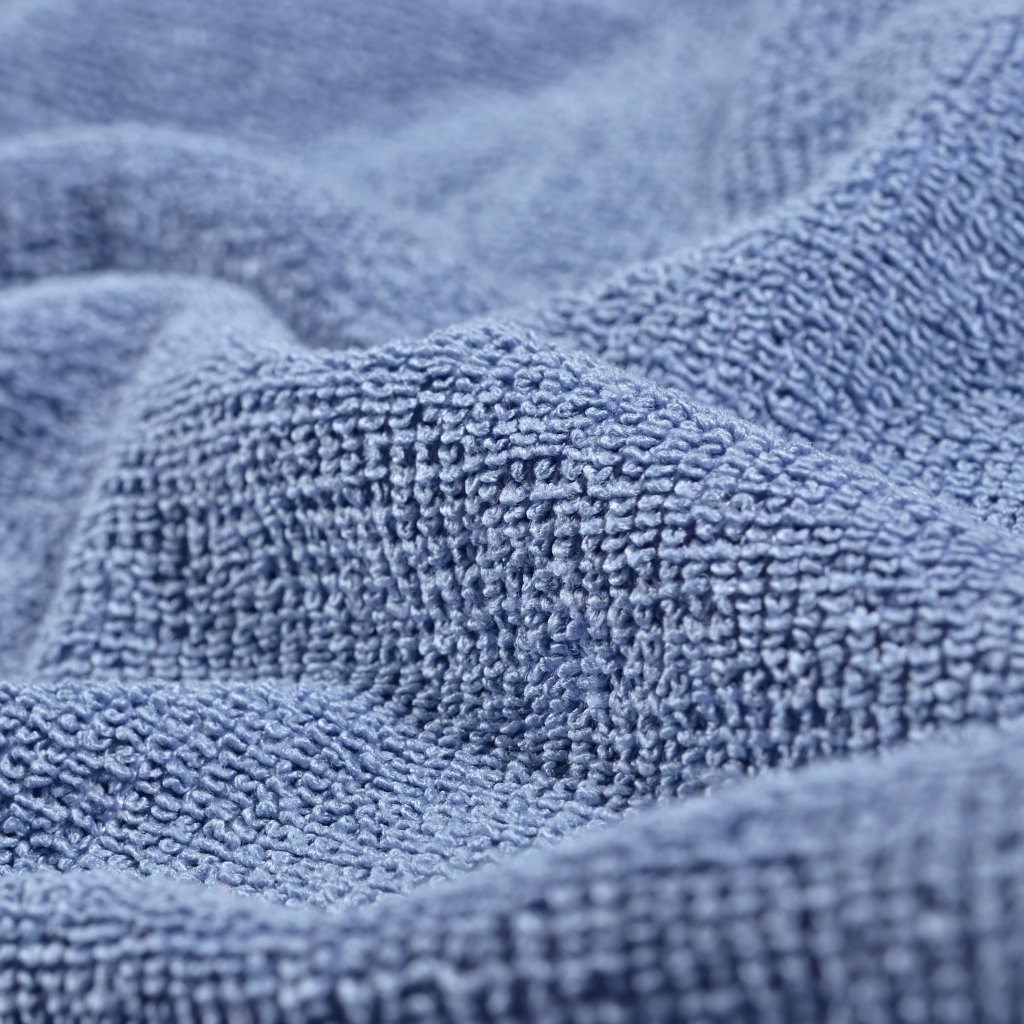
What is Rayon Blend Fabric

Close-up view of a vibrant pink rayon blend fabric with a soft, woven texture and gentle folds.
Understanding Rayon Blend Fabric: softness meets durability in a versatile textile.

The first step to understanding and appreciating this material is to understand what it is. Rayon Blend Fabric is a combination of rayon with other fibers, such as cotton, polyester, or spandex. These additions enhance the comfort and durability of the blend. Rayon is a fabric with a smooth, silky finish, and its supple texture provides the blend with a gloss. The other fibers make the blend stronger and easier to care for. These combined attributes result in a fabric that retains its elegance while being practical for everyday use, as is suited for a variety of clothing styles across all seasons.

The History of Rayon

A close-up image of light blue satin fabric draped in soft folds, illustrating rayon’s smooth, glossy appearance.
The History of Rayon: tracing the synthetic fiber’s invention, development, and impact on textiles.

Rayon’s history is fascinating and adds to the appeal of Rayon Blend Fabric. It was among the first artificial fibers, created to be a cheaper substitute for silk. The desire was to produce an affordable fabric with the opulence of silk. With time, rayon was recognized for its softness and breathability. When rayon was combined with other fibers, it gained greater strength and flexibility. These traits made it a highly sought-after material for both clothing and home textiles. Rayon, with its soft and breathable characteristics, is still highly valued and used throughout the world.

Why Designers Love Rayon Blend Fabric

“Soft peach rayon blend fabric draped and curled, smooth and lustrous with subtle folds.”
Why Designers Love Rayon Blend Fabric

Comfort and creative freedom are the two priorities for designers seeking new materials. Rayon Blend Fabric perfectly captures the elegance of drape and flow for a luxurious design aesthetic. It absorbs dyes well and prints remain vibrant after many washes, providing a range of colors and patterns for designers to play with. Its luxurious texture also creates warmth in winter while remaining light and breathable in summer, allowing for layers. The effortless combination of comfort and style makes Rayon Blend Fabric an ideal choice for fashion-forward collections.

The Softness That Feels Like a Dream

One of the best things about Rayon Blend Fabric is the softness. It feels like silk, which is a luxurious touch to the casuality. It retains softness after washing and proper care. It is lightweight, and air flows well around the body, which is helpful for warm weather. The most charming thing about Rayon Blend Fabric is its ability to cool, comfort and, elegance all at once. This combination is the reason people use it in a wide range of products, such as shirts and pajamas. It is also ideal for warm and humid climates.

Durability That Lasts Through Seasons

When it comes to fabric selection, strength is equally as important as comfort. Rayon Blend Fabric is designed to withstand everyday use. Its fiber combination provides ample durability. In contrast to pure rayon which can weaken when wet, bleBLENDED definition and meaningnded rayon withstands washing, stretching, and movement. It also maintains its shape. As a result, rayon becomes ideal for garments that are worn frequently, such as workwear, dresses, and activewear. Strength and comfort coexist in a fabric, as rayon demonstrates over time

Breathability for All-Season Comfort

During summer, no one wants to be heavy and restrained in heavy clothes while in winter, no one wants to feel cold. Rayon Blend Fabric addresses this concern with outstanding breathability. It passes air with such ease that it could be worn in the heat and keep the body cool. It could also be worn in layers as gentle warmth would be provided in cold months. This fabric creates a balance that allows it to be worn in any season. Its adaptability to various climates is the reason it is a traveler’s favorite. In a tropical country or cold city, this fabric provides all-day comfort.

The Stylish Appeal of Rayon Blend Fabric

Comfort and aesthetics go hand in hand when it comes to clothing. Rayon Blend Fabric adds to the stylish appeal of an outfit in addition to its comfort. The soft and smooth texture of the fabric conveys an understated elegance by absorbing and reflecting light. The fabric exhibits elegance of a higher order whether it is a flowy skirt or a fitted blouse. It is preferred in chic clothing in fashion because it retains the brilliant color and registered the colorfast prints. It could be casual or office attire; it adds class and elegance without being overly formal.

Easy Care & Maintenance

Most people dislike clothing that necessitates a lengthy cleaning regimen. Rayon Blend Fabric, as a result, is a fantastic option because it can be simply laundered. Most blends can be machine washed on a gentle cycle with a mild detergent. Added fibers in Rayon Blend Fabric assist in keeping the garment bulk and weight loss when it is dried. These features of aging with style and being luxurious are ideal for busy, fashion conscious individuals. After a bit of care and attention, it ages beautifully—for as long as the comfort is preserved—and stays refreshing and smooth.

Rayon Blend Fabric in Everyday Fashion

For all seasons and all times of the day, different needs are fulfilled by different garments in our wardrobes. Rayon Blend Fabric seamlessly integrates into daily life, as it is incorporated into different garments such as dresses, shirts, trousers, scarves, sportswear, etc. It is a fantastic choice for long, casual workdays and weekends, as it is cool and soft against the skin. It is highly appreciated for designing “comfort” clothes, which can transition from home to office, as many people find it incredibly easy to incorporate into various outfits. Most people really value the versatility of Rayon Blend Fabric and how easy it is to coordinate with a variety of different materials. This versatility allows for easy mix and match for any occasion, which people have always liked.
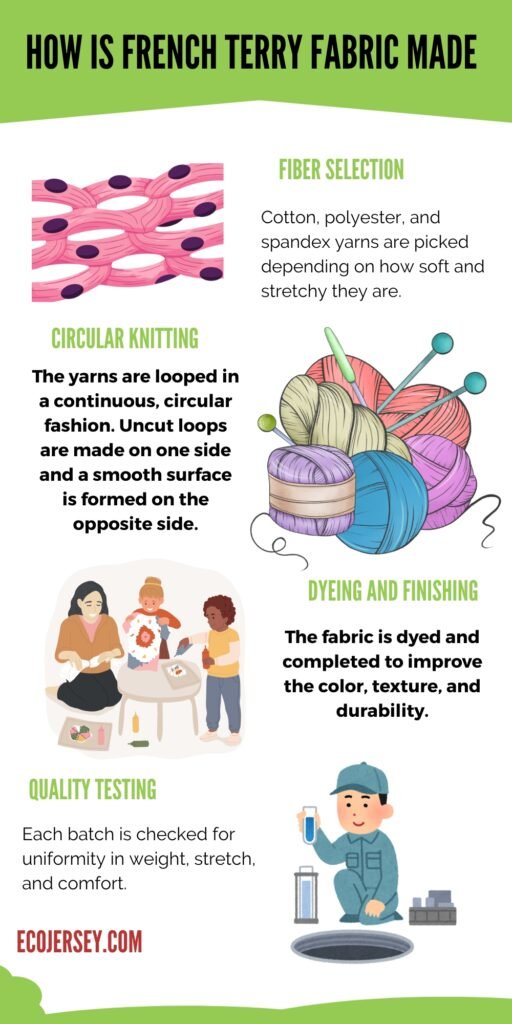
Why It Works for Every Season

Finding a fabric that suits all seasons is no easy task. Rayon Blend Fabric manages to do it seamlessly. In the summer, it holds coolness to the body by allowing air to circulate freely around it. It can be layered for gentle warmth in the winter. It provides a balance of comfort and breathability in the spring and autumn. This versatility makes it a favorite for people who appreciate all-weather comfort. Rayon Blend Fabric adjusts to temperature changes, which makes it a practical and fashionable fabric for every closet.

Comfort Meets Versatility

Combining span styles brings out a new dimension of joy in textiles. Rayon Blend Fabric achieves this. It maintains a sleek, form-fitting appearance while gently stretching, allowing ease of movement. It can emulate the looks of cotton, silk, and even linen, allowing it to adapt to numerous design functions. This results in relaxed yet polished pieces of clothing. For work, parties, and even vacations, the fabric proves its unmatched versatility in the seamless transitions of everyday life.

The Eco-Friendly Side of Rayon Blend Fabric

The concern for sustainable fabric choices is a recent development among the general populace. Rayon Blend Fabric can also serve this purpose when produced sustainably. Rayon is derived from natural cellulose, predominately wood pulp. When ethically sourced, it aids in offsetting the reliance on synthetic fabric. Coupled with durable fibers, blended rayon can also contribute to reducing fashion waste in a wardrobe with longer-lasting garments. Forward-thinking brands focus on sustainable methods to produce rayon-based materials, making it a functional fabric in today’s stylish market.

The Feel-Good Factor in Fashion

There are few things that are more uplifting than wearing something soft and lovely. Rayon Blend Fabric can greatly contribute to this. Its soft touch and lovely drape create an appearance of elegance. Fashion, in this context, also implies comfort and self-expression. Freedom of movement is encouraged when soft and smoothed clothes are worn which, in turn, brings relaxation. Everyday outfits can be more pleasurable to wear when this type of emotional comfort is provided. It is no wonder that this fabric is loved by so many in the fashion world.

How to Keep It Looking New

The right type of care helps prolong the life of any fabric. Rayon Blend Fabric retains its beauty when it is washed correctly. To keep its shape, it best to wash it in cold or lukewarm water, and it also helps to gently tumble dry. To eliminate, and at the same time to soften, stubborn wrinkles, ironing at low temperature works best. It may be fiercely rugged but it also keeps looking smooth and fresh after countless washing. Simple care ensures that garments remain charming, season after season, when made from this fabric.

Today’s fashion emphasizes the fusion of comfort and creativity, and the Rayon Blend Fabric embodies this perfectly. Designers craft lightweight, flowing dresses, jumpsuits, and even business attire. It energizes the modern prints, textures, and patterns. Comfort is now the more significant factor, and enough people tend to outfits that feel pleasant. This fabric’s versatility is likely the reason it is both casual and chic. Wearing this fabric makes fashion alive with ease, from light summer dresses to elegant tops.

Why it feels so luxurious

The Rayon Blend Fabric still manages to convey the idea of quality, even if it is economically priced. The way this fabric drapes and moves affords it a rich and expensively draped look. This fabric replicates the feel of silk, but being more durable and less expensive. For this reason, many luxury-inspired brands favor this. The smooth fibers reflect light softly, producing a refined glow in the clothing. The soft feeling of this fabric, even with simple clothing, affords the wearer a feeling of elegance and is extraordinarily timeless and favorite in most wardrobes.

Rayon Blend Fabric in Home Textiles

Rayon blend fabric goes beyond clothing and can be found in home textiles such as curtains, bed linens, and cushion covers. Its smooth texture and sheen can heighten the warmth and elegance of the living space. Its beautiful draping qualities allow it to be effectively used for more decorative purposes. Its breathability and comfort make it ideal for bed linens, as it allows the fabric to be worn comfortably against the skin. This fabric is liked by many interior designers for adding soft beauty to homes, and for its many decorative purposes.

A Fabric That Tells a Story

Every piece of clothing tells a story, and rayon blend fabric tells the story of comfort, beauty, and practicality. It bridges the gap between the old and the new by interweaving a fabric that speaks to us of good design and comfort. It is the long and interesting journey that one experiences from wearing a piece of clothing, starting from its silk-like beginnings and right through to its modern role in fashion. It is a fabric that continues to charm the world.

The Best Option for Contemporary Living

The pace of life these days is quick, and clothes need to meet these demands. Rayon Blend Fabric provides ease and ease. For those who do not want to put much effort into looking good, this is the ideal fabric. Its softness, strength, and ease of cleaning make it perfect for everyday use. For work, school, and travel, it adapts to any scenario wonderfully. This fabric is a companion for all seasons, styles, and life events.


Final Thoughts

Ultimately, the most important things are beauty and comfort. Rayon Blend Fabric provides comfort and beauty in a unique way. It has the softness of silk, the durability of cotton, and the trendiness of linen, and it is stylish. It is an absolute modern wardrobe essential. This fabric proves that style, quality, and comfort can all come together in perfect harmony. With proper maintenance, it retains its beauty for decades while keeping you comfortable through every fashionable era.

FAQs

Q1: What is Rayon Blend Fabric?

Rayon Blend Fabric is made by mixing rayon with other fibers like cotton or polyester. This blend makes the fabric soft, durable, and comfortable to wear in any season.

Q2: Is Rayon Blend Fabric good for hot weather?

Yes, Rayon Blend Fabric is great for warm weather. It allows air to pass through easily, keeping the body cool and dry even on hot days.

Q3: Can I wash Rayon Blend Fabric at home?

You can safely wash Rayon Blend Fabric at home using mild detergent and cold water. Gentle washing helps keep it soft, smooth, and in good shape.

Quilt Fabric: Types, Uses, Benefits, and Care Guide

0

Quilt fabric is a unique fusion of creativity, comfort, and craftsmanship. For decades, it has been the foundation of handmade creations… whether it’s a cozy blanket or an artistic wall hanging. Understanding is essential for all sewers, whether novice or master. This article will delve into the properties, uses, benefits, and care of and the reasons it is a staple for textile art and home decor.

History of Quilt Fabric

The history of quilts fabric spans across many cultures and traditions for many centuries. At first, the technique of quilting was simply a means of making bed coverings warm. With time, the technique became an artistic expression of one’s imagination. Every culture, whether ancient Egypt, Europe, or America had quilting traditions. At all times, quilts fabric was an expression of imagination, individuality and of enduring warmth.

Understanding Quilt Fabric

Generally, quilt fabric is comprised of three sections. the top, the batting and the backing. For the top decorative layer, it is common practice to use cotton or some form of a cotton blend. velvet wool fabric used to complete the top layer include silk, linen, wool and polyester blends.

The fabric quilted is more versatile than just a quilt. Other items include jackets, pillows and decorative accessories. quilted fabric is durable, warm and textured. It consists of a balanced weave and fine texture, making it easy to cut, sew and maintain.

Types of Quilt Fabric

Infographic titled ‘Types of Quilt Fabric’ displaying six fabric categories with circular icons: Cotton quilt fabric, Flannel quilt fabric, Batik quilt fabric, Linen quilt fabric, Wool quilt fabric, and Polyester and Blended quilt fabrics; each category includes a short description.
Types of Quilts Fabrics: Quick overview of common materials used in quilting, including cotton, flannel, batik, linen, wool, and blended blends.

Different styles and purposes call for different quilts fabric varieties. Below are some of the more common types:

1. Cotton Quilt Fabric

As the most common fabric for quilting, cotton quilts fabric is soft and breathable, and easy to work with. Moreover, machine washable cotton hold quilt colors wonderfully. This quilts fabric is ideal for everyday quilts.

2. Flannel Quilts Fabric

Quilted flannel fabric is slightly thicker and gives added warmth. This coziness makes it ideal for winter quilts, baby blankets, and loungewear.

3. Batik Quilt Fabric

Batik fabric is a type of qult fabric dyed by hand and adding different colors to the fabric. This differing colors fabric adds depth and uniqueness to any quilt.

4. Linen Quilt Fabric

Offering a unique texture, rustic appearance, and a natural luster, linen qult fabric has its own linen value. Linen is less soft than cotton, but adds a more interesting handmade effect as it softens with age and wear.

5. Wool Quilt Fabric

Offering warmth and longevity, quilted wool is used for decorative and heirloom quilts meant to last for generations. wool is also used for heirloom quilts.

6. Polyester and Blended Quilts Fabrics

These blended quilts integrate both natural and synthetic fibers. They resist wrinkles, are quicker to dry, and are cheaper, making them excellent options for beginner quilters.

Properties of Quilts Fabrics

An infographic titled ‘Properties of Quilt Fabrics’ listing five features: 01 Softness and Comfort with icon of a person on a couch, 02 Durability with a circular shield icon, 03 Breathability with a fabric icon, 04 Ease of Stitching with hands holding a heart, 05 Vibrant Prints with a colorful pattern circle; green accents and Eco-Jersey logo at the bottom.
Properties of Quilts Fabrics: softness and comfort, durability, breathability, ease of stitching, and vibrant prints—highlighting the key qualities that make quilt fabrics desirable.

The characteristics of quilts fabric are admired and contribute to its versatility and reliability.

  • Softness and Comfort: Most quilts fabrics, especially cotton and flannel, are gentle against the skin.
  • Durability: The tightly woven structure ensures long-lasting use even after multiple washes.
  • Breathability: Natural fibers allow air to circulate, keeping it comfortable all year round.
  • Ease of Stitching: Smooth surfaces simplify cutting and sewing.
  • Vibrant Prints: The endless patterns available for quilt fabrics are perfect for creative projects.

These features are the reason qult fabric is a favorite for home crafters and professional designers alike.

Uses of Quilt Fabrics

Infographic titled ‘Uses of Quilt Fabrics’ listing five uses with green headings: Home Décor, Clothing, Accessories, Art Quilts, Baby Quilts, each accompanied by simple illustrations of a living room, clothing rack, backpack and belt, an artist with fabric, and a baby with a quilt.
Uses of Quilts Fabrics: Home Décor, Clothing, Accessories, Art Quilts, and Baby Quilts.

Quilts fabrics versatility enables it to excel creatively and practically.

1. Home Décor

Quilts fabrics help to create bedspreads, throws, and cushion covers, and curtains, all of which contribute to the warmth and personality of a space.

2. Clothing

Jackets, skirts, vests, and coats all incorporate quilted fabrics. The layers provide heat and create a visually stunning fabric, and give a handcrafted appearance.

3. Accessories
Bag fabric, pouches, and tote bags all look and work well with quilted fabrics, and we can use quilted fabric-totes as bags and pouches. Since quilted bags are durable, they hold their form and add a visually stunning addition.

4. Art Quilts

Quilts fabric functions in art quilting as well, which abstracts and expresses the material through stitching and design, creating beautiful pieces such as wall hangings in panels.

5. Baby Quilts

For baby quilts, we use soft, gentle, and warm flannel and cotton for the top and bottom layers to provide comfort.

Benefits of Quilts Fabric

Infographic titled ‘Benefits of Quilt Fabric’ with illustrations of people resting, sewing, and presenting; green section headers highlighting sustainability, versatility, warmth and comfort, creativity, longevity; decorative wavy line and black and green dots.
Benefits of Quilt Fabric: sustainability, versatility, warmth and comfort, creative expression, and longevity.

From the aesthetic standpoint, quilt fabric provides multiple benefits.
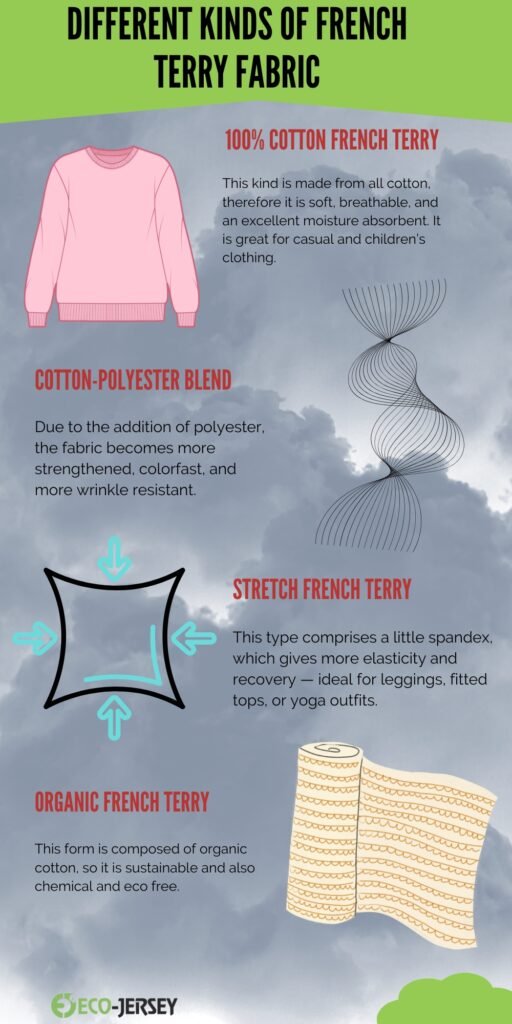
  1. Versatility: From the practical side of qult fabric, it works well for a variety of projects, including the decorative side.
  2. Sustainability: With quilts fabric, we are able to work sustainably as, cotton and wool are biodegradable and natural.
  3. Warmth and Comfort: The different layers create a quilt with additional insulation and softness which provide comfort for the user.
  4. Creative Expression: Different patterns, textures, and colors of quilts fabric can be used to create stunning and unique pieces.
  5. Longevity: Defective quilts fabrics can last for many years, even decades.

Qult fabric is a timeless material to work with and is great from traditional all the way to modern projects.
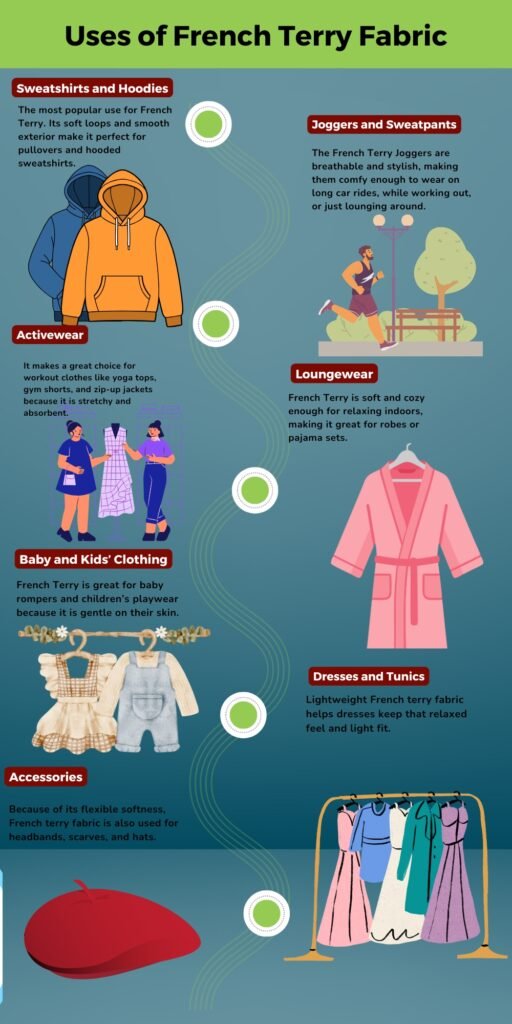
Caring for Quilts Fabric

Infographic about caring for quilt fabric with illustrations: washing, drying, ironing, storage, and ironing sections; images include a child washing, clothes drying rack, iron on board, storage icons, and a kitchen scene.
Caring for Quilts Fabric: Washing with cold or lukewarm water and mild detergent; air-dry for best results; store quilts and fabrics in a cool, dry, dark place; iron with a warm iron.

Quilts fabric needs gentle care to keep it soft and bright. Here’s how to achieve that:

  1. Washing: Soak quilt fabric in cold or lukewarm water with gentle soap. Pre-washing what is wool fabric before sewing is a great way to reduce fabric shrinkage.
  2. Drying: It is best to air dry quilts fabrics. If you tumble dry quilts fabrics, use low heat. Over drying can dry stiffen the fabric.
  3. Ironing: Press qult fabric, especially cotton, at medium heat to avoid scorching.
  4. Storage: store quilts and fabrics in dry cool places where it is dark to avoid fading from sunlight.

These practices will keep your quilt projects soft and vibrant.

Sustainability and Eco-Friendliness

Creativity in quilting can be paired with a sustainable lifestyle. Eco-friendly quilting can now include organic cotton, bamboo blends, and recycled fibers. Quilters can further reduce wool fabric waste during patchwork by reusing old fabrics.

Conclusion

Quilts fabric continues to evoke creativity, warmth, and beauty, not to mention the memories it holds in the realms of fashion and home décor. The variety of styles, colors, and textures quilt fabric covers guarantee boundless avenues for artistic manifestation. Be it a throw for a couch or a family heirloom, the quilt fabric covers a perfect trifecta of comfort, style, and strength. With the right attention, quilts fabric can stay a reliable and cherished part of your home for many years

FAQs

What is quilt fabric made of?

Qult fabric is commonly made from 100% cotton, but flannel, linen, wool, and polyester blends are also used for various projects.

Why is cotton preferred for quilting?

Cotton is soft, breathable, and easy to sew, which makes it ideal for precise stitching and long-lasting quilts.

How can I prevent quilt fabric from shrinking?

Pre-wash the fabric before sewing to remove excess dye and prevent shrinkage after the quilt is completed.