The choice of a motorcycle jacket has more to do with style than anything else. Material affects many factors, including abrasion resistance and weather protection. It also impacts comfort, maintenance, weight, and abrasion resistant. Leather, textile and mesh are the three most common materials for motorcycle jackets. The different materials have different properties, so riders must choose the right material for their riding conditions, climate and protection needs. Leather jackets are usually durable and resistant to abrasion, which makes them popular for road and performance riding. Textile jackets tend to be more versatile and flexible, as they are often made of a material that is softer.
What Are the Main Motorcycle Jacket Materials?
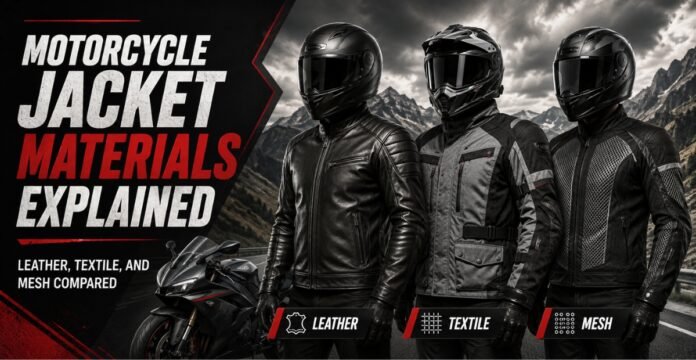
The main motorcycle jacket materials are leather, textile, and mesh. Leather is a natural material valued for durability and abrasion resistance. Textile jackets use engineered fabrics such as polyester, nylon, Cordura-type fabrics, or similar synthetic constructions. Mesh is usually made from synthetic fibers woven or knitted into an open structure that allows more air to move through the jacket. The right choice depends on how and where you ride. Someone who rides in hot summer weather may prefer mesh, while a rider who regularly travels in changing weather may find textile more practical. Riders can also explore different motorcycle jacket options to see how material, design, coverage, and construction can vary between jacket styles.
Leather Motorcycle Jackets
Leather is one of the oldest motorcycle jacket materials, and it remains popular because good-quality motorcycle leather can provide strong abrasion resistance. Cowhide is widely used, while buffalo, goatskin, and other hides may also appear in motorcycle clothing. However, protection depends on more than simply using leather. Thickness, quality, panel construction, seams, and protective armor all matter. Leather also has a classic appearance that many riders prefer. A well-designed men’s biker jacket can combine a traditional motorcycle look with practical construction. Leather can soften and shape around the rider with use, although it normally needs more care than synthetic motorcycle jacket materials.
Textile Motorcycle Jackets
The textile is one of the most versatile materials for motorcycle jackets , because the manufacturers can incorporate different features. A textile jacket can include different features depending on its design. These may include a waterproofing membrane, a removable thermal liner and ventilation openings. It could also have reflective areas, adjustable straps and multiple storage compartments. Textile is a great option for changing weather, commuting and touring. Not all textile jackets offer the same level of protection. It is not appropriate to treat a lightweight fashion fabric as if it were a motorcycle material.
Mesh Motorcycle Jackets
Mesh is unlike most other jacket materials, as its open design is intended to increase airflow. The jacket can be opened to allow airflow while the motorcycle moves, reducing heat around the upper body. Mesh is especially suitable for hot and humid climates, summer riding or places where the weather is warm. A very open mesh can offer less resistance to abrasion than leather panels or textile panels with high strength. The mesh is often used in the ventilation zones of better riding jackets while stronger materials are placed around the shoulders and elbows.
Motorcycle Jacket Materials and Abrasion Protection
Abrasion protection is important because a rider could slide down the road after a crash. When leather is thick enough and constructed properly, it has historically performed well in the area. Textile motorcycle jacket materials are also capable of providing strong abrasion resistant when they use high-tenacity fibres, reinforced zones and secure seams. Mesh is a term that covers a wide range of constructions. The difference between a strong motorcycle mesh panel and a fashion mesh is vast. Check where the stronger reinforcement is located and if protective armor covers critical impact zones.
Quick Comparison of Leather, Textile, and Mesh
When comparing motorcycle jacket materials, riders should look beyond appearance and consider how each option performs during real riding conditions.
- Leather: Strong abrasion resistance, classic appearance, durable construction, but usually heavier and warmer.
- Textile: Lightweight, versatile, practical, and suitable for adding waterproof, thermal, and ventilation features.
- Mesh: Provides high airflow and better summer comfort, but protective reinforcement is especially important.
- Rain riding: Waterproof or laminated textile designs are generally more practical than untreated leather or open mesh.
- Cold riding: Textile jackets with thermal liners can be convenient, while leather often requires extra insulating layers.
- Hot riding: Mesh normally provides the greatest direct airflow of the three motorcycle jacket materials.
- Maintenance: Leather usually needs specialized cleaning and conditioning, while many textile and mesh jackets are easier to maintain.
- Protection: Material alone is not enough; armor, stitching, fit, coverage, and overall jacket construction must also be checked.
Comfort, Weight, and Flexibility
Comfort can determine whether a rider actually wears protective clothing on every journey. Leather can feel firm and heavy when new, although quality leather often becomes more comfortable after repeated use. Textile motorcycle jacket materials are generally lighter and can use stretch panels or adjustment systems to improve movement. A jacket that is too loose may allow armor to move away from the correct position, while an overly tight jacket can restrict movement. Some riders also choose a leather biker jacket style when they want a more traditional appearance, but protective riding features should still be checked separately from styling.
Weather Performance of Motorcycle Jacket Materials
The weather can drastically alter how a jacket feels. Untreated leather does not perform well in heavy rain. Although riders should always follow the instructions of the manufacturer, water-resistant treatments are a good option. Textile motorcycle materials allow for more design flexibility, as waterproof membranes and storm flaps can be added to the jacket.Mesh is designed primarily for air flow, not rain protection. Some mesh jackets have removable waterproof liners that solve this issue, but the added lining reduces ventilation.
Durability and Maintenance
When leather is maintained properly and of high quality, it can last a long time. Keep it clean and dry naturally after being wet. Use leather care products when necessary. The material can be damaged or dried out by excessive heat and improper storage. Some riders prefer the textile motorcycle jacket materials because it requires less maintenance. Care instructions for mesh and textile jackets may be different, but they can still be easy to maintain. Specific washing instructions may be required for waterproof membranes, reflective coatings, removable armor, protective coatings and reflective components.
How to Choose the Right Motorcycle Jacket Material
The best motorcycle jacket materials depend on the rider rather than one material being perfect for everyone. Leather can be a strong choice for riders who prioritize abrasion resistance and a traditional riding feel. Textile can suit commuters and touring riders who need changing-weather versatility. Mesh is useful when ventilation is the main concern in very hot conditions. Before buying, consider the normal riding temperature, rainfall, trip length, riding speed, and how often the jacket will be used. Then check armor placement, abrasion zones, seams, closures, fit, ventilation, and weather protection. Comparing motorcycle jacket materials this way gives a much clearer picture than choosing a jacket only because leather, textile, or mesh appears in its product name.
Conclusion
Each of the three types of material can solve a different problem. Leather is durable and offers abrasion resistance. Textile is flexible, lighter, and has useful weather management features. Mesh is the best material for riding in hot weather. There is no one winner when it comes to motorcycle jacket material.The best jacket will provide adequate protection and be comfortable enough to wear regularly. Before making a choice, riders should consider the fabric, reinforcement, armor and seams. They should also compare fit, ventilation and weather features. Understanding motorcycle Jacket Materials can help riders select equipment that suits their climate, riding styles, and daily needs.
FAQs
Which motorcycle jacket material is best?
There is no single best material for every rider. Leather is often preferred for abrasion resistance, textile for versatility, and mesh for maximum airflow in hot weather.
Is leather better than textile for motorcycle jackets?
Leather can provide excellent abrasion resistance, while textile can offer lower weight, waterproofing, ventilation, and removable liners. The better choice depends on riding conditions and the jacket’s complete construction.
Are mesh motorcycle jackets safe?
Purpose-built mesh motorcycle jackets can provide protection when they use suitable abrasion-resistant materials, reinforced impact zones, secure seams, and correctly positioned armor. Ordinary fashion mesh should not be treated as protective motorcycle clothing.