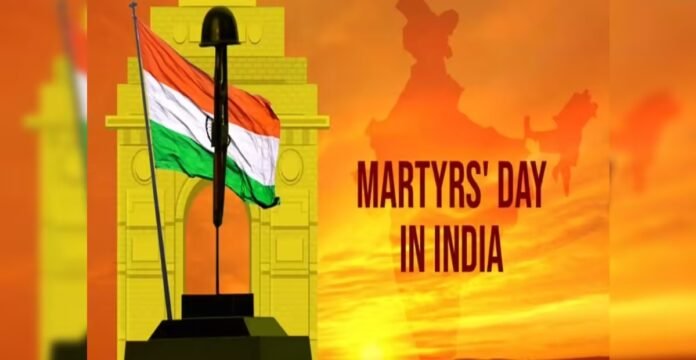
Writers often describe the awesome experience of being a great person to change the world. Martyrs’ Day (India) provides an opportunity to describe and celebrate the greatness of the men and women who with awesome resolve and total commitment, devoted their lives to the cause of gaining and protecting the unity and integrity of the country.
This occasion allows every Indian citizen a valuable chance to pause and contemplate the deep significance of the sacrifices that have been selflessly offered by numerous individuals. These sacrifices, often involving great personal cost and hardship, were undertaken with the noble intention of serving and advancing the collective interests of the nation. It is a time to recognize and truly appreciate the profound value of these contributions, understanding that the freedoms and progress we enjoy today are built upon the foundations laid by those who came before us and dedicated themselves to the greater national cause.
The day has educational aspects as well. It provides an outline of the disciplines required to achieve greatness. It compels all of us to examine our commitment to the cause of gaining and protecting the freedom of our people, and to ensure that no enemy ever enslaves our people again.
Martyrs’ Day (India) Observance Date
30 January of every year is set apart as Martyrs’ Day (India). It is the day when the world received the shocking news of the assassination of Mahatma Gandhi, the Father of the Nation. India, of course, is not the only nation to celebrate Martyrs’ Day. Most other nations with a history of colonization also celebrate a Martyrs’ Day in remembrance of all the martyrs for the nation.
Importance of Martyrs’ Day (India)
Martyrs’ Day (India) holds significance as it reminds Indian citizens of the immense struggle and hardships faced in order for the nation to achieve a rightful position in the free world.The day is observed on several dates, but most prominently on January 30th and March 23rd, to pay homage to those who sacrificed their lives for the country. January 30th marks the assassination of Mahatma Gandhi, a pivotal figure in India’s independence movement, while March 23rd commemorates the martyrdom of Bhagat Singh, Shivaram Rajguru, and Sukhdev Thapar.
It is a day:
- which pays homage to the fighters of the freedom struggle and the soldiers of the armed forces
- which keeps the feeling of nationalism alive and motivates other citizens to follow in the same footsteps
- which imparts the culture of sacrifice to the posterity
- which fosters a feeling of oneness and peace
This day reminds us of the historical present of the nation and how it is strong and still alive because of a very few who sacrificed everything for the nation. Martyrs’ Day (India) is the day to remind all of the present and future of the Indian nation. Martyrs’ Day (India) is the day to remind all of the present and future of the Indian nation.
What Does the Indian History Define as a Martyr?
In order to attain a certain level of goal, a person must involve the willing act of sacrificing themselves. When a person is willing to do such a thing, they are called as a ‘Martyr’. In order to achieve a greater goal, these are the people who are referred to as ‘martyrs’ in Indian History and should be given due regard, because of the particular association they had with the oppression of colonial control along with the involved injustice and oppression.
The people who, in order to achieve the goal of establishing a Martys’ Day (India) should be honored because they were the:
- A. Citizens who actively participated in the violent colonial control of the British
- B. Citizens who utilized all the legislative and other options to achieve the goal through passive actions.
- C. Citizens who participated in the armed forces.
- D. Citizens who participated in the defense of the establishment of the nation.
- E. Citizens who defended the country.
Each sacrifice, a martyr unfinished and self-sufficient dedication to the nation.
Mahatma Gandhi along with Martyrs’ Day (India)
Martyrs’ Day (India) is renowned for Mahatma Gandhi along with Martyrs’ Day (India) is renowned for Mahatma Gandhi along with Martyrs’ Day (India) is renowned for Mahatma Gandhi along with Martyrs’ Day (India) is. Along with these, he has also maintained non-violence, truth, and peace. Along with these, he has also maintained non-violence, truth, and peace. Along with these, he has also maintained non-violence, truth, and peace. Along with these, he has also maintained non-violence, truth, and peace. Along with these, he has also maintained non-violence, truth, and peace. Along with these, he has also maintained non-violence, truth, and peace.
Along with these, he has also maintained non-violence, truth, and peace. Along with these, he has also maintained non-violence, truth, and peace. Along with these, he has also maintained non-violence, truth, and peace. On January 30th, 1948, Mahatma Gandhi was shot dead in New Delhi. His death represents a significant act of sacrifice for peace.
Therefore, Martyr’s Day (India) also symbolizes that:
- Peace is not free.
- The absolute truth costs someone their life.
- The absence of violence is a peace that is not human.
The Other Brave Martyrs of India
India’s Martyrs Day (India) also recognizes, apart from Mahatma Gandhi, the numerous souls of courage that India’s freedom struggle gave birth to.These bravehearts embraced martyrdom, so that their fellow countrymen could breathe the air of freedom. Every year, on March 23, the nation observes Martyrs Day, also known as Shaheed Diwas, to pay homage to three extraordinary revolutionaries, Bhagat Singh, Shivaram Rajguru, and Sukhdev Thapar. They were hanged by the British rulers for their involvement in the Lahore Conspiracy case. These young men, with their indomitable spirit and selfless sacrifice, ignited the flame of freedom in the hearts of millions of Indians.
Some of the most famous martyrs are:
- Bhagat Singh
- Chandrashekhar Azad
- Sukhdev
- Rajguru
- Rani Lakshmibai
- Subhas Chandra Bose
- Lala Lajpat Rai
Millions are still inspired by their struggles.
What are the Activities for Martyrs’ Day (India)?
People observe Martyrs’ Day (India) with a lot of seriousness and stillness.They abstain from any sort of merrymaking on this day. It is a day to contemplate the sacrifices made by freedom fighters. Many schools and offices conduct events where tributes are paid to these great leaders. Silence is observed to honour their memory. The focus remains on remembering their courage and reaffirming commitment to the nation’s values.
Activities for Martyrs’ Day (India) include:
- Observing a 2-minute silence precisely at 11 am
- Tribute Prayers
- Laying of flowers
- Speeches of the people’s devotion to the motherland
- The schools conduct programs to educate the people
- Debates and other activities of a cultural nature
The leading citizens of the country, who are the President and the Prime Minister, lay a wreath at Raj Ghat, New Delhi.The ceremony is brief but solemn, a moment of quiet reflection amidst the bustle of the capital. The weight of history hangs heavy in the air as they pay homage to the Father of the Nation. Journalists jostle for position, their cameras clicking, capturing the scene for posterity. The sun beats down on the marble platform, reflecting the white khadi of the politicians’ attire.
Martyrs’ Day (India) in Educational Institutions
Educational Institutions greatly help in the maintenance of the Martyrs’ Day (India) spirit.
Students learn about the freedom fighters, give speeches and write essays, sing and act in plays, and talk about the values of courage and unity. All of these things help teach young people about the meaning of patriotism. This is why Martyr’s Day in India is celebrated.
When observing Martyr’s Day, we gain knowledge about the following democratic values:
- The importance of respect and appreciation in democracy.
- The importance and appreciation of complete national integration.
- The importance of standing against oppression.
- The importance of serving the nation with devotion.
- The importance of promoting and fostering harmonious relations.
Without responsibility, freedom is meaningless. Martyr’s Day is a reminder of the responsibility we carry.
Martyr’s Day is a meaningful and significant day that conveys a message.
On this day of honoring the fallen, we remember that the essence of freedom is in the struggle for it. we remember that strength lies in peace, not war, and that the power of the people is in unity.
Responsible citizenship is the best way to honor a martyr. It is the nature of Martyr’s Day in India to encourage people to reflect on these questions.
- Are we safeguarding our freedom?
- Are we serving the society?
- Are we accepting and respecting our differences?
- Are we advocating for peace?
Responsible citizenship is the best way to honor a martyr.
Conclusion: Remembering Martyrs’ Day
Martyrs’ Day (India) reminds us of the sacrifices made in love for the country.
When we think of our martyrs, we remember what they wanted and what values they stood for, ensuring the integrity of the nation.
May Martyrs’ Day (India) motivate us to forge in the spirit of truth, oneness, and harmony, always. Learn About: World Neglected Tropical Diseases Day And School Day of Non-Violence and Peace