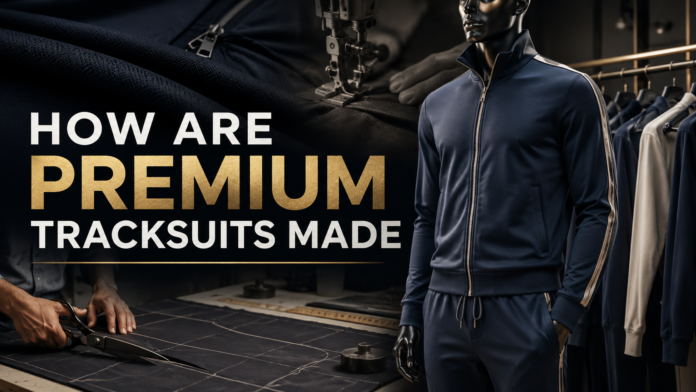
How are Premium Tracksuits made The process of making premium tracksuits is a meticulous one that involves fabric selection, pattern creation, cutting, sewing, fitting, finishing and quality checking. A stylish tracksuit is not enough. The tracksuit should be comfortable and move with the body easily. It should keep its shape and feel strong even after repeated washing and use.
Premium tracksuits differ from basic tracksuits due to the use of better fabrics, cleaner stitching and stronger finishing. From the softness and strength of the fabric, to the cuffs and waistband, every detail counts. You can see the different styles by exploring a range of options.
How are premium tracksuits made?
How are premium tracksuits made in a factory? The design concept is the first step. Brands decide on the style, fabric, color, fit, placement of logos, pockets, zippers and cuffs. The technical team then creates patterns and measurements for each size. These patterns are used by the teams responsible for cutting and sewing.
After the pattern has been created, the fabric will be selected and checked. It is then cut into pieces to make the jacket, sweatshirt or hoodie. Then, it’s divided up for sleeves, waistbands, cuffs and pockets. The pieces are carefully stitched after cutting. The final tracksuit will be checked, pressed and packed for delivery.
Choose the right fabric
Fabric is at the core of any premium tracksuit. The tracksuit won’t feel premium if the fabric is bad, even if it looks great. Cotton fleece, French Terry, polyester blends and cotton-poly blends are all common premium fabrics for tracksuits. Fabric should be chosen according to the intended use of the tracksuit.
French terry and soft cotton blends are ideal for everyday wear. Stretch fabrics and breathable polyester blends are better for training tracksuits. Winter tracksuits can be made with fleece or insulated fabric. For a good men’s tracksuit, the fabric should be comfortable, moveable, and durable.
Fabric Inspection and Testing
Fabric must be checked before cutting. Fabrics for premium tracksuits must be uniform in color, have a smooth texture, be the right weight and not show any visible defects. Fabric is checked for stains, holes, uneven dyes, weak spots, and shade variations. The final tracksuit will look poor if fabric issues are not addressed at this stage.
Fabric can also be tested on shrinkage, colorfastness and pilling. The manufacturer can better understand the behavior of the fabric after it is used. After washing, a good fabric should retain its color, shape and softness. Premium tracksuits are more durable than cheaper tracksuits.
Pattern Making
The patterning process is where the design of the tracksuit becomes a garment. It is like a tracksuit blueprint. The pattern includes each piece of fabric, including the front, back, sleeves, hoods, collars, pockets, waistbands, cuffs and leg legs.
Fit is crucial to a premium tracksuit. The tracksuit will feel tighter in certain areas, and looser in others if the pattern is incorrect. Pattern adjustments are needed for men’s tracksuits, women’s tracksuits, and children’s tracksuits because the body shapes and movements of each group differ. Pattern making is therefore a crucial step.
Size Grading
The sizes are then graded after the first pattern has been made. The size grading is the process of increasing or decreasing a pattern in order to create a variety of sizes, such as smalls, mediums, larges, XLs, etc. Each size should have the same shape design while fitting different body sizes.
The tracksuit must look good in all sizes. Size small shouldn’t look too tight and larger sizes shouldn’t look shapeless. Fit and shape is important for women’s tracksuits because they should be stylish, but also comfortable. The women’s tracksuit must have a good size balance, and the shape should be body-friendly.
Fabric cutting
Fabric is then cut after the pattern and grading have been completed. Even small errors can have a negative impact on the final look, stitching and fit. The pattern pieces are then placed on top of the fabric. Each part is then carefully cut by the cutting team.
When cutting for premium production, attention is paid to the grainline, fabric direction and stretch, as well as pattern placement. The pieces of fabric with a pattern, stripe or panel must be properly aligned. A poor cut can lead to twisted seams, uneven panels and a bad fit. Tracksuits that are cut correctly look professional and clean.
Stitching and Assembly
The tracksuit begins to take shape when it is stitched. Sewing machines are used to join the cut pieces together. The jacket, top, or separate pieces are stitched, whereas the pants, joggers, or side seams and cuffs of the pants, joggers, or bottoms are assembled. Each seam should be strong, comfortable, and neat.
Tracksuits are designed to be worn while moving. Special attention should be paid to areas such as the shoulders, underarms and crotch. Also, pay special attention to pockets, cuffs and waistbands. The tracksuit may open up or lose its shape if the stitching is weak. The clean stitching of premium quality tracksuits is easy to spot.
Add Zippers, Pockets and Waistbands
Details can make a tracksuit look more premium and useful. Zippers must be strong and run smoothly. Pockets must be stitched correctly and placed in the correct place. Cuffs must be able to hold their shape without being too tight. The waistband should be comfortable and remain in place when moving.
These details are more important for kids because they move around a lot. A tracksuit for kids should be comfortable, soft and safe. The fabric should be able to allow for running, sitting and playing. A well-made tracksuit for kids should be focused on comfort, durability and ease of movement.
Logos, Embroidery or Printing
Some tracksuits are branded with embroidery, screen-printing, heat-transfer logos, patches or woven labels. These details need to be applied with care. The logo must be placed correctly and not damage the fabric. A tracksuit can look cheap if it has poor printing or embroidery.
It should be balanced. It shouldn’t be too heavy or crooked. The embroidery must be neat from both the front and rear. Prints shouldn’t crack easily. Heat transfers must adhere properly and survive washing. This step gives the tracksuit a unique identity and prepares it for branding.
Finishing the Press and Finishing
After stitching, finishing is the process that involves cleaning and preparing a tracksuit. The garment is pressed, steamed, or any loose threads are removed. The tracksuit will look more neat and tidy after pressing. This step prepares the garment for packing, display or shipment.
The tracksuit must be free of loose threads, uneven stitching, stains or bad pressing marks. The finishing team inspects the tracksuit from all angles: front, rear, inside and outside. Customers often judge the quality of a product by small details.
Quality Control
The final and most crucial step is quality control. The tracksuits are checked for measurements, stitching defects, color shades, logo placements, zipper functions, pocket strength and quality, as well as overall appearance. The garment will be repaired or returned if any issues are found.
Premium tracksuits receive a more thorough inspection than standard tracksuits. It is important that every item meets the same standards. The quality control process helps to avoid issues such as size differences, loose seams and poor finishes, incorrect labels or damaged fabrics. This protects the manufacturer as well as the customer.
Premium Tracksuit Making Checklist
Here’s a quick checklist to help you understand how tracksuits of premium quality are made.
- Select the best fabric for your purpose.
- Before cutting, inspect the fabric.
- Make sure you have accurate patterns to fit your clothes.
- The correct grade sizes.
- Fabric should be cut with care and precision.
- Sew seams tightly and neatly.
- Add pockets, cuffs and zippers to waistbands.
- Use care when applying logos, prints or embroidery.
- Trim the loose threads, and press your garment.
- Quality control is a great way to ensure that every item meets your standards.
Tracksuit manufacturing mistakes: What you need to know
A common mistake is to use fabric that looks great but doesn’t perform well when washed. It can lead to shrinkage, fading or shape loss. Poor patterning is another mistake. The tracksuit won’t fit correctly if the pattern is incorrect, even if it is made of good fabric.
Another major issue is weak stitching. Because tracksuits are worn for moving, they need strong seams. Quality can be affected by poor finishing, loose cuffs and printing, as well as bad zippers. These mistakes are avoided by premium manufacturing, which checks each step.
Conclusion
How are Premium Tracksuits made? The process of making premium tracksuits is a comprehensive one that begins with the design and fabric choice and finishes with quality control and packaging. Each step is important because a tracksuit needs to be comfortable, stylish and perform well in daily use.
It is about more than just appearance. Fabric quality, fit and stitching strength are all important. Finishing, durability, and finishing is also very important. The final tracksuit is soft, stylish, durable, and reliable when manufacturers pay attention at each stage. This is what makes a tracksuit premium.
FAQs
How are premium tracksuits made?
Fabric selection, pattern-making, cutting, sewing, finishing, branding and quality control are all part of the process to create premium tracksuits.
What is the best fabric for premium tracksuits?
Premium tracksuits are often made from French terry fabric, cotton fleece, brushed cotton, cotton-poly mixes, and performance knits.
Why is stitching so important on tracksuits?
Tracksuits are worn to move. Stitching is important to keep the garment durable and comfortable.
Are tracksuits suitable for everyday wear?
Premium tracksuits can be worn every day because they are made for comfort, shape preservation, and durability.