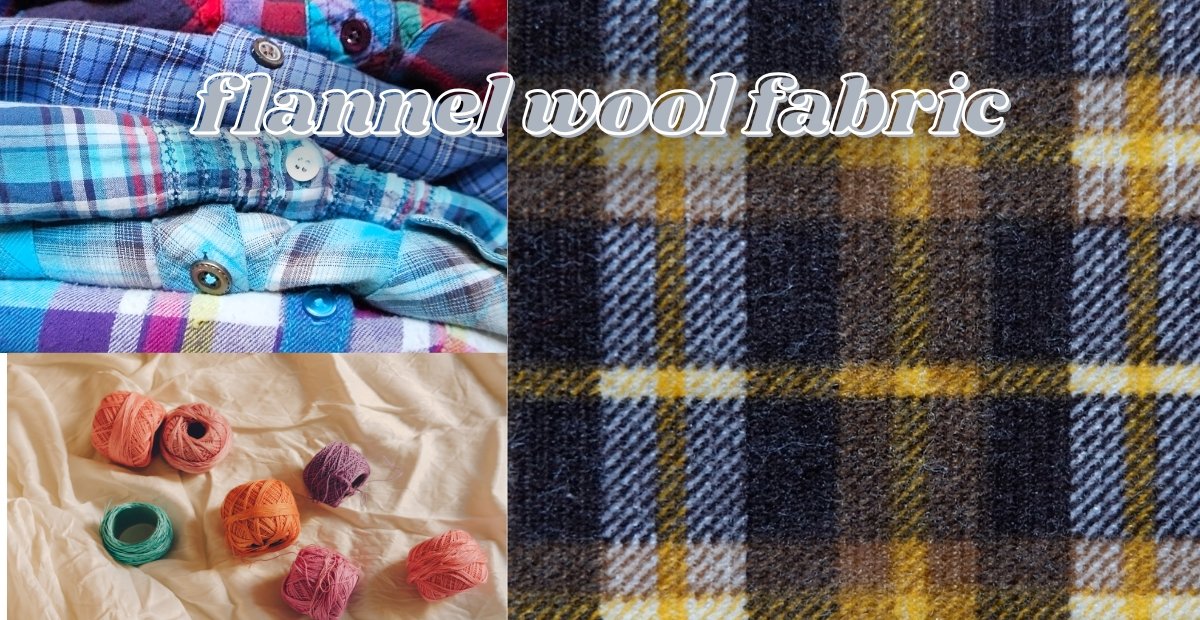
Flannel wool fabric has been a staple in the world of textiles for many centuries. It is one of the most well-loved materials in fashion and home decor because of its soft, warm and durable properties. will most likely be on the list of materials for a winter shirt, a warm sweater, or outerwear you may desire.
In this guide, we will focus on the history, properties, uses, benefits and care tips of flanel wool fabric. With its plethora of uses and timeless appeal, it is vital to remember the fabric’s versatility and worth.
History of Flannel Wool Fabric
Flannels wool fabric dates back to Wales in the 17th century. During this period, there was carded wool which was a what is wool fabric and was sought after due to its warmth retention in very chilly weather. The Industrial Revolution, in its turn, brought mechanical looms which made production of flannel faster, easier and cheaper.
Flannels woolen fabric was over time, attributed to the working class due to its low price and its comfort and durability. Eventually, transitioned to everyday use in clothing and interior design and remains in use till this day.
Characteristics and Properties of Flannel Wool Fabric
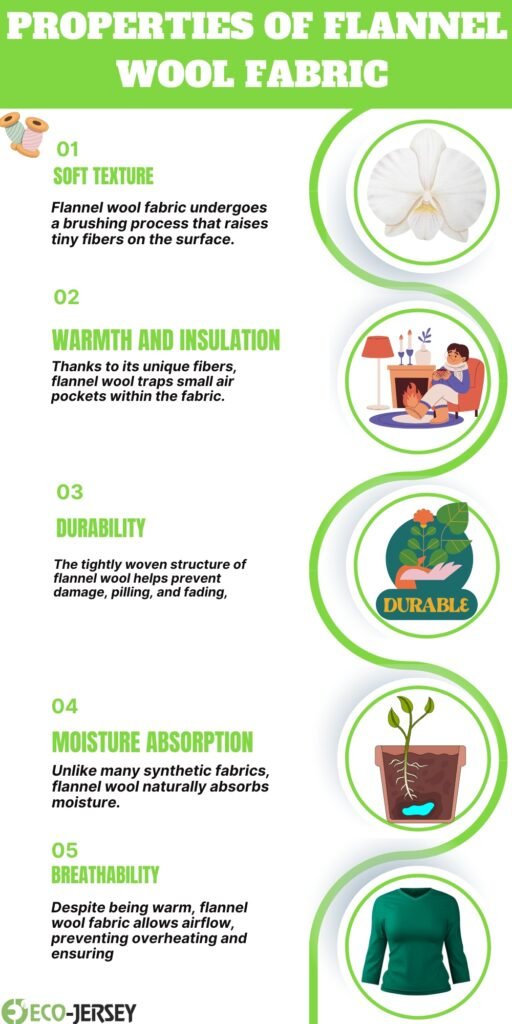
Flannels wool fabric has a distinguishable functional and physical features. Now, let’s discuss what gives it its uniqueness:
1. Soft Texture
The flanel wool fabric has a unique smoothness due to the brushing it endures. This technique raises the tiny fibers which increases warmth and comfort.
2. Warmth and Insulation
Flanel wool fabric, due its unique fibers, traps small pockets of air which creates its exceptional ability to insulate. It warms the body and does not feel heavy.
3. Durability
Absence of damage and fading due to the tightly woven fibers, makes flannels wool fabric, ideal for clothing and home textiles.
4. Moisture Absorption
Unlike synthetic textiles, flannel wool fabric is capable of absorbing moisture, thus keeping the skin dry and comfortable, even under changing temperatures.
5. Breathability
Although warm, flannel wool fabric is still breathable and comfortable, even if worn for a long period of time.
Types of Flannel Wool Fabric
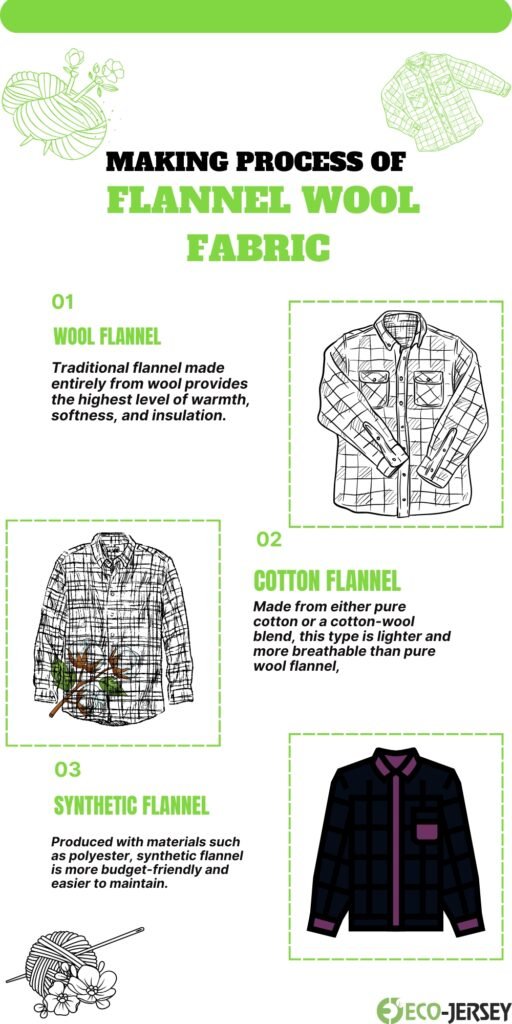
There are different types of flannel wool fabric, each presenting different advantages of its own:
1. Wool Flannel
Traditional flannel made entirely from fleece wool fabric offering maximum warmth and softness.
2. Cotton Flannel
A blend of cotton and wool or pure cotton, providing breathability and a lighter weight for warmer climates.
3. Synthetic Flannel
Made with fibers like polyester, it is more affordable but may lack the natural warmth of wool fabric based options.
Uses of Flannel Wool Fabric
One of the most versatile textiles, flannel wool fabric is used for a wide range of purposes:
Clothing
Some of the most common pieces of clothing made with flannel wool fabric include:
- Shirts and blouse
- Pajazine and loungewear
- Coat and jacket
- Scarf and winter accessories
It is highly appreciated due to its warmth and softness, which makes it ideal for semi-casual and semi-formal attire.
Home Furnishings
The soft and cozy characteristics of flannel wool make it a great choice for:
- Bed sheets and blankets
- Cushion covers
- Curtains and upholstery
Industrial Applications
Flannels wool fabric is used for linings in outdoor and protective clothing for colder climates regions because of its insulation value
Advantages of Flannel Wool Fabric
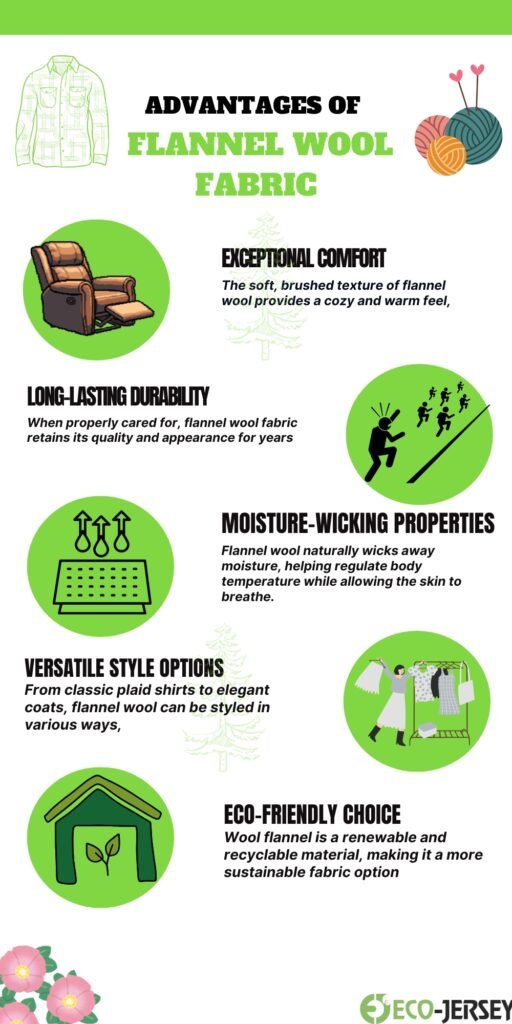
While used for an extended time worldwide, it provides unexplained benefits.
- Comfort: Its soft brushed texture provides a cozy and warm feeling
- Durability: Properly looked after flannels wool fabric can last for many years
- Moisture Wicking: It wicks and transfers moisture while allowing the skin to breathe
- Style Versatility: It can be used in a variety of clothing styles, ranging from plaid shirts to stylish coats
- Eco-Friendly Option: Wool flannels a recyclable and renewable material.
Disadvantages of Flannel Wool Fabric
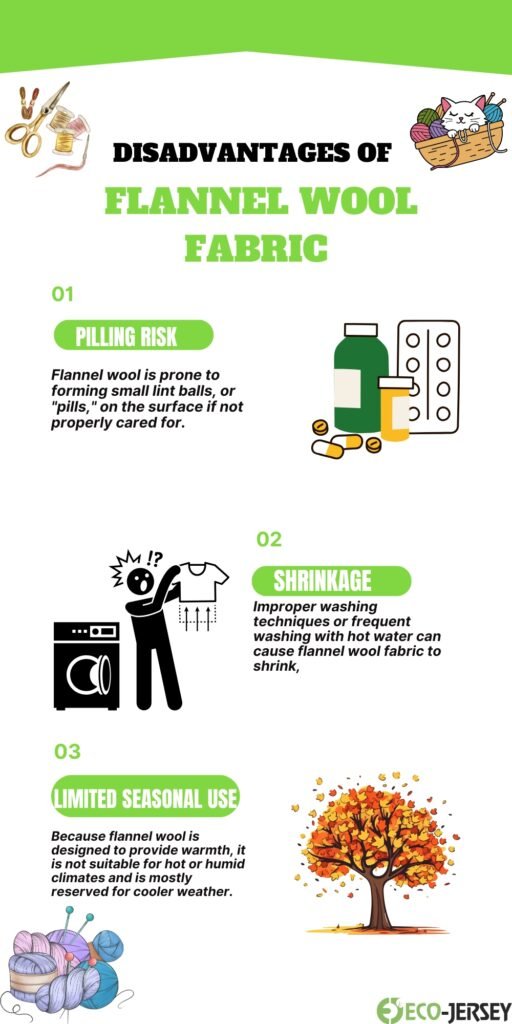
In as much as flannels wool fabric has several merits, it is also accompanied with numerous demerits.
- Pilling Risk: The fabric is subject to balls of lint or fuzz if not taken care of
- Shrinkage: Overwashing/ improper washing can cause the fabric to shrink
- Seasonal Use: It is unsuitable for hot climates—
Caring for Flannel Wool Fabric
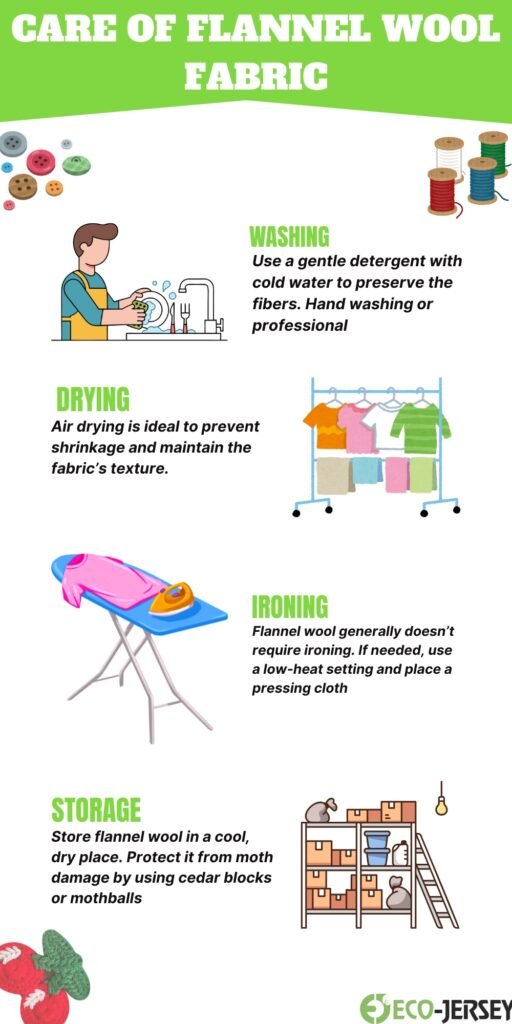
To keep a flanel wool fabric soft and durable, proper care is needed:
- Washing: A gentle detergent and cold water are ideal. Wool flannels is ideal for hand washing and dry cleaning.
- Drying: To upkeep fabric quality and avoid shrinkage, air drying is encouraged.
- Ironing: If possible, it is best to avoid ironing. However, if it is absolutely necessary, then low heat should be used.
- Storage: Protect from moth damage with mothballs or cedar blocks. Keep in a dry, cool environment.
Flannel Wool Fabric and Sustainability
Flanel wool fabric has many aspects that helps to achieve the goals of sustainable fashion.
- Wool is renewable, as sheep grow new fleece every year.
- The natural flanel will decompose without causing harm to the planet.
- The longer a garment is worn, the less textile waste will be produced due to fast fashion.
Supporting flanel and wool blends is a great way to practice sustainable buying as well as guaranteeing comfort and quality.
Conclusion
From being industrious working class fabric, flanel wool had become ‘happy wool’ and now leverages its warmth on its users while it is also immensely loved by designers for its durability and comfort. It also fulfills the modern eco-friendly demand and is easy to work with when designing home décor.
Explaining the fabric’s history, properties, and its relative care can draw full value appreciation of flannels wool fabric. This winter, don’t hesitate to try out the many stylish options ready with the fabric as for your bedding, home furnishing too.
FAQs
Is flannel wool fabric only for winter?
Lightweight flanel options work well in transitional seasons like spring and fall.
Does flannel wool fabric shrink?
it can shrink if washed in hot water. Always follow care instructions carefully.
Is flannel wool fabric environmentally friendly?
especially wool-based flanel, which is biodegradable and renewable.