
An Extreme Cold Protection Winter Coat is a heavy-duty coat built for severe winter conditions. It protects the body during sub-zero temperatures. It also blocks strong winds and heavy snowfall.Unlike standard winter jackets, this coat is made for dangerous cold exposure. It often uses thick insulation layers. It also includes windproof and snow-resistant shells. Therefore, it works well in snowstorms and blizzards.Most coats in this category perform best between -20°C to -50°C. Some expedition-grade models handle even colder weather. However, performance depends on wind-chill and activity level.
People who travel in harsh winter regions need this coat. Mountaineers rely on it for survival. Outdoor workers also depend on it for long shifts. Even commuters in freezing cities can benefit from it.If you face long snowstorms, this coat becomes essential. It keeps your body stable and warm. It also reduces the risk of frostbite and hypothermia.
History of Extreme Cold Protection Winter Coats
Humans have battled extreme cold for centuries. Early Arctic communities used animal fur. They also used thick hides for insulation. These coats trapped heat effectively. However, they were heavy and hard to dry.Later, explorers improved coat designs for long expeditions. They added layered wool and windproof fabrics. Over time, military forces also shaped winter coat technology. They needed strong outerwear for freezing battlefields.During the 20th century, down insulation became more common. It offered strong warmth with less weight. Soon after, synthetic insulation appeared. It worked better in wet and icy climates.
Today, an Extreme Cold Protection Winter Coat uses modern fabrics and advanced insulation. It focuses on warmth, wind resistance, and comfort. As a result, modern coats can handle polar-level cold conditions.
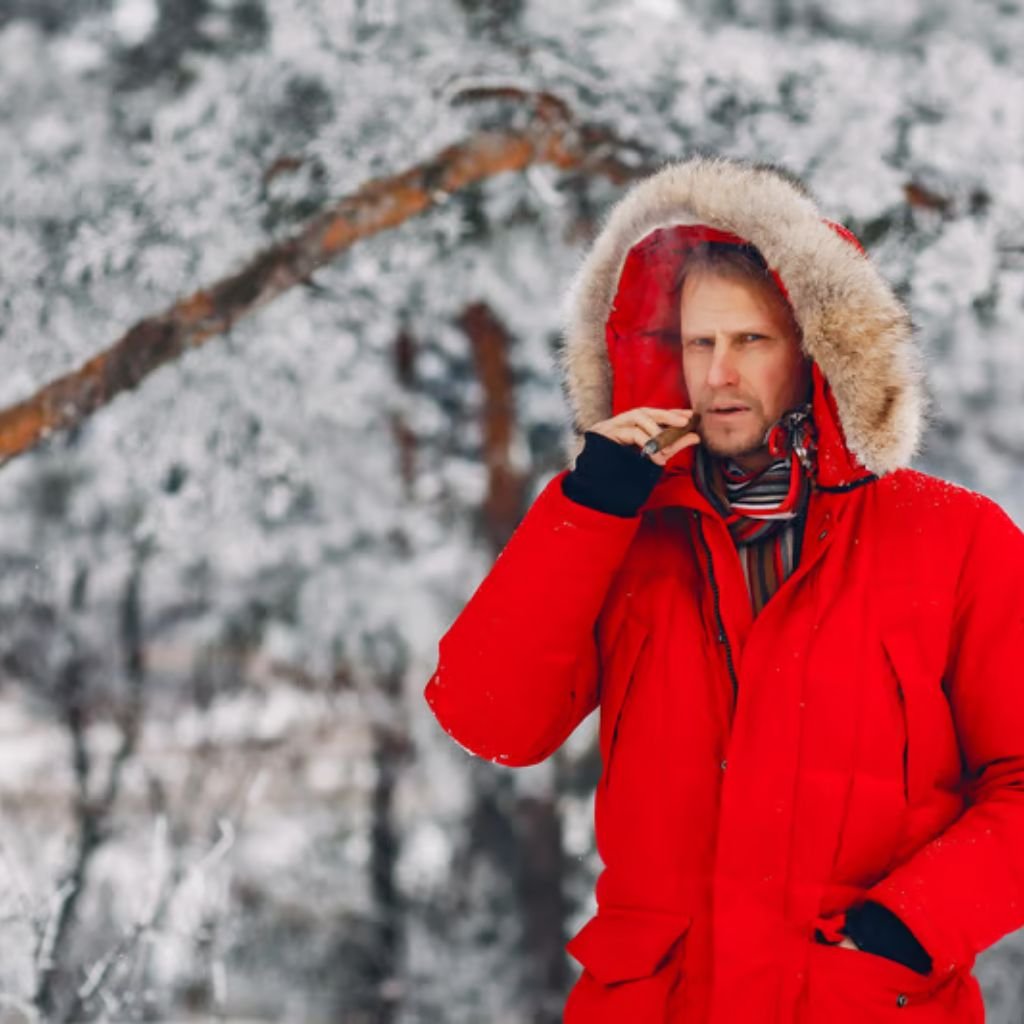
Types of Extreme Cold Protection Winter Coats
An Extreme Cold Protection Winter Coat comes in different styles, and each type serves a specific winter need. Some coats focus on expedition-level warmth, while others balance insulation with daily comfort. Therefore, understanding coat types helps you choose the best option for snowstorms, freezing winds, and long outdoor exposure.
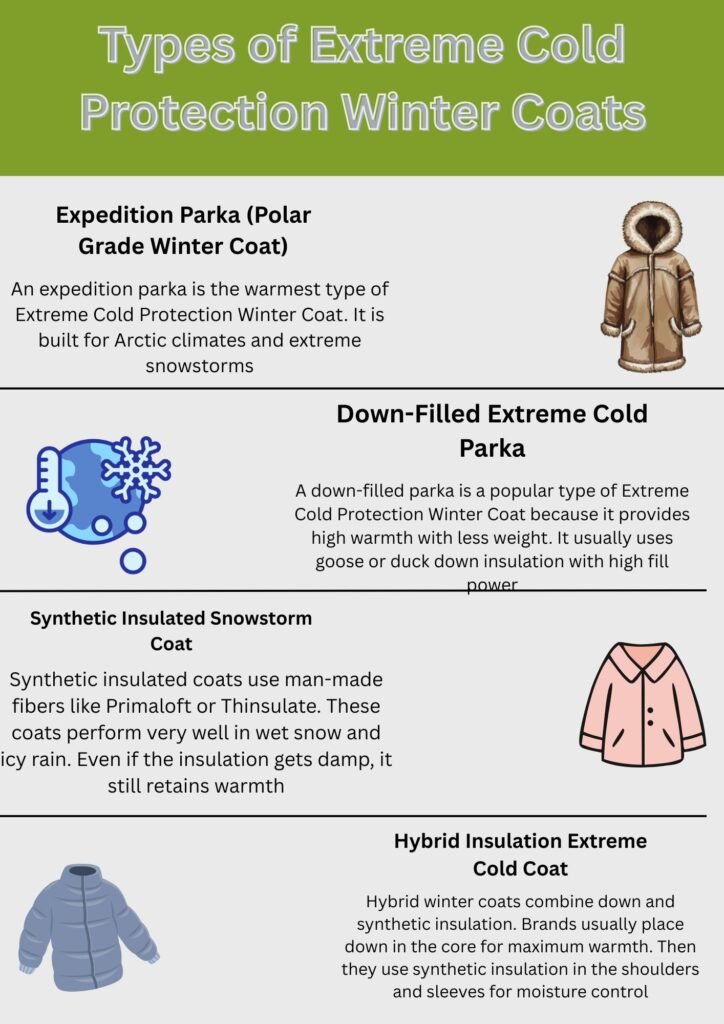
Expedition Parka (Polar Grade Winter Coat)
An expedition parka is the warmest type of Extreme Cold Protection Winter Coat. It is built for Arctic climates and extreme snowstorms. These coats usually feature heavy down insulation, thick shell fabric, and long coverage below the hips.
Down-Filled Extreme Cold Parka
A down-filled parka is a popular type of Extreme Cold Protection Winter Coat because it provides high warmth with less weight. It usually uses goose or duck down insulation with high fill power. As a result, it traps heat efficiently even in sub-zero temperatures.
Synthetic Insulated Snowstorm Coat
Synthetic insulated coats use man-made fibers like Primaloft or Thinsulate. These coats perform very well in wet snow and icy rain. Even if the insulation gets damp, it still retains warmth. That makes them a reliable Extreme Cold Protection Winter Coat choice.
Hybrid Insulation Extreme Cold Coat
Hybrid winter coats combine down and synthetic insulation. Brands usually place down in the core for maximum warmth. Then they use synthetic insulation in the shoulders and sleeves for moisture control. Therefore, this design offers both heat retention and wet-weather reliability.
What Makes a Coat Suitable for Extreme Cold?
An Extreme Cold Protection Winter Coat must provide reliable warmth. It must also prevent heat loss. Several core elements decide its performance.
Insulation Thickness and Fill Power
Insulation traps warm air near the body. Thicker insulation usually means better warmth. Fill power also matters in down coats. Higher fill power provides more warmth per ounce.
Wind-Blocking Outer Shell
Cold wind quickly removes body heat. That is why windproof shells are critical. A good outer shell blocks air movement completely. As a result, the coat stays effective in blizzards.
Heat Retention vs Breathability Balance
A coat must hold heat without overheating. Breathable materials allow moisture to escape. This matters during hiking or working. Otherwise, sweat can freeze inside the coat.
Layering Compatibility
Extreme cold coats must fit over layers. They should not feel tight. At the same time, they must not allow air gaps. A proper fit improves warmth and comfort.
Temperature Ratings Explained (Very Important for SEO)
Temperature ratings help buyers choose the right coat. However, many people misunderstand these numbers.
Most ratings are based on testing in controlled conditions. They assume proper layering and average wind levels. Because of that, real-world cold can feel different.
Comfort vs Survival Ratings
Comfort rating means you can stay warm normally. Survival rating means you may avoid hypothermia. However, survival does not mean comfort. It often means you will still feel very cold.
How to Choose Based on Climate
If your winters stay around -10°C, you may not need an expedition coat. However, if wind chill drops below -25°C, you need better protection. For Arctic travel, choose a coat rated below -40°C.
An Extreme Cold Protection Winter Coat should match your coldest expected weather. It should also match your activity level.
Common Uses Of Extreme Cold Protection Winter Coat
Extreme Cold Protection Winter Coats are widely used in environments where normal winter jackets fail to provide enough warmth and safety. One of the most common uses is in Arctic and polar travel, where temperatures can fall far below freezing and strong winds increase the danger. In these regions, an Extreme Cold Protection Winter Coat becomes essential because it prevents frostbite and keeps body heat stable for long periods.Extreme Cold Protection Winter Coats are also commonly worn in snowfall-heavy cities where blizzards and snowstorms occur regularly. In such areas, people often spend long hours outdoors while commuting, walking, or waiting for transport.
Another major use is in mountaineering and high-altitude expeditions. Climbers often face freezing air, heavy snowfall, and sudden storms. Since temperatures drop rapidly at higher elevations, these coats help protect the chest, arms, and core from extreme heat loss. They also support survival during rest breaks, when the body stops generating warmth through movement.

Outer Shell Materials That Block Extreme Cold
The outer shell protects the insulation inside. It blocks wind and prevents snow buildup. It also decides how waterproof the coat feels.
Gore-Tex and Similar Membranes
Gore-Tex is a waterproof breathable membrane. It stops water but allows vapor escape. Similar membranes include eVent and proprietary coatings. These materials perform well in snowstorms.
Nylon vs Polyester Shells
Nylon is stronger and more abrasion-resistant. It works well for climbing and heavy use. Polyester resists UV damage better. It also handles moisture well. Both fabrics can be effective with coatings.
Windproof, Waterproof, and Snow-Resistant Coatings
Many coats include DWR coatings. These coatings make water bead off. Windproof laminates also stop air penetration. Sealed seams improve storm resistance further.
A strong shell turns a warm coat into a snowstorm-ready coat.
Key Features of an Extreme Cold Protection Winter Coat
A true Extreme Cold Protection Winter Coat includes specific features for harsh storms. These features improve warmth and prevent heat loss.
- Thermal-lined hoods for head protection in blizzards
- Fur-trimmed or insulated collars to block wind near the face
- Storm flaps and sealed seams to stop snow entry
- Adjustable cuffs and hems to prevent cold air leaks
- Insulated pockets to keep hands warm longer
- YKK zippers for durability in freezing conditions
- High collar design to protect the neck and chin
- Two-way front zipper for easier movement and ventilation
These details may seem small. However, they decide how well a coat performs in real storms.
Extreme Cold Winter Coat vs Regular Winter Coat
Many people confuse these coat types. Yet they serve different winter needs.
Insulation Weight Comparison
Regular winter coats use moderate insulation. Extreme cold coats use heavy insulation. They often include thicker down or synthetic fill. That difference matters in long snowstorms.
Weather Resistance Differences
Regular coats resist light snow and wind. Extreme cold coats resist heavy snow, ice, and storms. They usually include sealed seams and better shells.
Mobility and Bulk Comparison
Extreme coats are bulkier. They can limit movement slightly. However, premium designs reduce stiffness and improve flexibility.
Best Use Cases for Each
Regular coats suit mild winter cities. Extreme cold coats suit harsh climates. They also work best for outdoor work and expeditions.
Best Uses of Extreme Cold Protection Winter Coats
An Extreme Cold Protection Winter Coat works best in extreme environments. It also performs well in snow-heavy locations.
Arctic and Polar Travel
Polar regions have constant wind chill. Temperatures drop quickly after sunset. Therefore, travelers need maximum insulation and wind protection.
Mountaineering and Expeditions
High altitudes increase cold exposure. Winds become stronger and more dangerous. Expedition coats provide survival warmth and storm coverage.
Snowfall-Heavy Cities
Some cities face daily snowstorms. Roads become icy and temperatures stay below freezing. In such places, extreme cold coats improve comfort and safety.
Outdoor Work and Industrial Use
Construction crews and delivery workers face cold for hours. They need durable coats with insulation. They also need mobility and strong pockets.
How to Choose the Best Extreme Cold Protection Winter Coat
Buying the right coat requires smart decisions. A wrong choice can lead to discomfort or danger. Therefore, focus on these factors carefully.

Climate and Temperature Needs
Start by checking your coldest winter days. Then include wind chill values. If your climate drops below -25°C often, you need a true extreme coat.
Activity Level: Active vs Static Warmth
If you hike or climb, you generate body heat. You need breathability more than bulk. If you stand still for work, you need heavier insulation.
Fit and Length: Parka vs Jacket
Parkas cover more body area. They protect the thighs and hips. Jackets are lighter but shorter. Parkas are the better snowstorm choice.
Hood and Collar Importance
Heat escapes quickly from the head and neck. A deep hood prevents frostbite on ears. A high collar protects the chin and face.
Weight vs Warmth Trade-Off
Heavier coats feel warmer but reduce movement. Lightweight coats feel flexible but may need layering. Choose a balance that matches your lifestyle.
Men’s vs Women’s Extreme Cold Protection Coats
Men’s and women’s coats differ in fit and design. They are not only different in style. They also differ in insulation placement.
Fit Differences
Women’s coats often have narrower shoulders. They also have more waist shaping. Men’s coats usually offer a straighter cut.
Insulation Placement
Some women’s coats add insulation near the core. This helps warmth retention. Men’s coats often spread insulation evenly. Both can work well if fitted correctly.
Length and Mobility Variations
Women’s parkas may offer longer cuts. Men’s coats may prioritize movement. However, modern designs now focus on both warmth and flexibility.
Are Extreme Cold Protection Winter Coats Waterproof?
Not all extreme cold coats are fully waterproof. Many are only water-resistant. However, they still handle snowstorms well.

Waterproof vs Water-Resistant
Waterproof coats block water completely. Water-resistant coats repel light moisture. In heavy rain, water-resistant shells can soak through.
DWR Coatings Explained
DWR is a durable water repellent coating. It helps snow and water slide off. However, DWR wears out over time. That is why it needs reapplication.
When Waterproofing Matters Most
Waterproofing matters during wet snowstorms. It also matters during freezing rain. If you travel in mixed winter climates, choose waterproof membranes like Gore-Tex.
How to Layer with an Extreme Cold Protection Coat
Layering increases warmth and improves comfort. It also helps regulate sweat and moisture. Therefore, layering is essential for extreme cold safety.
Base Layer Fabrics
Choose merino wool or synthetic base layers. These fabrics pull sweat away from skin. Cotton should be avoided because it holds moisture.
Mid-Layer Insulation Types
Fleece is breathable and warm. Down sweaters provide high insulation. Synthetic puff layers work better in wet snowstorms.
How Layering Boosts Thermal Efficiency
Each layer traps warm air. It also prevents heat loss through wind exposure. When layers work together, your Extreme Cold Protection Winter Coat becomes far more effective.
Sustainability and Ethical Insulation Options
Sustainability is now important in winter outerwear. Many brands offer eco-friendly choices. These options reduce environmental impact while maintaining warmth.
Recycled Insulation
Some coats use recycled polyester insulation. This reduces waste and saves resources. It also performs well in cold and wet weather.
Responsible Down Standard (RDS)
RDS-certified down ensures ethical sourcing. It protects animal welfare standards. Many premium brands now use RDS down.
Eco-Friendly Winter Outerwear
Some shells use recycled nylon. Others use PFC-free DWR coatings. These materials reduce chemical pollution. Therefore, sustainable winter coats are growing in demand.
Care and Maintenance for Extreme Cold Winter Coats
Taking care of an Extreme Cold Protection Winter Coat is essential if you want long-term warmth and performance. These coats use advanced insulation and technical shells, so careless washing can reduce their efficiency. Moreover, poor storage can flatten insulation and destroy loft. Therefore, regular maintenance helps your coat stay reliable in snowstorms and sub-zero temperatures.
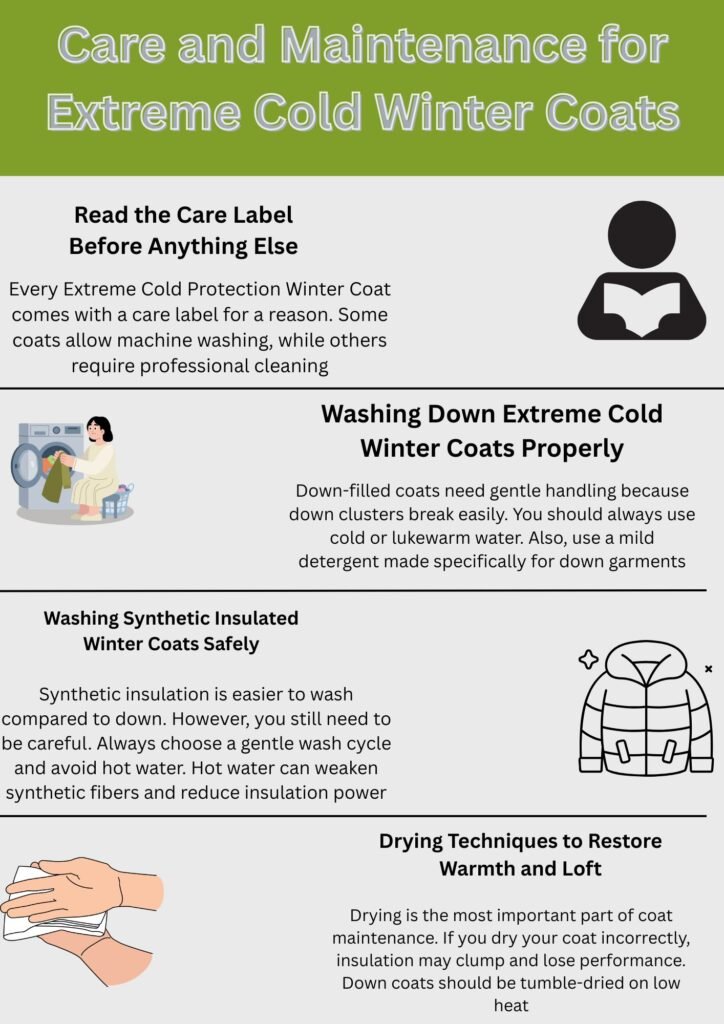
Read the Care Label Before Anything Else
Every Extreme Cold Protection Winter Coat comes with a care label for a reason. Some coats allow machine washing, while others require professional cleaning. If you ignore these instructions, you can damage the insulation or shrink the outer fabric.
Washing Down Extreme Cold Winter Coats Properly
Down-filled coats need gentle handling because down clusters break easily. You should always use cold or lukewarm water. Also, use a mild detergent made specifically for down garments. Regular detergent can strip natural oils and reduce loft.
Washing Synthetic Insulated Winter Coats Safely
Synthetic insulation is easier to wash compared to down. However, you still need to be careful. Always choose a gentle wash cycle and avoid hot water. Hot water can weaken synthetic fibers and reduce insulation power.
Drying Techniques to Restore Warmth and Loft
Drying is the most important part of coat maintenance. If you dry your coat incorrectly, insulation may clump and lose performance. Down coats should be tumble-dried on low heat. Adding dryer balls helps break clumps and restores loft faster.
Conclusion
An Extreme Cold Protection Winter Coat is absolutely worth it for harsh winters. It provides powerful insulation and wind resistance. It also keeps your body stable in heavy snowstorms.If you live in a snowfall-heavy city, you will feel the difference immediately. If you travel to polar regions, it becomes essential gear. Outdoor workers also benefit because they stay warm longer.However, if your climate is mild, it may feel too heavy. In that case, a regular winter jacket may be enough. Still, for blizzards and extreme cold, nothing beats a true expedition-style parka.
FAQs
How cold is an extreme cold protection winter coat rated for?
Most are rated between -20°C and -50°C. Expedition models may handle even lower temperatures. However, wind chill changes real performance.
Are these coats too warm for daily use?
Yes, they can feel too warm in mild winter cities. If temperatures stay above -5°C, you may overheat. However, they are perfect for harsh snowstorm commuting.
Can I wear one in snowstorms?
Yes, that is their best purpose. An Extreme Cold Protection Winter Coat blocks wind and keeps snow out. It also maintains warmth for long outdoor exposure.
What is the warmest winter coat type?
A high-fill-power down parka is usually the warmest. Coats with 800+ fill power perform extremely well. However, synthetic coats win in wet snowstorms.