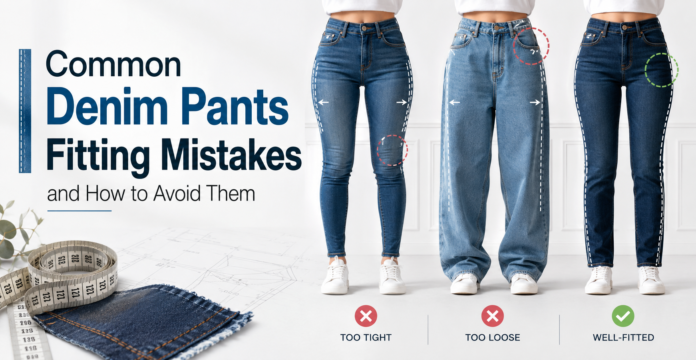
A denim pant fitting mistakes guide shows shoppers that fit is as important as color, fabric, and style. Shoppers do not care how stylish a pant is if it does not fit well. Pants that are too tight pull at the hips and thighs. Baggy pants fit poorly and careless. Pants should fit comfortably enough to sit and move around easily. Brands that show sizing and explain fit well make it more likely that a customer will be happy with their purchase and less likely to return it.
Denim Pants Fitting Mistakes Buyers Make First
Mistakes in fitting denim often begin with buyers considering only the waist and neglecting the rest of the body. denim pants fitting mistakescan fit the waist but can still be tight at the hips or thighs. Or denim can fit fine while standing, but fit the body oddly, or can be very uncomfortable while sitting. A full product category like the denim pants collection can include different cuts, so buyers should compare fit, length, rise, and leg shape before choosing. Checking only one measurement is not enough. A better choice comes from understanding the full pant structure.
Choosing the Wrong Waist Size
One common mistake when buying denim pants fitting mistakes is either buying the waist too small or too large. A small waist can make pants fit uncomfortably tight after meals or long periods of sitting. A large waist can make pants slide down and fit too loosely. The waistband should fit without feeling tight and without the need for constant adjustment. Buyers should measure their natural waist as well as the point where they expect the waistband to sit. It can also help to compare the pants size chart to a good fitting pair of pants.
Ignoring Hip and Seat Room
Buyers tend to overlook hip and seat room when buying pants, leading to a lack of space in the seat for sitting and walking. Pants that fit too tight in the seat will cause the pants to warp, making the pockets stick out. If pants fit too loose in the seat, the back of the pants will sag. Good seat fit is snug, not stretched. Women’s denim is more variable in fit and body shape, making it more important to get the seat area right. Buyers need to think about hips and avoid denim designed to fit something other than the hips.
Picking the Wrong Rise
Rise refers to the measurement between the waistband and the seam of the pants at the crotch. Usually, the rise of denim pants is designed for the average body type of the population, which is why fitting issues arise for different body types. Low-rise denim pants fitting mistakesis often uncomfortable to sit in for long periods. Of course, high-rise denim is nice for coverage, but can often be uncomfortable. Mid-rise denim is often good for daily wear as long as it is balanced. Customers should pick the rise of denim based on comfort, body type, and the reason for styling the denim. A good rise will help the waistband sit securely and the pant look neat from the front and back.
Not Checking Thigh Comfort
Thigh comfort is overlooked by many consumers, but it should be taken seriously because of how important comfort is to demi. With poor fitting pants, thigh comfort can easily impact the way a person moves – this is especially the case when thighs are not fitting correctly to the shape of the pant. If denim pants fit tightly around the thighs, fabric doesn’t have enough space to pull when a person walks or sits. If the fabric is too loose, people will have the opposite issue and denim will look overly baggy. For shorter styles like denim capri pants for women, thigh and knee comfort are even more visible because the leg shape is shorter.
Wrong Inseam Length
Inseam length refers to the distance from the inner crotch to the bottom edge of the pants. Inseams that are too long or short can cause significant problems when fitting pants. Long inseams cause pants to bunch at the shoes and short inseams make pants look unfinished. Having the right inseam corresponds to height and shoe and pant style. Long denim is meant to meet the shoes, denim meant to be ankle length should meet around the ankle, and denim pants fitting mistakes that is cropped should be well above the ankle. Having clear information on inseams allows customers to get the right length.
Forgetting Fabric Stretch
Stretch in fabric impacts the fit of the finished product. Everyday mistakes in buying denim stems from people generalizing the properties of all denim fabric. Some denim is lighter and more flexible while others may be heavier and more rigid and will require more room in the design. Stretch denim has a more comfortable fit, however if the design is too fitted, it may lose its shape. Rigid denim pants fitting mistakes may have a more fitted and uncomfortable design, however with wear it will loosen. It is important to read the fabric content before choosing a size. Additionally, brands should include a description of the stretch of their fabric to ensure good fit.
Simple One-Line Fit Checks
These checks help buyers avoid denim pants fitting mistakes before buying or approving production.
- Check the waist because it should feel secure without pressure.
- Check the hips because the fabric should not pull across the seat.
- Check the rise because it should match comfort and body shape.
- Check the thighs because movement should feel easy.
- Check the inseam because the hem should stop at the planned point.
- Check the leg opening because it should match the shoe style.
- Check stretch because fabric behavior can change the final fit.
These simple points make denim fitting easier for buyers who do not know technical garment terms.
Ignoring Work and Daily Movement
Some denim pants fitting mistakes look good while standing but may actively feel wrong when you try to do anything in them. Denim pants fitting mistakes come into clear display when the wearer sits, bends, walks, climbs stairs, or works long hours. For practical styles like work denim pants, the fit must support movement and durability together. A work pant should not be too tight at the knees, thighs, or seat. It should also stay secure at the waist. Casual denim can focus more on style, but daily movement still matters. Buyers should always test comfort beyond the mirror.
Final Guide to Avoid Wrong Fit
To avoid denim fitting errors, customers should consider the fit of the entire pant, not just the waist. The waist, hips, rise, thighs, inseam, leg opening, and pant stretch all need to be considered together. denim pants fitting mistakes should be properly balanced to allow the customer ease of movement. Denim companies should include size guides, and fit notes, and describe the models in the product descriptions. Consumers should measure their body and compare it to the measurements of product. The more companies include information regarding fit, the more confident customers will feel making the purchase and fewer products will need to be returned. Better fit means improved comfort, style, and longevity.
FAQs
What are common fitting problems in denim pants?
Common problems include tight waist, loose waist, tight hips, wrong rise, short inseam, long inseam, and poor thigh comfort.
How can buyers choose the right denim pants size?
Buyers should check the size chart, waist, hips, inseam, rise, and fabric stretch before choosing a size.
Why do denim pants feel tight when sitting?
They may feel tight because the seat, thighs, rise, or fabric stretch does not match the wearer’s body and movement.
Should denim pants be tight or loose?
Denim pants should feel secure, but they should not hurt, pull, sag, or stop normal movement.
How can brands reduce fitting confusion?
Brands can reduce confusion by adding clear size charts, fit descriptions, fabric stretch details, and product measurements.