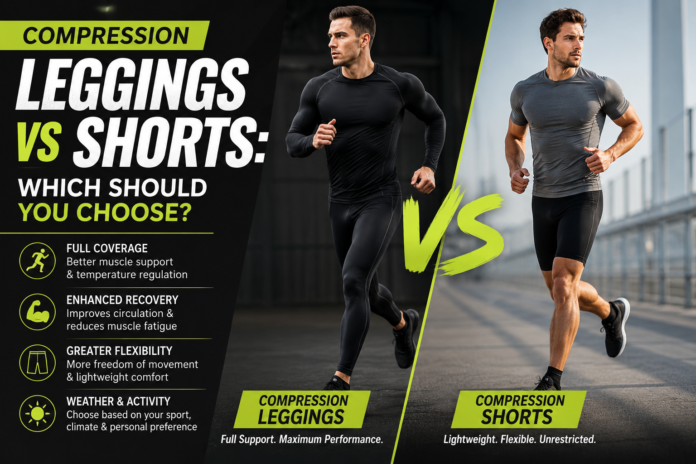
Compression leggings and compression shorts both support the muscles by fitting close to the body, but they are not the same garment. The easiest way to understand the difference is coverage. Compression leggings cover the full leg, usually from waist to ankle, while compression shorts cover only the upper legs. This difference changes how they feel during training, how much warmth they provide, how much skin they protect, and which activities they suit best. If you are choosing between compression leggings vs compression shorts, think about your sport, weather, comfort level, and how much support you want around your thighs, knees, calves, and ankles. Leggings are often better for cooler weather, full-leg support, outdoor runs, gym training, recovery, and sports where leg coverage matters. Shorts are often better for hot weather, quick workouts, high-sweat sessions, and people who want freedom around the knees and lower legs. The best choice is not about which one looks better; it is about which one feels useful on your body during real movement.
Compression Leggings vs Compression Shorts: Simple Meaning
The keyword compression leggings vs compression shorts is mainly about deciding between full-leg compression and upper-leg compression. Compression leggings give a longer, more covered fit, so they can support more areas of the leg at the same time. This can feel useful when you want a smooth, secure layer from the waist down to the ankles. Compression shorts give a lighter and cooler fit because they only cover the hips, glutes, and thighs. They are easier to wear under loose shorts, sports uniforms, or gym clothing. Many athletes keep both in their wardrobe because each one solves a different problem. If you want one simple rule, choose leggings when you need more coverage and choose shorts when you need more airflow. A runner may wear leggings on a cold morning but choose shorts for an indoor treadmill session. A football player may use shorts under a kit, while a gym user may prefer leggings for leg day or recovery work.
How Compression Gear Helps During Training
Compression clothing is designed to sit close to the body, reduce fabric movement, and give muscles a supported feeling during exercise. It does not magically make someone stronger, but it can help the body feel more stable while running, lifting, cycling, stretching, or playing sports. A good pair should feel firm without stopping normal movement or making breathing uncomfortable. The fabric should also move sweat away from the skin so the wearer does not feel heavy or sticky during training. For people comparing compression leggings vs compression shorts, the real value is not only the tight fit; it is the mix of support, stretch, comfort, sweat control, and confidence during movement. You can also explore broader performance clothing options in the activewear collection if you want to compare compression items with other training wear. A better garment should stay smooth under movement, should not rub the skin, and should not need fixing after every set, sprint, or stretch.
When Compression Leggings Are the Better Choice
Compression leggings are usually the better choice when you want full-leg coverage and a warmer training layer. They are helpful for outdoor running, winter workouts, football training, gym sessions, yoga, recovery walks, and long travel days where your legs may feel tired. Because leggings cover the knees, calves, and lower legs, they can also protect the skin from light scratches, cold wind, gym equipment, turf, and floor contact. They are a smart option for people who do not like exposed legs during exercise or who want a neat, streamlined look. In the discussion of compression leggings vs compression shorts, leggings win when the priority is coverage, full-leg support, and a more secure feeling from waist to ankle. For a direct product example, look at these compression leggings and notice how the long design supports more of the lower body. Leggings can also be a good choice for stretching because they keep the legs covered during bending, lunging, and floor exercises.
When Compression Shorts Are the Better Choice
Compression shorts are usually better when the weather is hot, the workout is very sweaty, or the athlete wants less fabric around the legs. They are common for running, football, basketball, gym training, cycling, boxing, and team sports because they support the upper legs without covering the knees or calves. Many people wear them under regular shorts to reduce rubbing between the thighs and to keep everything secure during quick movements. Shorts can also feel easier for fast sprints, heavy squats, deadlifts, and high-intensity training because the lower leg stays free. If your main question is compression leggings vs compression shorts for summer workouts, compression shorts usually feel cooler, lighter, and less restrictive. They are also easier to layer under uniforms, loose gym shorts, or everyday athletic clothing. Shorts may be the better daily option for people who sweat quickly, train in warm gyms, or dislike the feeling of fabric around the calves.
Comfort, Heat, and Weather Differences
Weather is one of the biggest reasons people choose one style over the other. Compression leggings hold more warmth because they cover more skin, so they are often more comfortable in cool gyms, early morning runs, winter training, hiking, or outdoor sports. Compression shorts release heat faster because they leave the lower legs open, so they are better for summer, humid climates, indoor cardio, and intense workouts where overheating is a problem. The right choice also depends on personal comfort. Some people feel more confident in leggings because they give more coverage, while others feel more relaxed in shorts because they feel less covered and more breathable. When comparing compression leggings vs compression shorts, do not only think about style; think about body temperature, sweat level, workout length, and the place where you train. A simple comfort test is to ask yourself whether you usually feel cold or overheated during exercise. If you get cold quickly, leggings may help. If you heat up quickly, shorts may feel easier.
Movement, Stretch, and Sport Performance
Movement matters a lot because compression gear should never fight against your body. Compression leggings can feel smooth and supportive during running, stretching, yoga, hiking, recovery, and strength training, but they must have enough stretch around the knees and hips. Poor-quality leggings may slide down, bunch behind the knees, or feel too tight around the calves. Compression shorts can feel easier during explosive sports because they do not cover the knee joint, which some athletes prefer for jumping, sprinting, kicking, or deep squats. However, shorts must still stay in place and should not roll up during movement. In the compression leggings vs compression shorts choice, leggings are better for full-leg control, while shorts are better for quick leg freedom. The best product is the one that lets you move naturally without constant adjustment. If the garment distracts you during training, it is not doing its job, even if the fabric looks good or the size label seems correct.
Fit, Fabric, and Size Guide
A compression garment should feel snug, but it should not feel painful, numb, or hard to move in. If the waistband digs into the stomach, the seams rub the skin, or the fabric becomes see-through when stretched, the size or material is not right. Good compression wear usually uses stretch fabrics such as polyester-spandex or nylon-spandex blends because these materials can recover their shape after movement. The waistband should stay flat, the stitching should feel smooth, and the fabric should not twist during training. For buyers comparing compression leggings vs compression shorts, the fit test is simple: walk, squat, bend, and stretch before judging the garment. If it stays in place and feels supportive without pinching, it is probably a better choice. You can also review more options in the compression wear collection to understand different compression styles. Do not buy only by waist size; also consider thigh fit, rise, inseam length, fabric thickness, and whether you plan to wear the item alone or under another layer.
Quick Decision Points
- Choose compression leggings when you want full-leg coverage, more warmth, and support from waist to ankle.
- Choose compression shorts when you want a cooler feel, easier layering, and more freedom around the knees.
- Choose leggings for cold weather, outdoor training, recovery, travel, and exercises where skin protection matters.
- Choose shorts for hot weather, indoor cardio, team uniforms, sprinting, cycling, and high-sweat workouts.
- Choose leggings if you prefer a smoother and more covered look during exercise.
- Choose shorts if you want support around the thighs without extra fabric on the lower legs.
- Choose the fabric that feels breathable, stretchy, and strong instead of buying only by appearance.
- Choose the correct size because compression should feel firm, not painful or restrictive.
- Choose based on your real training routine, not only on what looks popular online.
Common Mistakes Buyers Should Avoid
One common mistake is buying compression clothing that is too small because people think tighter always means better support. In reality, a garment that is too tight can feel uncomfortable, restrict movement, and make workouts harder. Another mistake is choosing only by style and ignoring the workout type. A person who trains outside in cold weather may not enjoy shorts, while a person who trains in a hot gym may feel too warm in leggings. Some buyers also ignore seam quality, waistband comfort, and fabric recovery. If the fabric loses shape after a few wears, it will not provide the same secure feeling. When thinking about compression leggings vs compression shorts, avoid copying someone else’s choice without considering your own body, weather, sport, and comfort needs. Also avoid thick fabric for very hot workouts and very thin fabric for outdoor cold sessions, because both can make the training experience uncomfortable.
Conclusion
The best choice depends on the situation, not on one fixed answer. Choose compression leggings if you want more coverage, more warmth, more full-leg support, and a cleaner training layer for outdoor or cooler conditions. Choose compression shorts if you want less fabric, better airflow, easier layering, and more freedom around the knees and lower legs. If you train all year, keeping both is the smartest option because weather and workout needs change. Compression leggings vs compression shorts is not about which item is always better; it is about which item solves your problem today.
FAQ
Are compression leggings better than compression shorts?
Compression leggings are better when you need full-leg coverage, more warmth, and support around the calves and knees. Compression shorts are better when you want a cooler and lighter feel. The better option depends on your workout, weather, and comfort.
Can I wear compression shorts under regular shorts?
Yes, compression shorts are commonly worn under regular shorts, gym shorts, football shorts, and team uniforms. They can help reduce thigh rubbing, improve comfort, and keep the body feeling secure during movement.
Are compression leggings good for hot weather?
Compression leggings can feel too warm in very hot weather, especially during intense workouts. Lightweight and breathable leggings may still work, but compression shorts are usually more comfortable for heat, humidity, and high-sweat training.
Should beginners choose compression leggings or compression shorts?
Beginners should choose based on comfort first. If they want more coverage and support, leggings are a safe choice. If they want easy movement and cooler wear, shorts are better. Many beginners eventually use both.