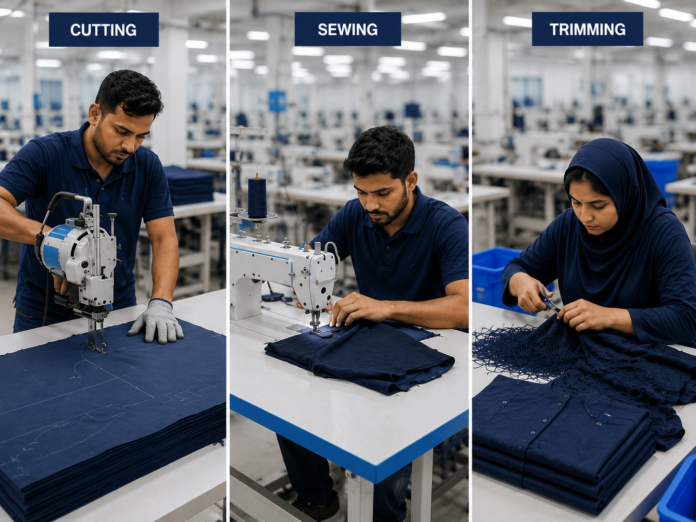
If you’re new to the fashion industry, you may come across the term CMT Clothing Manufacturing. CMT stands for Cut, Make, Trim. With this method, brands send fabric and design, and the factory handles the production.
If a brand wants full control over the quality of the fabrics and trims, they would prefer CMT services. If a business is after reliable production at scale, a Bulk Apparel Manufacturer can swiftly bring the design to the finished product.
How CMT Clothing Manufacturing Works
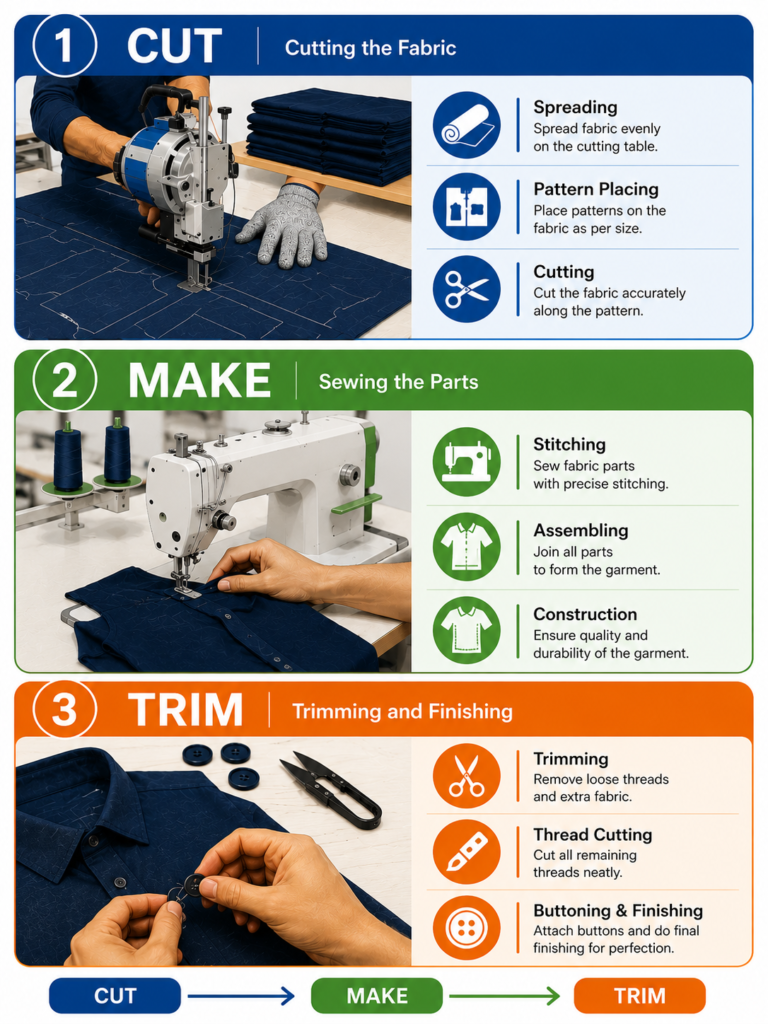
A CMT setup comprises three stages in the production process:
- Cut: The fabric is shaped to your design as a pattern.
- Make: The fabric is assembled into garments by sewing.
- Trim: Adding buttons, labels, and other finishings completes the garment.
This option is affordable for brands that already have materials and patterns. Designers who are interested in ethical and sustainable production can receive CMT services with ethical sourcing from a Sustainable Apparel Manufacturer.
Advantages of CMT Clothing Manufacturing
The following are some of the benefits of CMT Clothing Manufacturing:
- Material control: Brands provide the fabrics and trims, ensuring the quality of the final product.
- Financial reduction: Clients pay for the labor and production services only.
- Timely production: Orders are not held up due to production timing.
- Design control: Clients decide the design and style overall.
For brands that want to test new collections and have the ability to produce in low volume, the use of a Made-to-Order Apparel Manufacturer is a great option.
CMT vs. Full-Package Production
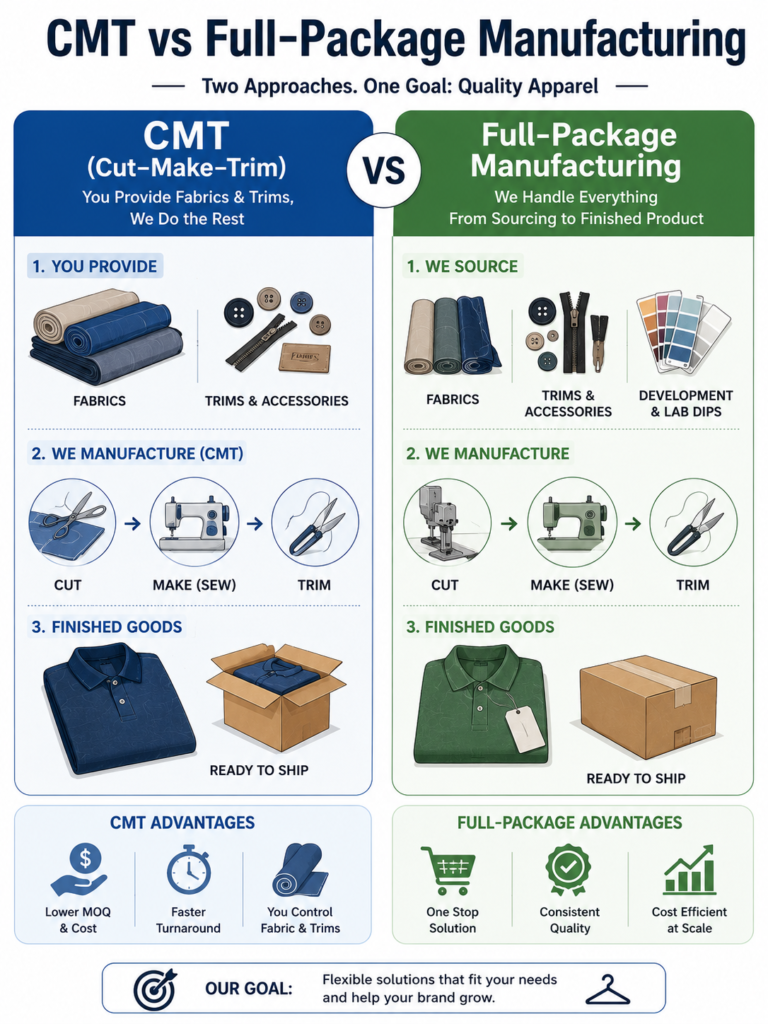
CMT is in contrast to full-package production, which means the factory also sources the fabric and trims.
| Feature | CMT Manufacturing | Full-Package Manufacturing |
|---|
| Fabric & Trims | Provided by brand | Provided by factory |
| Cost | Lower | Higher |
| Control | High | Moderate |
| Best for | Brands with own materials | Brands without suppliers |
CMT Production is often selected by brands that want low cost and already have fabrics in house while new brands often select full-package production. For flexible small runs, a Low MOQ Clothing Manufacturer is the best option.
Suggestions for Collaborating with a CMT Manufacturer
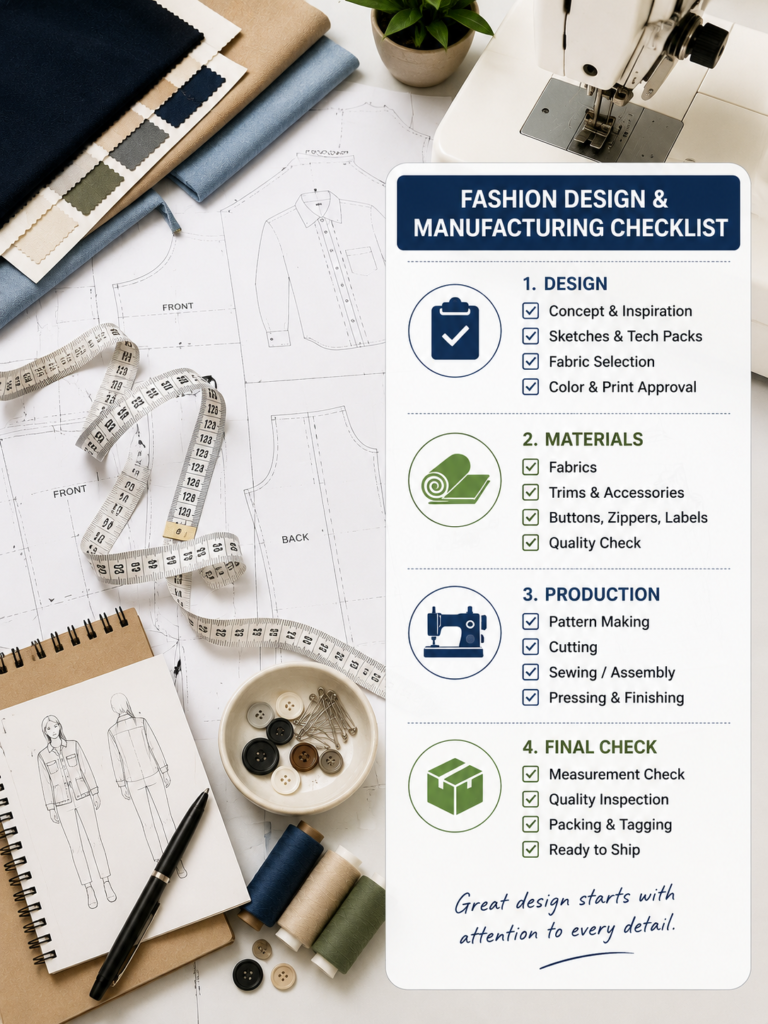
For optimal results with CMT services:
- Be precise with patterns and specs to reduce errors.
- Test run samples and approve before mass production.
- Characterize material with details such as the type of fabric, stitching, and the nature of the trimmings, etc.
- Quality control checks require frequent monitoring of the progress.
For the brands that want the support of skilled production to be more interactive, the CMT Clothing Manufacturers will help you through the process while keeping the standards of quality intact.
Who Can Benefit From CMT Clothing Manufacturing?
- Startups and independent fashion labels.
- Designers that incorporate their own trims and fabrics.
- Brands that want to manage their own production without a full-package offer.
For designers that want to fully manage their own production at the factory level, an FPP Apparel Manufacturer will manage the production as per your guidelines.
Conclusion
CMT Clothing Manufacturers are great for brands wanting to keep their labor-intensive work to a minimum, to keep their trims, fabrics, and designs in their own hands. With the right manufacturers, they can do just that while getting quality work and saving costs on their work.
Starting your first collection or expanding your company, will be made easier to manage with professional CMT manufacturers, making it a stream-lined production.
FAQs
What does CMT stand for in clothing manufacturing?
CMT is an acronym that stands for Cut, Make, Trim. This process gives the brand the control to provide their own fabric and design, while the factory does the garment production and the finishing touches.
Who should use CMT Clothing Manufacturing?
CMT is suited for brands or designers that provide their own fabric, trims, and designs. They will have the upper hand and control quality as they please.
What is the difference between CMT and full-package manufacturing?
CMT is when a brand supplies fabric and trims. In full-package manufacturing, the factory will source everything. CMT is usually more cost-effective and gives the brand more control.