Cashmere wool fabric is considered one of the most luxurious fabrics on the globe for a good reason. It is extremely soft, warmer than most other fabrics, and lightweight, which all add to its cost. Due to this reason, cashmere wool fabric is not only appreciated by high fashion, but also loved for home decor and other accessories. This article aims to shed light on the history, types, properties, benefits, common uses, and care guidelines about cashmere wool fabric that the owner or prospective buyer must know. Understanding this wool fabric will enable you to make smart decisions and enjoy its quality and elegance on the coldest winters and more for several years to come.
History and Origins of Cashmere Wool Fabric
To value cashmere wool fabric correctly, one needs to understand all the use it has been put since it originated.
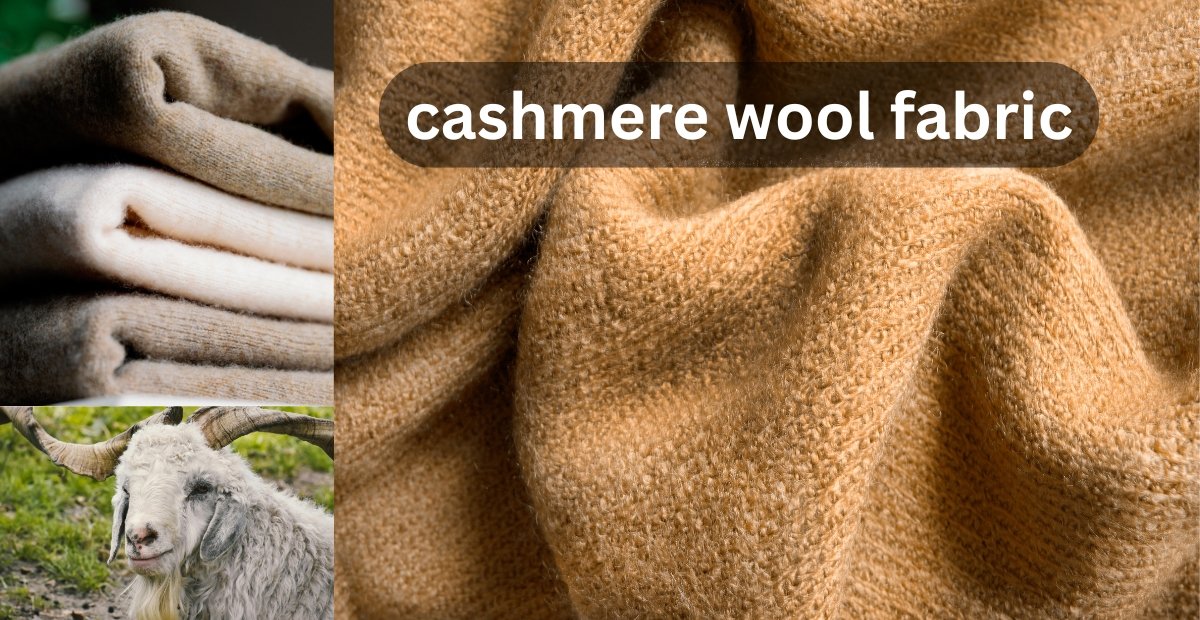
*Cashmere wool is collected primarily from cashmere goats’ soft undercoats, which can be found in Mongolia, Tibet, and Kashmir mountain regions. Each goat produces only tiny amounts of cashmere wool per year.
The people living in the Himalayan and central Asian mountain ranges shawls using cashmere and wore them for added warmth and comfort. Later, during the colonial and trade period, the Europeans’ love for cashmere wool and fine shawls and luxury fabrics rose the status of the shawl, particularly the Kashmir shawl. ([Wikipedia][2])
Cashmere, as it is known today, comes from the subcontinent of India and the earliest fine shawls from this region were made in Kashmir. Due to the lack of cashmere goats, Cashmere wool remains a luxury cotton due to the reduced supply and labor-intensive harvesting. Over the years the breeding of goats, processing methods, and trade increased the availability of Cashmere. ([Wikipedia][2])
How Cashmere Wool Fabric Is Made
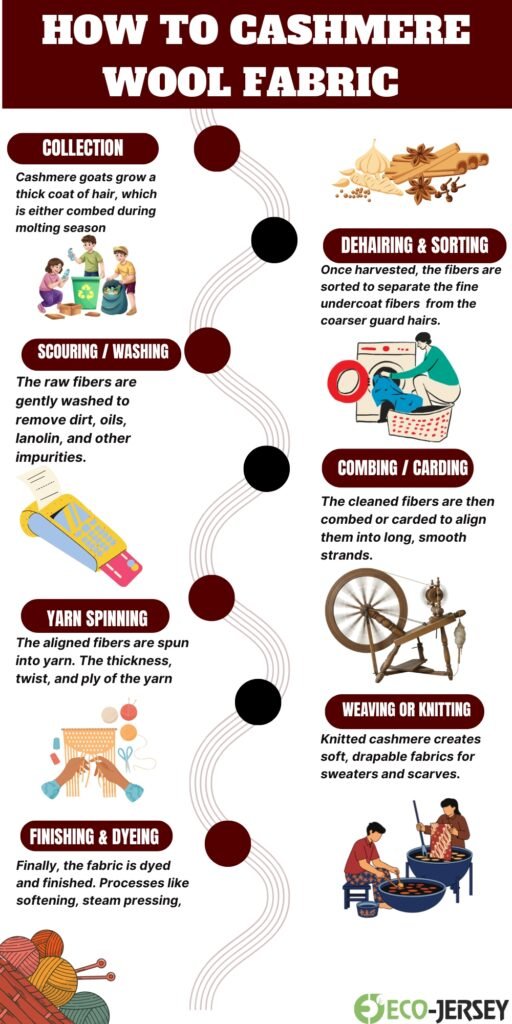
Appreciating the price and fragility of cashmere wool it is important to understand how cashmere wool fabric is made.
- Collection / Harvesting.
Cashmere goats grow a thick coat of hair. That coat can be combed (or shed during molting) to gather the raw cashmere fibers. In order not to damage the cashmere fibers, this process right is often done by hand. (Master Class)
- Dehairing & Sorting
Once collected, the raw material is sorted in order to separate the fine under-coat fibers (the true cashmere) from the coarser guard hairs. These hairs are tough, less soft, and often discarded for lower-grade textile use. (Master Class)
- Scouring / Washing
Fibers are cleaned to take out the dirt, natural oils, lanolin, and all other impurities. Cashmere wool fabric is delicate, and so the washing must be done very gently in order to keep the cashmere’s fineness. Too harsh of washing can damage the cashmere fibers. (Sewport)
- Combing / Carding
Having been washed, the cashmere is then combed or carded in order to be spun into cashmere fabric. There is a tendency for the combed cashmere to yield longer and more aligned fibers, thus producing cashmere fabric of a higher quality and less tendency to pill. (Master Class)
- Yarn Spinning
The sorted and combed cashmere fibers are spun into yarns. The cashmere wool fabric is determined by the amount of softeness, sturdiness, or drape it is; determined by the amount of twist, ply, and thickness it has. More blending of fibers increases the twist, which makes the cashmere warmer, stronger, and less soft. (Sewport)
- Weaving or KnittingDepending on the desired type of fabric, yarn could either be woven or knitted. Cashmere knits (sweaters, scarves) are more likely to be held and more drapable while cashmere woven (shaws, wraps, outer coats) adds structure. (Moda Knits)
- Finishing & DyeingIf the fabric is meant to be colored, it is dyed and then finished. Finishing may involve softening, steam pressing, or other techniques, the aim of which is to make the fabric feel better and look better. At this stage, cashmere wool fabric is ready for garment manufacturing or sale. (Sewport)
Properties of Cashmere Wool Fabric
| Property | What It Means | Why It Matters |
|---|---|---|
| Extreme Softness | Cashmere fibers have a diameter below 19 microns, much finer than sheep’s wool. Their smoothness and flexibility give cashmere its signature ultra-soft touch. | Provides unmatched comfort, making it ideal for sensitive skin and luxury garments. |
| Lightweight Warmth | Cashmere fibers naturally trap air, offering excellent insulation while staying lightweight. | Keeps you warm in cold weather without the bulk of heavy coats or layers. |
| Moisture Absorption & Breathability | Cashmere can absorb moisture while remaining dry to the touch and allows for air circulation, reducing sweat buildup. | Ensures comfort across various climates and prevents overheating. |
| Hypoallergenic Tendencies | The absence of coarse fibers makes cashmere less irritating than many other wools, though some individuals may still have sensitivities. | A preferred choice for people with allergies or sensitive skin. |
| Elasticity & Drapability | Natural crimp and elasticity give cashmere fibers the ability to stretch and recover while offering a graceful drape. | Creates elegant, flowing garments that hold their shape well. |
| Natural Luster & Appearance | The fine diameter and smooth surface of the fibers reflect light subtly, giving cashmere a refined, luxurious look. | Enhances the premium appeal of high-end clothing and accessories. |
| Durability with Proper Care | High-quality cashmere resists pilling and wear if maintained properly. Lower-grade cashmere, however, may lose its softness faster. | Proper care extends the garment’s lifespan, making it a long-term investment. |
Types & Grades of Cashmere Wool Fabric
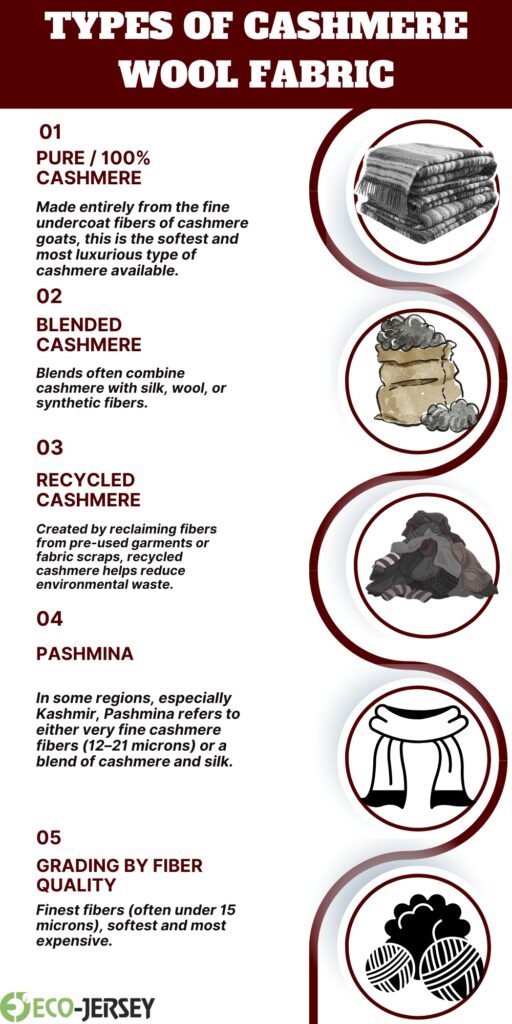
Cashmere synthesis comes in a number of forms, grades, and blends. Each type has its own compromises in price, touch, durability, and purpose.
- Pure / 100% Cashmere: This type is easier to carve out from the fine undercoat fibers. Out of all the types, it provides the softest and the most luxurious feel. Out of all the other types of cashmere, cashmere wool fabric is the most expensive. (Moda Knits)
- Blended Cashmere: The most popular type of cashmere blend with what is wool fabric silk and even synthetic fibers. Such blends may diminish the expense accordion, bolster the strength, mitigate the stretch, or change the texture. However, it is often less soft than cashmere. (Moda Knits)
- Recycled Cashmere: Reclaimed fibers from scraps of garment is used to formulate new yarn and fabrics. This decreases pollution as it uses reclaimed waste materials. However, the quality of the fibers reclaimed is often inconsistent. (Moda Knits)
- Pashmina: This term is often used interchangeably with fine cashmere in some regions (Kashmir for example). The definition is vague, and sometimes includes the very fine cashmere fibers (12 – 21 microns) or a blend of cashmere and silk. (Wikipedia)
- Grading by Fiber Quality: Cashmere is most often graded ( for example, Grade A, B, C) Cashmere with the least amount of coarseness is the most fine and soft. (Has the smallest diameter with much longer fibers) (Moda Knits)
Cashmere Wool Fabric Benefits
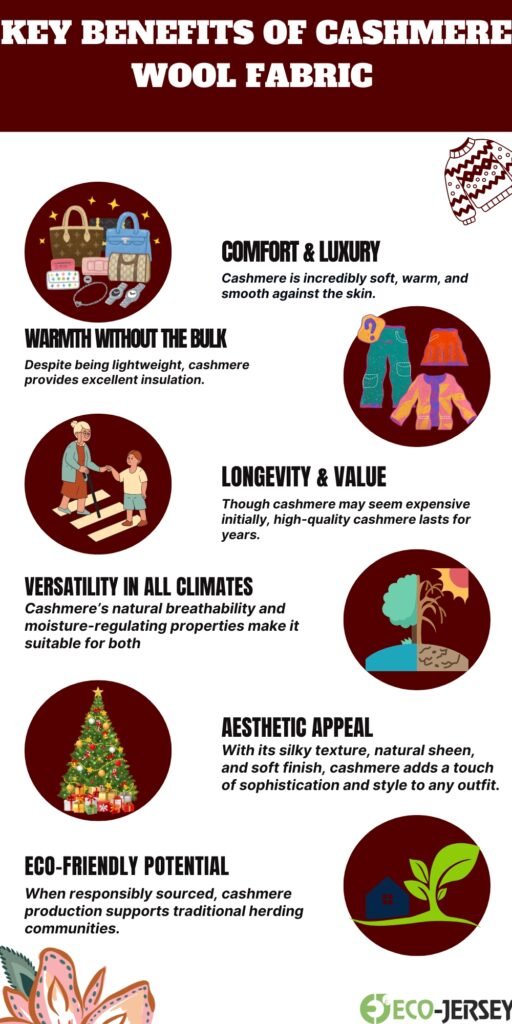
Due to the unique properties of cashmere, it is very desirable.
- Comfort & Luxury – The cashmere feels good and its warm as well as smooth. Any outfit worn with such material feels like it offers utmost comfort like ordinary wool cannot.
- Warmth Without Bulk – No one enjoys being weighed down by heavy wool. Cashmere wool fabric protects you just as well whilst being lightweight enough to enable movement. The thin material makes layering a hassle-free endeavor.
- Longevity & Value – Cashmere may be expensive, but if it is the good quality cashmere, then wearing it for years will definitely justify the cost. This is because, over a duration of time, the cost per wear becomes quite cheaper.
- Versatility in Climate – Cashmere wool, because it breathes and regulates moisture, can be worn in the cold. However, cashmere can be worn in the summer as well, for the cool evenings, as it offers just the right temperature, along with comfort.
- Aesthetic Appeal – Cashmere wool is silky, has a natural shine, and a very soft touch. The combination of all three offers a stylish and smooth look.
- Eco-Potential (When Responsibly Sourced) – The collection of responsibly harvested cashmere from these herds can benefit traditional herding societies. Recycled cashmere decreases waste. The cashmere wool fabric of ecologically sound options helps lessen the carbon footprint. (Moda Knits)
—
Drawbacks / Things to Consider
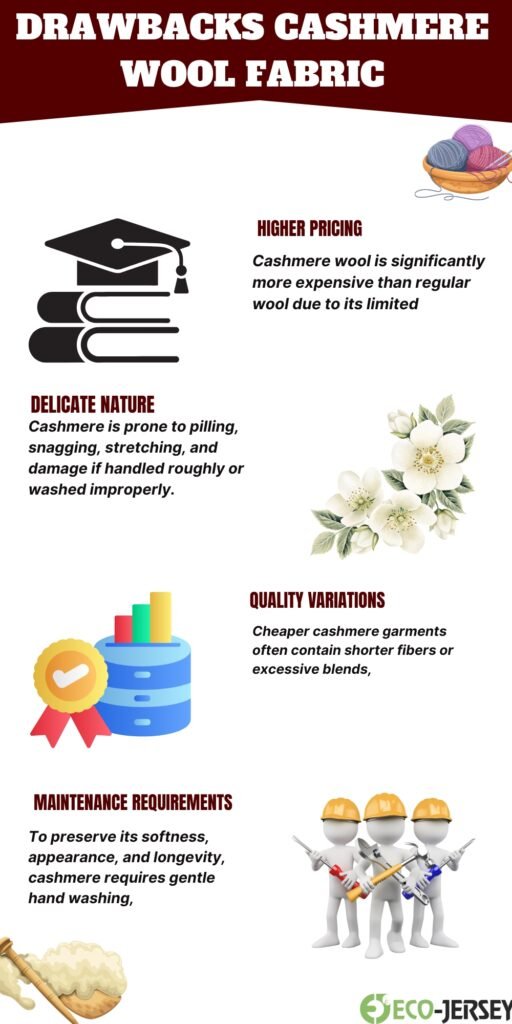
There are certain trade-offs that come with cashmere wool that are worth taking note of.
- Pricing: Cashmere wool fabric is more expensive than the average wool fabric because supply is limited (each goat only produces a certain amount) and the fabric is difficult to make. ([hatshopping.com][7])
- Fragility: Cashmere is easy to pill, snag, stretch, and damage in other ways with rough handling or improper washing, and these features are exacerbated in lower quality cashmere.
- Low breakage because of poor quality or processing: Garments made from cheap cashmere might include shorter fibers, or be blended too much, and as a result, they quickly lose their softness, pill, and are unlikely to last.
- Maintenance of cashmere: The softness, appearance, and overall quality of cashmere is maintained through gentle washing, limited exposure to heat, flat drying, and careful storage. These steps require, time and effort.
”Concerns about the environment during some production” Overgrazing of some areas caused by cashmere cashmere production if uncontrolled can have the opposite effect. It is vital to practice environmentally responsible sourcing. (Italian Artisan).
Common Uses of Cashmere Wool Fabric
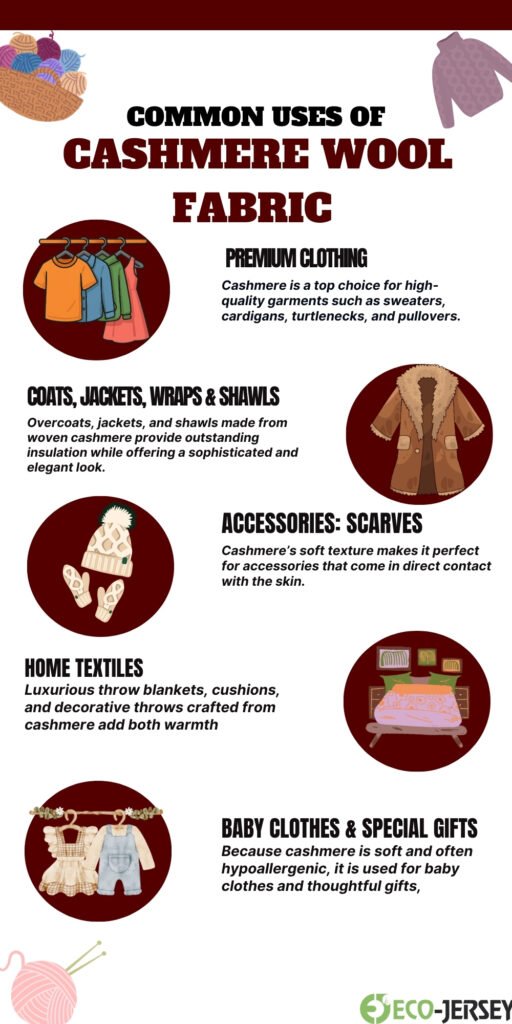
Cashmere can be widely used because of the luxurious touch it offers. The main ones are listed below:
- Clothing of the Highest Quality: The things that are clothing for the premium segment: sweaters, cardigans, turtlenecks, pullovers. Women’s clothing is most appreciated for its feather softness and for the warmth it provides. ([MasterClass][3])
- Coats, Jackets, Wraps, and Shawls: Overcoats and shawls are made of woven cashmere cloth. It provides great warmth and adds beauty. (Moda Knits)
- Scarves, Woolen Hats, Gloves, and Socks: Cashmere wool fabric used for accessories is very appreciated because it is very soft to the touch and soothing to the skin. (smartloom.blogspot.com)
- Home Textiles: Cashmere is used for luxurious throw blankets, cushions, and throws. Incorporating cashmere into interior home fabrics offers great soft touch appeal along with great aesthetics. (Moda Knits)
- Baby Clothes and Gifts: Cashmere wool is used for clothes made for babies and special gifts due to its soft touch and hypoallergenic nature. (smartloom.blogspot.com)
How To Choose Quality Cashmere Wool Fabric
When trying to get the best value, it is important to look for certain indicators of high quality. Check for the following:
- Fiber Diameter: indicator of quality is the diameter of the fiber used. Finer cashmere with lower micron texture is the softest.
Supply cashmere wool under 19 microns in diameter.
- Fiber Length: Pilling increases with less length and with increased length, durability increases.
- Grade Label: Prefer grade ‘A’ and above. Premium cashmere is more expensive but worth it due to the social stigma.
- Cashmere to Other Fibers: High cashmere content is expensive, but worth it in comfort.
- Weave / Knit: Restrained comfort and softness balanced against texture and appearance, more appealing.
- Source and Ethical Practices: Though opaque — the treatment of the herd, and grazing impact, along with transparent traditional herding strategies matter.
- Instructions on Label: Designed suggestions on wash, along with the arrangement of the corral drives the level of cashmere and wool.
Care Tips: How to Care For Cashmere Wool Fabric
In doing the above, the cashmere wool will retain it’s soft and luxurious feel.
- Washing
Most people prefer handwashing. Use cold or lukewarm water (not hot), and use mild detergent meant for wool or cashmere. Do not use soaps that are too strong. If machine washing is allowed (delicate cycle), use a mesh laundry bag for protection. (Better Homes & Gardens)
- Frequency
You do not need to wash cashmere every time you use it. It is sometimes enough to air it out or spot clean. Washing too often will break down the fibres. (Byrdie)
- Drying
You can never wring or twist cashmere. After rinsing, gently squeeze out the excess water and roll the item in a towel to absorb more water. Then lay cashmere flat to dry while shaping it. It should not be in direct sunlight or near heat. Do not hang cashmere that is heavy because it will stretch. ([MasterClass][3])
- Storing
Moths should be kept away with cedar blocks or lavender sachets but not chemicals that could damage the fibre. Make sure the garments are completely dry before storing them. (Byrdie)
- Pilling Prevention & Removal
Pilling is a norm with soft fibres. To reduce it, do not rub soft surfaces together. When soft fibres are formed, use a fabric shaver, cashmere comb, or scissors to remove them, but do not pull.
- Restore and ReviveIf stretching occurs (for example, from use), reshape very gently while damp. If a garment loses loft, steam lightly — or, professional pressing. Keep care to maintain for maximum lifespan.
Considerations for Sustainability and Ethical
Due to the luxurious nature of cashmere wool fabric, the environmental and ethical concerns are significant. Points to consider include:
- Per Animal Yield is Low: Each cashmere goat produces a meager clip of the undercoat, usable for kashmir, roughly 150 grams a year, making the raw material scarce.
- Impact of Grazing: In certain regions, an abundance of goats without proper supervision can lead to overgrazing and eventually, land erosion. Sustainable herding is critical.
- Sourcing: Do the due diligence and find brands that are certified to source sustainably, or that provide animal welfare and ecology impact assessments.
- Recycled Cashmere does amplify the issue of leftover cashmere, while also having a reduced environmental impact, although the quality is uncertain.
- Longevity is a Form of Sustainable: A cashmere piece of clothing that is of high quality, and is properly looked after, will last much longer than cheaper alternatives. This eventually, reduces material consumption.
What should I do to effectively extend the life of my cashmere wool fabric?
The policies explained are easy to use and will help with the extending of the cashmere wool fabric.
- Do put cashmere wool items away to rest after being worn.
- Do keep the cashmere wool item out so air can circulate around it.
- Do use rubbing for spot cleaning rather than full washing.
- Don’t use harsh detergents and other harsh chemicals to treat cashmere wool fabric.
- Don’t put cashmere and wool items near heat, and that includes radiators and the sun.
- Don’t use hangers to suspend heavy articles of cashmere; keep them flat for storage.
Conclusion
The cashmere wool fabric continues to represent wealth, ease, and sophisticated aesthetics. There is artistry, diligence, and attention to detail in every step of the process from its high origin in the mountains to the transformed version in your wardrobe. Unlike other fabrics, Cashmere is high in quality and also, when treated nicely, will remain as soft, beautiful, and warm for many years to come. Cashmere wool is also, more importantly, a craft that is filled with a wonderful and delightful heritage. If you treat cashmere wool nicely, you can also use it for many seasons as it is beautifully helpful.
FAQs
Is cashmere (100%) best all the time or are blends acceptable?
Nothing beats the feel of 100% cashmere, However, there are factors such as the quality that can affect durability as well as the price. Cashmere blends with wool, silk , or other synthetics are more affordable and tougher, However, they are less comfortable to wear.
How can I tell if cashmere is real?
Genuine cashmere can always be confirmed through the label and the fiber micron. With real cashmere, the feel is very soft as the fibers are very fine. The price can be an indicator too, if it’s too low, it’s more likely to be low quality. It good to check the source. Some brands are more reliable since they disclose the origin.
How much cashmere is enough to keep someone warm during winter?
This is determined by the thickness and knit of the cashmere. Strong insulation can be found in a dense knit or woven cashmere coat. In addition to the coat, sweaters or similar layers help keep warmth too. Cashmere is warm, especially when it’s lightweight. It works great when layered properly.