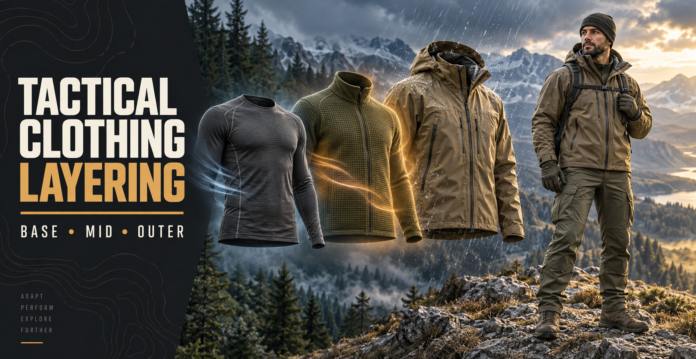
Tactical clothing layering is a system of garments that manages moisture, retains warmth, blocks wind, and protects against rain without restricting movement or equipment access. A functional system normally includes a moisture-managing base layer, an insulating mid-layer, and a protective outer shell. Each layer performs a separate job, and users can add or remove pieces as weather and activity change.
The best system is not the thickest one. It should match temperature, rain, wind, workload, armor, and time outdoors. Tight layers restrict movement, while excess fabric creates bulk beneath carriers, belts, and packs.
Start With the Base Layer
The base layer sits directly against the skin and moves perspiration away from the body. Polyester, nylon, merino wool, and blended performance knits are common choices. Lightweight fabrics suit warm conditions or intense activity, while midweight materials offer more warmth during cold, lower-output work.
Cotton is less practical when prolonged moisture is expected because it absorbs sweat and dries slowly. A damp base can feel cold when activity decreases. The garment should fit close without restricting movement, and its seams should not rub beneath armor or straps.
Add an Insulating Mid-Layer
The mid-layer traps warm air while allowing moisture from the base layer to continue moving outward. Fleece is widely used because it provides warmth, breathes well, and dries faster than many natural materials. Synthetic insulated jackets offer more warmth for their weight but may feel too hot during continuous movement.
Choose insulation according to workload as well as temperature. A person walking uphill generates more heat than someone standing still. Lightweight fleece may suit active movement, while thicker insulation is better during rest periods or cold camp conditions.
Use a Protective Outer Layer
The outer layer protects the system from wind, rain, snow, abrasion, and contact with rough surfaces. Softshells provide useful breathability, stretch, and resistance to light wind or brief drizzle. Waterproof hardshells offer stronger rain protection but can trap more heat during demanding activity.
A shell should cover other layers without pulling across the shoulders or limiting the elbows. Hood shape, cuffs, hem length, ventilation, and pockets affect performance. Eco Jersey’s feature guide explains why details must support movement and equipment access.
Layering With Body Armor
Body armor changes how heat, moisture, and pressure move through clothing. A combat shirt can reduce bulk beneath a plate carrier because it uses a breathable knitted torso with tougher sleeves. In cooler conditions, thin insulation may fit beneath armor, but bulky layers can affect carrier adjustment and mobility.
Outer insulation can be easier to manage during rest because it may fit over the carrier. Openings, pockets, and hoods must remain compatible with equipment. Test the complete system while reaching, kneeling, sitting, and carrying the expected load.
Important Layering Checks
Before using a system outdoors, check these points:
- Base fabric manages moisture and dries at a suitable speed
- Mid-layer provides enough warmth without excessive bulk
- Outer shell matches the expected wind and precipitation
- Sleeves allow full reach without pulling across the shoulders
- Pockets remain accessible around belts, carriers, and packs
- Cuffs, collars, and seams do not create pressure points
- Extra layers can be packed, added, or removed easily
Every garment should have a clear purpose. Similar layers add weight without improving adaptability. A spare base layer may provide more value than a second heavy jacket when clothing becomes wet.
Adjust Layers During Activity
Good tactical clothing layering requires adjustment before discomfort becomes serious. Remove insulation or open ventilation before a difficult climb, fast walk, or demanding task. Add warmth before a long stop rather than waiting until the body has already cooled. Small changes help reduce sweat buildup and preserve dry insulation.
Use the neck, cuffs, front zipper, and underarm vents to release heat. During rain, close openings before inner layers become wet. At rest, replace a damp base or air the insulation where practical.
Build a System for the Conditions
For warm weather, a moisture-managing shirt and light protective layer may be enough. Cold conditions require adjustable insulation and wind protection. Wet weather calls for a waterproof shell, ventilation, and spare dry clothing in a protected bag. A ripstop guide can also help when choosing durable exposed layers.
The lower body needs the same planning. Durable outdoor pants should match the climate and provide mobility without interfering with boots or equipment. Brands developing coordinated systems can work with an outdoor maker to align fabrics, fit, reinforcement, weather protection, and testing.
Conclusion
Tactical clothing layering works when every garment has a defined purpose. The base layer manages moisture, the mid-layer retains warmth, and the outer layer protects against wind and precipitation. Armor and equipment must be treated as part of the complete system.
Build the system around activity, climate, and mobility rather than maximum thickness. Test all layers together, adjust them early, and carry only the pieces needed to remain dry, warm, protected, and able to move.
FAQs
What are the three main tactical clothing layers?
They are a moisture-managing base layer, an insulating mid-layer, and a weather-protective outer shell.
Can fleece be used as a tactical mid-layer?
Yes. Fleece provides breathable insulation and dries relatively quickly, making it useful for active cold-weather layering.
Should tactical layers fit tightly?
The base should fit close, while insulation and shells need enough space for movement without creating excessive bulk.
How do you layer clothing under body armor?
Use a smooth, moisture-managing shirt beneath armor and avoid thick seams, hard closures, or bulky insulation that creates pressure points.