
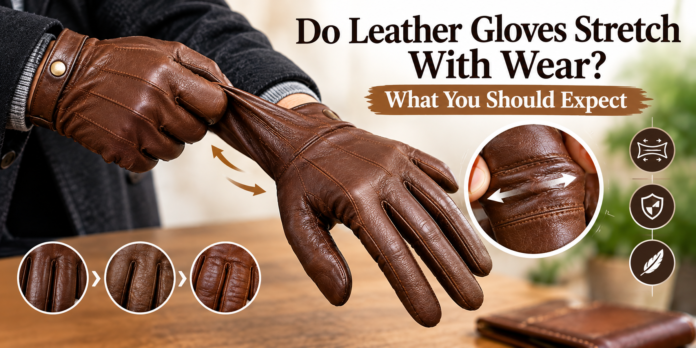
Yes, leather gloves do stretch and soften with wear, but the effect is more subtle than many buyers expect, and understanding it properly matters before you decide to size up or down. Rather than dramatically expanding, leather gloves gradually mold to the shape of your hand, easing in fit without meaningfully changing overall size, which is a very different process than how stretchy fabrics behave.
Knowing how much stretch to realistically expect, and which hides stretch more than others, makes it much easier to buy the right size from the start rather than compensating for a fit problem after the fact. In this guide, we’ll break down whether leather gloves stretch with wear in practice, and how to buy with that process in mind.
How Leather Actually Stretches
Leather stretching isn’t like fabric stretching, where fibers pull apart and the material genuinely expands. Instead, leather’s natural fibers gradually relax and reshape around the contours of your hand as oils from your skin and repeated flexing soften the material. This process is often described as “molding” rather than true stretching, since the leather is adapting to your hand’s shape rather than growing larger overall — an important distinction when thinking about whether leather gloves stretch with wear in a meaningful way.
Most leather gloves gain roughly a quarter to half a size of additional room through this molding process, concentrated mainly across the palm and finger joints where flexing happens most. This is a modest change, not a dramatic one, which is why buying gloves expecting significant future stretch is generally a mistake that leads to disappointment down the road.
Which Leathers Stretch the Most
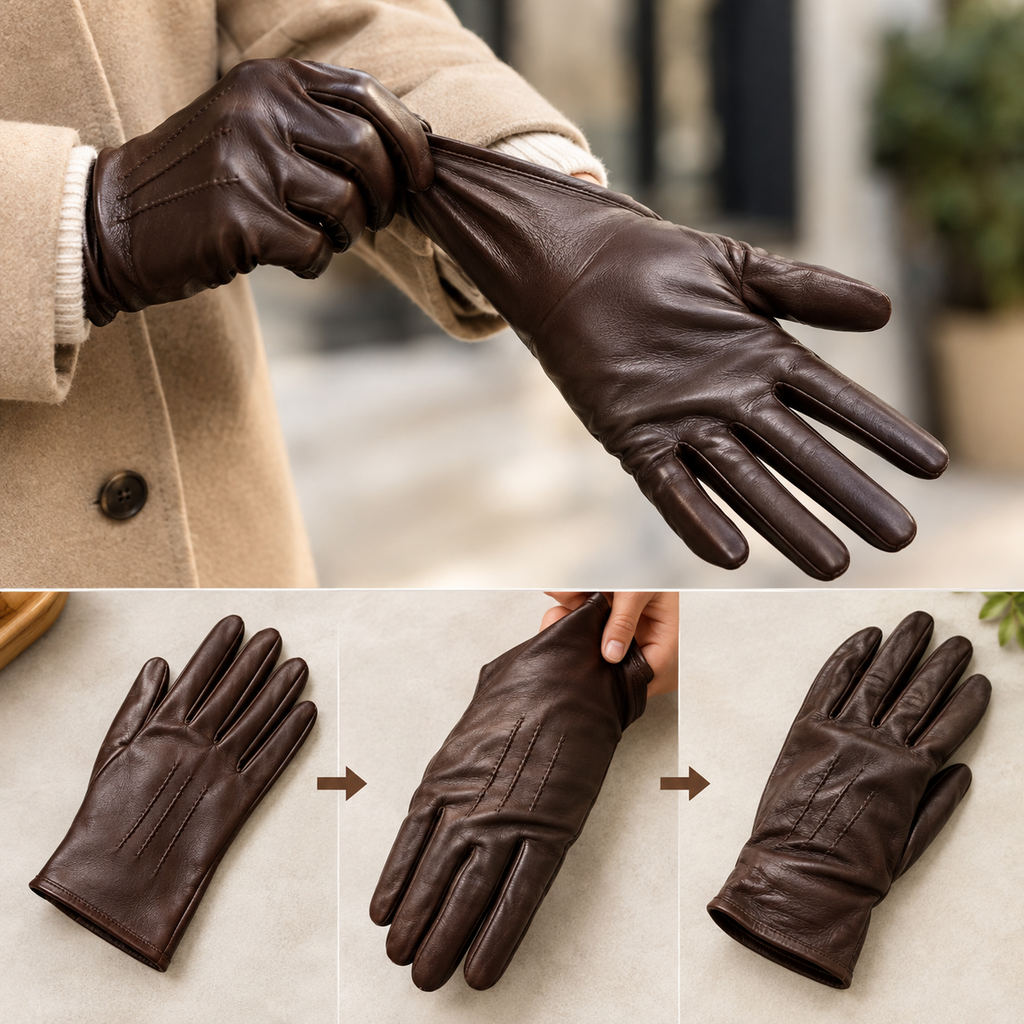
Softer, thinner hides tend to show more noticeable stretch than thicker, denser ones. Lambskin, being the softest and most loosely structured common glove leather, is more prone to stretching and losing its shape over time compared to firmer hides, particularly if worn frequently without proper care or regular conditioning.
Cowhide and goatskin, with their denser fiber structures, hold their shape more consistently and stretch less dramatically, even with regular wear across many months or years. Split leather, which lacks the tight natural fibers found in grain leather, is also more prone to stretching and losing structure over time than full-grain or top-grain leather cut from the same hide, which is worth keeping in mind when comparing gloves at different price points.
Why You Shouldn’t Buy Gloves Too Tight
Because leather stretch is modest rather than dramatic, buying a glove that feels genuinely tight in the store with the expectation that it will loosen significantly is a common and costly mistake. This is really the central answer to Do Leather Gloves Stretch With Wear enough to fix a poor fit: not reliably, and not by much. A glove that’s uncomfortably snug on day one will likely remain uncomfortably snug after breaking in, just marginally less so.
The better approach is choosing a glove that fits snugly but comfortably from the start, with enough room to close your hand and flex your fingers without strain. The break-in process should refine an already reasonable fit, not rescue a genuinely poor one, since leather can only compensate for so much of an initial sizing mistake.
How Long Does Break-In Take?
Break-in time varies by hide type and how often the gloves are worn. Softer leathers like lambskin and deerskin soften and mold relatively quickly, often within the first several wears, since their fibers are naturally more pliable from the start and require less repeated flexing to relax.
Thicker hides like cowhide take noticeably longer, sometimes requiring weeks of regular use before the leather fully relaxes and conforms to the hand. Conditioning the leather periodically during this process can help speed up softening while also protecting the material from drying out as it flexes and adjusts, since dry leather tends to crack rather than mold smoothly.
Can Leather Gloves Be Stretched Intentionally?
In some cases, leather gloves can be gently stretched using specialized glove stretchers or by wearing them with a thin liner glove underneath to gradually work the leather looser in specific tight spots. This approach works best for minor adjustments rather than correcting a glove that’s genuinely the wrong size from the start.
Applying excessive force or moisture to stretch leather more aggressively often damages the material’s structure rather than improving fit, so any intentional stretching should be done gradually and with the appropriate tools rather than through repeated forceful pulling, which can weaken seams and distort the leather’s natural shape permanently.
Do Leather Gloves Stretch With Wear at a Glance
Here’s a quick summary of what to expect:
- Typical stretch:About a quarter to half a size, concentrated at the palm and finger joints
- Softer hides (lambskin, deerskin):Stretch and soften faster, more noticeably
- Firmer hides (cowhide, goatskin):Hold shape longer, stretch less dramatically
- Split leather:More prone to stretching and losing structure than grain leather
- Buying tip:Choose a snug but comfortable fit; don’t rely on future stretch to fix a tight glove
Buying With Stretch in Mind
Understanding how much a glove will realistically loosen helps when comparing options like men’s leather gloves, where getting the initial fit right matters more than expecting significant future stretch to compensate for a tight purchase. Browsing our full leather gloves range makes it easier to compare hide types and expected break-in behavior before making a purchase, rather than guessing based on appearance alone.
For more on how leather grade specifically affects stretch and durability, our guide on grain versus split leather gloves breaks down why some gloves hold their shape better than others over time, adding another layer of consideration beyond hide type alone.
The Role of Custom Manufacturing in Leather Gloves
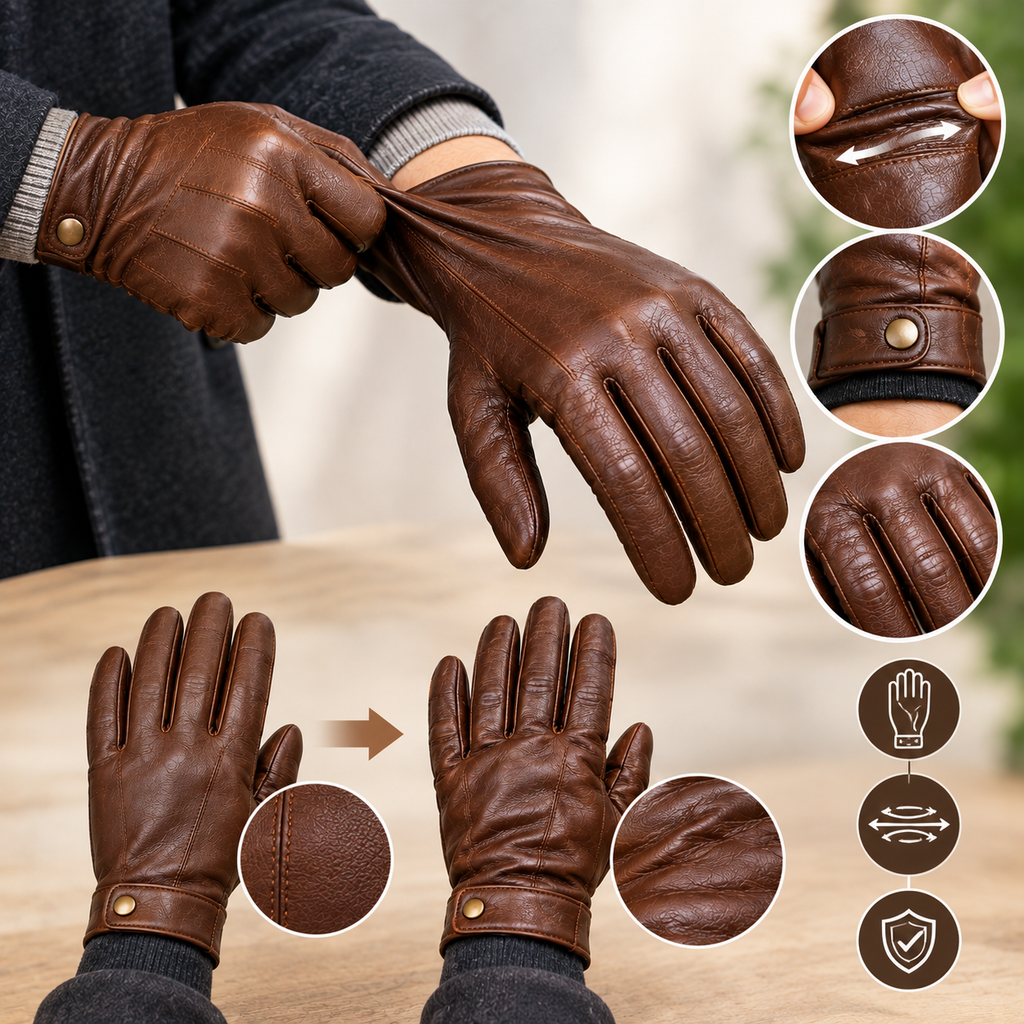
As demand grows for gloves with predictable, well-understood fit behavior, more businesses are turning to custom manufacturers who can specify hide type and grade clearly, rather than relying on generic sourcing that leaves buyers guessing how much a glove will actually change with wear over time.
At ECO-JERSEY, we manufacture and supply custom apparel including leather gloves and accessories to businesses around the world. Whether a company needs gloves built from firmer, shape-retaining hides or softer options that mold quickly to the hand, our team works directly with clients to produce gloves that match their exact specifications, from hide type to expected fit behavior.
Conclusion
Do Leather Gloves Stretch With Wear? Yes, but the change is modest and gradual rather than dramatic, mostly reshaping around the hand rather than genuinely growing in size. Softer hides like lambskin stretch more noticeably than firmer leathers like cowhide, and split leather tends to lose its shape faster than grain leather. The safest approach is always buying for a snug, comfortable fit from day one rather than counting on significant future stretch to correct a poor initial fit.
For businesses looking to source reliable leather gloves whether for everyday comfort or specialized use working with an experienced manufacturer like ECO-JERSEY ensures every pair is built with predictable, well-understood fit behavior.
FAQs
Do leather gloves stretch with wear?
Yes, leather gloves gradually mold and soften with wear, typically gaining about a quarter to half a size of additional room, mostly across the palm and finger joints.
Should I buy leather gloves tight expecting them to stretch?
No, since leather stretch is modest, a glove that feels uncomfortably tight in the store will likely remain too tight after breaking in, just slightly less so.
Which leather gloves stretch the most?
Softer hides like lambskin and deerskin stretch and soften more noticeably than firmer leathers like cowhide or goatskin, which hold their shape more consistently.
How long does it take for leather gloves to break in?
Softer leathers can soften within several wears, while thicker hides like cowhide may take weeks of regular use to fully relax and conform to the hand.



