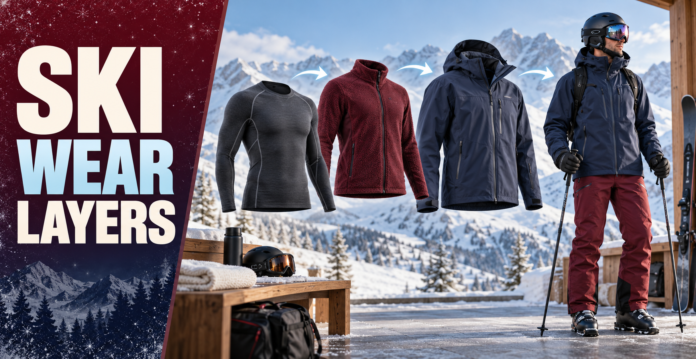
Ski wear layers form a three-part system. The base moves sweat away, the mid-layer traps warm air, and the outer layer blocks wind and snow. Together, they provide more control than one extremely thick garment.
Layering makes ski clothing adaptable. A cold morning may require extra insulation, while afternoon sun or demanding runs can feel warmer. You can adjust a zip, open a vent, or remove a mid-layer as conditions change.
What Are the Three Ski Wear Layers?
The three layers are a moisture-managing base, an insulating mid-layer, and a protective outer layer. They should work without restricting movement or creating bulk. Moisture needs to escape while the shell prevents wind and snow from entering.
Each layer can vary in weight. Mild conditions might require a lightweight base, thin fleece, and shell. Colder weather may call for a midweight base and warmer insulation. The right combination depends on the forecast, activity, and personal comfort.
Base Layer: Managing Moisture Next to the Skin
The base layer is worn against the body. Its priority is moisture management, not thickness. Merino wool, polyester, polypropylene, and technical blends move perspiration and dry more effectively than cotton. Long sleeves and full-length bottoms provide consistent coverage.
Choose a close, comfortable fit that manages moisture without limiting circulation. Stretch and flat seams improve comfort during movement. Lightweight fabrics suit warmer days, while midweight versions add insulation. Brands developing technical first layers can explore Eco Jersey’s base layers manufacturing options.
Mid-Layer: Holding Warm Air Around the Body
The mid-layer supplies adjustable insulation. Fleece traps warm air, breathes well, and dries quickly. Merino sweaters and synthetic insulated jackets are practical alternatives. The garment should fit smoothly over the base without limiting movement beneath the jacket.
Match insulation to the day. Thin microfleece suits mild weather or energetic skiing, while heavier fleece works better in low temperatures. Avoid so much warmth that you sweat and later become chilled. This warmth guide explains how fleece weight affects insulation.
Outer Layer: Blocking Wind, Snow, and Moisture
The outer layer is the weather barrier. Look for waterproof, breathable fabric, protected closures, and sealed seams. Adjustable cuffs, a secure hem, powder skirt, and suitable hood stop wind and snow, while vents release heat.
The outer layer can be a shell or insulated jacket. A shell gives greater control over separate insulation, while an insulated jacket suits consistent cold. Moisture still needs to escape. Eco Jersey’s breathability guide explains moisture movement through waterproof apparel.
Layering the Lower Body
The same system applies below the waist, although legs often need less insulation. Start with thermal bottoms and add ski pants or bibs. In severe cold, a thin insulating layer can fit between them without bunching behind the knees.
Ski pants should allow deep bends and resist wet snow. Useful details include articulated knees, sealed seams, vents, reinforced cuffs, and boot gaiters. Bibs provide more waist coverage, whereas pants feel simpler. Insulated ski pants combine protection and warmth.
How to Adjust Layers During a Ski Day
Adjust clothing before it feels soaked. Open vents before demanding runs and close them before cold lift rides. Remove insulation as temperatures rise and add a dry layer during breaks. Early changes keep body temperature more stable.
Use this quick layering checklist before skiing:
- Check the mountain forecast and wind chill
- Select a synthetic or merino base layer
- Match mid-layer weight to temperature and effort
- Choose a waterproof, breathable outer layer
- Confirm that every layer allows free movement
- Pack one dry spare layer when conditions may change
Common Ski Layering Mistakes
Cotton base layers hold moisture and dry slowly. Other mistakes include doubling socks, wearing a mid-layer that bunches, or making the system too tight. More clothing does not improve comfort when it traps sweat or compresses insulation.
Do not dress only for the resort entrance temperature; upper slopes may be colder, windier, or wetter. Beginners may prefer more insulation because lessons include waiting, while active skiers often need lighter layers and better ventilation.
Conclusion
Effective ski wear layers have three functions: managing sweat, retaining warmth, and blocking wind and snow. When the pieces fit correctly, they provide warmth without excessive bulk and move moisture away.
Choose fabric weights for the weather, activity, and personal comfort. Test the outfit for mobility, then adjust it during the day. A flexible system makes changing ski conditions easier to manage.
FAQs
How many layers should I wear skiing?
Most skiers wear three layers: a base layer, an insulating mid-layer, and a weatherproof outer layer. On mild days, the mid-layer may be very light. Severe cold may require additional insulation.
Should ski base layers be tight?
Ski base layers should fit close to the skin without feeling restrictive. A close fit improves moisture transfer, but fabric that feels painfully tight can affect comfort and movement.
Is fleece a good ski mid-layer?
Yes. Fleece is warm, breathable, quick drying, and available in different weights. Choose thin fleece for active or mild conditions and heavier fleece when temperatures are lower.
Do I need an insulated ski jacket?
Not always. An insulated jacket is useful in consistent cold, while a waterproof shell offers more flexibility because warmth can be adjusted through separate mid-layers.