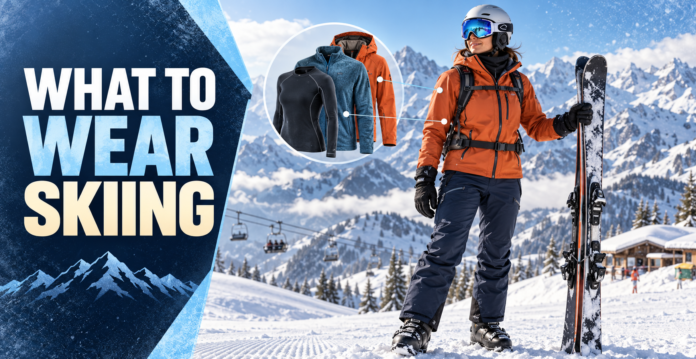
Knowing what to wear skiing can make the difference between an enjoyable day and hours spent feeling cold, damp, or restricted. Conditions change quickly, while hard movement is often followed by chilly lift rides. Your clothing must manage moisture, retain warmth, block wind, and keep out snow.
A flexible layering system handles these demands better than one thick coat. Layers can be opened, removed, or added as the weather and effort change. The same practical system works for first-time and experienced skiers.
Start With a Moisture-Managing Base Layer
The base layer sits against the skin and moves perspiration away from the body. Choose a close-fitting long-sleeve top and full-length bottoms made from merino wool, polyester, or a performance blend. It should stretch for bending and turning without feeling compressive. Flat seams can reduce rubbing.
Avoid cotton because it absorbs moisture, dries slowly, and can feel cold when activity decreases. Lightweight fabric suits mild days or energetic skiers, while midweight fabric adds warmth. This layering guide explains each layer’s basic role.
Add a Mid-Layer for Adjustable Warmth
Your mid-layer traps warm air while letting moisture move outward. Fleece is breathable, quick drying, and available in several weights. Wool or lightweight synthetic insulation also works. Choose a mobile cut that fits beneath the jacket without bunching or limiting your arms.
Insulation depends on temperature, wind, activity, and personal comfort. Thin fleece may suit spring skiing; freezing days can require heavier fleece or compact insulation. An easily removable layer helps prevent overheating and the sweat that later chills you on a lift.
Choose a Protective Ski Jacket and Pants
The outer layer blocks wind and snow. Look for a waterproof, breathable jacket with sealed seams, adjustable cuffs, a secure hem, ventilation, and room underneath. An insulated jacket combines protection and warmth, whereas a shell gives you more control. A purpose-built ski jacket may also provide useful storage and an adjustable hood.
Ski pants or bibs need similar protection and free movement. Articulated knees, reinforced cuffs, snow gaiters, and thigh vents are useful. Bibs give more waist coverage, while pants may feel less bulky. Brands developing winter ranges can explore Eco Jersey’s ski maker capabilities.
Complete Your Ski Outfit
Hands, feet, face, and neck need attention. Ski socks should rise above the boot and fit without wrinkles. One merino or synthetic pair is usually better than two, which may create pressure. Gloves offer dexterity, while mittens generally retain more warmth; waterproof shells help both in snow.
Use this simple checklist before leaving for the mountain:
- Base-layer top and bottoms
- Fleece or insulated mid-layer
- Waterproof ski jacket
- Ski pants or bibs
- One pair of ski socks
- Waterproof gloves or mittens
- Neck gaiter or balaclava
- Helmet and ski goggles
Adjust Ski Wear to the Conditions
Check the mountain forecast, including wind, snowfall, sun, and temperatures at upper elevations. On warm days, use lighter insulation and open vents before sweating heavily. In severe cold, add a warmer mid-layer, face coverage, and insulated mittens.
Beginners may need more warmth because lessons involve waiting and slower movement. Active skiers may prefer breathable pieces and easy ventilation. Pack a dry spare layer or gloves for long days. Eco Jersey’s winter guide offers more useful principles for balancing insulation and moisture.
Common Ski Clothing Mistakes
Overdressing is a common mistake. Feeling extremely warm indoors can mean you will sweat once skiing. Other problems include cotton base layers, doubled socks in tight boots, exposed wrists or waists, and stiff clothing. Test the outfit by bending, squatting, and raising your arms.
Fit matters as much as fabric. Tight layers compress insulation, while loose pieces can feel awkward. Check that jacket and glove cuffs overlap, pants cover the boots, and your gaiter works comfortably with goggles and a properly fitted helmet.
Conclusion
The answer to what to wear skiing is a balanced system: a moisture-managing base, adjustable insulation, and a weatherproof outer layer. Add suitable socks, gloves, neck protection, goggles, and a helmet. Dress for the conditions and activity rather than maximum thickness.
Good ski wear keeps you warm without trapping excess heat and moves naturally. Prepare your outfit, check the forecast, and bring a useful spare layer when conditions may change. Then you can focus on enjoying the snow.
FAQs
What should a beginner wear skiing?
A beginner should wear synthetic or merino base layers, a fleece mid-layer, a waterproof ski jacket, ski pants or bibs, one pair of ski socks, waterproof gloves, a neck gaiter, goggles, and a properly fitted helmet.
Can I wear regular clothes for skiing?
Regular clothing is suitable only when it provides the needed moisture control, warmth, movement, and weather protection. Jeans, cotton sweatshirts, and everyday fashion coats generally perform poorly because they can absorb water, dry slowly, or restrict movement.
Should a ski jacket be insulated?
An insulated jacket is convenient for consistently cold conditions. A non-insulated shell is more adaptable because you can change the mid-layer beneath it. The better choice depends on climate, activity level, and whether you tend to run warm or cold.
How many layers should I wear skiing?
Most skiers use three: a base layer, an insulating mid-layer, and a protective outer layer. Very mild conditions may require a thinner mid-layer, while severe cold may justify additional insulation as long as the clothing remains breathable and unrestricted.