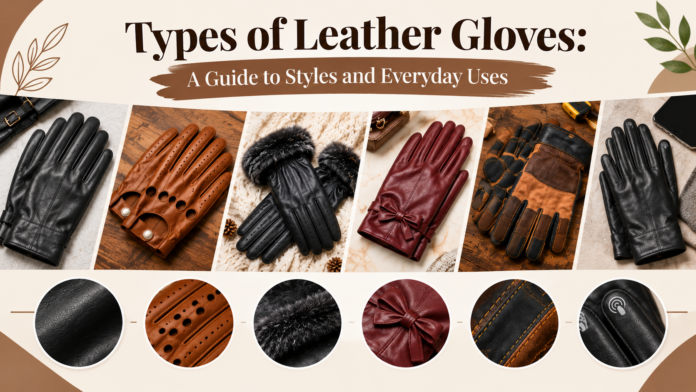
Leather gloves serve a much wider range of purposes than most people realize, and understanding the Types of Leather Gloves available makes it much easier to choose the right pair for a specific job, climate, or occasion. From heavy-duty work gloves built to survive daily abrasion to soft, cashmere-lined dress gloves meant for warmth and polish, the category covers far more ground than a single “leather glove” label suggests, and no single style performs well across every use case.
Because construction, hide type, and lining all vary significantly between styles, picking the wrong pair often means sacrificing either comfort or function. In this guide, we’ll break down the most common types of leather gloves, what makes each one suited to its purpose, and how to choose the right pair for your needs, whether that’s daily job-site wear or a polished finishing touch for a winter coat.
Work Gloves: Built for Abrasion and Grip
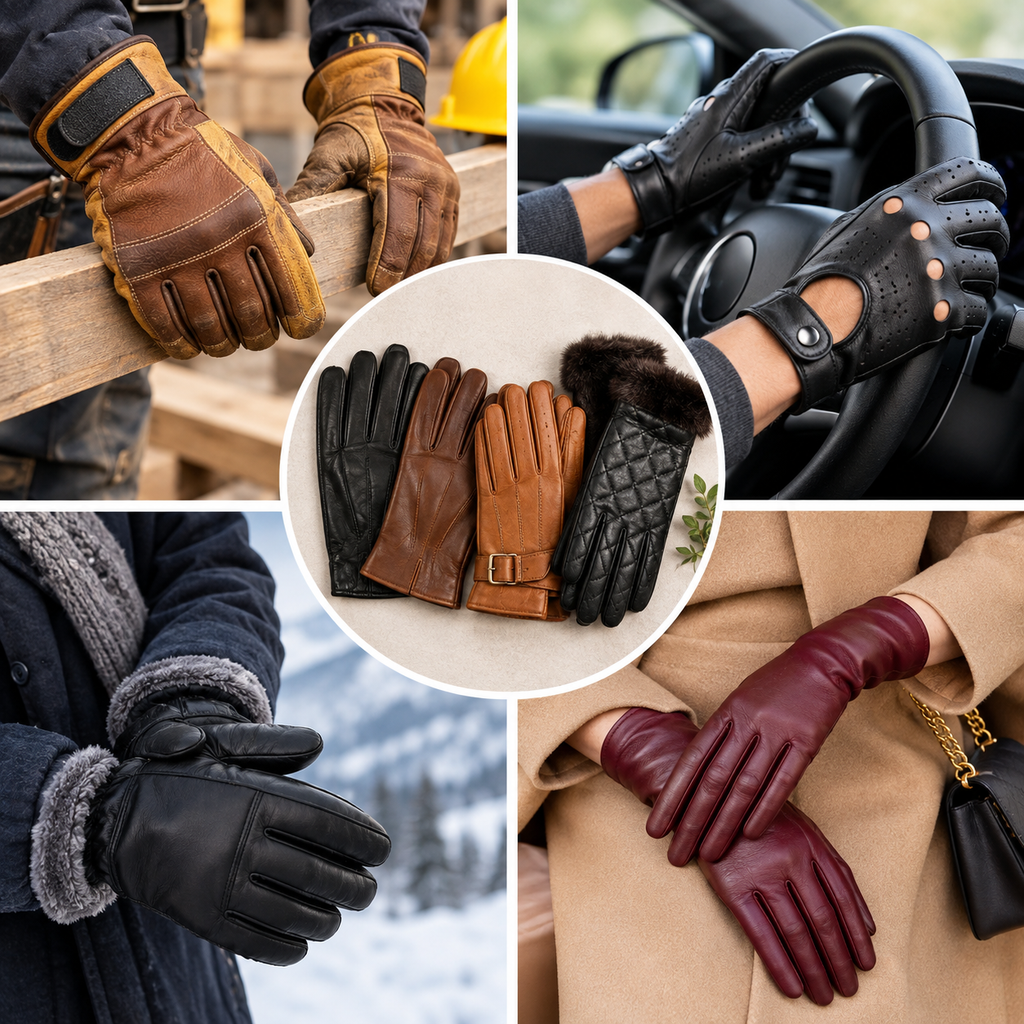
Work gloves are designed first and foremost for durability, typically made from full cowhide for its natural resistance to abrasion, punctures, and rough handling. Many work gloves use a gunn cut construction, where the palm is made from a single piece of leather with a seam running along the outside of the index finger, reducing seams across the high-wear palm area and improving grip during repetitive tasks.
Reinforced palms and double-stitched seams are common features on work gloves specifically, since these areas take the most repeated stress during manual labor. This construction approach is why cowhide work gloves remain the standard choice across trades like construction, warehousing, and manufacturing, where daily wear and tear would quickly break down a thinner or less reinforced glove.
Driving Gloves: Thin, Flexible, and Grip-Focused
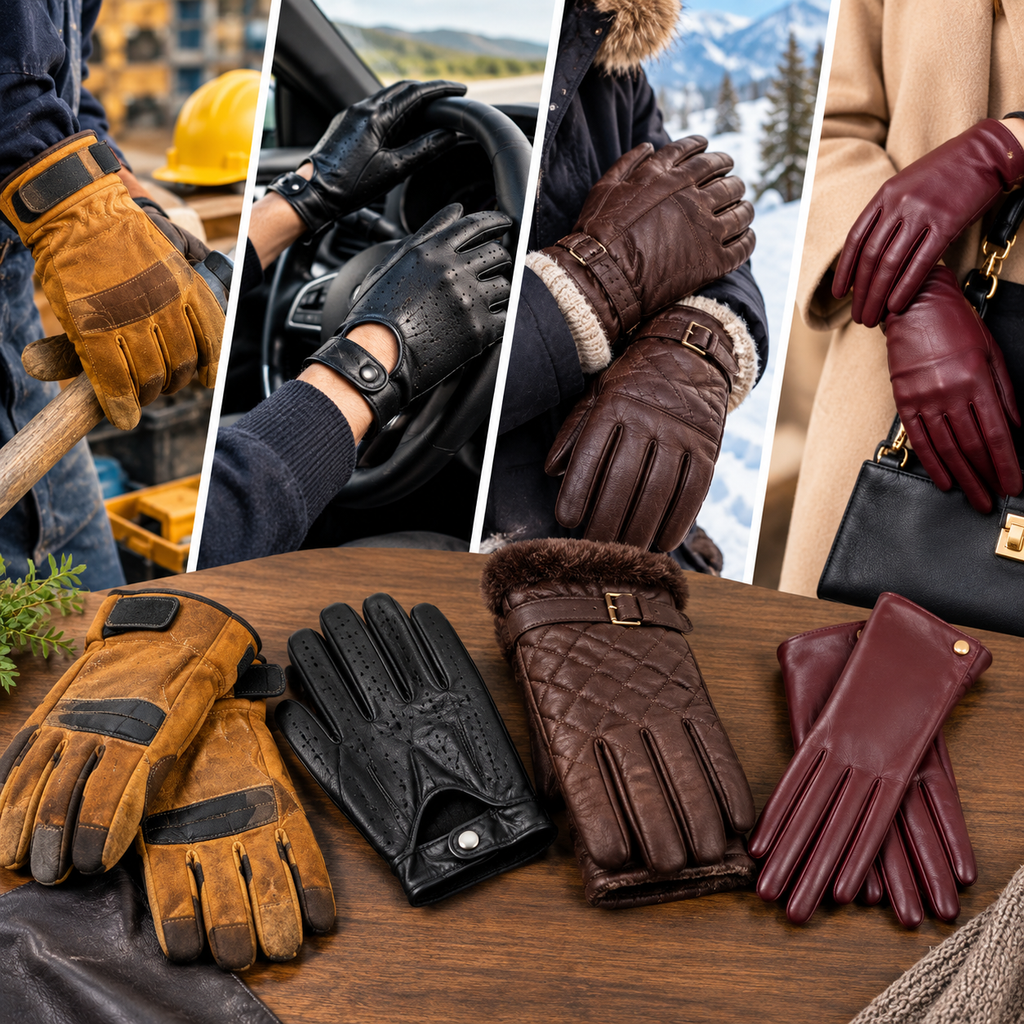
Driving gloves prioritize dexterity and tactile feedback over raw durability, which is why they’re typically made from thinner, softer hides like lambskin or deerskin. This thinner construction allows for better grip feel on a steering wheel and more natural hand movement than a thicker work glove would allow, since bulk and stiffness directly interfere with fine motor control behind the wheel.
Many driving gloves also feature perforated backs or knuckle cutouts to improve breathability and flexibility, along with a shorter cuff that doesn’t interfere with wrist movement while gripping and turning. These design choices reflect a completely different set of priorities than a work glove, even though both are technically leather gloves.
Dress Gloves: Polished and Often Lined
Dress gloves are built around appearance and comfort as much as function, commonly made from sheepskin or high-quality lambskin for a soft, refined feel against the skin. These gloves are frequently lined with cashmere or silk, adding warmth without the bulk that a thicker unlined glove would carry, which matters for anyone wearing them alongside tailored coats and formal outerwear.
Because dress gloves are meant to complement formal or business attire, they typically feature a closer, more tailored fit than work or driving gloves, along with minimal external stitching or hardware that could disrupt a polished look. Even small details like button closures at the wrist are chosen specifically to maintain a clean, understated appearance.
Winter and Cold-Weather Gloves: Insulated for Warmth
Cold-weather leather gloves prioritize insulation, often combining a leather or faux leather shell with a warm lining like cashmere, wool, or synthetic insulation. This combination gives the glove leather’s natural wind resistance on the outside while trapping warmth against the hand on the inside, which is exactly the combination needed for genuinely cold conditions.
Some winter gloves use faux PU leather rather than genuine hide specifically to keep costs down while still delivering a leather-like look and feel, making warmth and lining quality more important considerations than the leather type itself in this category. This is one of the few glove categories where the outer material matters less than what’s underneath it.
Motorcycle and Protective Gloves: Reinforced for Impact
Motorcycle and other protective leather gloves are built with reinforced panels, often at the knuckles and palm heel, to absorb impact and resist abrasion in the event of a fall or accident. These gloves typically use thicker cowhide or goatskin, sometimes combined with additional armor inserts at high-impact points, since protection matters more here than in almost any other glove category.
Because protective gloves need to stay secure during sudden movement, they often feature wrist straps or gauntlet-style cuffs that work gloves and dress gloves generally don’t require. This added security is specifically designed to keep the glove in place during a fall rather than sliding off at the moment it’s needed most.
Types of Leather Gloves at a Glance
Here’s a quick summary of how the main categories compare on material and purpose:
- Work gloves:Full cowhide, gunn cut, reinforced palms; built for abrasion resistance
- Driving gloves:Lambskin or deerskin, thin and flexible; built for grip and dexterity
- Dress gloves:Sheepskin or lambskin, often cashmere-lined; built for polish and warmth
- Winter gloves:Leather or faux leather shell with insulated lining; built for cold-weather warmth
- Motorcycle/protective gloves:Thick cowhide or goatskin with reinforced panels; built for impact resistance
Choosing the Right Glove Type for the Job
Matching glove type to actual use is the most practical way to apply this guide. For manual labor or job sites, a reinforced leather work glove built from full cowhide offers the durability needed for daily handling and repeated abrasion. For everyday warmth and a more polished look, dress and winter styles made from sheepskin with a cashmere lining balance comfort with a refined appearance suited to colder months.
Browsing the full leather gloves range side by side makes it easier to compare construction and lining details across styles before deciding which type actually fits your needs. For more on how different hides compare in general leather apparel, our guide on leather skirt materials breaks down how lambskin, cowhide, and goatskin differ in thickness, softness, and durability the same core material differences that shape glove performance as well, regardless of the finished garment.
The Role of Custom Manufacturing in Leather Apparel
As demand grows for well-made leather gloves suited to specific uses, more businesses are turning to custom manufacturers who understand how hide type, cut, and lining affect performance, rather than relying on generic, one-size-fits-all sourcing that doesn’t account for the actual conditions gloves will face.
At ECO-JERSEY, we manufacture and supply custom apparel including leather gloves and accessories to businesses around the world. Whether a company needs rugged work gloves for industrial use or refined, lined gloves for corporate or retail programs, our team works directly with clients to produce apparel that matches their exact specifications, from hide type to lining and cut.
Conclusin
Understanding the different Types of Leather Gloves makes it much easier to choose the right pair for the job, whether that’s rugged cowhide built for a construction site or soft, cashmere-lined sheepskin meant for warmth and polish. Each style balances hide type, cut, and lining differently, and the right choice ultimately depends on how and where the gloves will actually be worn.
For businesses looking to source reliable leather apparel — whether for industrial use or branded professional wear working with an experienced manufacturer like ECO-JERSEY ensures every pair is built with the right materials for the job.
FAQs
What are the main types of leather gloves?
The main types include work gloves, driving gloves, dress gloves, winter or cold-weather gloves, and motorcycle or protective gloves, each built with different hides and construction for their specific purpose.
What leather is best for work gloves?
Full cowhide is generally the best choice for work gloves, since its thick, dense structure resists abrasion, punctures, and rough handling better than thinner hides.
What is a gunn cut glove?
A gunn cut glove has a palm made from a single piece of leather with a seam running along the outside of the index finger, reducing seams across the high-wear palm area for better durability and grip.
What leather is used for dress gloves?
Dress gloves are commonly made from sheepskin or high-quality lambskin, often lined with cashmere or silk for a soft, warm, and polished feel suited to formal wear.