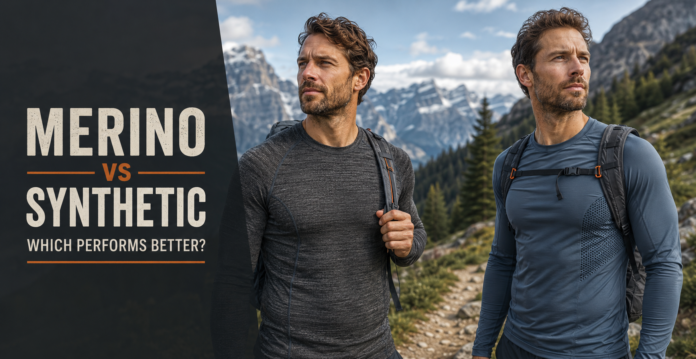
Every outdoor enthusiast eventually faces this question — merino wool or synthetic? Both appear in premium outdoor clothing. Both claim superior performance. Both have passionate advocates in hiking, running, skiing, and camping communities globally. Understanding exactly what merino wool vs synthetic outdoor clothing delivers across the performance properties that genuinely matter outdoors helps you choose correctly for your specific activities rather than following brand loyalty or marketing claims that don’t reflect real-world performance differences.
The Fundamental Difference in How Each Fabric Works
Merino wool and synthetic fabrics manage moisture through completely different physical mechanisms — and this difference explains most of the performance distinctions between them across varied outdoor applications.
Merino wool absorbs moisture vapor into the fiber core through a chemical attraction between the hydrophilic fiber interior and water molecules. This absorption mechanism keeps moisture away from the skin contact surface — preventing the wet clammy sensation — while the fiber’s natural structure distributes absorbed moisture across a large surface area for gradual evaporation. The fiber’s scaly outer layer repels liquid water droplets while the hollow interior attracts moisture vapor — creating a selective moisture management system that no synthetic fabric fully replicates.
Synthetic fabrics — primarily polyester and nylon — don’t absorb moisture into fiber cores. Instead, engineered fiber cross-sections create surface channels that move liquid moisture from skin contact surfaces toward outer fabric faces through capillary action. This surface wicking mechanism is faster than merino’s absorption process — making synthetics faster drying during and after intense perspiration events.
Where Merino Wool Genuinely Outperforms Synthetics
Odor Resistance — merino’s most significant practical advantage for outdoor use. Natural protein fiber structure creates an environment where odor-causing bacteria cannot thrive as effectively as on synthetic fiber surfaces. This allows merino garments to be worn across multiple consecutive days without developing the persistent odor that synthetic alternatives accumulate rapidly under continuous wear conditions.
For multi-day backpacking, long-distance hiking, and any extended outdoor trip where washing opportunities are limited — this odor resistance represents a genuine practical advantage that reduces clothing weight by allowing fewer garments to serve the same trip duration. Understanding the full scope of merino’s performance properties across outdoor applications is explored in this merino wool fabric guide — covering fiber structure, moisture management mechanisms, and temperature regulation in detail relevant to outdoor clothing selection.
Natural Temperature Regulation — merino’s fiber structure moderates body temperature across a wider range of conditions than synthetic alternatives achieve. The same garment remains comfortable during cold morning starts and warm afternoon hiking sections — adapting to changing conditions in ways that dedicated warm or cool weather synthetic garments cannot replicate within a single wearing.
Comfort Against Skin — fine merino fiber — 17 to 19 microns — feels genuinely soft against sensitive facial and body skin without the itch associated with coarser wool grades. This comfort advantage matters for extended outdoor wear where garment contact against skin across full days and nights creates cumulative irritation that rough fabrics cause progressively.
Sustainability — merino wool is a renewable natural fiber that biodegrades at end of garment life. Synthetic fabrics derived from petroleum require hundreds of years to decompose — making merino significantly more environmentally favorable for outdoor enthusiasts who prioritize sustainability alongside performance credentials.
Where Synthetics Genuinely Outperform Merino
Moisture Wicking Speed — synthetic surface wicking moves perspiration from skin faster than merino’s absorption mechanism during high-intensity activity where maximum moisture management speed matters most. For trail running, intense climbing, and any sustained aerobic effort where perspiration rates are highest — synthetics keep skin drier during peak effort levels that exceed merino’s absorption rate capacity.
Quick-Dry Performance — synthetics dry significantly faster than merino after thorough wetting — whether from perspiration, rain, or water crossing. Merino’s moisture absorption mechanism holds moisture within fiber cores longer than synthetic surface wicking construction retains it — creating longer drying times that matter for activities involving frequent complete wetting.
Durability — merino wool fiber is more susceptible to abrasion damage than synthetic alternatives. Thin merino base layers in particular develop wear holes at friction points — pack hip belt contact, seams, and high-movement zones — faster than equivalent weight polyester or nylon constructions under equivalent use intensity.
Cost — quality merino wool outdoor garments cost significantly more than equivalent synthetic alternatives — reflecting both raw material costs and manufacturing complexity. For budget-conscious outdoor enthusiasts or brands targeting accessible price points, synthetics provide strong performance credentials at considerably lower cost per garment.
Performance Comparison Across Key Properties
| Property | Merino Wool | Synthetic |
|---|---|---|
| Odor Resistance | Excellent — natural | Low — requires treatment |
| Moisture Wicking Speed | Moderate | Fast |
| Quick-Dry Performance | Moderate | Excellent |
| Temperature Regulation | Natural — wide range | Good — narrower range |
| Comfort Against Skin | Very high | Good — varies by construction |
| Durability | Moderate | High |
| Sustainability | Excellent | Moderate — recyclable options |
| Cost | Higher | Lower |
| Best Use | Multi-day outdoor trips | Single-day high-intensity activities |
Merino-Synthetic Blends — The Best of Both
Many premium outdoor brands have moved toward merino-synthetic blend constructions — combining merino’s natural odor resistance and comfort with synthetic’s improved durability and faster moisture wicking. Typical blends use 70% to 85% merino with 15% to 30% nylon or polyester — creating garments that perform meaningfully better than pure merino in durability and drying speed while maintaining the odor resistance and skin comfort that make merino valuable for extended outdoor use.
These blends represent the most commercially balanced approach for outdoor brands building base layer collections that serve diverse customer needs — delivering meaningful advantages from both fiber types while minimizing the specific limitations that make pure alternatives less than ideal in certain outdoor applications.
For outdoor brands looking at the commercial landscape of merino wool products and understanding which brands have built successful merino-based outdoor collections, this merino wool brands guide provides valuable market context — relevant for brands positioning their own merino outdoor clothing collections against established competitors.
Choosing Based on Your Outdoor Activity
Choose merino for: Multi-day backpacking and extended outdoor trips where odor resistance allows fewer garments and reduced pack weight. Cold weather outdoor activities where natural temperature regulation maintains comfort across wide condition variations. Outdoor enthusiasts who prioritize comfort against skin and natural sustainability credentials alongside performance.
Choose synthetic for: Single-day high-intensity outdoor activities — trail running, fast hiking, intense climbing — where maximum moisture wicking speed and quick-dry performance matter more than multi-day odor resistance. Budget-conscious outdoor consumers who need strong performance at accessible price points. Activities involving frequent complete wetting where fast drying matters more than extended wear between washing.
Our base layer clothing manufacturer page covers both merino and synthetic base layer options available for brand development — giving outdoor brands the manufacturing flexibility to build collections serving customers across both fiber preferences within the same cohesive outdoor clothing range.
For a practical product reference, these outdoor tees demonstrate how performance fabric construction — whether merino or synthetic — translates into complete outdoor garments built for active outdoor use across hiking, camping, and trail activities.
Conclusion
Merino wool vs synthetic outdoor clothing doesn’t have a universal winner — because each performs genuinely better than the other across specific use cases and outdoor applications. Merino wins for multi-day odor resistance, natural temperature regulation, skin comfort, and sustainability. Synthetic wins for moisture wicking speed, quick-dry performance, durability, and accessible pricing. Understanding these performance differences clearly — and matching your fiber choice to your specific outdoor activities and priorities — ensures your outdoor clothing genuinely serves you rather than compromising performance where your specific activities demand it most.
FAQs
Can merino wool be worn in hot weather outdoor conditions?
Yes — fine merino’s natural temperature regulation provides meaningful cooling performance in warm weather through efficient moisture absorption and release. It performs comparably to lightweight synthetic in moderate heat and outperforms cotton significantly across all temperature conditions.
How many consecutive days can merino wool outdoor clothing be worn?
Quality merino base layers typically remain fresh for three to five consecutive days of active outdoor use before odor becomes noticeable — significantly longer than synthetic alternatives that develop persistent odor within one to two days of continuous wear without washing.
Is merino wool worth the higher price for occasional outdoor use?
For occasional single-day outdoor activities, quality synthetic alternatives provide comparable performance at significantly lower cost. For frequent outdoor use — particularly multi-day trips — merino’s odor resistance and natural performance justify the premium cost through genuine practical advantages over extended use.
Can merino wool and synthetic outdoor clothing be produced under a private label?
Yes. Professional outdoor apparel manufacturers offer complete private label production for both merino and synthetic outdoor clothing with verified performance fabrics, custom designs, colors, labels, and packaging — giving outdoor brands full technical and commercial control over their base layer collections.