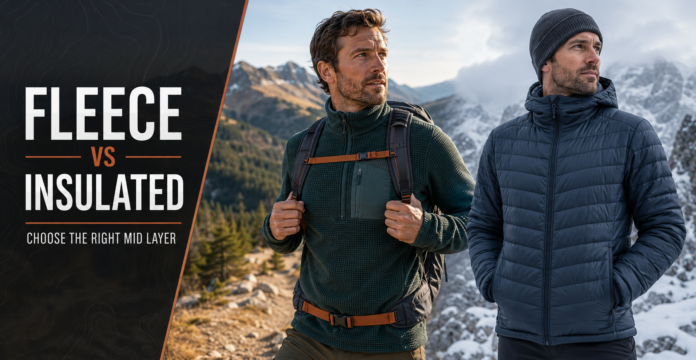
The mid layer is where warmth actually happens in an outdoor clothing system. Your base layer keeps you dry. Your shell keeps weather out. But the mid layer — sitting between them — is what keeps you genuinely warm when temperatures drop, activity intensity decreases, or cold conditions push your body’s heat retention capabilities to their limits. Choosing between a fleece vs insulated jacket for this critical role determines how effectively your entire outdoor clothing system performs across the conditions you regularly encounter outdoors.
What Fleece Does — and Where It Excels
Fleece is engineered polyester in its most useful outdoor form. Its open fiber structure traps warm air between fibers — providing reliable insulation — while simultaneously allowing moisture vapor to pass through freely rather than trapping it within the fabric. This combination of warmth and breathability is what makes fleece the dominant mid-layer choice across hiking, camping, climbing, and general outdoor use globally.
The breathability advantage matters enormously during sustained physical activity. When you hike uphill in cold conditions wearing a fleece mid-layer, the moisture vapor your base layer has moved away from skin continues traveling outward through the fleece construction — preventing accumulation within the layering system that would create the clammy, cold dampness that compromises thermal performance and comfort simultaneously.
Fleece weight determines its warmth contribution:
- 100-weight lightweight fleece suits active hiking as a standalone layer in cool conditions where maximum breathability matters
- 200-weight mid-weight fleece suits general outdoor use as a mid-layer in cold conditions where both warmth and breathability remain important
- 300-weight heavyweight fleece suits cold camping, stationary winter activities, and any situation where maximum warmth retention justifies reduced breathability and increased bulk
What Insulated Jackets Do — and Where They Excel
Insulated jackets use either down or synthetic fill — trapped within baffle constructions — to provide warmth through a fundamentally different mechanism than fleece. Instead of trapping air within an open fiber structure, insulation creates dead air space within loft that minimizes convective heat loss from the body surface across the entire insulated area simultaneously.
This warmth generation mechanism delivers superior warmth-to-weight ratios compared to fleece — insulated jackets provide significantly more warmth per gram of clothing weight than equivalent fleece constructions. For outdoor applications where maximum warmth at minimum weight matters — backpacking, alpine climbing, ski touring rest stops — this efficiency advantage makes insulated jackets genuinely superior mid-layer options despite their reduced breathability compared to fleece.
The key distinction within insulated jackets is fill material:
Down insulation delivers unmatched warmth-to-weight for dry cold conditions. High fill power ratings — 700 to 900+ — indicate better quality down creating more insulating loft per gram of fill weight. Hydrophobic down treatments improve wet condition performance — but untreated down loses insulating effectiveness significantly when dampened through perspiration or moisture penetration.
Synthetic insulation maintains meaningful warmth even when wet — making it more reliable than untreated down in damp outdoor environments where internal moisture from perspiration or external moisture exposure regularly dampens mid-layers during sustained active use. Premium synthetics like PrimaLoft Gold approach down warmth-to-weight ratios while delivering this wet performance advantage that makes them the practical choice for outdoor enthusiasts who regularly encounter moisture.
Understanding how insulation choices perform in the most demanding cold conditions is explored in this Alaska winter jackets guide — directly relevant for outdoor enthusiasts choosing between down and synthetic insulation for serious cold weather mid-layer applications.
Fleece vs Insulated Jacket: Direct Comparison
| Feature | Fleece | Insulated Jacket |
|---|---|---|
| Breathability | Excellent | Moderate |
| Warmth-to-Weight | Moderate | Excellent |
| Packability | Moderate | Excellent |
| Wet Weather Performance | Good | Varies by fill |
| Versatility | High | Moderate |
| Best Activity | Active hiking | Rest stops and cold static |
| Cost | Lower | Higher |
| Durability | Excellent | Good |
Matching Mid Layer to Activity and Conditions
Choose fleece when:
Activity intensity remains moderate to high throughout the outdoor day — where continuous movement generates body heat that makes maximum insulation unnecessary and breathability genuinely matters for moisture management. Trail hiking, climbing, ski touring, and any sustained aerobic outdoor activity all benefit from fleece breathability that insulated alternatives cannot match during sustained physical output.
Choose an insulated jacket when:
Activity intensity varies significantly between high-output movement and stationary rest — or when genuinely cold temperatures exceed what body heat generation and fleece insulation can maintain comfortably. Backpacking camps, summit rest stops, ski resort chairlift rides, and any cold weather situation where stationary exposure to cold creates genuine warmth demand benefit from insulated jacket efficiency that fleece cannot replicate at equivalent weight.
For comprehensive understanding of how different thermal coats and insulated layers perform across varied cold weather applications beyond just outdoor use, this thermal coats guide covers the full spectrum of insulated clothing options — useful context for outdoor brands building mid-layer collections that serve both technical outdoor and lifestyle markets simultaneously.
The Case for Carrying Both
Many experienced outdoor enthusiasts carry both a fleece and a lightweight insulated jacket on demanding outdoor trips — using each where it genuinely performs best rather than compromising with one option that serves neither role optimally.
The fleece serves as the active mid-layer during sustained movement — breathable, versatile, and effective for managing the moisture and heat that physical effort generates continuously. The insulated jacket deploys during rest stops, cold mornings, and any stationary exposure where maximum warmth at minimum weight genuinely matters. Combined weight of a lightweight fleece plus packable insulated jacket often approaches equivalent single mid-layer alternatives — while providing the flexibility to use each where it performs best throughout the outdoor day.
Our outdoor fleece manufacturer page covers the complete range of outdoor fleece mid-layer options available for brand development — giving outdoor brands the manufacturing capability to build versatile fleece collections that serve customers across the full spectrum of outdoor activity intensities and temperature conditions they encounter.
For a practical product example, these outdoor cargo pants demonstrate how performance fabric construction principles — the same principles that define quality fleece and insulated mid-layers — translate into complete outdoor garment products built for serious trail use.
Conclusion
The fleece vs insulated jacket decision for your outdoor mid-layer comes down to honest assessment of your typical activity intensity, temperature conditions, and moisture exposure. Fleece serves active outdoor use with superior breathability and reliable warmth during sustained physical effort. Insulated jackets serve cold static conditions and low-intensity outdoor use with superior warmth efficiency at minimum weight. Understanding both options clearly — and choosing based on genuine performance match rather than marketing appeal — ensures your mid-layer genuinely serves every outdoor activity you take it on.
FAQs
Is fleece or an insulated jacket warmer for cold outdoor conditions?
Insulated jackets provide significantly more warmth per gram of clothing weight than equivalent fleece at genuinely cold temperatures — making them the warmer choice for static cold conditions. During active movement, fleece maintains more comfortable warmth through superior breathability that prevents the overheating insulated alternatives cause during sustained physical effort.
Can fleece be used as an outer layer without a shell jacket?
Fleece suits standalone outer layer use in dry cold conditions where wind protection isn’t required. In wet or windy conditions, fleece requires a waterproof or wind-resistant shell over it — because fleece is neither windproof nor waterproof as an independent outer layer construction.
What insulation type is best for wet outdoor environments?
Synthetic insulation maintains meaningful warmth performance when wet — making it significantly more reliable than untreated down in damp outdoor environments where moisture exposure from rain, humidity, or perspiration regularly dampens mid-layers during extended outdoor activity.
Can fleece and insulated outdoor clothing be produced under a private label?
Yes. Professional outdoor apparel manufacturers offer complete private label production for both fleece and insulated mid-layers with verified performance specifications, custom fabrics, colors, labels, and packaging — giving outdoor brands full technical and commercial control over their complete mid-layer collections.