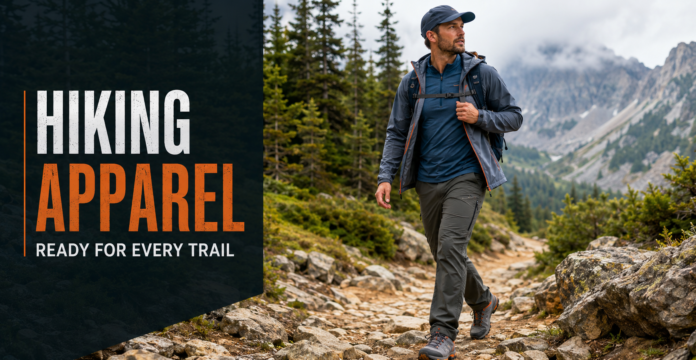
The best outdoor clothing for hiking should manage moisture, support movement, and protect the wearer as conditions change. A forest, exposed ridge, muddy path, and cold summit can occur during the same hike. Clothing must remain adaptable instead of being selected only for the starting temperature.
A practical hiking outfit includes a moisture-wicking top, flexible trail pants or shorts, and a packable protective layer. Colder routes may also require fleece or lightweight insulation. Fabric, fit, and construction should match the distance, terrain, weather forecast, and intensity of the hike.
Start With a Moisture-Wicking Base Layer
The base layer sits against the skin and moves perspiration toward the outer fabric surface. Polyester and merino wool are dependable options because they manage moisture and dry more effectively than cotton. Merino also controls odor and provides light insulation, making it suitable for long hikes and multi-day routes.
Cotton absorbs perspiration and dries slowly, which may cause discomfort during rest periods or unexpected temperature drops. A hiking base layer should fit close enough to transfer moisture without restricting movement. Flat seams can also reduce rubbing beneath backpack straps during long hours on the trail.
Choose Hiking Pants for the Terrain
Hiking trousers should balance durability, stretch, ventilation, and drying speed. Nylon resists abrasion from rocks and vegetation, while polyester handles moisture effectively. A small amount of elastane improves mobility during steep climbs, scrambling, and repeated bending. Eco Jersey’s fabric guide explains how these materials affect hiking-pants performance.
Lightweight trousers suit maintained trails and warm weather, while stronger fabrics protect against rocky or overgrown routes. Reinforced knees, gusseted crotches, articulated patterns, and secure pockets improve trail function. Well-designed hiking pants also provide useful protection where trails involve brush or rough surfaces.
Dress for Hot and Exposed Trails
Hot-weather hiking clothing should allow perspiration to evaporate while protecting the skin from direct sun. Lightweight polyester or nylon tops work well because they dry quickly and remain comfortable during sustained movement. A relaxed but controlled fit encourages airflow without leaving loose fabric that catches on branches.
Long sleeves can provide better sun and vegetation protection than a sleeveless top when made from lightweight, breathable fabric. Light colors reduce solar heat absorption, while UPF-rated materials add dependable coverage. A brimmed hat, breathable socks, and ventilated footwear complete the system for dry and exposed routes.
Prepare for Wet, Windy, and Cold Conditions
Mountain weather changes quickly, so hikers should carry a protective shell even when the day begins clear. A breathable shell with sealed seams, an adjustable hood, secure cuffs, and ventilation protects against rain and wind. The tactical guide offers useful comparisons for selecting garments across different environments.
Cold trails require a moisture-wicking base layer, breathable fleece, and protective shell. Lightweight synthetic or down insulation can be added during rest periods or at exposed summits. Hikers should remove insulation before intense climbs to prevent sweat from soaking the inner layers and causing rapid cooling later.
Essential Hiking Clothing Features
Good outdoor clothing for hiking should solve practical trail problems rather than add unnecessary weight. Useful features include:
- Articulated knees and elbows improve mobility.
- Gusseted panels support climbing and wide steps.
- Zippered pockets secure maps and small items.
- Adjustable cuffs and hems block wind and rain.
- Ventilation openings release heat during climbs.
- Reinforced panels resist contact with rough surfaces.
- Reflective details improve visibility in low light.
The complete outfit should also work comfortably with a backpack. Shoulder seams should not create pressure beneath straps, and pockets should remain accessible when the hip belt is fastened. An overly loose garment may catch on vegetation, while a very tight fit can limit movement and strain seams.
Match Clothing to Trail Type
Maintained woodland trails usually require lightweight, breathable clothing with basic abrasion resistance. Rocky or technical routes need stronger pants, stretch panels, and reinforced areas. Wet trails call for quick-drying fabrics, waterproof shells, and footwear with dependable grip. High-altitude routes require additional insulation, wind protection, and full coverage against stronger UV exposure.
Brands designing trail collections can work with an outdoor manufacturer to align fabric weights, patterns, performance finishes, and garment features with particular environments. Designing around real trail conditions creates more useful products than applying the same construction to every hiking category.
Care for Hiking Apparel
Mud, perspiration, and body oils can reduce fabric performance. Hiking garments should be washed according to their care labels with mild detergent. Avoid fabric softener because it can interfere with moisture-wicking fibers and water-repellent finishes.
Small tears, loose seams, and damaged zippers should be repaired before the next trip. Waterproof treatments may need renewal when rain stops beading on the fabric surface. Proper cleaning, drying, and storage help outdoor clothing for hiking retain its fit, breathability, and protection across repeated use.
Conclusion
Effective hiking clothing combines moisture control, mobility, durability, and weather protection. The correct fabrics and features depend on whether the route is hot, cold, wet, exposed, wooded, or technically demanding. Carrying adjustable layers allows hikers to respond when conditions change.
The best outdoor clothing for hiking supports the body without creating unnecessary bulk. When base layers, trail trousers, insulation, and shells work together, hikers remain more comfortable and prepared across different environments.
FAQs
What fabric is best for hiking clothing?
Polyester, nylon, merino wool, and stretch blends perform well because they manage moisture and support movement.
Should hikers avoid cotton?
Yes. Cotton absorbs moisture, dries slowly, and may feel cold when activity stops.
Are shorts suitable for every hiking trail?
No. Full-length trousers provide better protection against sun, insects, vegetation, and rough terrain.
Can hiking apparel be customized?
Yes. Brands can customize fabrics, fit, pockets, reinforcement, performance finishes, labels, and packaging.