Every outdoor enthusiast has experienced it — that cold, clammy sensation of sweat-soaked clothing clinging to their body mid-hike. It’s uncomfortable at best and genuinely dangerous at worst. Moisture wicking outdoor clothing solves this problem at the fabric level — moving perspiration away from your skin continuously so you stay dry, comfortable, and thermally regulated throughout every outdoor activity regardless of how hard you push.
What Moisture Wicking Actually Means
Moisture wicking is not simply about absorbing sweat. Absorption holds moisture within the fabric — which creates the heavy, wet, cold sensation that cotton clothing creates during physical activity. True moisture wicking works differently.
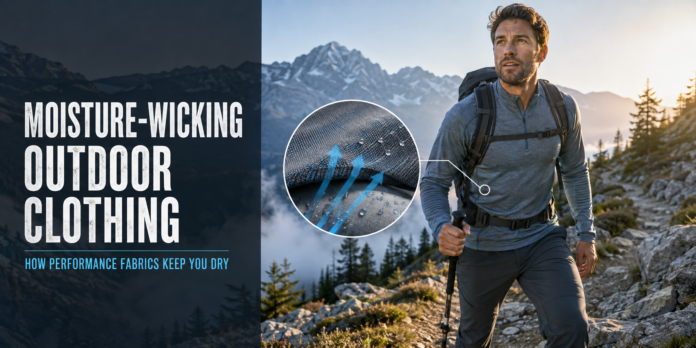
Wicking fabrics use engineered fiber structures that create capillary action — drawing moisture from the skin contact surface through the fabric construction and toward the outer face where airflow and evaporation remove it rapidly. The result is a fabric that actively keeps the skin contact surface dry rather than simply soaking up perspiration and holding it against your body throughout your activity.
This distinction between absorption and wicking is the fundamental reason why performance outdoor fabrics dramatically outperform cotton in every active outdoor application — and why serious outdoor enthusiasts consistently choose technical performance fabrics over natural alternatives for demanding trail and mountain use.
The Best Moisture Wicking Fabrics for Outdoor Clothing
Polyester is the most widely used moisture wicking fabric in outdoor clothing. Its synthetic fiber structure resists moisture absorption — instead channeling perspiration along fiber surfaces toward the outer fabric face for rapid evaporation. Polyester dries quickly, maintains its wicking performance across repeated washing, and holds color well across extended UV exposure during outdoor use.
Merino Wool manages moisture differently — absorbing perspiration into the fiber core rather than wicking it along the surface. Despite this absorption mechanism, merino doesn’t create the cold wet sensation that cotton produces — because the fiber core holds moisture away from the skin contact surface while regulating temperature naturally throughout the process. Understanding merino’s specific performance advantages is worth exploring in this merino wool guide — particularly relevant for outdoor brands choosing between natural and synthetic base layer options.
Nylon offers excellent moisture management alongside superior abrasion resistance — making it particularly valuable for outdoor garments that face regular terrain contact alongside the moisture management demands of active use.
Polyester-Elastane Blends combine moisture wicking performance with four-way stretch — creating performance fabrics that manage perspiration effectively while accommodating the full range of movement that demanding outdoor terrain requires across hiking, climbing, and fast-paced trail activities.
How Moisture Wicking Performance Differs Across Garment Types
Base Layers carry the heaviest moisture management burden — sitting directly against skin where all perspiration originates. Base layers need the fastest, most efficient wicking performance available because any moisture that accumulates at the skin contact surface immediately impacts comfort and thermal regulation across the entire clothing system above it.
Mid Layers must allow moisture vapor to pass through rather than trapping it — preventing accumulation within the layering system that the base layer has already moved away from skin. Fleece constructions with open fiber structures manage this particularly well — allowing moisture vapor transmission while retaining the warm air that makes them valuable insulating layers.
Outer Shells must release moisture vapor from inside the system while blocking external moisture from penetrating inward — the dual function that breathable waterproof membranes achieve through controlled pore structures that allow vapor molecules to pass outward while blocking liquid water droplets from entering.
For brands building performance outdoor collections, our waterproof clothing range covers the complete spectrum of moisture management outer layer solutions — from lightweight water-resistant windbreakers through fully waterproof breathable membrane shell constructions.
Performance Fabric Technologies Worth Knowing
Several specific fabric technologies deliver superior moisture wicking performance across outdoor clothing applications.
DWR Treatment — Durable Water Repellent coatings applied to outer fabric surfaces cause external water to bead and roll off rather than saturating the face fabric. This maintains the breathability that allows internal moisture vapor to escape — because saturated face fabrics block vapor transmission from inside the garment regardless of membrane performance below.
Mesh Constructions — Strategic mesh panels in high-perspiration zones — underarms, back panels, side inserts — provide direct airflow to the body’s highest heat generation areas, supplementing fabric wicking performance with physical ventilation during peak intensity activity.
Anti-Odor Treatments — Moisture accumulation supports bacterial growth that creates persistent odor during extended outdoor use. Anti-microbial treatments and natural fiber odor resistance — particularly relevant for merino wool applications — maintain freshness across multi-day outdoor adventures where washing opportunities are limited.
For a practical product example of how these moisture management properties come together in a real outdoor garment, these hiking pants demonstrate the combination of moisture management and weather protection that serious trail use demands — worth exploring for brands building lower body performance collections.
Why Moisture Management Matters Beyond Comfort
Moisture wicking outdoor clothing isn’t purely about comfort — though comfort matters significantly across long outdoor days. Moisture management carries genuine safety implications in serious outdoor environments.
Wet clothing against skin loses insulating effectiveness dramatically — creating the conditions for hypothermia risk even in moderately cold temperatures when activity levels drop and wet clothing no longer receives the warming benefit of exercise-generated body heat. This risk is particularly acute during the rest stops and summit breaks that outdoor activities regularly create — when a hot sweaty climb transitions suddenly to cold exposed stationary conditions that demand effective insulation the wet clothing beneath cannot provide.
Understanding how fabric properties relate to outdoor performance — including the role that specific fabric choices play in overall outdoor apparel design — is explored further in this fabric guide covering polyester’s specific properties and outdoor applications in detail.
Conclusion
Moisture wicking outdoor clothing keeps you dry through performance fabric engineering rather than simply hoping perspiration evaporates on its own. Polyester wicks efficiently. Merino manages naturally. Nylon adds durability. Breathable membranes manage the interface between internal and external moisture simultaneously. Understanding how each fabric achieves its moisture management function helps outdoor enthusiasts choose correctly and helps brands build collections that genuinely perform when customers depend on them most during demanding outdoor activity.
FAQs
Is moisture wicking the same as waterproof in outdoor clothing?
No — moisture wicking moves internally generated perspiration away from skin. Waterproofing prevents externally generated rain and moisture from penetrating the garment. Quality outdoor clothing often combines both properties across different layers of the clothing system.
Does moisture wicking performance degrade over time?
Synthetic wicking performance remains relatively stable across garment lifetime with correct washing. DWR treatments on outer layers do degrade with use and washing — requiring periodic refresh through tumble drying or specialist re-treatment to maintain outer surface water repellency.
Is merino wool or polyester better for moisture management in outdoor clothing?
Both serve different needs. Polyester wicks faster for high-intensity single-day activities. Merino manages moisture more naturally across multi-day use with superior odor resistance — making the choice dependent on activity duration and intensity rather than one being universally superior.
Can moisture wicking outdoor clothing be produced under a private label?
Yes. Professional outdoor apparel manufacturers produce complete private label moisture wicking collections with verified performance fabrics, custom designs, colors, labels, and packaging giving outdoor brands full creative and commercial control.