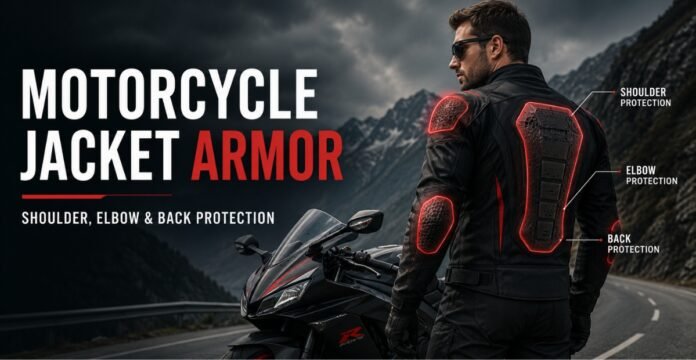
Motorcycle jackets aren’t just made to keep out the wind, rain or cold. The motorcycle jacket armor can be held in place by a protective riding jacket. The armor is usually placed on the shoulders, elbows and back, because they can be subjected to strong impacts in a fall. The best motorcycle jackets work by helping to absorb and distribute impact energy. Armor cannot protect you from every injury. The performance of the armor depends on the design, the tested protection level, the coverage, the position and the degree to which the jacket fits.
What Is Motorcycle Jacket Armor?
Motorcycle jacket armor is protective padding or an impact protector placed inside a motorcycle jacket. Unlike normal soft clothing padding, proper motorcycle jacket armor is designed to reduce the impact energy that reaches the rider. Protectors are commonly fitted at the shoulders and elbows, while some jackets also include a back protector or a pocket where one can be installed. Armor is only one part of a protective jacket. The outer material, stitching, seams, closures, fit, and abrasion resistance also matter. Riders comparing different designs can browse the motorcycle jacket collection to see how jacket construction and materials can vary.
Why Shoulder Armor Is Important
Shoulder armor is one area that can contact the road in a fall. The shoulder armor on motorcycle jackets creates a layer of protection between the rider’s body and the outer shell. Its main purpose is to distribute and absorb some impact energy before it reaches the body. The placement is crucial. The motorcycle jacket armor can move away from your shoulder when riding normally. This could also happen in a crash. The jacket should fit snugly enough to keep the protector in place without being uncomfortable.
How Elbow Armor Protects Riders
Riders may naturally put out an arm during a fall, which makes the elbow and nearby forearm important protection areas. Elbow motorcycle jacket armor is usually shaped to sit over the joint and may extend down the forearm. A larger coverage area can provide protection across more of the exposed region.The sleeve fit has a major effect on how useful motorcycle jacket armor can be. If a sleeve is very loose, the elbow protector may rotate away from its intended position. When examining a men’s biker jacket design or another riding jacket, buyers should therefore look beyond the outer appearance and consider sleeve shape, fit, construction, and whether the garment is actually specified for protective motorcycle use.
How Back Protectors Work
The back motorcycle jacket armor is larger than the typical shoulder or elbow protectors. The back armor is designed to reduce the impact energy transmitted across a part of your back. Some motorcycle jackets come with a back protector while others only have a pocket or a thin pad of comfort. A removable foam pad is not the same as certified motorcycle armor. The rider should inspect the protector to determine its protection level, standard, manufacturer, and intended usage.
Main Features to Check in Motorcycle Jacket Armor
Before buying a jacket, riders should check more than whether the product description simply says “armored.” Motorcycle jacket armor can differ greatly in coverage, flexibility, thickness, certification, and comfort. A simple inspection can reveal whether the protectors are suitable for the rider and whether they stay correctly positioned.
- Shoulder protection: Motorcycle jacket armor should sit directly over the shoulder area.
- Elbow protection: The protector should cover the elbow securely without rotating easily.
- Back protection: Check whether a real protector is supplied or only a pocket is provided.
- Certification: Look for clear information about the standard and protection level.
- Coverage: Larger motorcycle jacket armor can protect more of the relevant impact zone.
- Fit: Protectors should stay in place while the rider moves.
- Flexibility: Armor should allow normal riding movement without becoming distracting.
- Ventilation: Air channels or perforations can improve comfort in warm weather.
- Removability: Removable motorcycle jacket armor makes jacket cleaning and replacement easier.
- Condition: Replace damaged protectors according to the manufacturer’s instructions.
Understanding CE Levels and Protection Ratings
The standard that was used to test the motorcycle jacket armor should be clearly stated on all certified products. EN 1621-1 is often associated with limb protectors, such as those for the shoulders and elbows. Motorcycle back protectors fall under EN 1621-2. The markings on the protector should be read by riders rather than just relying on marketing claims. The level of protection is also important. In accordance with the applicable standards, Level 2 protective devices must adhere to stricter limits for transmitted force than Level 1 protection devices.
Soft Armor vs Hard Armor
Modern motorcycle jacket armor is not always a hard, plastic shell. Most protectors are made of flexible materials which feel soft when moving but have been engineered to reduce impact energy. This makes a jacket more comfortable to wear for everyday riding, commuting and touring. A hard-shell motorcycle jacket can offer a solid outer surface. Flexible protectors, on the other hand, may be more comfortable as they follow your body shape. The hardness of the material should not be used to judge either option.
Jacket Fit Can Affect Armor Performance
Even high-quality motorcycle jacket armor may offer less useful coverage when a jacket fits badly. A jacket that is too loose may allow shoulder or elbow protectors to move. A jacket that is extremely tight can also cause discomfort and may prevent the protector from sitting naturally over the joint. Riders should try the jacket in a riding position rather than judging the fit while standing straight. Bend the elbows, reach forward, move the shoulders, and check the back. Different outer materials also create different fits, so a genuine leather biker jacket may feel and move differently from a textile design. Whatever the material, motorcycle jacket armor should remain centered over the area it is intended to protect.
Comfort and Ventilation Still Matter
Wearing protective equipment regularly is the best way to get the most out of it. In hot climates, thick motorcycle jacket armor may feel warm. Modern protectors can reduce the bulk of their products by using perforations, flexible structures, flexible structures or lightweight materials. It is not acceptable to remove important motorcycle jacket armor just because it is uncomfortable. Riders should look for armor that offers a balance between tested protection and flexibility.
When Should Motorcycle Jacket Armor Be Replaced?
The armor on motorcycle jackets does not last forever. After prolonged use, protectors can be damaged, permanently compressed or cracked, or become misshapen. Even if the visible damage to a motorcycle jacket is minimal, a strong collision can still affect its armor. Riders should inspect their protectors after a major impact and replace them according to the manufacturer’s instructions. When cleaning your jacket, you should also check the armor on the motorcycle jacket.
Conclusion
The motorcycle jacket armor is a vital part of riding apparel because it manages impact in areas like the shoulders, elbows and back. Shoulder protectors protect a common area of impact, elbow protectors cover a joint that is exposed, and back protection adds additional protection to a wider part of the body. Motorcycle jacket armor is not the same as protection for all products. t is best to examine certification, protection, coverage, fit and position, comfort and condition all together. The motorcycle jacket armor must be positioned correctly when the rider moves, and it should also be suitable for the type of riding intended.
FAQs
What is motorcycle jacket armor made for?
Motorcycle jacket armor is designed to absorb and spread some impact energy during a fall or collision. It is commonly positioned around the shoulders, elbows, and back.
Is motorcycle jacket armor necessary?
Motorcycle jacket armor can add important impact protection to a riding jacket. However, riders should also consider abrasion resistance, jacket construction, fit, and other protective equipment.
Is Level 2 motorcycle jacket armor better than Level 1?
Within the applicable CE testing standard, Level 2 armor must meet stricter transmitted-force requirements than Level 1. Riders should still consider coverage, fit, comfort, and correct positioning.