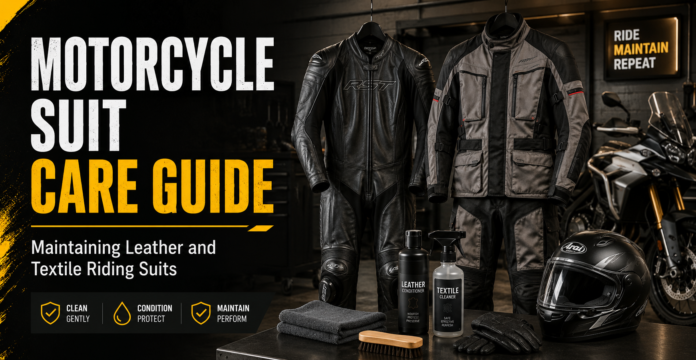
Many people only treat motorcycle riding gear as a fashion item, but in reality, it is the primary protective barrier during rides. Proper maintenance is essential to ensure its protective performance holds up on every trip. This motorcycle suit care guide covers the must-know maintenance knowledge for two main types of riding gear: leather riding gear and fabric riding gear. motorbike suit womens or a men’s racing suit, the right care routine will extend its life and keep you safe on the road.
Why Motorcycle Suit Maintenance Matters
Your motorcycle suit care guide riding gear is constantly exposed to damage from wind-blown sand, insects, road grime, and sweat. These forms of wear gradually break down the fabric and weaken its protective performance. Proper routine maintenance can preserve the gear’s abrasion resistance, waterproofing, and protective fit, while also eliminating odors. This motorcycle suit care guide will help you protect your investment in this equipment and your riding safety.
The Golden Rules of Suit Care
Before diving into specific material care, understand these universal rules that apply to all motorcycle suits:
- Remove all armor and detachable liners before cleaning.
- Avoid bleach, fabric softener, harsh solvents, and high heat.
- Always check the care label inside your suit first.
- When in doubt, hand wash with mild detergent and air dry.
Cleaning Textile Motorcycle Suits
Textile cycling apparel designed for daily riders has a wide range of uses and can withstand harsh weather conditions. Most such garments are made of nylon, polyester, or blended elastic mesh fabric. Heated versions of this apparel are durable and worth the investment, and the heating elements can maintain normal operation as long as the garments are properly motorcycle suit care guide for.
Spot Cleaning
For small stains or bug splatter, mix a little mild detergent with lukewarm water. Use a soft cloth or sponge to work on the dirty area, then wipe with clean water to rinse. Blot with a towel and let it air dry.
Hand Washing
Fill a tub with lukewarm water and a small amount of mild detergent or specialized textile wash. Submerge the jacket or pants and gently agitate to loosen dirt. Pay extra attention to high-contact areas like cuffs, collar, seat, and knees. Drain and rinse with clean water until no suds remain.
Machine Washing (If Label Allows)
Use a gentle cycle with cold or lukewarm water. Close all zippers and Velcro to protect the fabric. Use a small amount of detergent designed for technical fabrics. Never use fabric softener—it can clog breathable membranes and reduce water resistance.
Drying Textile Suits
Gently squeeze—don’t wring—excess water out. Hang on a wide hanger or drying rack in a ventilated area, away from direct sunlight and heat sources. Once dry, you can restore water beading by applying a spray-on DWR (durable water repellent) treatment.
Caring for Leather Motorcycle Suits
Leather is the preferred material for serious riders due to its unmatched abrasion resistance. But it needs more motorcycle suit care guide maintenance than textile. Too much water, the wrong cleaner, or strong heat can dry it out and cause cracking.
Regular Dusting and Wiping
Use a dry, soft cloth to remove loose dust and dirt first. Dampen another cloth with lukewarm water and wipe down the suit to remove surface grime.
Deep Cleaning Leather
Use a cleaner specifically formulated for motorcycle suit care guide leather. Apply the cleaner sparingly to a soft cloth—never directly onto the leather. Clean section by section, especially around collars, sleeves, knees, and hips. Wipe off with a clean cloth and allow to dry naturally, away from heaters or direct sunlight.
Conditioning Leather
After leather cycling gear is cleaned, it needs to be replenished with moisture and nutrients. A special leather motorcycle suit care guide lotion should be applied in two thin layers; after the lotion is absorbed, polish the gear with a microfiber cloth. This care process should be carried out every 3 to 6 months to prevent cracking and maintain the leather’s flexibility.
Important: Avoid Common Mistakes
Never use household cleaners or dish soap on your leather suit—these strip essential oils. Don’t dry leather in sunlight or on heaters as this makes it brittle. Always condition after cleaning to restore flexibility and protective strength.
Special Care: Heated Suits and Rain Suits
Modern riding gear often includes electronics or specialized materials. A heated motorbike suit requires extra motorcycle suit care guide.This paper organizes cleaning and maintenance standards for two types of cycling equipment: for washable, rechargeable cycling jerseys with heating elements, the battery pack must be removed before washing; for machine washing, the jersey must be placed in a laundry bag, washed with mild detergent on the gentle cycle, and must not be twisted or wrung out to avoid damaging the heating elements; for the matching motorcycle suit care guide raincoat, after it is used while wet, it must be wiped with a damp cloth and fully air-dried before storage.
Waterproofing and Weather Protection
Even if your motorcycle suit care guide came waterproofed, the coating can wear off over time. Reapply a waterproof spray or treatment every few months to keep your gear weather-ready. This is especially important for textile suits with breathable membranes.
Storage Tips for Motorcycle Suits
To maintain a suit properly, storage and cleaning are equally important. Before storing a suit, you must let it dry completely. Choose a cool, dry place and a wide-shoulder hanger, and keep the motorcycle suit care guide away from direct sunlight to prevent mold growth, deformation, and fading.
Regular Safety Inspections
Before every long ride, inspect your suit’s critical components:
- Check zippers and Velcro for wear and proper function
- Ensure armor is correctly positioned in its pockets
- Examine seams and stitching for any tears or fraying
- Look for signs of leather cracking or textile wear
Catching small issues early can save your suit and keep you safe.
Common Mistakes to Avoid
Even experienced cyclists often fall into these maintenance pitfalls: do not use harsh cleaning agents that can strip away protective coatings, do not dry gear in direct sunlight or near heaters, do not store wet cycling clothing, do not neglect leather motorcycle suit care guide, and do not overlook maintenance for components such as zippers—all these mistakes will speed up the wear and tear of your equipment.
When to Replace Your Suit
No amount of care can make a worn-out suit safe again. Replace your suit if you notice:
- Cracked or thinning leather
- Tears or holes in textile fabric
- Broken zippers that can’t be repaired
- Armor that no longer stays in position
- Seams that are pulling apart
Your safety is worth more than trying to extend a motorcycle suit care guide past its useful life.
Frequently Asked Questions
How often should I clean my motorcycle suit?
Spot clean after every few rides. Deep clean leather suits every 4-8 weeks of regular use. Textile suits can go longer but wash when visibly dirty or odorous.
Can I machine wash a leather motorcycle suit?
No. Leather suits must be hand cleaned only. Machine washing will damage the leather and its protective properties.
What products should I use on my motorcycle suit?
Use specialized leather cleaner and conditioner for leather suits. For textile, use mild detergent or technical fabric wash. Never use bleach, fabric softener, or household cleaners.
How do I remove odors from my motorcycle suit?
Wash removable liners separately. For leather, use a leather cleaner and allow to air dry thoroughly. For textile, hand wash with mild detergent. Regular cleaning prevents odor buildup.