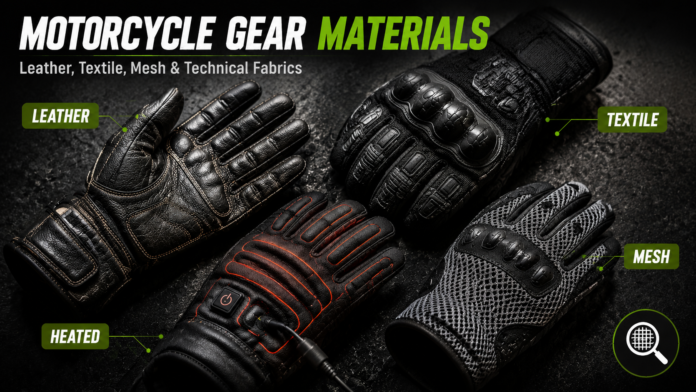
Motorcycle gear is subject to different demands. Gloves, boot, and other accessories are no exception. This is why they require a separate evaluation. Gloves must be able to withstand constant flexing and grip pressure as well as direct contact with controls. They also need to maintain the level of abrasion that would be required by a slip in a crash.
Understanding motorcycle gear materials is just as important for clothing brands or retailers who are sourcing accessories as it is to know which style of glove you should stock. This guide compares and contrasts the main materials that are used in riding gear, as well as describing what you should check before choosing a supplier.
What Makes Motorcycle Gear Materials So Different?
The riding accessories have fundamentally different purposes than jackets or pants. This determines which materials are best for motorcycle gear. The glove needs to balance dexterity and grip while also protecting the rider from impact. A boot must provide ankle support, abrasion protection, without losing flexibility.
As a result, certain materials are used for specific accessory categories. The manufacturers select materials and combine them based on mechanical requirements for each product. Understanding these differences helps buyers assess gear quality much more accurately than just judging it by its appearance.
Leather is the traditional choice for grip and durability
This durability and tactile performance make leather a strong choice for a href=”https://ecojersey.com/catalog/mens-motorbike-gloves/”>motorcycle gloves for men/a> as well as ‘https://ecojersey.com/catalog/womens-motorbike_gloves/”. Its natural texture ensures dependable grip even under varying weather conditions. Leather is a great choice, both for men’s motorcycle gloves as well as women’s motorcycle gloves. Its durability and performance are excellent in the grip and palm zones of gloves where you need to have control.
Leather’s lack of breathability, and the longer time it takes to break in, can make leather less comfortable for extended use. This is more important for long-distance riders, than those who commute only a short distance. Leather is a good material to use for the grip zones of a glove. However, it should be paired with breathable materials in other areas for optimum performance.
Fabric and synthetic blends that are versatile
The use of modern textiles and synthetics in motorcycle gear is becoming more common. They offer many of the protective properties that leather offers, but with increased flexibility and adaptability to weather conditions. They are often used in the back and cuffs of gloves, which have a greater need for breathability and flexibility than gripping palms.
The versatility of this construction is especially evident in specialized categories such as dirtbike gloves. Textile reinforcements at the knuckles combine with synthetic grip panels for a balance between protection and the demands off-road riders place on them. The textile-based construction is also more able to integrate technology, making it a better choice for gear with embedded components.
Tech Fabrics for Specialized Applications
heated glove is a great example of how certain motorcycle gear goes beyond protection and delivers specialized performance. They are made from technical fabrics that combine heating elements with insulation, while maintaining flexibility and grip.
This type of gear is only possible with materials that are specifically designed for this purpose. Standard leather and textile cannot accommodate the embedded heating elements, without impacting durability or flexibility. When sourcing heated accessories or other technical gear, buyers should verify how manufacturers integrate these components while maintaining the material’s protective core.
Mesh and ventilated materials for warm-weather accessories
Although mesh is less common in gloves than jackets, the ventilated construction plays an important role in motorcycle gear for warm weather, especially in accessories and glove backs designed to withstand hot temperatures. Airflow is prioritized to reduce heat accumulation during hot rides.
Manufacturers reserve mesh to lower-risk areas on accessories, while bolstering high-impact zones like the knuckles or palms regardless of ventilation design. This hybrid design is ideal for buyers in warm climates, as full mesh rarely offers adequate protection.
Gear Material Evaluation: Key Features
When choosing materials to use for motorcycle accessories, brands should consider the following factors:
- Performance of the grip in particular palm areas where material texture is important for control and handling.
- Dexterity and Flexibility, ensure the material does not restrict the riding controls required range.
- Placement of reinforcement, to confirm that higher-protection material is placed at the knuckles and palms as well as other high-impact areas
- Technical integration including weather and product types, insulation, heating elements or waterproofing.
- Balance of Breathability is especially important for accessories designed to be worn in warm climates that need protection.
- Material quality is the same for men and women, regardless of gender.
Catalogue Materials that Match Rider Needs
The material selection for a particular accessory should be based on how it will be used, rather than a standard across all accessories. For grip and durability on standard road gloves, leather is the preferred material. Off-road gloves and adventure gloves rely more on textile reinforced with reinforcement for dexterity and technical terrain.
The materials used for heated and technical gear must be engineered to meet their specific functionality. This is different from the standard grips. By comparing the full catalog with rider-specific materials, buyers can stock an assortment that is effective across different uses cases.
Last Thoughts
Material for motorcycle gear is not interchangeable between accessories. Gloves, boots and technical equipment all require a unique balance of flexibility, grip and protection depending on the way riders use them. These material differences allow brands and retailers to create accessory catalogs which perform well rather than just relying upon generic “durable’ claims.
Eco-Jersey offers motorcycle gear in leather, textile and technical materials, as well as heated and off-road gloves for both men and women. Browse the catalog of motorcycle gear, or ask for a consultation on sourcing to find the best material combination for your customers.
FAQs
Which material makes the best motorcycle gloves?
Leather is generally considered to be the most durable and grip-friendly for palm areas, although many gloves are made of a combination of leather and textiles or synthetic materials.
Do heated riding gloves offer less protection than regular gloves?
No, they do not. Well-engineered heated glove designs integrate the heating element without impacting on the material’s durability or knuckle safety.
Can mesh be used for motorcycle gloves without causing harm?
Which material makes the best motorcycle gloves?
Leather is generally considered to be the most durable and grip-friendly for palm areas, although many gloves are made of a combination of leather and textiles or synthetic materials.
Do heated riding gloves offer less protection than regular gloves?
No, they do not. Well-engineered heated glove designs integrate the heating element without impacting on the material’s durability or knuckle safety.
Are off-road gloves made of different materials?
Off-road and dirt-bike gloves are often constructed with reinforced textiles and enhanced protection for the knuckles, which is more suitable to technical terrain than leather.