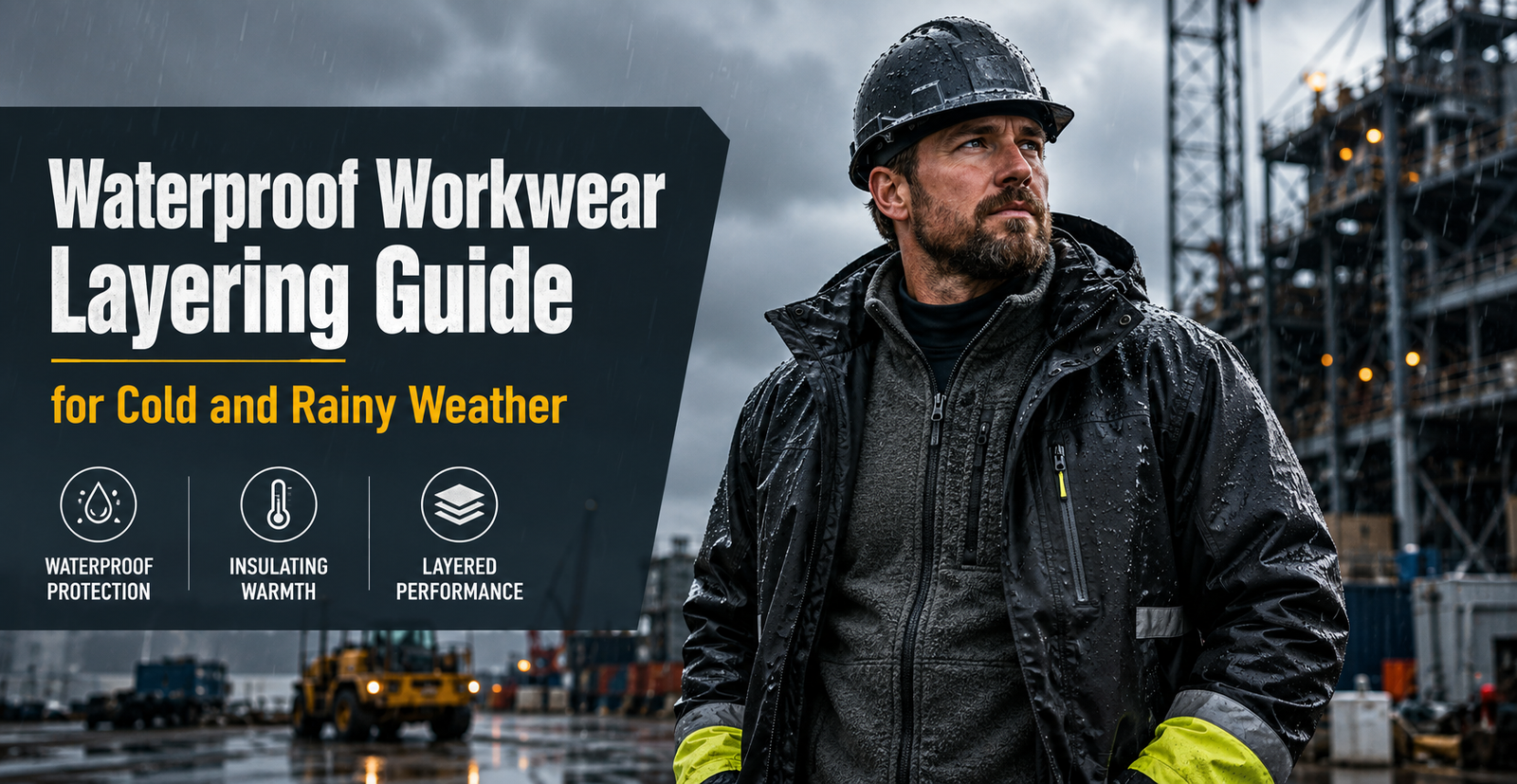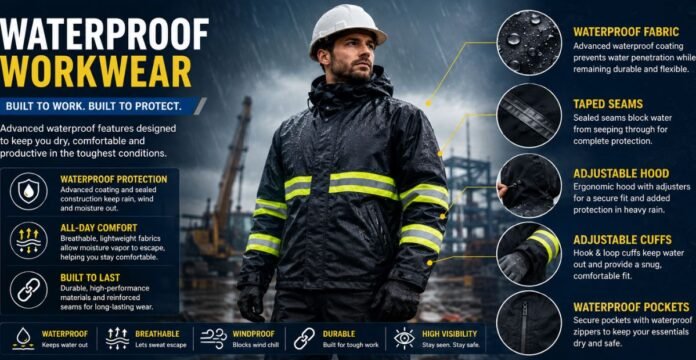
Working outdoors can be difficult when rain, wind, and cold weather are involved. Therefore, workers need clothing that can protect them from changing conditions. This is where waterproof workwear becomes important. It helps keep workers dry while they continue their daily tasks.However, good waterproof workwear is not only about stopping rain. It should also provide comfort, mobility, durability, and safety. For this reason, understanding the main waterproof workwear features can help businesses choose better clothing for their teams.Modern waterproof workwear combines protective fabrics with practical design details. As a result, workers can stay comfortable and focused during demanding jobs. From waterproof jackets to protective pants, every part of the clothing can improve protection when designed correctly.
What Is Waterproof Workwear?
Waterproof workwear is protective clothing designed to help prevent water from reaching the wearer’s body. It is commonly used by construction workers, road crews, outdoor workers, utility teams, agricultural workers, and other professionals who work in wet conditions.Unlike ordinary clothing, waterproof workwear uses specially designed fabrics and construction methods. These materials can help resist rain and moisture. At the same time, many modern designs focus on breathability and movement.Together, they create better coverage during wet-weather work.Businesses can explore different waterproof options through Eco Jersey’s waterproof workwear collection. This range shows how waterproof garments can be used as part of professional workwear.
Why Are Waterproof Workwear Features Important?
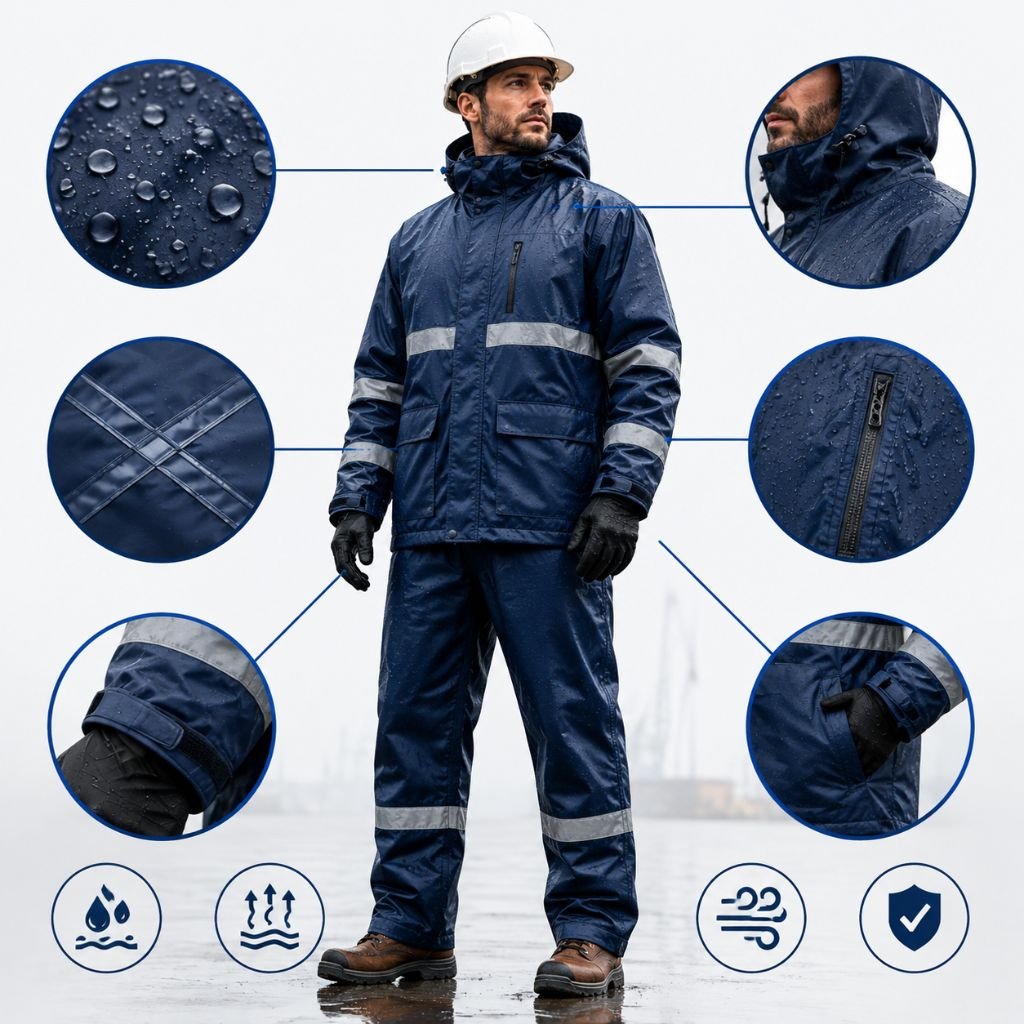
Workers often spend several hours outside. Therefore, uncomfortable clothing can affect their productivity and concentration. Wet clothing can also make workers feel cold and restricted.Good waterproof workwear helps reduce these problems. It keeps moisture away from the body. Moreover, it can help workers stay comfortable during long shifts.Safety is another important factor. Wet conditions can create additional workplace challenges. For instance, poor visibility can make outdoor work more difficult. Slippery surfaces can also increase risks.Therefore, workwear should offer more than water protection. It should support visibility, movement, comfort, and durability as well.
Key Waterproof Workwear Features
There are several features that make waterproof workwear more useful for professional environments. However, the right features can vary depending on the job and weather conditions.
Waterproof Fabric
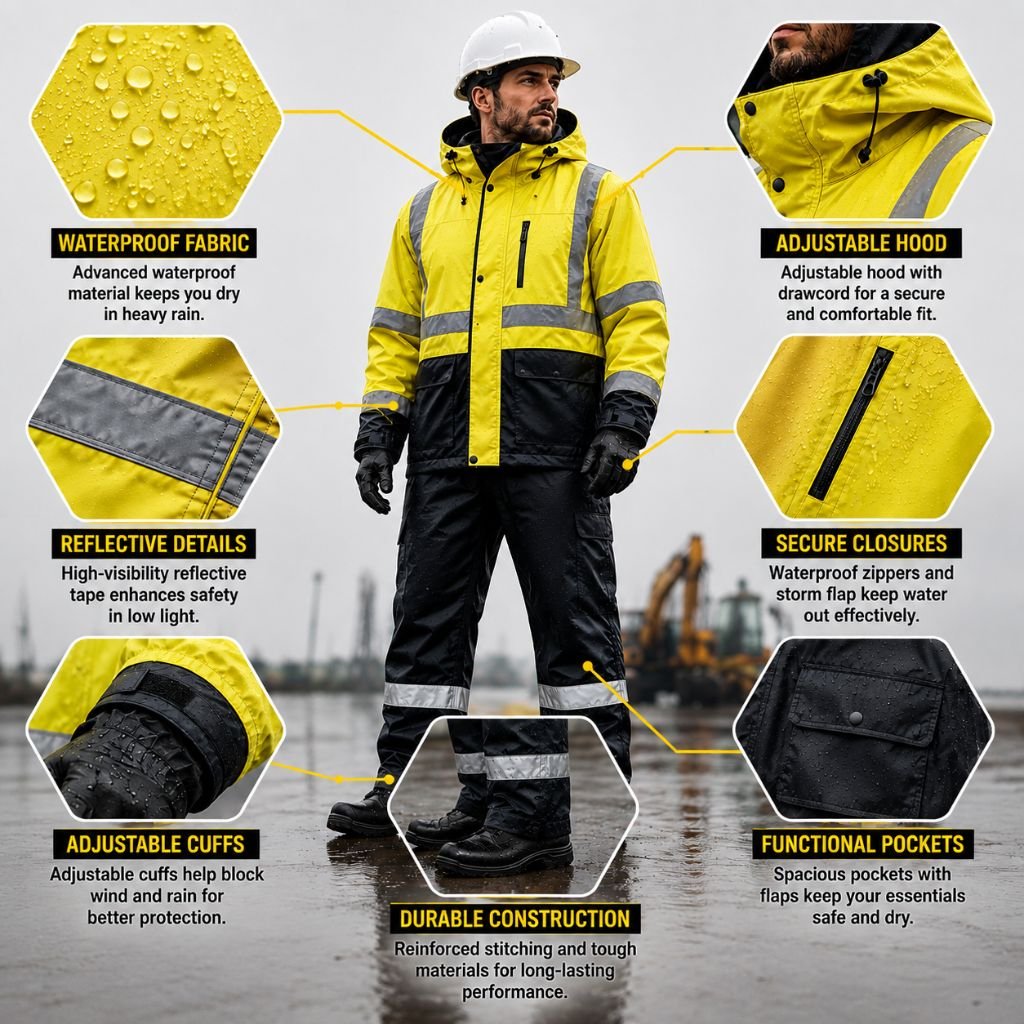
One of the most important waterproof workwear features is waterproof fabric. The material should help prevent rain and moisture from passing through.Waterproof fabrics are often designed with protective coatings or membranes. These materials create a barrier against water. Therefore, workers can stay drier during rain.
However, waterproof protection should not make clothing uncomfortable. Modern workwear often combines water protection with lightweight construction. As a result, workers can move more easily while staying protected.
Breathable Materials
Waterproof clothing should also allow moisture vapor to escape. This feature is known as breathability.Workers can become warm while performing physical tasks. Consequently, sweat can build up inside poorly designed clothing. This can make the garment feel uncomfortable.Breathable waterproof materials help manage moisture from inside the garment. Therefore, they can improve comfort during long working hours.For active jobs, breathable waterproof workwear can be especially useful. It allows workers to remain protected without feeling excessively hot.
Waterproof Seams
Even strong waterproof fabric can lose its effectiveness if the seams allow water to enter. Therefore, sealed or taped seams are important.Waterproof seams help close small openings around stitched areas. As a result, rain has fewer ways to enter the garment.This feature is particularly useful for jackets and pants used during heavy rain. It can also improve the overall durability of the clothing.
Adjustable Hoods
A good waterproof jacket should provide reliable head protection. An adjustable hood can help cover the head and neck during rain.Moreover, adjustable designs allow workers to achieve a better fit. The hood can be tightened when the weather becomes worse. It can also be loosened when more movement is needed.A well-designed hood should not block the worker’s vision. Therefore, the hood design should balance protection with visibility.
Secure Closures
Waterproof workwear often uses secure closures to reduce water entry. These may include zippers, snaps, storm flaps, or adjustable cuffs.For example, a storm flap can provide extra protection around a zipper. Likewise, adjustable cuffs can help prevent rain from entering through the sleeves.These small details can make a significant difference. Therefore, businesses should consider closure design when selecting workwear for outdoor teams.
Adjustable Cuffs
Rain can enter through open sleeve ends. However, adjustable cuffs can help create a closer fit around the wrists.Workers can tighten the cuffs when working in heavy rain. They can also loosen them when additional ventilation is needed.Furthermore, adjustable cuffs can help improve comfort. This makes them a useful feature for workers who regularly perform outdoor tasks.
Durable Construction
Waterproof workwear should be able to handle demanding working conditions. Therefore, durability is another important feature.Workwear may come into contact with tools, rough surfaces, dirt, and other challenging environments. Weak materials can tear or wear out quickly.Strong stitching and durable fabrics can increase garment life. As a result, businesses may reduce the need for frequent replacements.Durability is especially important for industries where workers wear the same protective clothing regularly.
Comfortable Fit
Protection is important, but comfort should not be ignored. Workers need to move, bend, stretch, and perform physical tasks.Therefore, waterproof workwear should provide enough room for natural movement. A restrictive garment can make everyday tasks more difficult.A comfortable fit can also support productivity. Workers are more likely to stay focused when their clothing does not cause unnecessary discomfort.
Lightweight Design
Heavy waterproof clothing can become tiring during long shifts. For this reason, lightweight construction is another valuable feature.Modern materials can provide water protection without adding excessive weight. As a result, workers can move more comfortably.Lightweight garments are particularly useful for jobs that require frequent walking or physical activity. They can also make layering easier during cold weather.
High-Visibility Details
Visibility is essential for many outdoor jobs. Therefore, high-visibility materials can improve worker awareness in low-light or busy environments.Reflective strips and bright colors can help workers become easier to see. This is especially useful for construction, road maintenance, transportation, and utility work.For example, a high-visibility waterproof jacket combines weather protection with visibility-focused design. Such clothing can be useful when workers need protection from rain while remaining visible.
Functional Pockets
Pockets are another practical feature of workwear. Workers often need to carry small tools, phones, keys, or other essential items.Therefore, waterproof workwear can benefit from secure pockets. Zippered pockets are particularly useful because they can help protect contents from rain and accidental loss.Pocket placement also matters. Well-positioned pockets allow workers to reach important items without restricting movement.
Reinforced Areas
Certain parts of workwear experience more stress than others. These areas may include the knees, elbows, shoulders, and pockets.Reinforced construction can help improve durability in these high-use areas. Therefore, workers can continue using their clothing during demanding tasks.This feature is especially useful for construction and industrial workers. Such jobs often involve kneeling, bending, lifting, and frequent movement.
Waterproof Workwear Jackets for Better Protection
Waterproof jackets are one of the most common forms of protective workwear. They provide coverage for the upper body while allowing workers to continue working in wet weather.A quality waterproof jacket may include several useful features. These can include waterproof fabric, sealed seams, adjustable cuffs, protective hoods, secure pockets, and breathable construction.In addition, jackets can be designed for different seasons. Lightweight versions can be useful during warmer rainy weather. Heavier options can provide additional warmth during winter.Therefore, businesses should select jackets based on the working environment. The right design can improve both comfort and protection.
Waterproof Workwear Pants
Protecting the upper body is not enough during heavy rain. Water can also reach the legs and lower body. Therefore, waterproof pants are an important part of complete wet-weather protection.Good waterproof pants can help keep workers dry while they walk, bend, and work. They should also provide enough flexibility for movement.For example, waterproof workwear pants can be considered when workers need lower-body protection in wet conditions.Features such as durable fabrics, practical pockets, flexible construction, and waterproof materials can make work pants more suitable for outdoor jobs.
How Waterproof Workwear Improves Comfort
Comfort is a major part of effective workwear. Workers may wear protective clothing for many hours. Therefore, uncomfortable garments can quickly become a problem.Waterproof workwear can improve comfort in several ways. First, waterproof materials help keep rain away from the body. Second, breathable fabrics can help manage moisture from sweat.Moreover, lightweight construction can reduce fatigue. Adjustable features can also help workers achieve a better fit.As a result, the right combination of features can make waterproof workwear much more comfortable during long shifts.
How Waterproof Workwear Improves Safety
Waterproof clothing can also support workplace safety. Staying dry can help workers remain comfortable and focused.Furthermore, high-visibility features can make workers easier to identify. This can be important around vehicles, machinery, roads, and construction areas.Protective clothing should always match the risks of the specific workplace. Therefore, waterproof protection should be considered alongside other required safety equipment.For example, some jobs may require high-visibility clothing, flame-resistant clothing, or other specialized protective equipment. Waterproof workwear should complement these requirements rather than replace them.
Choosing the Right Waterproof Workwear
Choosing workwear requires careful consideration. Different jobs have different weather and safety requirements.First, consider the working environment. Workers who face heavy rain may need stronger waterproof protection. On the other hand, workers in light rain may prefer lightweight garments.Next, consider temperature. Cold environments may require insulated waterproof clothing. Warmer conditions may require breathable and lightweight materials.Also, consider the level of physical activity. Workers who move frequently may benefit from flexible designs. Meanwhile, workers performing stationary tasks may need additional insulation.Finally, consider visibility and durability. These features can be important for outdoor and industrial work.Businesses looking for broader workwear options can also review workwear catalogs to compare different garment types and applications.
Waterproof vs. Water-Resistant Workwear
Waterproof and water-resistant clothing are not exactly the same. Water-resistant garments can help repel some moisture. However, they may not provide the same level of protection as waterproof clothing.Waterproof garments are designed to provide stronger protection against water penetration. Therefore, they are generally more suitable for prolonged exposure to rain.On the other hand, water-resistant clothing can be useful for light rain or short periods outdoors.Consequently, businesses should select clothing based on actual working conditions. Choosing the wrong level of protection can reduce comfort and effectiveness.
Maintenance Tips for Waterproof Workwear
Proper maintenance can help extend the life of waterproof workwear. Therefore, workers should follow the manufacturer’s care instructions.First, clean the garments according to the recommended washing method. Avoid harsh cleaning products unless they are approved for the fabric.Next, inspect seams, zippers, cuffs, and other important areas regularly. Small problems can become larger if they are ignored.Also, store waterproof clothing in a clean and dry place. Avoid storing wet garments for long periods because this can cause unpleasant odors and damage.Finally, check the waterproof performance over time. If the protective finish becomes less effective, follow the manufacturer’s recommended care or reproofing process.
Benefits of Investing in Quality Waterproof Workwear
Quality waterproof workwear can offer several benefits to businesses and workers. First, it helps protect workers from wet weather. Second, it can improve comfort during long shifts.Moreover, durable garments can last longer. Therefore, businesses may reduce replacement costs over time.Better workwear can also support employee satisfaction. When workers have suitable clothing, they can perform tasks more comfortably.In addition, professional workwear can create a consistent appearance across a team. This can be useful for companies that want a recognizable and professional image.
Conclusion
The right waterproof workwear features can make a major difference in wet working conditions. Waterproof fabrics, breathable materials, sealed seams, adjustable hoods, secure closures, and durable construction all contribute to better performance.Furthermore, features such as high visibility, comfortable fits, lightweight designs, and practical pockets can improve everyday usability.Therefore, businesses should look beyond basic waterproof protection when choosing workwear. The best clothing should balance protection, comfort, durability, mobility, and workplace safety.
FAQs
What are the most important waterproof workwear features?
The most important waterproof workwear features include waterproof fabrics, sealed seams, breathable materials, adjustable hoods, secure closures, durable construction, and comfortable fits. These features help protect workers from rain while supporting comfort and movement.
How does waterproof workwear keep workers dry?
Waterproof workwear uses specially designed fabrics and protective construction to prevent water from passing through. In addition, sealed seams and secure closures help reduce areas where rain could enter.
Is waterproof workwear breathable?
Yes, many modern waterproof garments are designed with breathable materials. These fabrics help moisture vapor escape from inside the clothing. Therefore, workers can stay more comfortable during physical activities.
Why are sealed seams important in waterproof workwear?
Sealed seams help prevent water from entering through stitched areas. As a result, they improve the overall waterproof protection of the garment, especially during heavy or prolonged rain.