Motorcycle riding gives freedom, speed, and adventure, but it also brings real safety risks. That is why modern riding gear is changing fast. Today, riders do not only want a suit that looks strong. They want a suit that protects the body, feels comfortable, handles different weather, and supports long rides without making movement hard. This is where motorcycle suit trends are becoming very important. New riding suits are now made with better armor, stronger fabrics, smarter ventilation, improved waterproof layers, and more comfortable fits.
A good suit is no longer just a leather outfit for racing. It can be a touring suit, a rain suit, a heated suit, or a flexible textile suit for daily riders. These motorcycle suit trends show that protection and comfort can work together. Riders now expect safety at the shoulders, elbows, back, chest, hips, and knees, but they also want light weight, breathability, and easy movement. The best motorcycle suit trends are not only about fashion. They are about helping riders stay safer, warmer, drier, and more confident on the road.
Why Rider Protection Technology Is Changing
Rider protection technology is changing because riders are using motorcycles in many different ways. Some ride daily in city traffic. Some ride long distances on highways. Some ride in rain, cold weather, or hot summer conditions. Others ride sport bikes and need stronger impact protection. Because of this, one basic suit is not enough for every rider. Modern motorcycle suit trends focus on matching the suit to the real riding situation.
A rider may need abrasion resistance for sliding protection, impact armor for hard falls, waterproof panels for rain, and stretch zones for comfort. Older suits were often heavy and stiff, but newer suits try to protect without feeling like a burden. Many riders now compare suits by fabric strength, armor placement, ventilation, fit, and weather control. This makes the buying decision more practical. The goal is simple: a riding suit should protect the rider before, during, and after a crash risk. That is why motorcycle suit trends are moving toward complete body protection, better comfort, and smarter design.
Motorcycle Suit Trends
Motorcycle suit trends are becoming more focused on full-body protection. Riders are now looking for suits that cover more than the upper body. A jacket alone may help, but it can leave the lower body less protected if paired with normal jeans. A proper suit gives better coverage because the jacket and pants are designed to work together. Many riders also prefer connected two-piece suits because they are easier to wear than one-piece racing suits.
A good two-piece suit can give daily comfort while still offering serious coverage. For buyers who want to compare different suit styles, Eco Jersey’s motorcycle suits collection is a relevant place to view suit-based riding apparel options. These motorcycle suit trends show a clear move toward practical safety. Riders want suits that feel usable for real roads, not only race tracks. This means better zippers, improved stretch panels, adjustable waists, stronger seams, and armor that stays in place. The suit must protect, but it must also be easy enough to wear often.
Smarter Armor Placement
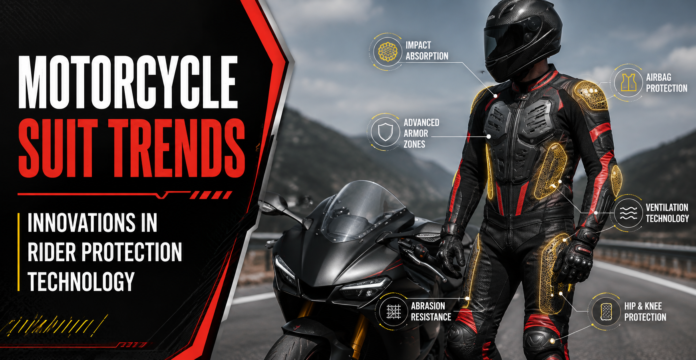
One of the biggest motorcycle suit trends is better armor placement. In the past, some suits had basic padding that looked protective but did not always stay in the right position. Now, riders want armor at the main impact zones. These areas include shoulders, elbows, back, chest, hips, and knees. Good armor should sit close to the body, but it should not block normal movement. If armor moves away during a fall, it may not protect the correct area.
That is why modern suits use shaped armor pockets, adjustable straps, stretch panels, and better body mapping. Body mapping means the suit is designed around how the rider sits, bends, reaches, and moves on a motorcycle. This helps the suit stay in place while riding. These motorcycle suit trends are important because protection is not only about adding more padding. It is about placing the right protection in the right area. A suit with smart armor placement can feel lighter, safer, and more natural than a bulky suit with poor design.
Better Abrasion-Resistant Fabrics
Abrasion resistance is one of the most important parts of rider protection. If a rider falls and slides on the road, normal clothing can tear quickly. Motorcycle suits are made to reduce that risk by using stronger materials. Leather is still popular because it gives strong abrasion resistance, especially for sport and race use. Textile suits are also improving with stronger woven fabrics, reinforced panels, and hybrid construction. Many modern motorcycle suit trends focus on mixing materials instead of using one fabric everywhere. For example, high-risk areas may use stronger reinforcement, while lower-risk areas may use flexible or breathable fabric.
This keeps the suit protective without making it too stiff. Reinforced shoulders, elbows, knees, hips, and seat areas can make a big difference. These motorcycle suit trends help riders get better protection in the places that need it most. The best suit is not always the thickest one. It is the suit that uses the right fabric, in the right place, with strong seams and a safe fit.
Heated and Cold Weather Suit Technology
Cold weather riding can make the body stiff, slow, and uncomfortable. When hands, arms, legs, and the core become cold, the rider may react more slowly. That is why heated riding technology is becoming a useful part of motorcycle suit trends. Heated panels, insulated layers, wind-blocking fabrics, and thermal liners help riders stay warm during winter rides. A warm rider can focus better and move more naturally. This does not mean every rider needs a heated suit, but it does show how safety and comfort are connected.
Riders who travel in cold areas often look for suits that keep warmth inside without adding too much bulk. Eco Jersey’s heated motorbike suit is a relevant example for riders interested in cold-weather riding apparel. These motorcycle suit trends show that protection is not only about crashes. It is also about keeping the rider comfortable enough to stay alert. A suit that protects against cold, wind, and fatigue can support safer riding during longer winter journeys.
One-Paragraph Innovation Checklist
When checking modern motorcycle suit trends, riders should look for these features before buying:
- Strong abrasion-resistant fabric in slide zones.
- Impact armor at shoulders, elbows, back, hips, and knees.
- Stretch panels for easy movement.
- Ventilation for hot weather riding.
- Waterproof or water-resistant layers for wet roads.
- Thermal liners for cold weather comfort.
- Adjustable cuffs, waist, arms, and legs.
- Strong seams that do not open easily.
- Reflective details for better visibility.
- Zippers that connect jacket and pants.
- Comfortable collar and soft inner lining.
- Armor pockets that keep protectors in place.
- Easy care instructions for long-term use.
- A fit that works in the riding position.
- Practical pockets that do not affect safety.
Waterproof and All-Weather Protection
Weather protection is another major part of motorcycle suit trends. Riders do not always ride in perfect weather. Rain, wind, dust, and cold air can make a ride harder and more dangerous. A wet rider may feel uncomfortable, distracted, and cold. That is why waterproof motorcycle suits are becoming more popular for touring, commuting, and long-distance riding. A good rain suit should keep water out while still allowing some comfort inside.
Poor rain gear can trap sweat and make the rider feel sticky, so breathability also matters. Waterproof zippers, sealed seams, storm flaps, and adjustable closures can help keep water away from the body. Eco Jersey’s motorbike rain suit fits this type of riding need for wet-weather protection. These motorcycle suit trends show that modern suits must protect against more than impact. They must also help riders handle weather changes. A dry and comfortable rider can stay more focused, especially during long rides or sudden rain.
Ventilation and Hot Weather Comfort
Hot weather riding can be just as difficult as cold weather riding. A suit that is too hot may make the rider tired, sweaty, and uncomfortable. Some riders make the mistake of wearing light casual clothing in summer, but that can reduce safety. Modern motorcycle suit trends solve this problem with better ventilation. Mesh panels, air vents, breathable liners, and moisture-control fabrics help air move through the suit. The goal is to cool the rider without removing protection from key areas.
A summer riding suit should still protect the shoulders, elbows, back, hips, and knees. It should also keep the fabric strong enough in slide zones. These motorcycle suit trends are useful for riders in warm climates because they allow comfort and safety together. A suit should not force the rider to choose between staying cool and staying protected. The best hot-weather suits use airflow carefully, placing ventilation where it helps comfort while keeping reinforcement in the areas that face the most risk.
Fit, Flexibility, and Real Riding Movement
Fit is one of the most important motorcycle suit trends because even a strong suit can fail to perform well if it fits badly. A suit that is too loose can move around during a fall. A suit that is too tight can limit movement and make the rider uncomfortable. The correct fit should feel comfortable in the riding position, not just while standing in front of a mirror. Riders bend their arms, lean forward, grip the tank, move their knees, and turn their shoulders while riding.
Modern suits use stretch zones, pre-curved sleeves, flexible knees, adjustable waist systems, and better panel shaping to support this movement. These motorcycle suit trends make suits easier to wear for longer rides. Comfort also affects safety because a rider who feels restricted may react more slowly. A well-fitted suit should keep armor in place, cover the body properly, and allow natural control of the motorcycle. Good fit is not a luxury feature. It is part of protection.
Conclusion
Motorcycle suit trends are moving toward smarter, safer, and more comfortable riding gear. Modern suits are no longer only about thick leather or bold design. They now include better armor placement, stronger fabrics, heated comfort, waterproof protection, ventilation, stretch panels, and improved fit. These changes help riders choose gear that matches real riding needs. A city rider, touring rider, winter rider, and sport rider may all need different suit features, but the goal stays the same: better protection with better comfort. The right suit should help protect the body, support movement, and make the rider feel confident on the road. As technology improves, motorcycle suit trends will keep moving toward gear that feels lighter, fits better, and protects more intelligently. Riders should not choose a suit only by style or price. They should look at safety features, fabric quality, armor position, weather protection, and comfort before making a decision.
FAQs
What are the latest motorcycle suit trends?
The latest motorcycle suit trends include better armor placement, stretch panels, waterproof layers, heated options, breathable fabrics, and stronger abrasion-resistant materials.
Are heated motorcycle suits good for winter riding?
Yes, heated motorcycle suits can help riders stay warm in cold weather. They support comfort, focus, and better movement during winter rides.
Is a one-piece or two-piece motorcycle suit better?
A one-piece suit is often better for racing, while a two-piece suit is easier for touring, commuting, and daily riding. The better choice depends on the rider’s use.
Why is armor placement important in motorcycle suits?
Armor placement matters because protectors must stay over impact zones like shoulders, elbows, back, hips, and knees during a fall.