
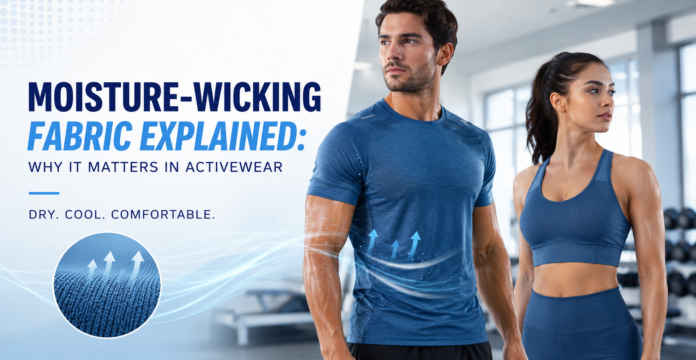
Moisture wicking fabrics are designed with specific characteristics to pull sweat away from the skin and disperse it over a larger area on the outer surface of the fabric. Once the moisture is dispersed and spread over a larger surface, it can dry quickly. Along with that, it helps the fabric also helps the moisture wicking garment evens out the stickiness caused by sweat and improves comfort especially during physical activity by evens out moisture distribution throughout the garment.
How Moisture Wicking Fabric Moves Sweat
Moisture-wicking fabric helps with the movement of sweat through a process known as capillary action. Once sweat comes in contact with the fabric, the moisture enters the tiny channel within the yarn, and then continues to the outer surface of the fabric. Once the outer surface of the fabric contains the moisture, the surface allows the moisture to evaporate by air contact. Although the process does help with the movement of sweat, it does not mean that the fabric will remain completely dry during the time of intense physical activity.
Why Moisture Wicking Fabric Matters in Activewear
Exercise raises body heat, so sweating is a normal way for the body to cool itself. Problems begin when clothing traps that sweat against the skin. Wet material may feel heavy, cling to the body, and cause rubbing during repeated movement. In well-designed activewear, moisture wicking fabric helps move dampness away from high-sweat areas such as the back, chest, waist, and underarms. This can make training feel more comfortable, especially during running, cycling, strength work, or outdoor exercise. Moisture wicking fabric also helps activewear keep a cleaner shape instead of becoming soaked and loose.
Moisture Wicking Fabric Is Not the Same as Absorbent Fabric
Absorbent fabric stores liquid. It can also keep water in its fibers. Cotton is a common example of fabric that can absorb a lot of sweat and remain wet for a long time. Moisture wicking fabrics do not allow liquid to be stored. Rather, it moves and spreads moisture to leave the garment. A fabric can do some of the functions of the other; however, they are mostly different. A fabric can absorb some of the moisture and leave the rest to be moved by knitting. When shopping for clothing to exercise in, consider how the fabric handles sweat and not just the fiber name.
Which Fibers Make Good Moisture Wicking Fabric?
Moisture management materials usually consist of polyester, nylon, or polypropylene. These fibers absorb very little water and can be engineered into yarns that transport water away from the fibers. Simply using one of these fibers does not guarantee good performance. For instance, a poorly knitted polyester shirt can manage sweat worse than a good quality blended shirt can. Some moisture wicking fabric includes polyester and elastane, while others contain polyester and softer fibers such as cotton or modal. There are a number of variables that can affect the performance of moisture wicking fabric, including the fiber cross-section, texture of the yarn, the density of the knit, and various finishing treatments.
Main Benefits of Moisture Wicking Fabric
- Moisture wicking fabric moves sweat away from the skin instead of leaving one wet patch.
- It helps clothing feel lighter and less sticky during exercise.
- It can reduce rubbing by limiting long periods of wet fabric against the body.
- It supports faster drying when the garment has good airflow and a suitable structure.
- It works well in shirts, leggings, shorts, sports bras, and base layers.
- It can improve everyday comfort in warm weather as well as during training.
- Quality moisture wicking fabric should keep working after regular washing when it is made and cared for correctly.
Moisture Wicking Fabric in Performance Wear
High-intensity exercise creates more heat and sweat, so the fabric must handle moisture without limiting movement. In performance wear, moisture wicking fabric is often combined with mesh panels, lightweight knits, four-way stretch, and flat seams. These features work together rather than acting alone. Mesh can improve airflow, stretch supports a full range of motion, and smooth seams may reduce rubbing. Meanwhile, moisture wicking fabric moves sweat toward areas where it can spread and dry. For hard sessions, choose garments with breathable zones around the back, underarms, inner thighs, or other places where heat usually builds.
Moisture Wicking Fabric for Gym Wear
Gym clothing must stay comfortable during many kinds of movement, including lifting, walking, rowing, cycling, and floor exercises. A well-made gym wear collection should use moisture wicking fabric in a way that matches each garment. A loose tank may need a light, airy knit, while fitted leggings may need a denser blend with stretch and good recovery. Moisture wicking fabric is especially useful around waistbands and fitted areas because trapped sweat can make these places feel uncomfortable. Still, the garment should not be too tight because extreme compression may reduce airflow and slow drying in some conditions.
Fit, Fabric Weight, and Construction Matter
The same fibers don’t guarantee identical performance. Even lightweight moisture-wicking fabrics that dry quickly need to be strong enough for the task at hand. Heavier moisture-wicking fabrics may provide support and coverage, but may require a strong enough structure to allow the passage of sweat and heat. The fit changes the comfort level. Clothing that is close to the skin can collect sweat quickly, but can accommodate space to allow free and unhindered movement as well as air. Performance also hinges on the seams, panels, yarn tension, and the thickness of the fabric.
How to Choose and Care for Moisture Wicking Fabric
Before you buy, Does it feel like it will breathe? Does it feel stretchy? Can you move in it? Does it feel like it will wick moisture? Pay attention to the fiber and focus on the knit, thickness, stretch, and positioning of ventilation panels. Test the fit by doing an arm lift, a light bend, and a step walk. Good moisture wicking fabric feels good against the skin, not rough and plasticy. For protection, follow the care instructions and wash it with a mild soap and use as little as possible. It can coat the fabric, leaving a film that may prevent moisture wicking fabrics from spreading water. Also, it can air dry to protect the shape and stretch.
Conclusion
Moisture wicking fabric is a crucial component in athletic apparel. As comfort while exercising is directly related to a person’s confidence and overall ability to perform at their best. It’s important to remember that while sweating is inevitable, it should not be seen as a lack of hydration or an unhealthy training environment. In fact, this fabric relocates sweat and promotes the spread of moisture in order to dry the fabric fast. The fabric’s moisture wicking properties improves the final outcome, especially when combined with breathable construction and an overall well designed garment.
FAQs
Does Moisture Wicking Fabric Stop Sweating?
No, moisture wicking fabric does not stop the body from producing sweat. It moves sweat away from the skin and spreads it across the garment so it can evaporate more easily.
Is Moisture Wicking Fabric Good for Everyday Clothing?
Yes, moisture wicking fabric can be useful for travel, warm weather, outdoor work, and daily activities. It is especially helpful for people who stay active or sweat easily.
Is Polyester Always Moisture-Wicking?
No, not every polyester material offers the same performance. The yarn shape, knit structure, fabric weight, chemical finish, and garment construction all affect how well it manages moisture.


