
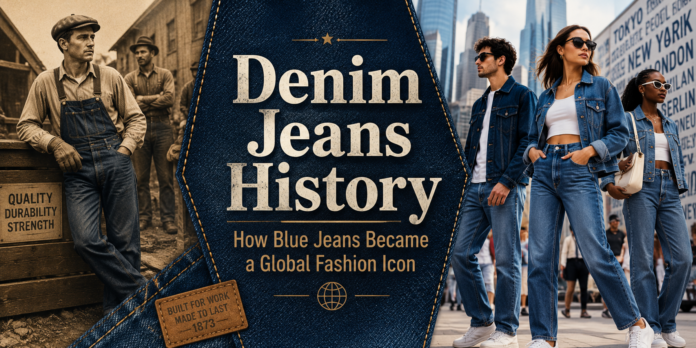
Denim jeans history is not just about a pair of pants. It is the story of hard work, daily comfort, youth culture, movie style, street fashion, and global identity. Blue jeans started as strong work clothing for people who needed durable pants, but over time they became one of the most loved fashion items in the world. Today, denim jeans are worn by students, workers, artists, celebrities, travelers, and professionals because they are easy to style, long-lasting, and suitable for many occasions. The best thing about jeans is that they feel simple but still look stylish. This is why denim jeans history matters so much. It shows how one practical clothing item moved from mines, farms, and factories into fashion shows, city streets, schools, offices, and wardrobes around the world.
Early Denim Roots Before Blue Jeans Became Famous
Denim jeans history began long before jeans became a fashion item. The fabric itself was known for being strong, thick, and useful for tough work. In earlier times, people needed clothes that could handle dust, sweat, travel, and long hours of labor. Denim became popular because it did not tear easily and could be worn again and again. Its twill weave made it stronger than many lighter cotton fabrics, while the blue color helped hide stains better than pale clothing. At first, denim was not seen as stylish or expensive. It was simply practical. Workers liked it because it gave them comfort and protection during difficult jobs. That is why the early part of denim jeans history is connected with function, not fashion. The jeans we see today came from a need for clothing that could survive real life, not from a fashion trend created only for looks.
Denim Jeans History and the Birth of Workwear
The most important turning point in denim jeans history came when strong denim pants became linked with workwear. Workers needed pants with strong pockets, firm stitching, and fabric that could handle daily pressure. This is where blue jeans became more than normal trousers. They became a trusted work garment. In that time, people did not buy jeans because they wanted to follow fashion. They bought them because they needed clothes that lasted. That practical beginning is still part of modern denim style today. Even when people now buy fashion-focused denim jeans, they are still choosing a garment that comes from durability and comfort. This is why denim jeans history is different from many other fashion stories. It started with usefulness first and style second, but later both qualities came together and made jeans popular across every class and age group.
From Workers’ Clothing to Everyday Wear
As time passed, jeans slowly moved from work sites into everyday life. People noticed that denim pants were not only strong but also comfortable for normal activities. Farmers, mechanics, riders, and outdoor workers wore them first, but then students and young people also started wearing them casually. This change was important because it made jeans part of daily fashion. Denim jeans history shows that people often accept clothing when it solves a real problem. Jeans were easy to wash, easy to match, and easy to wear in different seasons. They looked better with age, which made them different from many formal clothes. Faded areas, soft creases, and worn edges gave each pair its own character. This natural aging made jeans feel personal. Instead of looking old in a bad way, denim often looked more relaxed and stylish after repeated use. That helped jeans become a favorite everyday choice.
Hollywood and the Rise of Cool Denim Style
Denim jeans history changed again when movies made jeans look bold, young, and cool. Western films showed cowboys wearing denim as a symbol of strength and independence. Later, movie stars wore jeans in a way that made them feel rebellious and stylish. Young people saw jeans as more than simple clothing. They became a sign of confidence, freedom, and personal attitude. This was a big step in the journey from workwear to fashion icon. Jeans were no longer just pants for labor. They became a symbol of youth style. People wanted to wear denim because it looked natural, brave, and modern. The rough look of jeans gave them emotional value. They did not feel stiff like formal trousers. They felt alive, free, and connected to real people. That is why cinema played a powerful role in making blue jeans famous across the world.
Youth Culture, Rebellion, and Ripped Denim
One of the most interesting parts of denim jeans history is how jeans became connected with youth culture and rebellion. In many decades, young people used jeans to show that they wanted comfort, freedom, and a style of their own. Ripped denim, faded denim, and relaxed fits became popular because they looked different from polished formal clothing. These styles showed attitude without needing many words. Today, items like mens ripped denim jeans still carry that same feeling of casual confidence and street style. Ripped jeans are not only about tears in the fabric. They represent a fashion idea where imperfection becomes part of the look. This is why denim jeans history is so powerful. It proves that fashion does not always need to be neat, formal, or expensive. Sometimes, a worn and relaxed look can become the strongest style statement.
How Women Made Denim a Fashion Essential
Women also played a major role in denim jeans history. At first, jeans were mostly linked with men’s workwear, but that changed as women began wearing denim for comfort, movement, and personal style. Over time, jeans became an important part of women’s wardrobes because they could be styled in many ways. They could look casual with a T-shirt, smart with a blazer, or stylish with a fitted top. This flexibility made jeans useful for school, shopping, travel, work-from-home outfits, and weekend plans. Modern denim jeans for women show how far denim has moved from its early workwear image. Today, women’s denim includes skinny, straight, wide-leg, mom-fit, bootcut, high-rise, and relaxed styles. This part of denim jeans history shows that jeans became global because they adapted to different body types, fashion needs, and lifestyles without losing their simple identity.
Built-In Point: Why Blue Jeans Became a Global Fashion Icon
Denim jeans history became global because jeans had many useful qualities in one simple garment.
- They were strong enough for work and comfortable enough for daily wear.
- They matched easily with shirts, jackets, sweaters, sneakers, boots, and casual tops.
- They looked good when new and often looked better after natural fading.
- They worked for men, women, and children across different age groups.
- They became a symbol of freedom, youth, travel, music, movies, and street culture.
- They could be made in many fits, washes, colors, and price ranges.
- They were simple enough for everyday use but stylish enough for fashion trends.
- They allowed people to express personality without needing loud or complicated clothing.
Denim in Music, Streetwear, and Pop Culture
Denim jeans history also became stronger through music and streetwear. Rock musicians, hip-hop artists, pop stars, and street-style influencers helped jeans reach new audiences. In music culture, denim often looked honest, bold, and easy to relate to. A singer wearing jeans on stage felt closer to the public than someone dressed only in formal clothing. Streetwear made denim even more creative by mixing it with hoodies, graphic tees, sneakers, oversized jackets, and accessories. This helped jeans become part of personal expression. People could choose dark denim for a clean look, faded denim for a vintage feel, ripped denim for attitude, or relaxed denim for comfort. Pop culture gave denim emotional power. It made jeans feel connected to confidence, creativity, and self-expression. That is why jeans stayed popular even when many other fashion trends came and went.
The Global Spread of Blue Jeans
The global success of jeans is a major reason denim jeans history is so special. Many clothing items stay popular in one country or one culture, but blue jeans became common almost everywhere. People in different regions accepted denim because it was practical and easy to understand. Jeans did not need complicated styling rules. A person could wear them with local clothing, modern fashion, casual shoes, boots, jackets, or simple shirts. This made denim flexible across cultures. In some places, jeans became a sign of Western fashion. In others, they became normal daily clothing for school, work, and travel. Global brands, films, music videos, magazines, and online fashion all helped spread denim style. The simple blue jean became a shared fashion language. Even when trends changed, jeans stayed familiar. This worldwide acceptance made denim one of the strongest clothing stories in modern fashion.
Modern Denim: Fits, Washes, and Personal Choice
Modern denim jeans history is now about choice. In the past, jeans had fewer shapes and were mostly made for strength. Today, people can choose jeans based on fit, comfort, wash, fabric weight, stretch, rise, and occasion. Straight-leg jeans give a classic look. Slim-fit jeans look clean and modern. Wide-leg jeans feel relaxed and trendy. High-rise jeans create a balanced shape, while relaxed jeans give more room for movement. Dark washes can look smarter, while light washes feel casual and easygoing. Stretch denim adds comfort, while rigid denim keeps a more traditional feel. This variety helped denim stay fresh for every generation. Jeans did not become outdated because they kept changing without losing their original identity. That is the real strength of denim. It can follow new trends while still feeling classic, familiar, and useful.
Sustainability and the Future of Denim
The future of denim jeans history is moving toward better fabrics, cleaner production, and more responsible buying. Denim is loved around the world, but modern shoppers also care about water use, fabric quality, dyeing methods, and garment life. Many people now prefer jeans that last longer instead of buying low-quality pairs again and again. Strong stitching, better fabric, careful finishing, and timeless fits can reduce waste because the jeans stay useful for years. Sustainable denim also includes recycled fibers, organic cotton, lower-impact washes, and smarter manufacturing methods. This does not mean jeans must lose their style. It means denim can become more thoughtful while still staying fashionable. The next chapter of denim jeans history will likely focus on comfort, durability, circular fashion, repair, reuse, and designs that look good for a long time instead of only one season.
Conclusion
Denim jeans history proves that the most powerful fashion items are often the simplest ones. Blue jeans became a global fashion icon because they were useful first, stylish later, and personal forever. They started as strong workwear, became a symbol of youth and freedom, entered movies and music, reached women’s fashion, shaped streetwear, and spread across the world. Their real beauty is that they can look different on every person while still feeling familiar to everyone. A pair of jeans can be clean, rugged, classic, modern, rebellious, or relaxed depending on how it is worn. That is why denim has never fully disappeared from fashion. It keeps changing with people, culture, and lifestyle. In the end, denim jeans history is not only about clothing; it is about comfort, identity, confidence, and everyday style.
FAQs
What is denim jeans history in simple words?
Denim jeans history is the story of how strong work pants became one of the most popular fashion items in the world.
Why did blue jeans become so popular?
Blue jeans became popular because they were durable, comfortable, easy to style, and suitable for many different people and occasions.
Were jeans always a fashion item?
No. Jeans started as practical workwear before becoming part of casual fashion, movies, music, streetwear, and modern wardrobes.
Why are denim jeans still popular today?
Denim jeans are still popular because they are versatile, long-lasting, simple to wear, and available in many fits, washes, and styles.


