Windbreaker jackets look deceptively simple. Lightweight shell, zipper, hood — how complicated can the choice be? Quite complicated, actually. The wrong windbreaker leaves you cold, wet, or restricted at exactly the moment you need reliable protection and freedom of movement. Knowing how to choose the right windbreaker jacket for your specific activity, climate, and performance priorities makes the difference between a jacket you reach for constantly and one that sits unused at the back of a drawer. Here’s everything you need to consider.
Start With Your Primary Activity
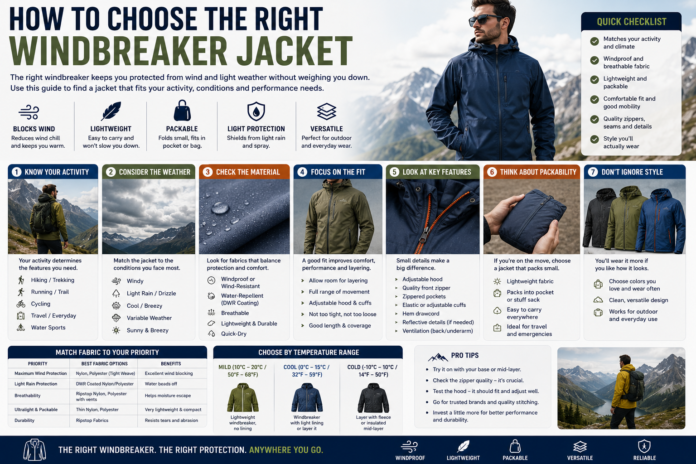
The single most important windbreaker selection decision is matching the jacket to your primary use case. Windbreakers built for different activities make meaningfully different construction choices — and those choices determine how well the jacket serves you in the specific conditions your activity creates.
Running and high-intensity cardio demand ultralight fabrics, minimal construction details, and maximum breathability. Every unnecessary gram affects running economy across long distances. Reflective details add genuine safety value during low-light training sessions. Thumb loop cuffs maintain sleeve position during arm swing without velcro adjustment mechanisms that add weight.
Hiking and trail use benefit from slightly heavier constructions with better abrasion resistance, more pocket storage, and hood designs that work with or without a pack’s shoulder straps restricting access. Hiking clothing specialists design windbreakers around the specific functional demands trail users face — including hem length that covers the lower back during uphill lean and pocket placement that works correctly with backpack hip belts.
Casual lifestyle and travel use suits packable windbreakers that compress small, look clean, and handle the varied light weather conditions urban and travel environments create without requiring technical performance optimization for any specific activity.
Cycling demands close-fitting aerodynamic construction, extended rear hems covering the exposed lower back during forward riding position, and back pocket access that works without stopping or jacket removal.
Understand the Wind and Weather Protection You Actually Need
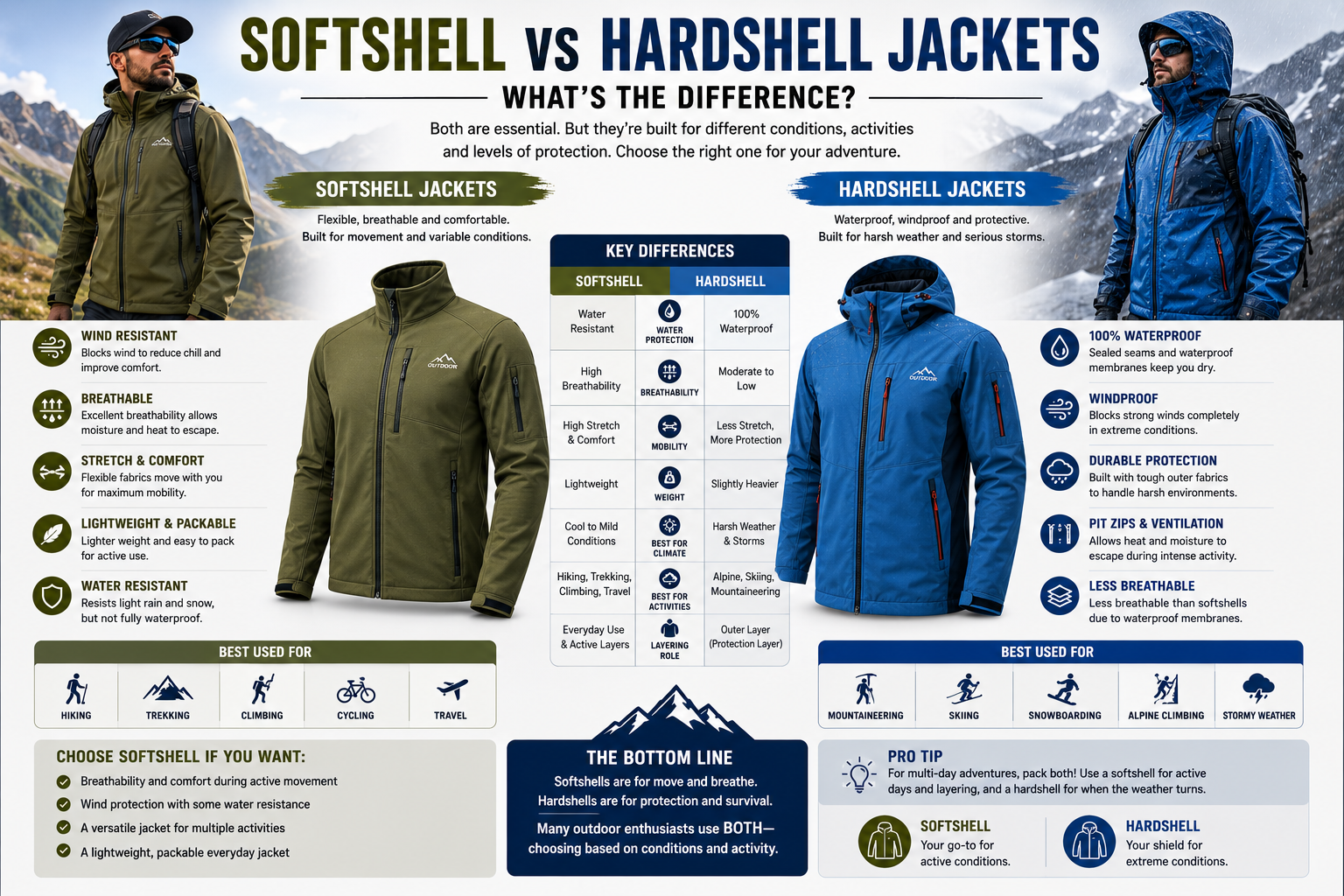
Windbreakers exist on a spectrum from simple wind defense to full waterproof weather protection — and matching protection level to your actual conditions prevents both under-specification that leaves you wet and over-specification that adds unnecessary weight and cost.
Wind protection only — DWR-treated face fabrics without membrane construction — suits dry cold and windy conditions where precipitation is genuinely rare. These constructions offer maximum breathability and minimum weight at the cost of meaningful waterproofing that sustained rain exposure quickly defeats.
Water-resistant windbreakers — DWR treatment plus tightly woven face construction — handle light rain and moisture splash adequately for activities in moderately wet environments. They suit camping apparel use, casual hiking, and urban environments where heavy sustained rain is uncommon but light precipitation occurs regularly.
Waterproof windbreakers — lightweight membrane constructions in 2 or 2.5-layer formats — provide genuine rain protection for activities in reliably wet environments without the weight penalty of full hardshell construction. These suit trail running in variable mountain weather, cycling in rain-prone regions, and any activity where getting wet creates significant comfort or safety problems.
Understanding which protection level your specific activity and environment genuinely requires prevents the common mistake of choosing maximum specification when lighter alternatives would serve perfectly — or choosing insufficient protection for conditions that regularly demand more than DWR treatment provides.
Evaluate Weight and Packability Requirements
Windbreakers exist across a wide weight range — from sub-100 gram ultralight emergency layers to 400 gram insulated constructions that prioritize warmth and durability over packability. Matching weight to your activity’s transport requirements ensures the jacket you choose actually gets carried and deployed rather than left behind because it’s too heavy or bulky for your intended use.
For activities where the jacket travels in a pack or pocket — running, cycling, day hiking — packability matters enormously. The jacket’s compressed volume and weight determine whether it genuinely gets carried on every outing or left at home on weight-conscious days. A windbreaker jackets manufacturer who builds proper stuff pocket construction — reinforced, correctly sized, and positioned for quick deployment — creates packable jackets that function reliably across hundreds of pack-and-deploy cycles without stuff pocket failure undermining the packability that justifies the jacket’s inclusion in your kit.
For activities where the jacket is worn continuously — commuting, travel, casual outdoor use — packability matters less than comfort, durability, and weather protection performance across extended wear periods.
Check Hood Design Carefully
Hood design significantly impacts windbreaker performance in real conditions — and the right hood design depends entirely on your specific use case rather than any universal best option.
Helmet-compatible hoods with adjustable volume controls suit cycling, ski wear applications, and climbing where headwear worn beneath the hood creates volume requirements that standard hoods cannot accommodate.
Wire-brim peaks maintain hood shape against wind — preventing the hood from collapsing across the face during high-speed descents or strong gusts that flatten soft-brim alternatives against your goggles or face.
Packable hoods — those that roll into the collar or a pocket — suit fashion and casual applications where hood-free styling suits most conditions but occasional hood access adds genuine value without permanent aesthetic impact.
Hood-free designs suit activities where a separate hat provides preferred head coverage — and create cleaner aesthetics that work more naturally in urban styling contexts where hooded outdoor jackets can look visually heavy.
Assess Fit for Your Specific Use
Windbreaker fit affects both performance and versatility — and the right fit depends on how you plan to wear and layer the jacket across your activities.
Athletic or active fit — close to the body — suits running, cycling, and high-intensity activities where aerodynamic efficiency matters and excess fabric creates drag or billowing that disturbs movement rhythm. Active fit jackets layer correctly over base layers without bunching during arm swing.
Regular fit — slightly roomier through chest and shoulders — accommodates light mid-layers underneath for cold weather use and suits moderate-intensity activities where layering flexibility matters alongside unrestricted movement.
Sleeve length should allow full arm extension without wrist exposure during overhead reach. Hem length should cover the lower back during a forward bend — preventing cold air and moisture entry through the gap that short hems create during uphill hiking positions and cycling forward lean.
Review Key Features Against Your Needs
Beyond construction and fit, specific features determine how well how to choose the right windbreaker jacket translates into genuine daily performance for your specific use case.
Essential features worth evaluating carefully:
- Zipper quality — YKK or equivalent quality zippers operate smoothly with cold or gloved hands across hundreds of open-close cycles without failure
- Pocket number and placement — sufficient storage for your specific carry needs positioned where your activity allows access without removing pack straps or stopping movement
- Cuff design — velcro adjustment seals against cold air; elasticated cuffs provide quick-donning convenience; thumb loops maintain sleeve position during arm movement
- Reflective details — genuinely useful for low-light running and cycling; irrelevant for most other applications
- Ventilation — underarm or back venting systems manage heat accumulation during high-intensity activity that passive breathability alone cannot adequately address
Outdoor jackets collections that communicate these feature distinctions clearly — helping customers understand which specific features serve their activity rather than listing every feature as universally desirable — build stronger customer trust and significantly reduce return rates from disappointed buyers whose expectations mismatched actual product performance.
Consider Durability Against Your Use Intensity
Light occasional use demands different durability specifications than daily hard use across demanding outdoor environments. Matching face fabric denier and construction quality to your actual use intensity prevents both over-paying for durability you don’t need and under-buying construction that fails prematurely under your real-world use demands.
20 denier fabrics suit occasional-use packable emergency layers where ultralight weight justifies reduced abrasion resistance. 40 to 70 denier constructions suit regular daily use where pack strap abrasion, branch contact, and repeated compression-deployment cycles impose meaningful mechanical stress that lighter fabrics don’t withstand reliably across extended service life.
Brands building windbreaker collections for hunting apparel and serious outdoor markets must specify higher denier constructions and reinforced stress point construction — because professional and serious recreational users evaluate durability through real field experience and share their assessments powerfully within tight-knit outdoor communities.
Conclusion
Knowing how to choose the right windbreaker jacket comes down to honestly matching jacket construction, protection level, weight, hood design, fit, features, and durability to your specific activity, conditions, and use intensity. A windbreaker chosen correctly for your actual needs becomes one of the most-reached-for garments in your outdoor wardrobe — deployed constantly and relied upon completely. Choose it with genuine consideration for how and where you actually use it — and it rewards you with reliable performance across years of outdoor activity.
FAQs
Do I need a waterproof windbreaker or will a water-resistant one suffice?
If your activity regularly involves sustained rain exposure or wet mountain environments — choose waterproof membrane construction. If you encounter only occasional light rain in generally dry conditions — quality DWR water-resistant construction performs adequately at lower weight and cost.
How important is breathability in a windbreaker jacket?
Breathability importance scales directly with activity intensity. High-intensity running and cycling demand maximum breathability. Casual walking and travel use tolerate lower breathability without significant comfort impact during the lower perspiration rates these activities generate.
What size should I choose for a windbreaker if I plan to layer underneath?
Size up one size from your standard fit if you regularly layer a mid-layer beneath the windbreaker in cold conditions. Standard sizing suits base-layer-only layering for most active use applications without requiring size adjustment.
Can windbreaker jackets be produced under a private label for outdoor brands?
Yes. Professional outdoor apparel manufacturers offer complete private label windbreaker production with custom fabrics, protection levels, colors, hardware, reflective details, labels, and packaging — giving brands full technical and commercial control over their windbreaker collection identity.